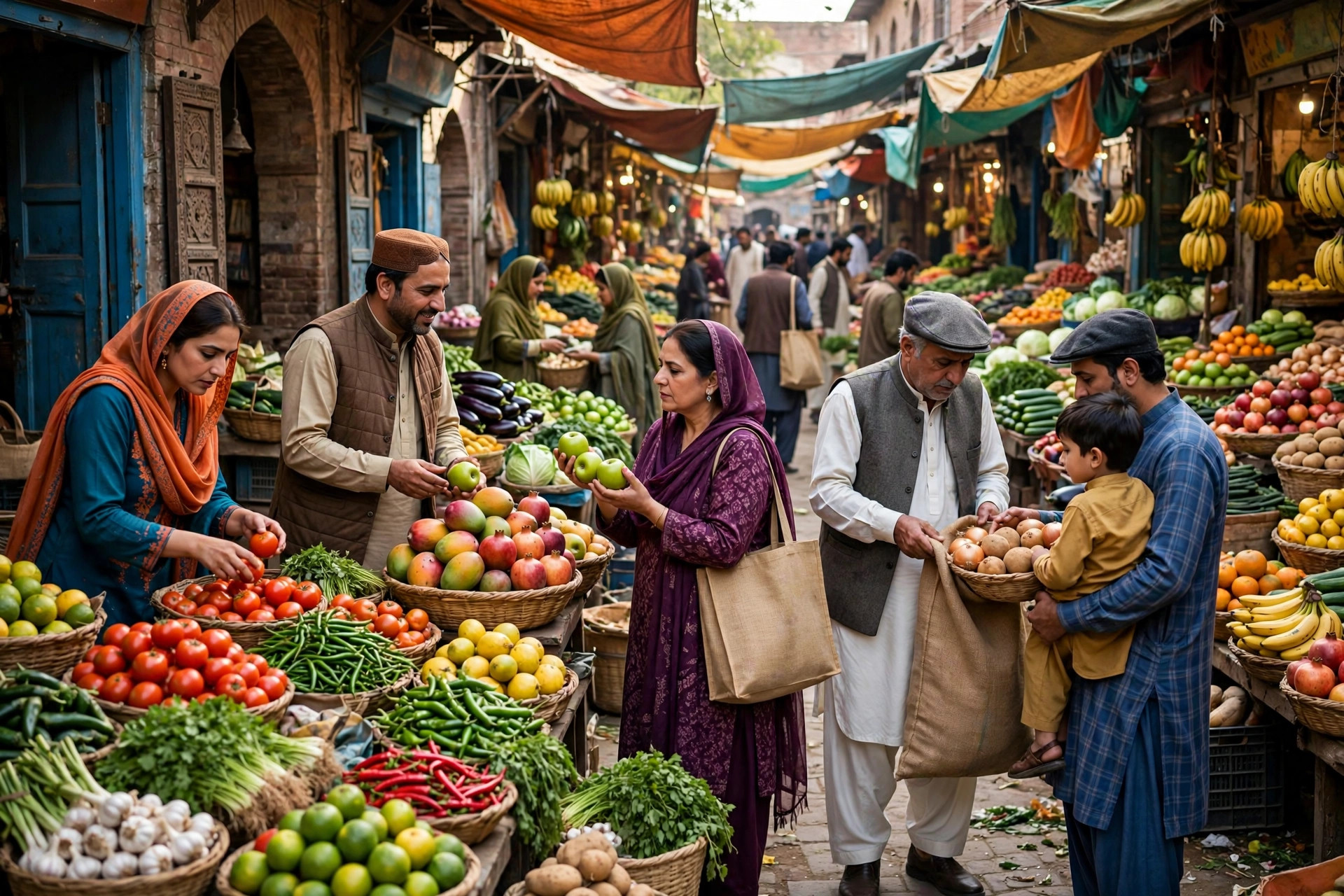
KARACHI: Nestlé Pakistan's factories buy milk from an army of small farmers before most of the country is awake, and its brands — milk powders, infant nutrition, juices, bottled water, coffee, cereals — sit in virtually every grocery store in Pakistan. It is the local arm of the Swiss food giant, listed on the PSX with a famously small free float and a share price that has historically sat among the highest on the exchange in absolute rupee terms. Its model looks deceptively simple: buy farm produce and packaging, add brand and distribution, sell at a premium. The interesting economics live in the three words of that sentence — milk collection, brands and pricing power.
The portfolio: what Nestlé actually sells
The company's revenue comes from categories with quite different mechanics:
- Dairy and nutrition — the core. Powdered and liquid milks, yoghurts, infant and child nutrition products and specialised nutrition. This is where the milk-collection machine points, and where scientific and regulatory scrutiny is most intense, especially around infant formula marketing rules.
- Beverages — juices and juice drinks, bottled water, coffee and tea creamers and related products. Bottled water is a logistics business wearing a brand's clothes: heavy, low value per kilo, profitable only with dense distribution.
- Food and culinary — cereals, confectionery-adjacent products, culinary aids and the out-of-home channel supplying hotels, restaurants and institutions.
- Exports — a modest slice, selling Pakistani-produced goods into regional markets including Afghanistan and beyond, useful as a natural hedge but not the engine of the business.
What unifies the portfolio is not the products but the system behind them: sourcing at national scale, factories held to global standards, a distribution network reaching from hypermarkets to the smallest kiryana store, and marketing budgets that keep the brands permanently in front of consumers. Our sector guide to food and personal care stocks frames how Nestlé compares with other listed consumer companies in Pakistan.
The milk machine: sourcing as a competitive weapon
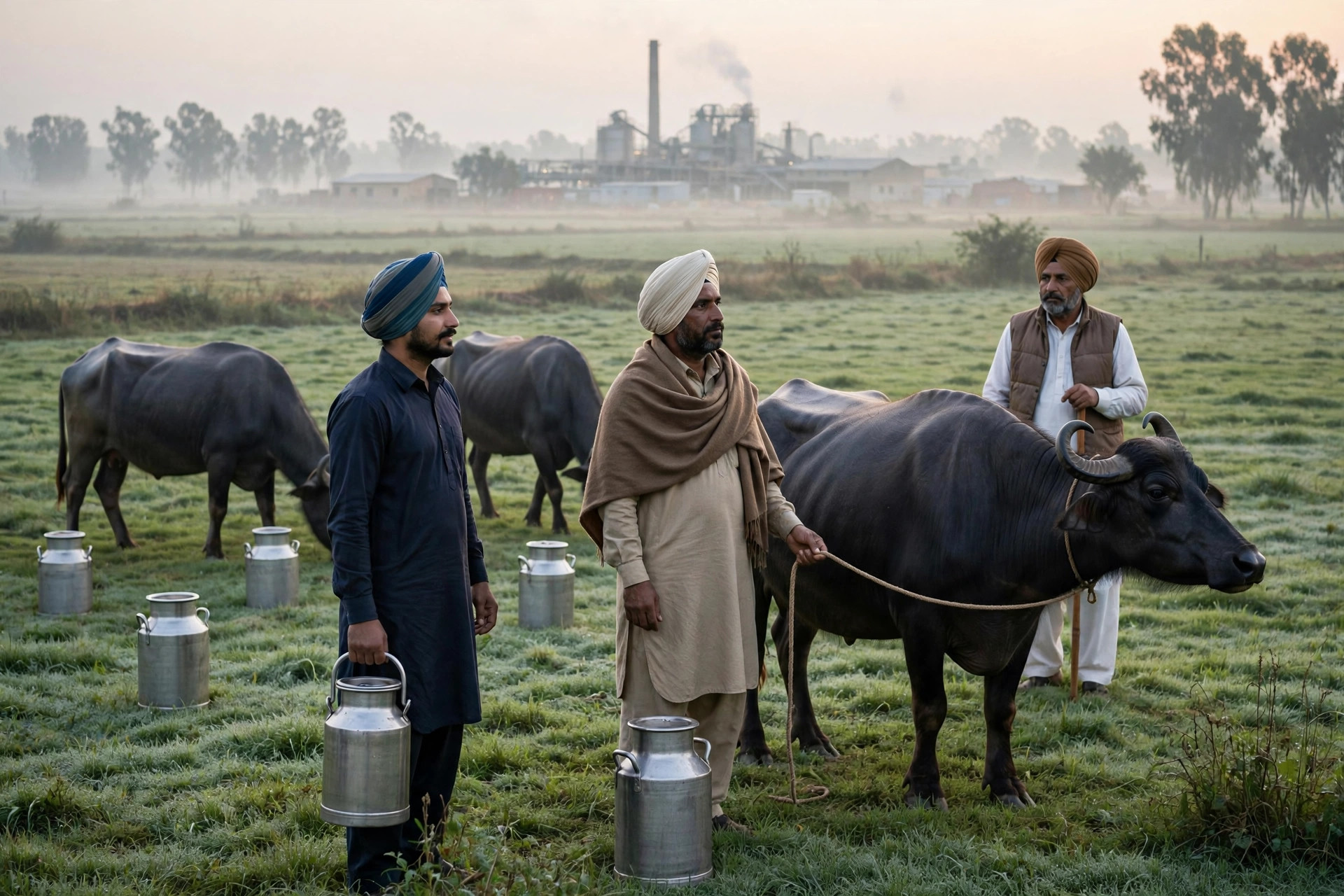
Start at dawn. Pakistan is among the world's larger milk-producing countries, but production is atomised: millions of households keep a few buffaloes or cows, yields per animal are low, and most milk historically moved through informal channels — the neighbourhood gawala — with no cold chain and variable quality. Nestlé built, over decades, a formal collection infrastructure: village milk collection centres where farmers deliver morning and evening milk, chilling facilities that preserve it, quality testing at intake, and tanker routes feeding its processing plants in Punjab.
Why does this matter commercially? Three reasons. First, security of supply: the company that organises collection gets the milk, in a market where lean-season shortages are real. Second, quality control: testing at the village gate keeps adulterated or spoiled milk out of products where the brand cannot afford a scandal — and safety failures are existential for a nutrition company. Third, farmer loyalty: regular payment, veterinary and feed support, and a reliable buyer in good times and bad bind farmers to the formal channel. Rivals can copy a recipe; replicating a collection network built village by village over forty years is a different proposition. This is what investors mean by a moat — and in Nestlé Pakistan's case a large part of it is stainless steel and village relationships, not advertising.
Pricing power: the brand premium, tested by inflation
The output side of the model is the consumer's willingness to pay more for a trusted brand than for an unbranded or local alternative. A mother buying infant nutrition, a family buying milk powder, a commuter buying bottled water — each is purchasing perceived safety and consistency as much as calories. That perception allows Nestlé to pass input-cost increases into shelf prices with less volume loss than a commodity seller would suffer. In an economy with Pakistan's inflation history — the subject of our inflation explainer — this pricing power is the difference between margins that survive cost shocks and margins that evaporate.
Pricing power has limits, and Pakistan tests them regularly. When household budgets are squeezed, consumers downtrade: smaller packs, cheaper brands, loose milk from the gawala instead of packaged powder. Nestlé's answers are classic FMCG craft — pack-size architecture (sachets and small packs that keep the absolute price point within reach even as the per-kilo price rises), promotions, and a portfolio ladder from value to premium so the downtrading customer stays inside the company's own range. Watch revenue in inflationary years and you typically see price-led growth masking flat or falling volumes; the skill is keeping the volume base alive until real incomes recover.
A worked example: the journey of a rupee of revenue (illustrative)
Follow a round, invented Rs 100 of Nestlé Pakistan sales to see where the money goes — the proportions are illustrative of a branded food business, not the company's reported figures. Perhaps Rs 55–65 leaves immediately as cost of goods: raw milk and other farm inputs, imported ingredients such as certain milk solids, vitamins and coffee, packaging (a significant cost in itself), factory energy and labour, and depreciation. That leaves a gross profit of roughly Rs 35–45 — rich compared with a commodity processor, and the direct financial expression of the brand premium.
From gross profit, the company pays for distribution (getting products into hundreds of thousands of outlets is a fleet-and-warehouse business), marketing and advertising (the ongoing rent for shelf space in consumers' minds), and administration. A further, distinctive outflow is the royalty and service payments to the parent group: as a subsidiary of Nestlé S.A., the Pakistani company pays for the use of global brands, technology and know-how under its agreements with the group — a real and recurring cost of being the local arm of a multinational, and a standard feature readers see across multinational subsidiaries on the PSX. What remains after finance costs and taxation is the net profit, split between dividends to shareholders — the parent holding the majority — and reinvestment in factories and distribution.
The multinational structure: majority parent, minority float
Nestlé Pakistan is controlled by its Swiss parent through group holding companies, and the shares available to PSX investors are the minority free float. Two practical consequences follow. Minority investors are, in effect, partners in a business whose strategy, brand licences and dividend policy are steered by a parent whose primary interest is the group's global position — usually aligned with local profitability, occasionally a source of questions at annual meetings about royalty rates and transfer arrangements. And the thin float means the share can trade at prices that reflect scarcity as much as analysis: with few shares available, modest buying or selling moves the price, liquidity is limited, and the stock's absolute price level — long among the PSX's highest — is a cosmetic consequence of few shares and high earnings per share, not a quality grade in itself. Our beginner guides explain free float, market capitalisation and why a high share price alone says nothing about whether a company is large or cheap.
The cost side: imports, energy and the rupee
For all its local sourcing, the model has significant imported exposure: certain dairy ingredients, coffee, specialised inputs, packaging materials and machinery come from abroad, and the royalty stream flows out in foreign currency terms as well. A weaker rupee therefore raises input costs and the rupee value of group payments, testing exactly the pricing power described above — can shelf prices rise fast enough to cover the devaluation without breaking volumes? Factory energy costs and the logistics of a national cold and dry distribution network add further inflation sensitivity. Periods of sharp currency decline in Pakistan have historically produced the same sequence at Nestlé and its FMCG peers: gross margins compress first, price increases restore them with a lag, and volumes wobble in between.
What moves Nestlé Pakistan's earnings — the short list
- Consumer demand and real incomes — the willingness of households to stay with branded products when budgets tighten.
- Raw milk prices and collection — farm-gate competition for milk and seasonal supply swings.
- The exchange rate — imported inputs and group payments versus the speed of shelf-price adjustment.
- Energy and distribution costs — fuel and power prices flow straight into factories and fleets.
- Regulation and taxation — food safety and marketing rules (especially for infant nutrition), sales tax treatment of packaged foods, and periodic budget measures aimed at the formal sector, all set in Islamabad and checkable in current FBR notifications.
- Competition — local dairy and food companies, informal milk channels, and multinational rivals contesting the same shelf.
Set Nestlé beside the previous article's subject and the PSX's range comes into focus: Hubco sells availability to a single state buyer under a contract; Nestlé sells branded goods to millions of individual buyers under no contract at all, and must re-win them at every shopping trip. Both models can produce durable earnings; they fail in completely different ways. This article is educational content, not financial advice, and offers no view on the shares — only on the machine: organise the milk, earn the premium, defend it with distribution and pack craft, and convert what survives into dividends largely flowing to a Swiss parent and the minority who invest alongside it.
Distribution: the second moat, built one shop at a time
If milk collection is the moat on the way in, distribution is the moat on the way out. Pakistan's retail landscape is dominated by hundreds of thousands of small independent stores, and reaching them — directly or through layers of distributors and wholesalers — is an operating discipline of routes, vans, order cycles and credit management. A competitor can rent a factory and copy a product in a season; building coverage that puts chilled and dry products, in the right pack sizes, into a small shop in a small town on a reliable weekly rhythm takes years and sustained investment. That coverage is also data: the company sees demand shifts town by town and category by category long before they surface in industry statistics, and can steer promotions and pack launches accordingly. The growing modern channels — supermarkets, and increasingly e-commerce and quick-commerce in the big cities — sit on top of this base rather than replacing it, and out-of-home channels (offices, hotels, restaurants, tea stalls at national scale) add a further, less visible layer where creamers, coffee and culinary products earn quietly.
Pressures that come with the territory
Three structural pressures deserve mention because they recur in the company's public debates. Water: bottled water and dairy operations draw on local resources, and the group's water stewardship — replenishment projects, factory efficiency, community filtration plants — is both genuine operating policy and a response to sustained public scrutiny of groundwater use by bottlers in Pakistan. Packaging waste: sachets and small packs are the affordability engine of FMCG and simultaneously its waste problem; collection and recycling commitments are becoming a standing cost of doing business in the category, not a one-off campaign. Health and marketing regulation: as Pakistan grapples with malnutrition in two directions at once — under-nutrition in children alongside rising obesity and diabetes — the regulatory environment for fortification, labelling and the marketing of foods, especially to children, tightens steadily. None of these pressures breaks the model described in this article; all of them price into its long-run cost base, and serious readers of the annual report track them in the sustainability disclosures as carefully as in the financial statements.
Why the float matters to a small investor
One practical coda for PSX readers. A small free float does not make a company good or bad, but it changes the experience of owning it: bid–offer spreads can be wide, a modest order can move the price, and index inclusion or exclusion moves weights abruptly. Position sizing and patience — limit orders rather than market orders, horizons measured in years — are the standard adaptations, and they generalise to every thinly traded quality name on the exchange. Aktzien plans to make such company mechanics legible to first-time investors at the moment they matter, inside the investing flow itself, because the costliest beginner errors in stocks like this are usually about liquidity and order types rather than about the underlying business at all.
Key takeaway: Nestlé Pakistan's profit is a brand premium collected at the shelf and defended at the farm gate — village milk collection and national distribution create the supply moat, and pricing power decides how much of each inflation shock the company can pass on.