KARACHI: Pakistan's economic story can be told as a repeating cycle: growth picks up, imports surge, dollars run short, the rupee slides, the IMF arrives, growth is squeezed back down — and a few years later the cycle begins again. The single number that tracks this whole drama is the current account balance. It is not an obscure statistic for specialists. It is the difference between everything Pakistan earns from the rest of the world and everything it pays to the rest of the world in a given period, and when that difference turns deeply negative, almost every other economic problem — currency pressure, reserve losses, borrowing needs, import restrictions — follows from it. This guide explains what goes into the current account, why Pakistan's version has the shape it does, and how investors should read the monthly figures published by the State Bank of Pakistan (SBP). No current balance is stated as fact here, because the figure is revised monthly; the SBP's balance-of-payments releases are the source to check.
The four building blocks
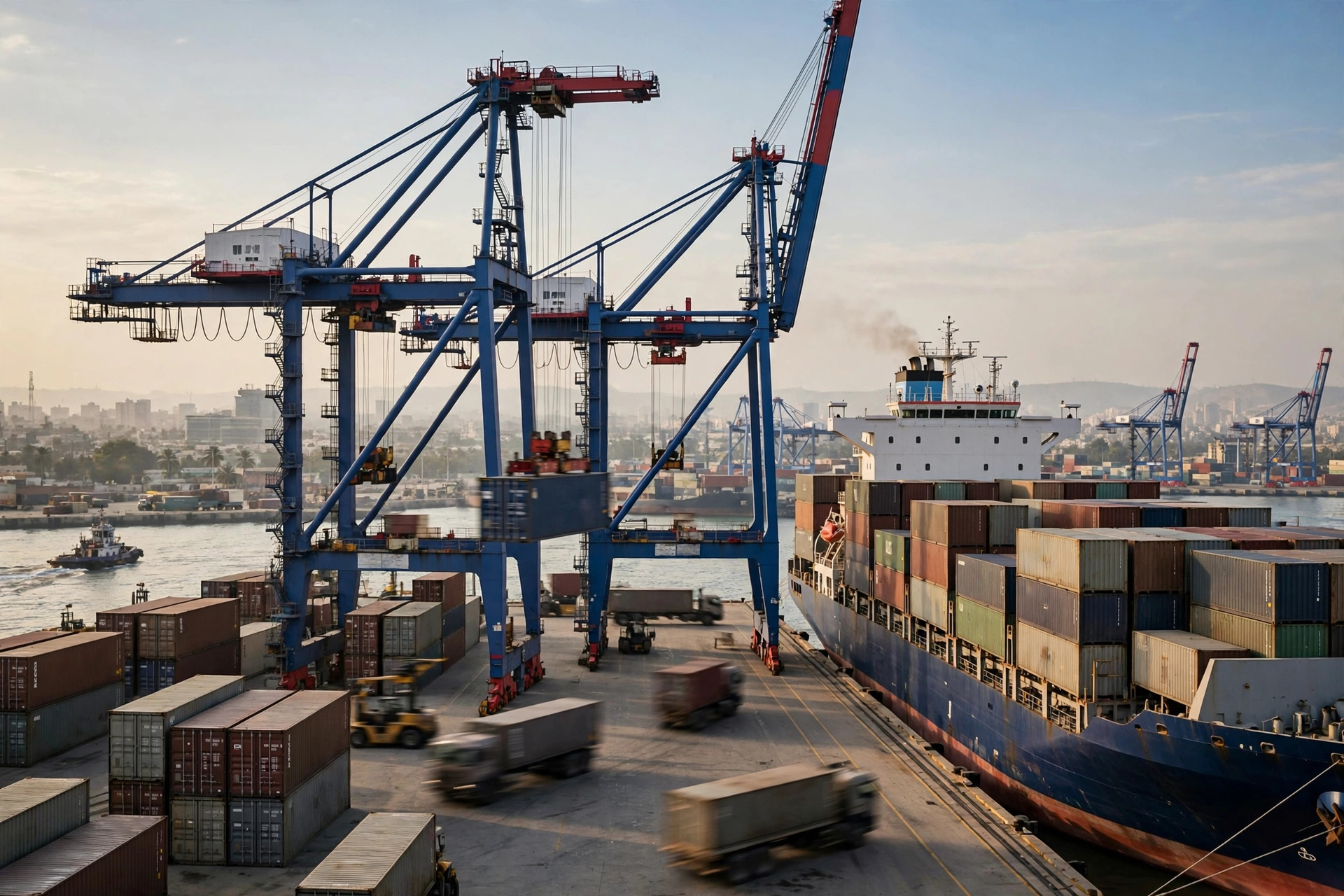
The current account has four main components. The largest is trade in goods: exports of merchandise — textiles, rice, leather goods, sports goods, cement and more — minus imports of merchandise, dominated by petroleum, machinery, chemicals, edible oil and metals. Pakistan has run a goods trade deficit in most modern years, meaning it buys more physical goods from the world than it sells. The second component is trade in services: earnings from IT and business services, transport and travel sold to foreigners, minus what Pakistanis pay abroad for shipping, insurance, foreign travel, education and other services. Pakistan's IT service exports have become a genuinely important earner here, though freight and travel payments keep the services account under pressure.
The third component is primary income: investment income flowing in and out. For Pakistan this is usually negative, because the outflows — profits and dividends repatriated by foreign companies operating in Pakistan, and interest paid on foreign loans — exceed the income Pakistanis earn on assets abroad. The fourth is secondary income, and it is Pakistan's great offset: workers' remittances. Money sent home by Pakistanis working in the Gulf, Europe, North America and elsewhere counts here, and it is large enough to cancel out a substantial share of the trade deficit in a typical year. The full remittance story is told in remittances explained; for this article, what matters is its role in the arithmetic.
Add the four blocks together and you get the current account balance. A surplus means the country, on these everyday transactions, earned more foreign exchange than it spent — it could, in principle, build reserves or repay debt. A deficit means it spent more than it earned, and the gap must be financed somehow: by borrowing abroad, attracting foreign investment, drawing down reserves, or some combination. That financing question belongs to the wider balance of payments, covered briefly below and in depth in external financing explained.
Try the arithmetic with clearly illustrative, invented round numbers for a single month. Suppose goods exports are $2.5 billion and goods imports are $5 billion — a trade deficit of $2.5 billion. Services roughly balance at a small deficit of $0.2 billion. Primary income is negative by $0.4 billion. Remittances arrive at $2.8 billion. Total: -$2.5 - $0.2 - $0.4 + $2.8 = a current account deficit of $0.3 billion for the month. Change one assumption — oil prices spike and imports rise to $5.8 billion — and the same economy posts a deficit of $1.1 billion. This sensitivity is the point: Pakistan's current account is hostage to a handful of large, volatile lines, above all the energy import bill and the remittance inflow.
Why the deficit keeps coming back: the structure underneath
A current account deficit is not automatically a crisis. Young, fast-growing economies often import machinery and energy to build capacity, financing the gap with investment inflows — the deficit is then the mirror image of development. Pakistan's recurring problem is the composition of the deficit and the way it is financed. Historically, import surges have been led not only by machinery but by consumption: cars, phones, and energy to fuel a growing vehicle fleet and air-conditioners, paid for with an exchange rate that was often held strong enough to make imports feel cheap. When growth accelerated, imports accelerated faster than exports, the deficit widened to levels that remittances could not cover, and financing it depended on fresh borrowing and the goodwill of lenders.
The export side explains why the adjustment is so hard. Pakistan's goods exports are concentrated in textiles and a short list of agricultural and low-to-mid-technology products, sold into competitive world markets where prices are set globally. Expanding them requires energy at workable prices, a competitive real exchange rate, working capital and market access — none of which can be summoned in a single quarter. The full picture is in Pakistan's exports explained. Imports, by contrast, respond immediately to income and credit growth. This asymmetry — imports that leap, exports that climb stairs — is the structural heart of the cycle.
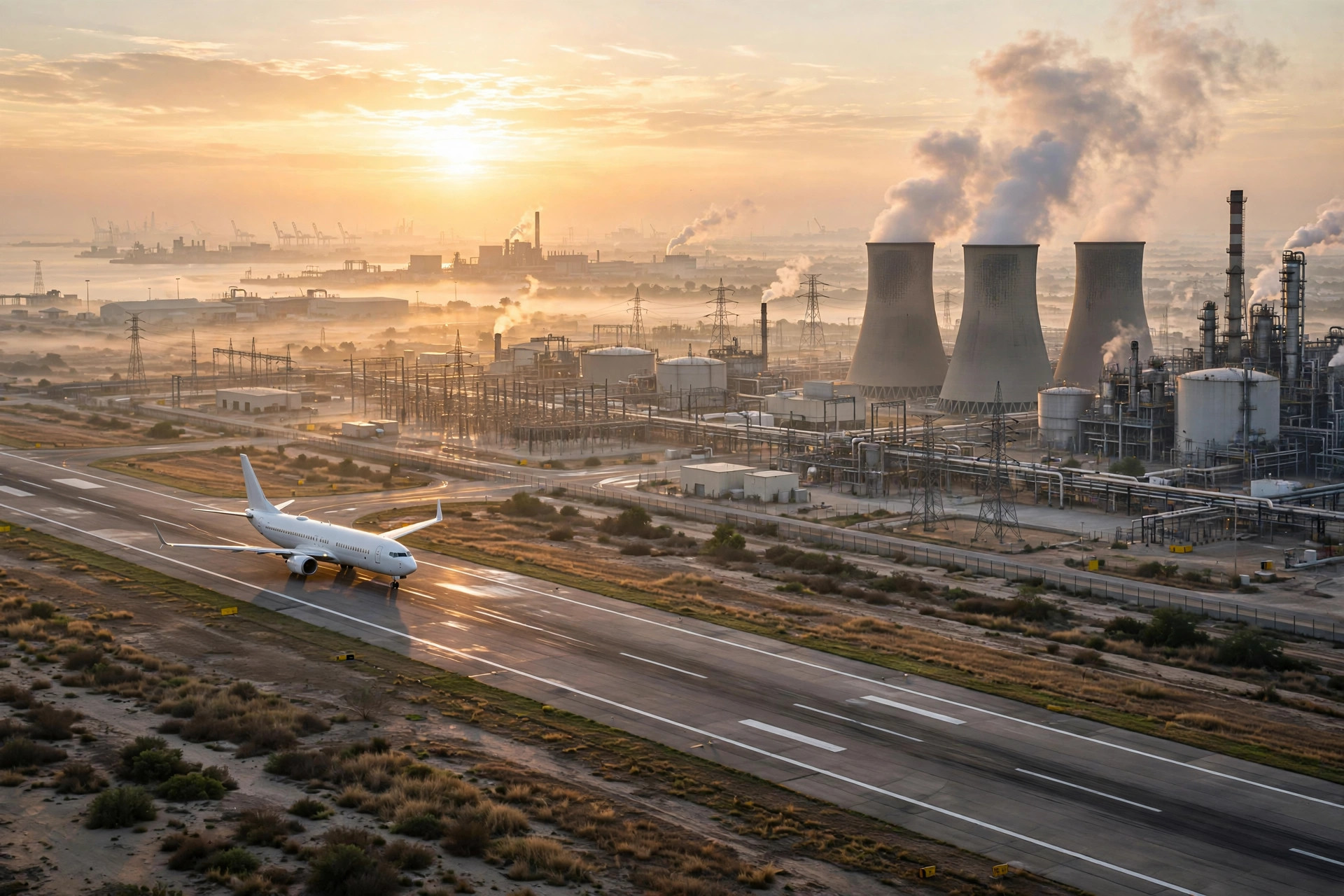
Energy ties the structure together. Pakistan imports a large share of its fuel, so every growth spurt raises the energy bill, and every global oil or gas price shock lands directly on the trade balance. Domestic energy pricing and the famous circular debt are the internal side of the same dependence; the current account is its external side. Add a growing population importing food items such as edible oil and pulses in large quantities, and the import bill has a high floor below which it cannot fall without squeezing living standards — which is why import compression, when it comes, quickly shows up as shortages, factory shutdowns and inflation.
Financing the gap: the balance of payments as a whole
The current account is one half of the balance of payments, the full record of a country's transactions with the world. The other half — the financial account — records how a deficit is funded or a surplus is placed: foreign direct investment into factories and companies, portfolio investment into shares and government securities, loans from multilateral lenders, bilateral deposits and credits from friendly governments, commercial borrowing and Eurobonds, and changes in the SBP's reserves. The accounting identity is simple: a current account deficit must be matched by net financial inflows or by running reserves down. When neither is available on sufficient scale, the exchange rate and import demand are forced to adjust — the mechanism in the rupee explained.
Not all financing is equal. Foreign direct investment is the most durable: it builds capacity, does not have to be repaid on a date, and its return leaves only when profits are earned. Portfolio flows into the PSX or into treasury bills can reverse within days — market participants call this hot money — and their sudden exit has amplified past crises. Loans must be serviced and repaid regardless of conditions, and short-term loans must be rolled over frequently, creating the refinancing treadmill described in the external financing guide. Reserves are the buffer of last resort, and watching them fall month after month alongside a wide deficit is the classic pre-crisis chart.
This is also where IMF programmes enter. An IMF arrangement is, in essence, financing plus a monitored plan to shrink the current account deficit to a level that can be funded sustainably — through some mix of currency adjustment, tighter monetary and fiscal policy, energy price corrections and structural reforms to exports. Whether one approves of the medicine or not, the diagnosis is always anchored in this balance. Reading an IMF staff report without understanding the current account is like reading a medical chart without knowing what blood pressure is.
What moves the number month to month
For anyone following the monthly SBP releases, a few drivers explain most of the movement. Oil and energy prices change the import bill with a lag of a month or two. Remittance seasonality is real: inflows typically strengthen around Ramadan and Eid as workers send money for family spending, and soften at other times; policy incentives for formal channels and the gap between official and informal exchange rates also shift how much arrives through banks. Textile orders and cotton prices move goods exports. Machinery imports rise when investment and credit expand, an early sign of the classic cycle restarting. Profit repatriation bunches around corporate year-ends and can be delayed when dollars are scarce, storing up a backlog that reappears later. Travel — including education and health spending abroad — quietly widens in prosperous years.
Two reading cautions. First, one month's figure is noisy; economists look at cumulative fiscal-year trends and twelve-month rolling sums. Second, data get revised, and goods trade figures from the SBP and the Pakistan Bureau of Statistics can differ because of timing, valuation and coverage — a discrepancy that regularly confuses headlines. Use one consistent source for comparisons over time, and check the SBP for the definitive balance-of-payments series.
A surplus is not automatically good news — read how it was earned
Beginners often assume a current account surplus is simply good and a deficit simply bad. The composition matters more than the sign. A surplus achieved because exports are booming, factories are investing in imported machinery for future production, and remittances are flowing through banks is a sign of strength. A surplus achieved because imports have collapsed — factories unable to open letters of credit, car plants shut for lack of parts, households too squeezed to buy fuel — is a sign of an economy being compressed by crisis, and it usually reverses violently when restrictions ease and pent-up demand returns. Pakistan has experienced the second kind more often than the first, which is why experienced analysts greet a sudden swing into surplus during a stabilisation programme with questions rather than celebration: what happened to machinery imports, what happened to dividend payments owed abroad, and what backlog of payments is building outside the measured accounts?
The mirror image applies to deficits. A moderate deficit during a period of strong investment, financed mainly by foreign direct investment and long-term loans, is a different phenomenon from a deficit of the same size driven by consumption imports and financed by drawing down reserves or borrowing short-term at market rates. The monthly number alone cannot tell you which story you are in. The financing table beneath it — published in the same SBP release — can. Train yourself to read both halves together: the deficit tells you the size of the hole; the financial account tells you whether the hole is being filled with concrete or with sand.
Why investors should care
The current account is the upstream variable for much of what PSX investors watch downstream. A widening deficit foreshadows pressure on the rupee, which reshuffles sector fortunes between exporters and import-dependent companies. It foreshadows tighter monetary policy, because the SBP defends the external position partly with interest rates, as explained in the SBP policy rate explained — and higher rates raise corporate financing costs while making bank deposits and government securities more competitive against equities. It foreshadows administrative import measures that can halt production lines. And it frames sovereign risk: persistent deficits funded by short-term borrowing are exactly what rating agencies penalise, as sovereign credit ratings explained describes.
Conversely, a sustained improvement — built on export growth and stable remittances rather than crushed imports — is the closest thing Pakistan's economy has to an all-clear signal: reserves rebuild, the currency steadies, rates can fall, and equity valuations can breathe. Learning to distinguish an improvement bought by import compression, which stores up pent-up demand and deferred payments, from one earned by export growth is one of the most valuable analytical skills a Pakistani investor can develop. The data to practise on are free: the SBP publishes the full breakdown every month.
This article is educational content, not financial advice, and it states no current current-account figure as fact, because the balance is published and revised monthly — check the SBP's latest balance-of-payments release for the numbers that apply today.
Key takeaway: the current account adds up Pakistan's trade, services, income and remittance flows with the world; when the sum is deeply negative, the gap must be financed or forced closed — and that forcing is what a Pakistani economic crisis actually is.