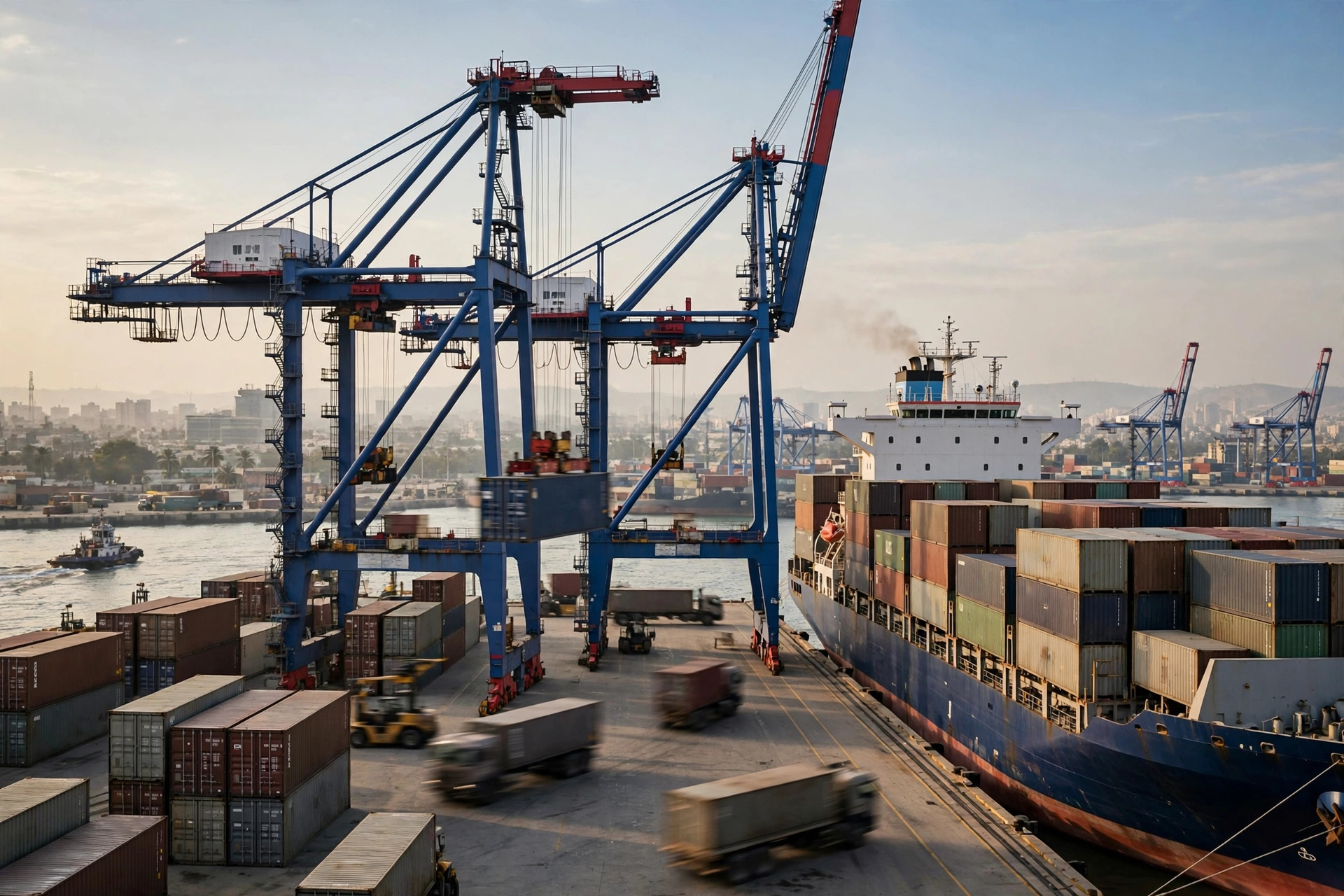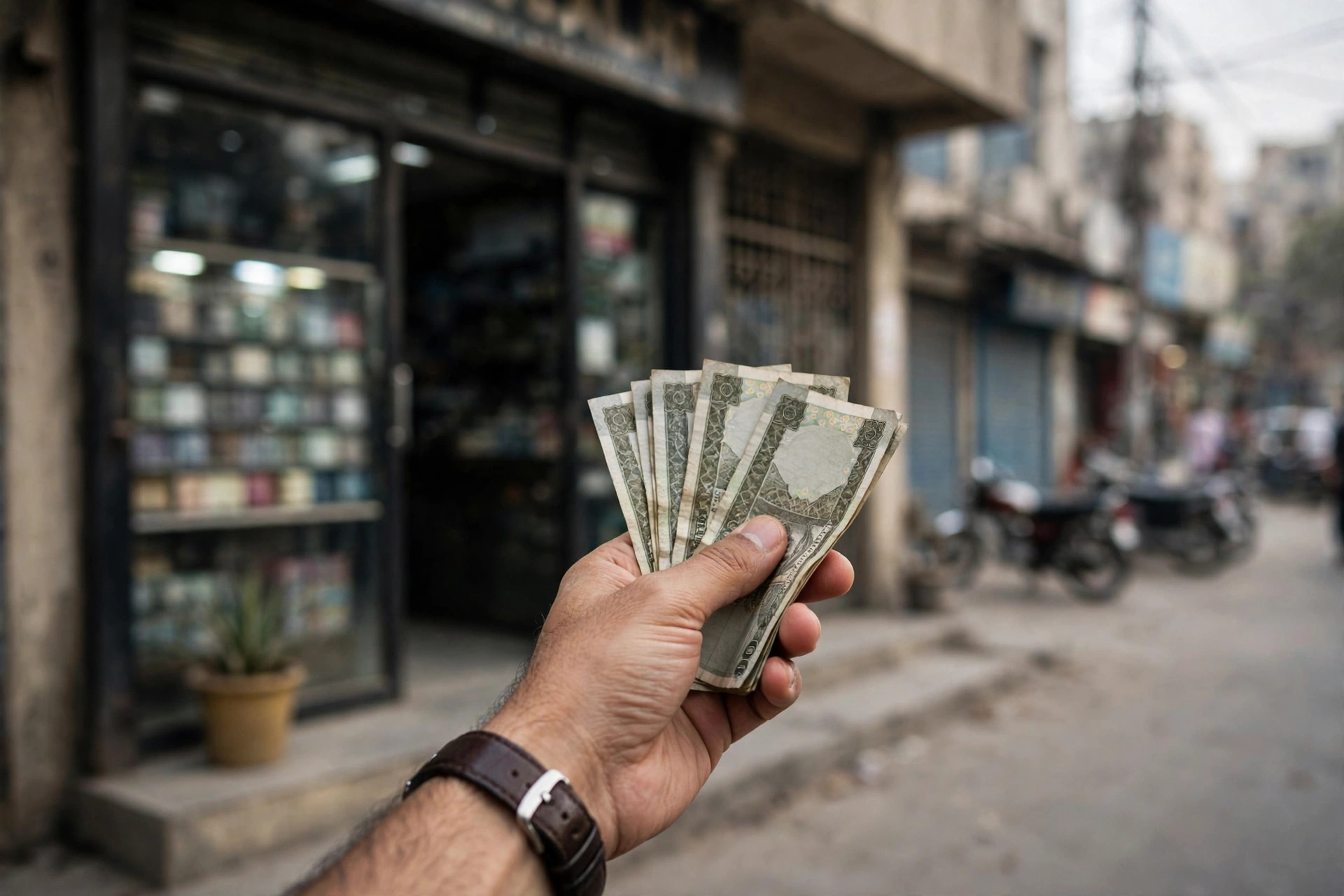
KARACHI: Ask a room of Pakistanis for the dollar rate and you will get at least three answers — the rate on the news, the rate at the money changer, and the rate someone's cousin got last week. All three can be real at the same time, because Pakistan does not have one rupee price but several closely related ones, quoted in different markets for different customers. The exchange rate matters far beyond travellers and importers: it sets the rupee value of export earnings, the cost of fuel and machinery, the burden of foreign debt, and the translated profits of some of the largest companies on the Pakistan Stock Exchange. This guide explains where the different rates come from, what actually moves them, and why the State Bank of Pakistan (SBP) cares so much about its foreign exchange reserves. It deliberately states no current rate as fact — rates move daily, and the SBP website publishes the official interbank figures you should check for any decision.
Three markets, three prices
The interbank market is where banks trade foreign currency with each other and with their large customers, under SBP rules. When newspapers quote "the dollar closed at" a certain level, they almost always mean the interbank rate. Exporters sell their dollar earnings into this market through their banks, importers buy dollars from it to pay foreign suppliers, and the SBP itself occasionally buys or sells here. Because volumes are large and participants are regulated banks, this is the reference rate for the whole economy: trade invoices, foreign debt payments and official statistics are built on it.
The open market is the network of licensed exchange companies and money changers where individuals buy and sell physical currency and make personal remittances — the rate a student paying foreign fees, a family sending money abroad within legal limits, or a traveller buying dollars actually faces. It is normally close to the interbank rate, but not identical: exchange companies add a margin for their costs and risk, and physical cash has its own supply and demand. When the gap between the open market and interbank rates widens noticeably, it is a warning sign that something is out of balance — often that dollars are scarce in the formal system or expectations have turned against the rupee.
Beyond both sits the informal or kerb market — unlicensed dealing, including hawala and hundi channels that move money outside the banking system. Its rates are not official and its channels carry legal risk for users, but its premium over the official rate is watched as a thermometer of pressure: when people are willing to pay significantly more outside the formal system, confidence in the official rate is weak. Policies that narrow that premium — by making formal channels cheaper, faster and more reliable — pull money back into banks, where it supports reserves and can be measured. The story of formal remittances through banking channels is told in our guide to remittances explained.
What actually moves the rupee: flows in, flows out
Strip away the jargon and an exchange rate is a price, set by supply and demand for foreign currency. Dollars flow into Pakistan when exporters are paid for textiles, rice, IT services and other goods and services sold abroad; when overseas Pakistanis send remittances home; when foreign investors buy Pakistani shares or government securities; when the government or companies borrow abroad; and when institutions such as the IMF, World Bank or Asian Development Bank disburse loans. Dollars flow out when importers pay for petroleum, machinery, edible oil, and thousands of other goods; when profits and dividends are repatriated by foreign companies; when foreign investors sell and take money home; when foreign debts are repaid; and when residents travel, study or receive treatment abroad.
When inflows comfortably exceed outflows over a period, demand for rupees rises relative to dollars and the rupee tends to appreciate — each dollar buys fewer rupees. When outflows dominate, the rupee depreciates. The summary measure of the trade and income side of this tug-of-war is the current account, explained in full in Pakistan's current account explained. A useful mental model: the exchange rate is where the country's external accounts meet its citizens' expectations. If people believe the rupee will hold its value, exporters sell dollars promptly and families remit through banks. If they expect depreciation, exporters delay converting earnings, importers rush to buy dollars early, and cash dollars are hoarded — behaviour that can make the expected depreciation happen faster.
Consider a clearly illustrative example with invented round numbers. Suppose an exporter earns $100,000 from a shipment. At an example rate of Rs 250 to the dollar, that is Rs 25 million; at Rs 300, it is Rs 30 million. The exporter's dollar business did not change, but its rupee revenue rose by a fifth — while an importer owing $100,000 for machinery saw its rupee cost rise by the same Rs 5 million. This is why depreciation is neither simply good nor bad: it redistributes income between exporters and importers, between foreign-currency earners and rupee earners, and between the government (whose foreign debt becomes heavier in rupee terms) and everyone else. Companies listed on the PSX sit on both sides of that line, which is why currency moves produce clear sector winners and losers, a theme developed in our explainer on Pakistan's exports explained.
The SBP's role: referee, buffer and shock absorber
Pakistan operates what economists call a managed float. The rate is determined in the market, but the SBP influences it, principally through its foreign exchange reserves — the stock of dollars and other reserve assets the central bank holds. Reserves are a buffer: when dollar demand temporarily spikes, the SBP can sell dollars to smooth the move; when inflows are strong, it can buy dollars to rebuild the buffer. The key word is smooth. A central bank can lean against a temporary squall, but it cannot indefinitely hold a rate that the underlying flows do not support. Defending an overvalued rate simply spends reserves until they run low, at which point the adjustment tends to come suddenly and painfully — a pattern visible in several widely documented episodes in Pakistan's economic history, usually in the run-up to or early stages of IMF programmes.
Reserves themselves come mostly from borrowing and from the SBP buying dollars in the market when the balance of payments allows — which means a rising reserve figure is not automatically a sign of strength. Reserves built from exports and remittances are earned; reserves built from short-term foreign loans must be repaid or rolled over. Analysts therefore look at what stands behind the reserves, and at import cover — roughly how many months of imports the reserves could pay for — rather than the headline number alone. Check the SBP's weekly reserves release and its published interbank rates for current figures; this article explains the mechanism, not the level.
The SBP also regulates the plumbing: which transactions banks and exchange companies may handle, documentation for imports and outward payments, limits and reporting for certain categories, and incentives for bringing remittances through formal channels, including the Roshan Digital Account framework for overseas Pakistanis. In stressed periods, administrative measures — prioritising essential imports, tightening documentation, or discouraging certain payments — have historically been used to ration scarce dollars. Such measures can buy time, but they also create backlogs for importers, which listed companies disclose as letters of credit constraints or production stoppages. When you read a company announcement blaming import restrictions for a shutdown, you are seeing exchange-rate policy arrive on the factory floor.
Why the rupee falls over long periods — and why that is not the whole story
Over long horizons, the most powerful force on a currency is the inflation difference between two countries. If prices in Pakistan rise persistently faster than prices in the United States, a dollar's worth of goods gradually costs more rupees, and the exchange rate adjusts to reflect that — economists call this purchasing power parity. This is why a chart of the rupee over decades slopes steadily in one direction even in calm periods: it is partly a chart of Pakistan's inflation history, which is its own subject in inflation in Pakistan explained. A country cannot permanently fix both high inflation and a stable nominal exchange rate; something has to give, and historically it has been the rate.
Two refinements matter for investors. First, economists distinguish the nominal rate from the real effective exchange rate (REER), which adjusts for inflation differences and weights Pakistan's trading partners together. A rupee that is stable in nominal terms while domestic inflation runs high becomes more expensive in real terms, quietly squeezing exporters even though the quoted rate has not moved. The SBP publishes REER data, and exporters' complaints about competitiveness often refer to this real measure, not the headline rate. Second, short-run moves are dominated not by inflation but by flows and expectations: an IMF review completed, a large loan disbursed, a political shock, a change in global oil prices or a shift in foreign investor appetite can move the rate quickly, in either direction, long before any price index changes.
Oil deserves its own sentence. Petroleum products are among Pakistan's largest import items, so a rise in global oil prices mechanically increases dollar demand from importers and widens the trade deficit unless export or remittance inflows rise to match. This single channel explains much of the timing of Pakistan's currency stress: energy shocks hit the import bill first, reserves second and the exchange rate third. The structure behind that dependence is covered in Pakistan's energy mix explained.
What a moving rupee does to companies and investors
For PSX companies, currency effects arrive through at least four channels. Revenue translation: exporters and dollar-linked earners — textile exporters, IT companies, and oil and gas explorers whose product prices are referenced to international dollar prices — report higher rupee revenues when the rupee depreciates, even with flat volumes. Cost translation: companies importing fuel, raw materials, pulp, chemicals or components face higher rupee costs, and can only pass them on if customers accept higher prices. Debt translation: a company that borrowed in dollars must repay more rupees for the same loan, and accounting rules can force it to book exchange losses through its income statement in a depreciation episode. Demand effects: depreciation raises the price of imported consumer goods and fuel, squeezing household budgets and shifting spending — a second-round effect on everything from car sales to cement demand.
For investors holding shares, the lesson is to read results with the currency in mind. A profit surge driven mainly by translation gains is different in quality from one driven by volumes; annual reports disclose exchange gains and losses, and comparing a company's performance across a sharp depreciation without adjusting for them misleads. For savers more broadly, the rupee's long-run behaviour is the reason comparisons between rupee deposits, dollar accounts (available only under specific SBP rules), gold and equities are really comparisons of inflation protection — a theme our learning guides return to often. Note, too, that holding physical foreign cash as an investment is restricted and impractical for most residents; the legal channels are bank accounts and regulated products, and the SBP's foreign exchange manual sets the rules.
A brief note on costs for those who do invest through formal channels: converting currency, like trading shares, carries spreads and fees, and small frictions compound. That is one reason Aktzien is being built around low-cost commissions and, in time, plans to offer tools such as fractional shares that let small investors diversify without needing large lump sums — features still in development, not yet live. The principle generalises: whatever the asset, know the spread between buying and selling prices before you transact.
Reading currency news without being misled
A few habits protect against the most common errors. Ask which rate. A story quoting an open-market rate and a story quoting interbank are not contradicting each other. Ask over what period. A one percent move in a day is news; the same move over a year may be below inflation. Separate level from direction of pressure. Reserves rising while the rate is stable tells a different story from reserves falling to hold the same rate. Beware of single-cause stories. Speculation exists, but persistent moves almost always have flow fundamentals underneath. Check the source. The SBP publishes official closing rates, weekly reserves and balance-of-payments data; the Pakistan Bureau of Statistics publishes trade figures. Rumour-driven rates quoted on social media are not data.
Finally, keep the long view. Pakistan's currency history includes long calm stretches, managed adjustments and abrupt dislocations, usually when reserves, politics and external shocks collided. Investors who understood the flow mechanics were rarely surprised by the direction of stress, even if the exact timing was unknowable — and timing the currency is a speculation, not an investment strategy, for almost everyone.
This article is educational content, not financial advice. It states no current exchange rate, reserve level or forecast, because all three change constantly; consult the SBP for current official figures before acting on any currency question.
Key takeaway: the rupee is a price set by dollars flowing in from exports, remittances and financing, and flowing out for imports, profits and debt — the SBP can smooth the moves with its reserves, but over time flows and inflation decide.