KARACHI: In a small trading room in Lahore, a screen shows gold moving in New York, crude oil in dollars, and wheat priced for delivery in Pakistan — all tradable from one account, in rupees, under a Pakistani regulator. That is PMEX, the Pakistan Mercantile Exchange: the country's licensed commodity futures exchange, and the natural counterpart to the PSX. Where the stock exchange trades claims on companies, PMEX trades contracts on things — metals, energy, agricultural produce and currency pairs. The opportunity is real, and so is the leverage, which is why PMEX deserves a careful explanation rather than either hype or dismissal.
What PMEX is and how it came to be
PMEX is Pakistan's national, demutualised commodity futures exchange, licensed and regulated by the Securities and Exchange Commission of Pakistan (SECP). It began operations in the late 2000s — originally known as the National Commodity Exchange before rebranding as PMEX — taking over and formalising commodity futures trading that had previously existed in older, narrower forms, including the commodity activity historically associated with the Karachi Stock Exchange's predecessors. The exchange is electronic and nationwide: brokers who are members of PMEX open accounts for clients, orders are matched centrally, and the exchange's clearing arrangements guarantee settlement of trades between members, much as NCCPL does for shares. That central guarantee matters: when you trade a futures contract, your counterparty risk is managed by the exchange's margining and clearing system, not by trusting the stranger on the other side.
Understand the category clearly. PMEX is not a market where trucks of wheat change hands between millers — though delivery mechanisms exist for certain contracts. It is a futures market: standardised contracts to buy or sell a specified quantity and quality of a commodity, or a cash-settled equivalent, at a set price for a set future date. Most positions are opened and closed long before any delivery date; the economic functions are price discovery, hedging for businesses exposed to commodity prices, and — the part that attracts most retail attention — speculation on price movements with leverage. It is also not the informal, unregulated "commodity trading" pitched in WhatsApp groups and by unlicensed operators: if an outfit offering gold or oil trading is not a PMEX member broker regulated under SECP's framework, it is not PMEX, whatever its logo suggests. Verify any broker's status through PMEX and SECP sources before sending money anywhere.
What trades on PMEX
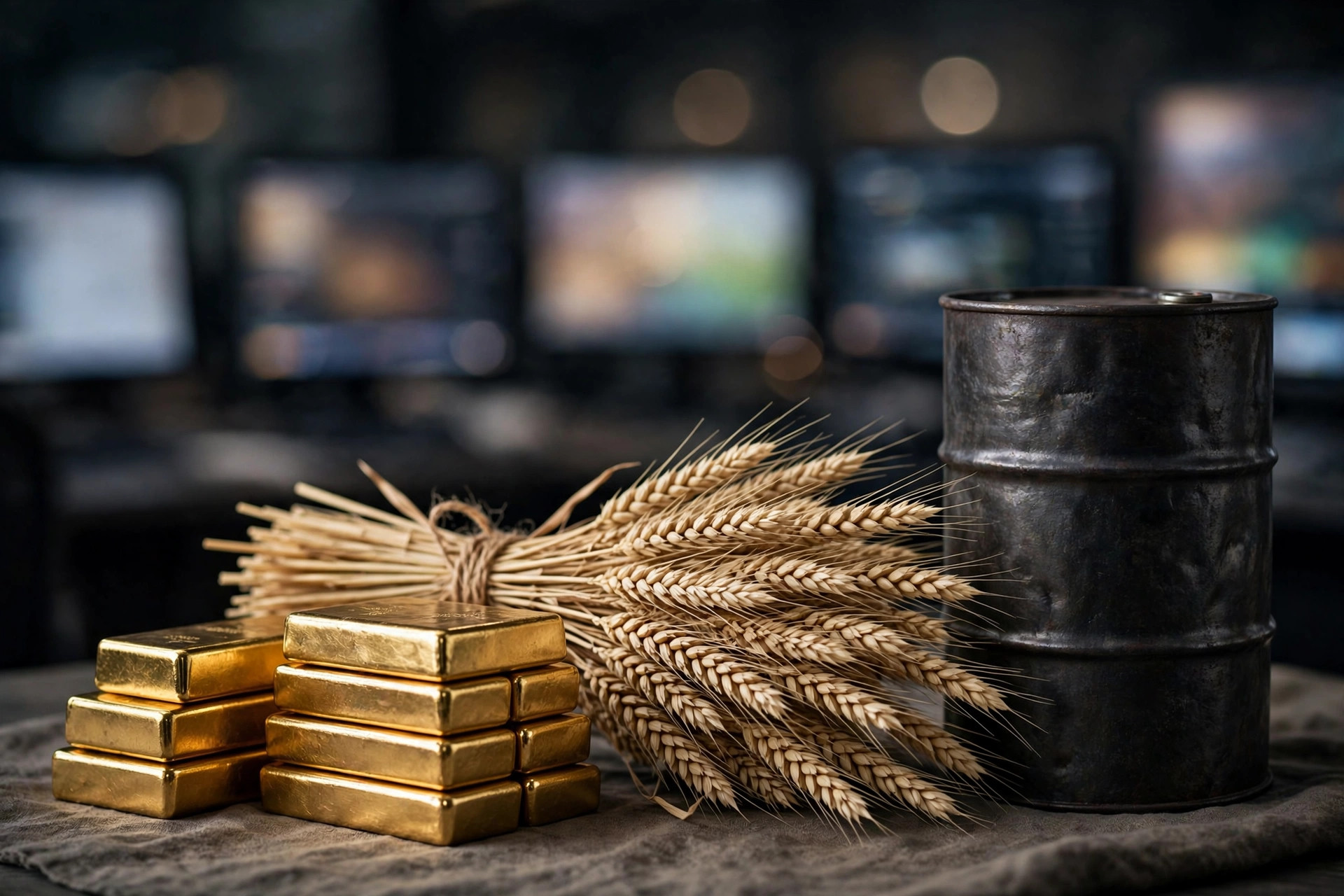
The contract list evolves — exchanges list, revise and retire contracts — but the enduring families are these. Metals: gold is the flagship and historically the most actively traded contract for Pakistani retail participants, offered in different contract sizes; silver and other metals such as copper and platinum have also been listed. Energy: crude oil contracts, referenced to international benchmarks, and natural gas. Agriculture: contracts linked to commodities central to Pakistan's economy, such as wheat, rice, sugar, maize and cotton, have been listed with the aim of serving farmers, traders and processors as well as investors, though liquidity in agricultural contracts has historically been thinner than in the international metals and energy contracts. Currencies: futures on major currency pairs against the US dollar and cross rates have been part of the offering, giving exposure to exchange-rate movements within a regulated local framework. Check PMEX's current contract list and specifications for what is actually tradable today — contract sizes, tick values and expiry schedules are defined per contract and change by exchange circular.
Why do gold and crude dominate? Because their prices are set globally and move during hours that suit Pakistani evenings — the big moves in gold happen in London and New York sessions, which fall in Pakistan's afternoon and night — and because many Pakistanis already follow gold through the local sarafa market's tola prices. PMEX translates that familiarity into a screen-based contract. But note the translation: international gold is priced in US dollars per troy ounce, local gold in rupees per tola, and PMEX contract specifications define their own units. A trader who cannot convert fluently between the contract's unit, the dollar price and the rupee is trading blindfolded, and the first task for a newcomer is boring, essential arithmetic.
How a futures trade actually works
Walk through a stylised example with round, illustrative figures — the numbers are chosen for clarity, not quoted from a live contract specification. Suppose a gold futures contract represents a defined quantity of gold and is quoted in rupees derived from the international price and the exchange rate. You believe gold will rise. Through your PMEX broker you buy one contract. You do not pay the full value of the gold. You deposit initial margin — a fraction of the contract's value set by the exchange and possibly topped up by your broker — and your account is then marked to market: as the price moves, gains or losses are credited or debited daily, in practice continuously during trading. If the price rises, your account gains the contract's full price movement multiplied by its size, not just a movement proportional to your margin. If it falls, losses accrue at the same full rate, and if your balance falls below the required maintenance level you face a margin call: deposit more money promptly, or the broker closes your position and crystallises the loss.
That asymmetry of funding is the whole story of futures. Leverage magnifies both directions with perfect fairness. A modest price move in gold — the kind that happens on an ordinary volatile day — can double a small margin deposit or erase it. Experienced futures traders therefore think position-size first: how much of my account can this contract's normal daily swing take from me? Beginners think price-direction first, which is why beginners' futures accounts have a famously short life expectancy. The exchange's circuit limits and margin system protect the market's plumbing; they do not protect an over-sized position from a routine adverse move.
Other mechanics to know before a first trade: contracts have expiry dates, and positions in physically deliverable contracts must be closed or rolled before expiry unless you genuinely intend and are able to make or take delivery under the contract's procedures; cash-settled contracts settle against a reference price. Trading hours for international contracts extend beyond the PSX day, aligned to global markets — an attraction for office workers, and a hazard for sleep and judgement. And costs are per-trade: exchange fees, broker commission and spreads on less liquid contracts add up quickly for hyperactive traders, the commodity-market cousin of the cost problem our guide to PSX futures describes for equity futures.
Hedgers, speculators and why the market exists
It is worth understanding the respectable economic work futures do, because it explains the market's design. A jeweller in Karachi holding gold inventory is exposed to a fall in the gold price; selling gold futures on PMEX lets that business offset inventory losses with futures gains — a hedge. A flour mill or a sugar trader facing future purchase costs can lock an input price by buying futures. An importer exposed to the dollar can use currency futures as one tool among others. Hedgers accept the certain cost of the hedge to remove an uncertain, business-threatening risk. Speculators — most retail participants — take the other side of such trades and provide liquidity, in exchange for bearing the risk hedgers shed. Neither role is illegitimate. But a speculator should know which chair they are sitting in: if you have no gold business, your gold futures position is a leveraged bet on the world gold price and the rupee, and it should be sized and managed as a bet, not reimagined as an investment because the word "gold" sounds solid.
The link to the rest of Pakistani finance is closer than it first appears. The same investor may hold PSX shares through a CDC account, units of the mutual funds described earlier in this series, and a PMEX account for commodity exposure — three different risk animals under three different rulebooks, all overseen at the top by SECP. Some Voluntary Pension System funds have offered a commodity sub-fund, typically gold-based, as a small diversifying slice inside a pension — professional, limited exposure of exactly the kind an individual should imitate if they use PMEX at all: small, deliberate and understood.
The risks, stated plainly
- Leverage risk. Losses can reach your entire margin quickly, and in fast markets a position can be closed out at prices worse than you expected. Only money you can afford to lose entirely belongs in a leveraged futures account — a cliché because it is the survival rule.
- Volatility and hours. International commodity prices react to US data releases, central bank statements, wars and inventory reports, often while Pakistan sleeps. A position left open overnight is a decision, not a default.
- Currency compounding. Rupee-quoted contracts on dollar-priced commodities carry two risks in one: the commodity can fall while the rupee also moves against you — or rescue you. Know which exposure you actually want.
- Liquidity risk in smaller contracts. Not every listed contract trades actively. Wide spreads and thin books in agricultural or minor contracts can cost more than the price move you were trading for — the same lesson as reading depth on the PSX, covered in our guide to reading the order book.
- Operator risk outside the system. The gravest losses in "commodity trading" in Pakistan have often involved unlicensed platforms and agents, not the regulated exchange. The protection of SECP regulation, margining and an exchange guarantee fund framework only exists inside the licensed system.
Getting started, if you decide it is for you
Open an account with a PMEX member broker after verifying its registration, completing the account-opening and know-your-customer documentation the regulated system requires. Start by reading the contract specifications for a single contract — gold is the usual candidate — until you can state its unit, tick size and value, margin requirement, expiry cycle and settlement method from memory. Trade the smallest available size, or use any educational or simulated facilities your broker offers, until your record-keeping is honest: a trading journal recording entry reason, size and exit is the difference between learning and merely experiencing losses. Set a maximum loss per trade and per month in rupees before you begin, and respect margin calls as information, not as invitations to double down. Keep futures activity financially separate from your long-term investing; money earmarked for children, retirement or a house deposit has no business meeting a margin clerk.
Finally, everything operational about PMEX — the live contract list, specifications, margins, trading hours, fee schedules and member directory — is published by PMEX and overseen by SECP, and changes by circular. Verify the current facts on PMEX's official sources before trading, because a contract specification remembered from an old article, including this one, is a liability. This article is educational content, not financial advice, and futures trading is unsuitable for most beginners until the mechanics above are thoroughly understood.
One further distinction protects newcomers from a common and expensive misunderstanding. Trading a futures contract on PMEX is not the same as owning the commodity. A buyer of physical gold in the sarafa market holds an asset that can sit in a safe for a decade, neither gaining nor losing cash along the way, whatever the price does in between. A futures position, by contrast, settles its gains and losses in cash as prices move, demands margin to stay open, and expires on a fixed date whether the holder is ready or not. The two can even move through the same headline in opposite emotional directions: a sharp overnight fall in world gold is a minor regret for the physical holder and a margin call before breakfast for the leveraged futures trader. Neither instrument is the other's substitute, and money allocated to one should never drift into the other by accident or by a broker's suggestion. Decide which exposure you actually want — the patience of ownership or the intensity of a contract — and fund it accordingly, in a separate account, with separate rules.
Key takeaway: PMEX is Pakistan's SECP-regulated commodity futures exchange — gold, energy, agriculture and currencies traded on margin with central clearing. The economics are legitimate and the leverage is unforgiving: verify your broker is licensed, master one contract's specification, and size every position for survival.