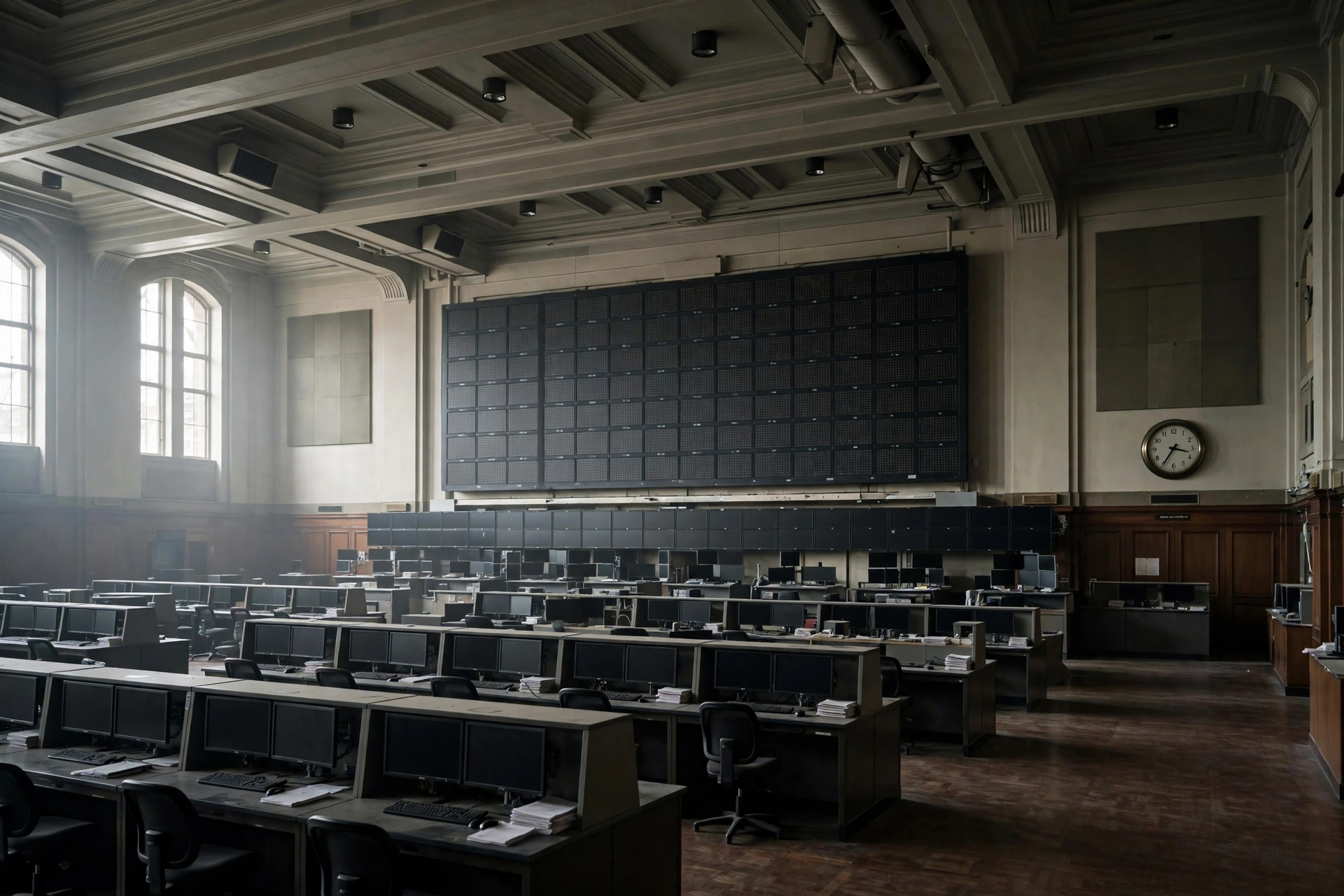
KARACHI: Buy a heavily traded bank share on the Pakistan Stock Exchange and your order fills in seconds, a few paisas from the last price. Buy an obscure small company and you may find no seller at all — or a single offer far above the last trade, for a quantity smaller than your order. The difference between those two experiences is liquidity, and the professionals paid to manufacture it where it would not otherwise exist are market makers. Liquidity is the least visible and most consequential property of any stock: it decides what it really costs to enter and exit, how honest the quoted price is, and whether your paper wealth can become money when you need it. This guide explains how liquidity works on the PSX, what market makers do and why they are paid to do it, and why so many listed counters barely trade — closing the series that began with short selling and futures.
Liquidity, defined in terms of your money
Market professionals define liquidity through three qualities. A liquid share trades in depth: substantial quantities are available near the current price, so an ordinary order does not move the price against itself. It trades with tightness: the gap between the best buying price (the bid) and the best selling price (the offer or ask) — the bid-ask spread — is small, so entering and immediately exiting costs little. And it trades with resilience: after a large order disturbs the price, new buyers and sellers quickly refill the book and prices return to reflecting value rather than the disturbance. An illiquid share fails all three tests, and the failures compound: wide spreads tax every trade, thin depth means your own order becomes the price move, and stale quotations mean the "last traded price" on your screen may be hours or days old — information about the past displayed as if it were the present.
The costs are easy to underestimate because most of them never appear on a contract note. Suppose, purely for illustration, a share's market shows a bid of Rs 90 and an offer of Rs 100 — a spread of Rs 10 around a midpoint of Rs 95, or roughly ten percent. Buy at the offer and sell immediately at the bid and you have lost about ten percent with the share "unchanged", before commission. An institution trading a blue chip with a spread of a few paisas loses almost nothing the same way. Over a portfolio's life, this invisible toll — paid by small-cap investors on every round trip — can rival or exceed all visible commissions, which is why our companion guide on why trading costs matter treats spread as a first-class cost, and why a share can be a reasonable long-term holding and a terrible trading vehicle at the same time.
The order book is where liquidity lives, and learning to read it is a core market skill covered in depth in the forthcoming guide to reading the order book. For now, hold the picture: bids stacked below, offers stacked above, the spread between the best of each, and quantities that tell you how much of the visible interest is real depth and how much is a single small order wearing a price like a costume.
What market makers actually do
A market maker is a firm — in Pakistan's framework, a licensed participant operating under exchange rules and agreements, typically a brokerage or dedicated trading firm — that commits to quote two-way prices in an assigned security: a bid at which it will buy and an offer at which it will sell, for specified minimum quantities, for a specified portion of the trading day. That commitment transforms a security's market. Instead of waiting for a natural counterparty to appear, an investor can almost always trade — with the market maker. The market maker earns the spread between its bid and offer across many trades, and manages the risk of the inventory it accumulates in the process: buying shares it did not particularly want, because quoting was its job, then hedging, working the position off, or holding it within strict limits.
Market making is a business, not a public service, and its economics explain both its benefits and its limits. Revenue comes from the spread and, in many market designs, from exchange incentives — fee arrangements that reward firms for supplying dependable quotes, particularly in securities the exchange wants to develop, such as exchange-traded funds, where market makers are integral to the product, as our ETF guide explains. Costs and risks are inventory losses when prices gap — a market maker obliged to keep bidding through bad news buys all the way down from sellers who know more that morning than it does — plus capital, technology and compliance. Rational market makers therefore quote wider and smaller in risky, illiquid securities, and may step back within the limits of their obligations in extreme volatility. The quotes you see in a quiet PSX small-cap are not evidence of a conspiracy or a failure; they are the price of immediacy in a security where immediacy is genuinely expensive to provide.
Designated market making has been applied selectively on the PSX — for ETFs and, under various programmes and frameworks over time, for designated securities and government instruments — rather than as a universal obligation covering every listed share, as in some specialist-driven markets. The exact arrangements, eligible securities, quoting obligations and incentives are set in PSX rules and market making agreements that change over time, and the absence of a market maker in a given ordinary share is the default condition of the PSX's order-driven market, not an exception. In that default condition, liquidity is supplied by whoever shows up: institutions, day traders, other investors. In the largest companies, that crowd is deep and self-sustaining. Everywhere else, it is weather.
Why so many PSX shares barely trade
The structural causes stack up. Begin with free float: the shares actually available to trade. Many Pakistani listed companies are controlled by sponsor families or groups holding large, static stakes; add strategic holders and government holdings, and the tradable residue of some companies is a small fraction of their capital. A company can have a large market capitalisation and a tiny effective market — few shares, changing hands among few people, which is why float-adjusted thinking matters when judging whether a price means anything.
Add the shape of the investor base. Pakistan's market has historically been dominated by retail activity and episodic foreign flows, with a comparatively small domestic institutional core of mutual funds and insurers relative to the economy's size; institutions concentrate, for their own liquidity reasons, in the same large names, leaving the tail of the market thinner still. Add tick sizes and price limits: daily price limits that protect against disorderly moves can also lock an illiquid share at its limit for sessions at a time, with queues and no trades, so adjustment happens in steps rather than continuously. Add information scarcity: shares with no analyst coverage and infrequent news give outsiders no reason to quote tight markets — uncertainty widens spreads as surely as risk does, the same force that makes the GEM Board a wide-spread habitat by design. And add simple arithmetic of attention: with hundreds of listed companies and finite trader capital, order flow pools where order flow already is. Liquidity attracts liquidity; its absence repels it. The rich counters get richer.
How illiquidity distorts prices — and tempts manipulation
In a deep market, price is a consensus with millions of rupees behind it. In a thin market, price is an anecdote: the last small trade, possibly between related parties, possibly engineered. Illiquid counters can sit motionless for days and then jump by their daily limit on trivial volume, producing charts that look dramatic and mean almost nothing. Valuation becomes treacherous: multiplying the last price by all shares outstanding gives a market capitalisation that no one could actually realise, because attempting to sell even a fraction of the float would collapse the price. Index providers and funds know this, which is one reason index eligibility turns on liquidity criteria as well as size, as our guide to index rebalancing explains.
Worse, thinness is an invitation. The pump-and-dump pattern — accumulate quietly, promote loudly, distribute into the excitement — requires a market where modest buying moves prices and modest promotion finds buyers; illiquid small shares are its natural habitat, and circuit breakers and surveillance are the exchange's countermeasures rather than a cure. For the ordinary investor, the defence is recognition: a share that "always rises" on tiny volumes, promoted in tips and group chats, with a float you could corner from a savings account, is not undiscovered value. It is a liquidity trap with marketing.
A practical liquidity checklist for any PSX share
Before buying anything beyond the obvious large names, run five checks, all from public market data. Daily traded value: average the value of shares traded over the last month or quarter — not the best day, the typical day — and compare it with the size of the position you might one day need to sell; if your exit alone is several days' normal volume, you are the market. Spread: observe the bid-ask spread at several points across several sessions, and express it as a percentage of price; treat a persistent wide spread as a standing charge on the investment. Free float and shareholding pattern: company disclosures show how much is actually in public hands. Trading frequency: count zero-trade days; a share that does not trade on many days cannot be sold on the day you choose. Order book depth: look beyond the best bid and offer to the quantities stacked behind them. Then act on what you find: use limit orders in anything thin, stage entries and exits, size positions so a delayed exit is an inconvenience rather than an emergency, and demand a genuine fundamental bargain as compensation when you accept illiquidity knowingly — professionals call it the liquidity premium, and they collect it because they are paid to wait.
There is a hopeful side to end on. Liquidity is not a fixed trait of the PSX but an outcome that deepens as participation broadens: more retail accounts through simpler onboarding, more institutional savings channelled through funds and pensions, market making extended where it pays, and instruments such as ETFs that pool flow into liquid baskets all push the same direction. Aktzien, the app being built for Pakistan, plans to offer low-cost, fractional access designed to bring more small investors into the market's documented core — every new participant is, among other things, a little more liquidity for everyone else. Market arrangements, designated programmes and quoting obligations change over time, so check current PSX rules and market data before acting on any general description. This article is educational content, not financial advice.
Investors should also know that liquidity is seasonal and event-driven, not a fixed rating stamped on a share. It drains in the nervous days around budgets, monetary policy announcements and political shocks, when quoting tight prices becomes dangerous for everyone, and it floods back when confidence returns — foreign buying episodes have historically deepened the top of the PSX book within weeks. It differs within the day, too, generally firmest in the active middle of the session and thinnest at the open, when overnight news is still being digested, and in the final minutes. None of this changes the checklist above; it changes the reading of any single day's evidence. Judge a share's liquidity the way you would judge its earnings: over a period, through a cycle, and with special suspicion of the best-looking single observation.
Key takeaway: liquidity — depth, tight spreads and resilience, supplied by the crowd in big names and by committed market makers where programmes exist — decides your real cost of trading, and on the PSX it must be checked share by share, because many counters barely trade at all.