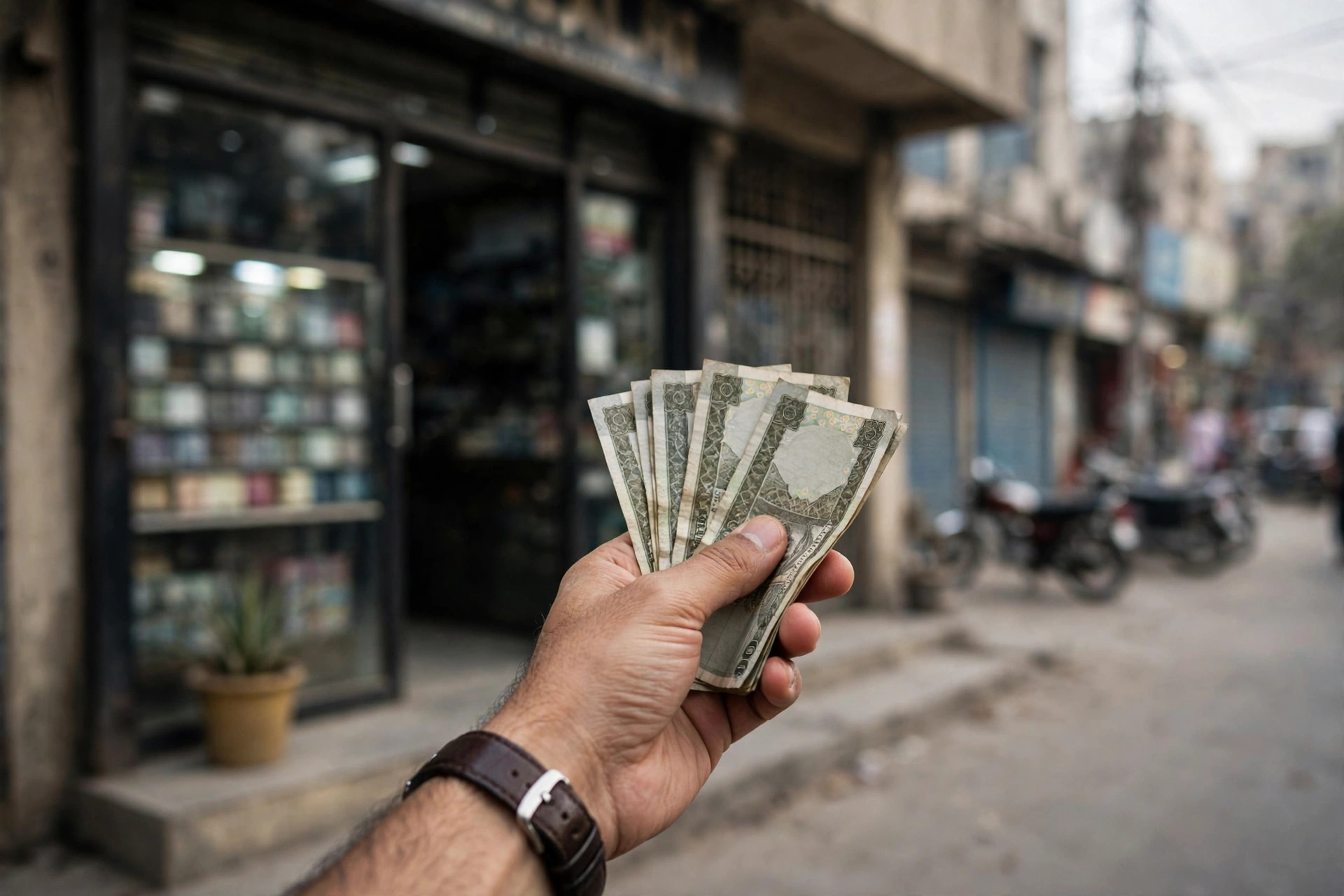
KARACHI: Somewhere in Riyadh, a construction supervisor finishes a shift and sends part of his salary to Multan. In Dubai, a driver tops up his mother's account in Gujranwala. In London, a doctor funds a sister's university fees in Islamabad. Multiply those transfers by millions of workers and twelve months, and you get one of the largest financial flows in Pakistan's economy — workers' remittances, a river of money that rivals the country's entire goods exports and quietly decides whether the rupee has a calm year or a crisis. This is how that river flows, what feeds it, and what can make it run low.
What remittances are, precisely
Remittances are transfers of money by Pakistanis working abroad to recipients at home — overwhelmingly their own families. The State Bank of Pakistan compiles the official statistics from banks and exchange companies, which report the inflows arriving through formal channels. In SBP's balance-of-payments accounts, these inflows sit in the current account as secondary income, directly offsetting the trade deficit: Pakistan buys more goods from the world than it sells, and remittances cover much of the gap. When economists say Pakistan "finances" its imports, they usually mean some blend of exports, remittances and borrowing — and of the three, remittances are the only one that arrives without creating a debt or requiring a product to be sold.
The geography follows the diaspora. The Gulf states — Saudi Arabia and the United Arab Emirates above all — host the largest share of Pakistani workers, many in construction, transport, retail and services; the United States, United Kingdom and other Western countries contribute smaller headcounts but higher average incomes, and therefore larger average transfers. This mix means remittance flows respond to two different weathers at once: Gulf labour markets and oil-driven construction cycles on one side, Western employment and exchange rates on the other.
How a transfer actually travels
The plumbing has been transformed within a generation. The traditional route — cash carried by a travelling relative, or informal value transfer — has steadily given way to formal channels:
- Bank transfers from an overseas account to a Pakistani bank account, increasingly instant and app-based, with the amount converted into rupees at the interbank-linked rate the receiving bank applies.
- Exchange companies and money-transfer operators, the storefronts and apps familiar in every Gulf city, paying out in cash or to accounts and mobile wallets in Pakistan.
- Mobile wallets and home-remittance accounts in Pakistan, which let recipients in small towns receive funds without a bank branch visit — a genuine inclusion story, since the recipient is very often a woman managing the household budget.
- Roshan Digital Accounts (RDA), the State Bank's channel that lets overseas Pakistanis open Pakistani bank accounts digitally and hold funds, invest in government securities and the stock market, and transfer with full documentation — our learning library has a dedicated RDA guide.
Two prices hide inside every transfer, and savvy senders watch both: the fee charged by the operator, and the exchange-rate margin — the gap between the rate applied to your transfer and the interbank rate. On large transfers the margin usually costs more than the fee, which is why "zero fee" offers deserve a calculator, not applause.
The shadow channel: hawala, hundi and the grey market
Running beside the formal system is the ancient one: hawala or hundi, trust-based networks in which a sender pays an operator abroad and a counterpart in Pakistan pays the family — no money crosses a border, balances are settled later through trade or reverse flows. It survives because it can be fast, familiar and, crucially, because it sometimes pays a better rupee rate than banks do. That happens when the official interbank rate is held away from the rate the open market would set: a gap opens, and informal operators arbitrage it. The sender gets more rupees per dirham; Pakistan's official reserves get nothing, because the dollars never enter the banking system.
This is why remittances statistics are partly a story about exchange-rate policy. When the gap between interbank and open-market rates is small and formal channels are cheap and fast, flows come home through banks and the SBP counts them. When controls or distortions widen the gap, measured remittances can fall sharply without workers sending any less — the money simply changes road. Periods of tight currency management in Pakistan's recent history have demonstrated the pattern clearly, and the subsequent clean-ups — narrowing the gap, incentivising formal channels, cracking down on grey-market dealing — have shown the flows returning. The lesson generalises: remittances are loyal to families, not to channels; policy decides which channel they use.
What remittances do inside Pakistan's economy
Follow a monthly transfer into a household in, say, Faisalabad, and its economic life fans out. The immediate uses are consumption and security: food, school fees, healthcare, rent and debt repayment. Then come the lumpy investments that transfers famously finance — a plot of land, a house extension, a motorcycle, a daughter's wedding, seed capital for a small shop. At national scale, these billions of private decisions do several jobs at once:
- They stabilise the external account, supplying dollars that pay for fuel and machinery imports and rebuild the reserves discussed in our policy rate explainer.
- They reduce poverty directly, with studies of remittance-receiving households consistently showing higher spending on education and health — human-capital investment that never appears in any ministry's budget.
- They smooth shocks: when Pakistan's economy contracts, workers abroad often send more, because their families need more — making remittances partially counter-cyclical, unlike foreign portfolio investment, which flees at the first sign of trouble.
- They feed banks and builders: deposits swell in remittance-heavy districts, and construction — the classic destination of Gulf earnings — employs millions more at home.
The critiques are real and worth hearing. Heavy remittance dependence can appreciate the real exchange rate and dull the urgency of export reform — a mild national version of "Dutch disease". Consumption-led inflows can fund imports rather than investment. And a generation's talent working abroad is a brain drain as well as a balance-sheet gain. Honest analysis holds both truths: remittances are a lifeline Pakistan did not design and cannot afford to scorn, and a symptom of an economy that does not create enough opportunity at home — the tension our current account explainer explores in full.
What makes the flow rise or fall
- Emigration itself: the number of Pakistanis leaving for work each year — recorded through the Bureau of Emigration — is the flow's headwaters; strong Gulf hiring today is strong remittances for a decade.
- Host-country conditions: oil prices (through Gulf construction and government spending), employment markets in the West, and immigration and labour policies from Riyadh to London.
- The exchange-rate gap between formal and informal channels, as above — the single most policy-sensitive factor in the short run.
- Incentives and friction: fee subsidies, prize schemes, mobile-wallet integration and RDA-style products all nudge senders formal; documentation burdens and slow payouts nudge them back.
- Seasonality and faith: flows reliably swell around Eid and Ramadan and during family events, a rhythm banks plan liquidity around.
- Confidence: in crisis months, some senders accelerate transfers to beat feared depreciation, while others hold dollars abroad waiting for stability — confidence cuts both ways, which is why remittance data is read as a sentiment gauge as much as a statistic.
Reading the monthly number like an analyst
The SBP publishes remittance inflows monthly, with breakdowns by source country and channel. Read it the way you would read rainfall: in twelve-month totals rather than single months (seasonality is strong), against the trade deficit it is offsetting, and alongside the emigration data that predicts its future. A rising trend with a narrow exchange-rate gap is structural good news; a falling trend with a widening gap is usually a plumbing problem, not a diaspora problem. And for the numbers themselves, always go to the SBP's own releases — remittance figures are revised, and third-party summaries age badly. This article is educational content, not financial advice: its subject is a flow of family love measured in dollars, and understanding it is understanding Pakistan's economy at its most human — the same diaspora whose investment options, from RDA to the PSX, the Aktzien guides exist to explain.
One transfer, two prices: a worked example (illustrative)
Make the channel choice concrete with round invented numbers. A worker in Dubai sends AED 1,000 home. Through a bank-linked app offering the interbank-linked rate of, say, Rs 76 per dirham with a small fee, the family might receive about Rs 75,500 after charges. Through an informal operator quoting Rs 79 per dirham — possible only when the informal market prices the dirham above the official channel — the family might receive Rs 79,000. The extra Rs 3,500 is real money to that household, roughly a week of groceries; no lecture on patriotism outbids it, and this is why economists insist the durable fix is not enforcement alone but an exchange-rate and payments system in which the formal quote is the best quote. Note also the sender's other comparison: two formal providers with identical fees can deliver different rupee amounts because their conversion margins differ — the delivered amount, not the advertised fee, is the only honest comparison, a habit worth forming for anyone in the diaspora reading this.
Remittances beside the other flows
It helps to set remittances next to Pakistan's other dollar sources, because their personalities differ. Exports must be produced and sold competitively every year — the subject of our exports explainer — and they bring dollars with factories and jobs attached. Foreign direct investment arrives in lumpier, project-sized pieces and stays for years. Portfolio flows into shares and bonds are the fastest money in and the fastest out. Borrowing — Eurobonds, multilateral loans, friendly deposits — fills gaps at a price and must be repaid with interest. Remittances alone combine scale, stability and zero repayment obligation, which is why every Pakistani economic plan of the last four decades has courted the diaspora, and why schemes from prize bonds for overseas Pakistanis to the RDA keep returning in new packaging. The strategic catch completes the picture: the countries that converted remittances into lasting prosperity are those that also made it attractive for the diaspora to invest — in businesses, property and markets at home — rather than only to consume. That conversion, from family support to national capital formation, is the unfinished chapter of Pakistan's remittance story, and it is the chapter platforms being built today, Aktzien among them, hope to make easier to write.
The household ledger: what the statistics cannot see
Behind the national aggregates sit decisions no survey fully captures. Remittances decide whether a family's daughter stays in school or leaves it, whether a father's illness is treated at a private clinic or endured at home, whether a family's savings sit in a bank, under a mattress in dollars, or in a plot whose papers are in a steel trunk. They also carry obligations and frictions: the sender's say in how money is spent, the exchange-rate losses quietly absorbed, the years of family separation priced into every transfer and never itemised. Economists reach for phrases like "secondary income credits"; the lived reality is a parallel welfare system, privately funded and transnational, that Pakistan's families built for themselves while formal safety nets lagged. Any reading of the SBP's monthly chart that forgets this — that treats the line as merely a financing item — has missed the phenomenon itself, and with it the reason the flow has proven so durable: it is not investment sentiment. It is duty, love and rent, arriving monthly, in foreign currency.
One more measurement caution completes the picture: the SBP's figures capture formal flows, and estimates of informal flows vary widely by method. Treat any precise claim about the grey market's size — in either direction — as an estimate wearing a suit, and anchor your reading in the formal series and the exchange-rate gap that drives money between the two roads.
Key takeaway: remittances are Pakistan's most reliable dollar inflow — earned by millions of workers abroad, spent on family needs at home — and whether they arrive through banks or back channels depends mainly on the exchange-rate gap and how easy formal sending is.