KARACHI: Drive north from Karachi toward Peshawar, or fill up anywhere in Punjab and Khyber Pakhtunkhwa, and the green-and-red pumps of Attock Petroleum are part of the roadside furniture. Attock Petroleum Limited — APL — is the fuel retailer of the Attock Group, the century-old oil group that also explores for crude through Pakistan Oilfields and refines it through Attock Refinery. APL was incorporated on 3 December 1995, licensed as an oil marketing company in February 1998 — only the fourth OMC licensed in Pakistan at the time — and listed on the stock exchange in March 2005. From its head office at Attock House in Morgah, Rawalpindi, it runs a nationwide business: hundreds of retail pumps, bulk sales to industry, the armed forces and power producers, aviation fuel infrastructure, lubricants, LPG and liquefied petroleum supply chains. It is one of the leading names among PSX oil marketing companies and a KSE-100 constituent. This profile explains what an oil marketing company actually does, how APL came to sit inside Pakistan's only fully integrated oil group, and how money is made — and sometimes lost — selling a product whose price the company does not set.
The Attock inheritance
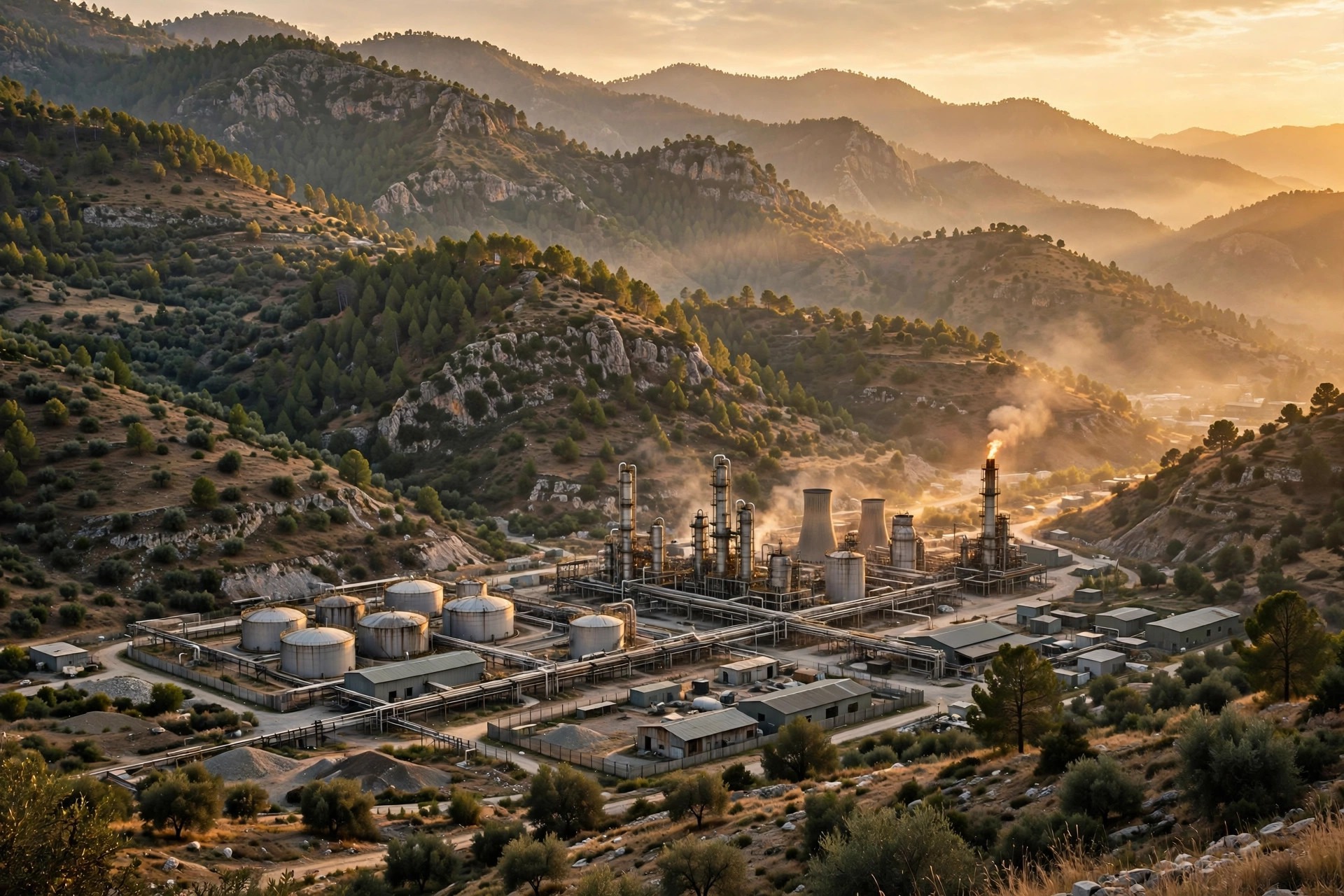
APL is a young company with an old bloodline. Its sponsor group begins with the Attock Oil Company, incorporated in England on 1 December 1913, which made Pakistan's first oil discovery at Khaur in the Attock district in 1915 and started refining at Morgah in 1922. A century later the group spans the whole oil chain: exploration and production through Pakistan Oilfields, refining through Attock Refinery (established as a separate company in 1978), and — the missing downstream piece for most of that century — marketing. APL was created to be that piece: the group's own route from refinery gate to motorist's tank.
The sponsorship structure reflects the group's history. APL's major shareholders have included Pharaon Investment Group Limited — the vehicle of the Pharaon family, the group's international sponsors — holding about 34 per cent, and Attock Refinery itself holding roughly 22 per cent, with Pakistan Oilfields also among the significant holders, according to the company's published shareholding pattern. That cross-holding is more than financial engineering: it welds the retailer to the refinery, so that the group captures margin at each stage of the chain and the marketing company has a captive source of product at Morgah, in the heart of its strongest market, the north.
1995–2005: licence, launch and listing
Pakistan's oil marketing was long dominated by three names — the state giant Pakistan State Oil and the local arms of multinational brands. The licensing of new OMCs in the 1990s opened the trade, and APL was among the first entrants: incorporated in December 1995 and commencing operations in February 1998 with its marketing licence. A new OMC's early life is a scramble for the two assets that matter — storage and sites. It must build or lease depots and installations around the country to hold product safely, and it must persuade dealers to build pumps under its flag on the highways and in the towns. APL built both, leveraging the group's northern stronghold first and expanding outward, and by the time of its 2005 listing on the Karachi Stock Exchange it had established itself as a credible fourth force in the market. The listing, at a strike price recorded in its IPO history, gave public investors a pure play on fuel retail inside an integrated group.
Later milestones show the business broadening beyond the forecourt. From 2012, company accounts record, APL began regular supply of JP-8 jet fuel and ground fuel to the Pakistan Air Force and the Pakistan Army — institutional business that suits a group headquartered beside the garrison city of Rawalpindi. In 2017, APL and Pakistan State Oil jointly commissioned a 10,000-tonne, hydrant-fed fuel farm at the new Islamabad International Airport — described at the time as Pakistan's first aircraft refuelling system of its kind — putting the relative newcomer at the heart of the capital's aviation infrastructure. More recently the company has added electric-vehicle charging points at selected sites, a small but symbolic hedge against the fuel transition.
What an oil marketing company does
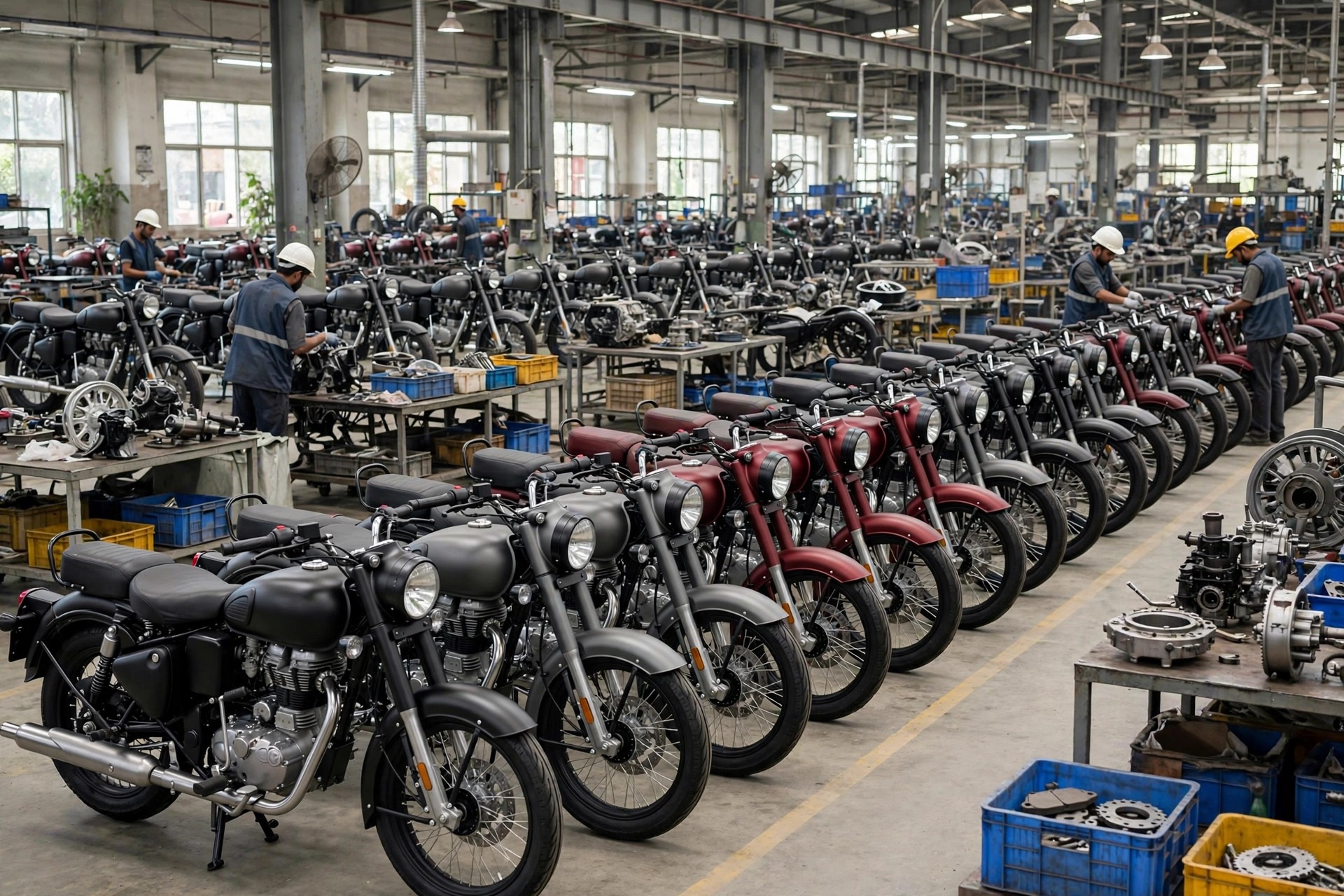
Strip away the branding and an OMC is a logistics and working-capital machine. It procures petroleum products — motor gasoline (petrol), high-speed diesel, furnace oil, kerosene, jet fuel, bitumen and lubricants — from local refineries, including its sister refinery at Morgah, and from imports arranged through the national supply system. It stores those products in depots and installations positioned around the country, then distributes them through three channels:
- Retail — the branded pump network, mostly dealer-operated, selling petrol and diesel to motorists, plus lubricants and, increasingly, convenience and charging services.
- Bulk and industrial — direct supply to factories, transport fleets, agriculture, government and semi-government buyers, and power producers burning furnace oil.
- Institutional and aviation — fuel for the armed forces and airlines, including the airport fuel-farm business.
The company also markets LPG and a range of automotive and industrial lubricants under its own branding. What it does not do is set the price of its main products: petrol and diesel prices in Pakistan are determined by a government formula administered through the Oil and Gas Regulatory Authority (OGRA), built from international product prices, exchange rates, taxes and a fixed OMC margin. The retailer's skill lies not in pricing but in volume, logistics, credit control and inventory timing.
How APL makes money: a fixed margin and a dangerous inventory
The core earning unit is the OMC margin — a regulated amount per litre on petrol and diesel, revised by the government from time to time — multiplied by the litres sold. Around that spine sit the unregulated or differently regulated earnings: lubricants, sold on brand like any consumer product; LPG; aviation and institutional contracts won on tender; and non-fuel retail. Costs are the depots, tankers and pump infrastructure, staff, and the financing of a very large working-capital cycle, because an OMC pays refineries and importers promptly while many bulk customers pay slowly.
The model's famous trap is inventory gain and loss. An OMC holds days of national fuel supply in its tanks, bought at yesterday's prices. When the government formula raises pump prices, that stock becomes more valuable overnight — an inventory gain that can dwarf the month's honest margin. When prices fall, the reverse happens just as mechanically. This is why OMC results, APL's included, swing violently in periods of volatile oil prices, and why careful readers separate the underlying margin-and-volume business from the inventory weather. A second structural pressure is the sector's receivables and cash cycle, cousin to the circular-debt problems elsewhere in Pakistan's energy chain: slow-paying institutional customers and price-differential claims due from the government can trap an OMC's cash for months. Our sector guide to oil marketing stocks compares how the listed OMCs handle these shared mechanics.
APL's place in the market and the group
APL's own reporting has described it as the country's second-largest oil marketing company by market share in recent years, with a share around a tenth of national product sales — treat the precise ranking as the company's characterisation of a moving market, but the substance is clear: below the state giant PSO, APL is among the leaders of the chasing pack, and disproportionately strong in the north, near its refinery and its institutional heartland. Its vertical integration is genuinely distinctive — company materials call it the only OMC in Pakistan backed by a fully integrated group covering exploration, production, refining and marketing — which gives it supply security in shortages and a group-level view of the whole barrel's economics.
For the KSE-100, APL brings energy-sector weight outside the exploration names: its drivers — fuel demand, regulated margins, inventory cycles — rhyme with, but are not identical to, those of its refinery sibling Attock Refinery (ATRL), whose profile tells the Morgah story from 1922. How companies of this size enter the benchmark is explained in our guides to the KSE-100's calculation and market capitalisation.
The forecourt business, up close
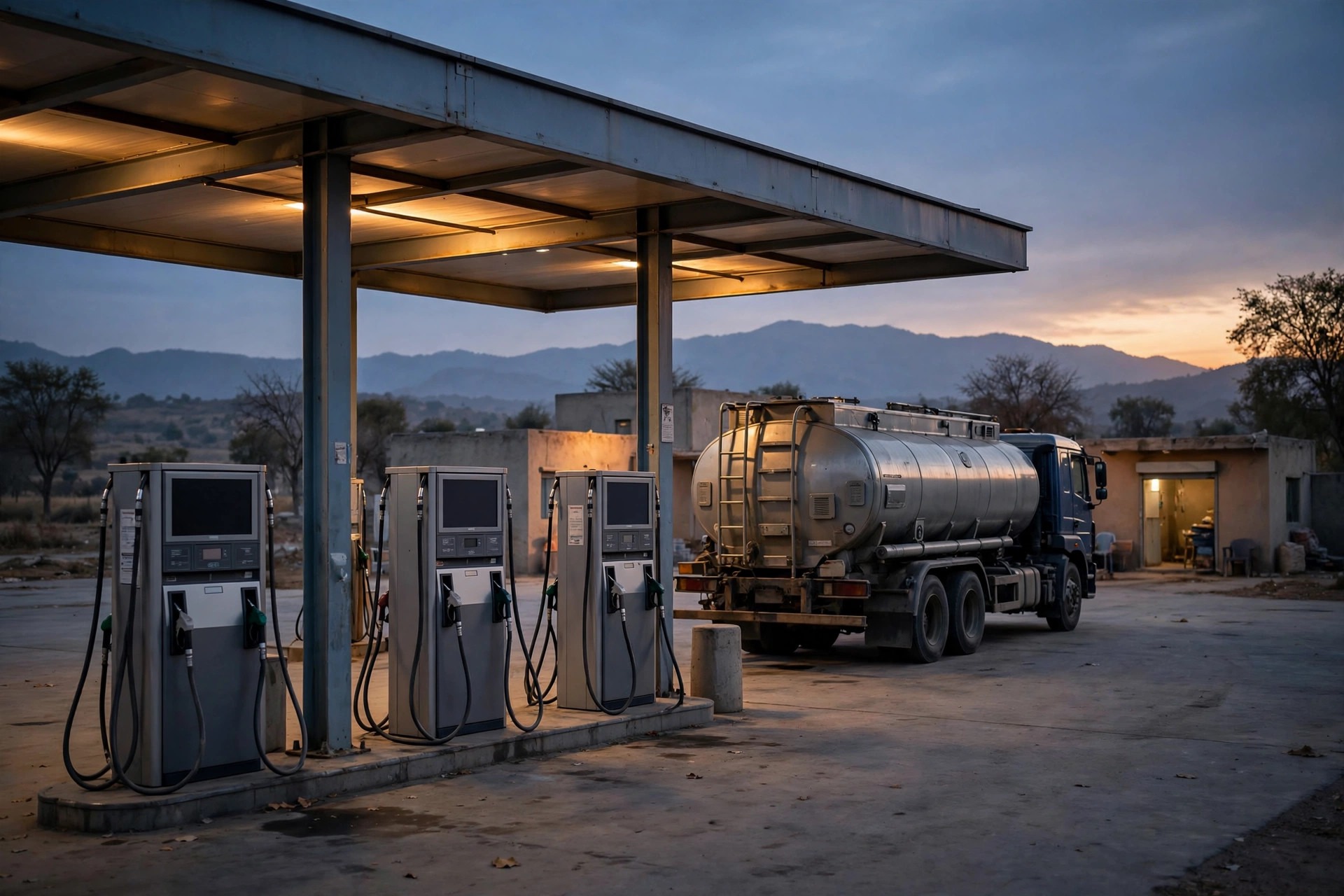
It is worth pausing on the pump itself, because the economics of the network explain much of the strategy. Most APL-branded stations are operated by dealers who invest in the site and earn their own regulated dealer margin, while APL supplies the fuel, the brand, the standards and the lubricant shelves. A good site — a highway junction, a truck corridor, a growing housing colony's edge — is contested ground, and OMCs compete for dealers with signage, supply reliability and support rather than price, which is fixed. Inside the forecourt, the profit pools are quietly shifting: fuels bring the traffic, but lubricants, shops, car washes and now EV charging carry the margins a fixed per-litre fuel commission cannot. APL's investments in charging points and its institutional contracts — the airport fuel farm, defence supply — are all variations on one theme: sell energy services where the regulated litre is only the beginning of the customer's value.
The other underappreciated asset is storage. Depots and installations are expensive, permitted, safety-critical infrastructure that cannot be improvised; an OMC's tankage map is effectively its licence to operate in each region. APL's decades of building and leasing that footprint, anchored on the pipeline-fed north and extending to installations across the country, are a barrier a new entrant would need years and heavy capital to replicate — one reason the OMC sector's membership changes so slowly, and why the 1998 newcomer is now part of the establishment it once challenged.
That storage map has been deliberately extended in recent years. Company reporting describes the Shikarpur bulk oil terminal being commissioned, new terminals at Sahiwal and Daulatpur completed and licensed by OGRA in December 2019, a major expansion at the Machike terminal, and construction progressing on a terminal at Port Qasim in Karachi to handle import cargoes at the port. APL has also completed multigrade connectivity with the White Oil Pipeline at Shikarpur and Machike, allowing both high-speed diesel and motor gasoline to be received by pipeline rather than relying only on road tankers — a quieter, safer and cheaper way to move the north's fuel.
Lubricants deserve a closer look for the same reason. APL blends its range at an automatic batch blending facility, mixing base oils with additives, and sells diesel-engine oils under its Gold family, petrol-engine oils under the HiDrive name, and industrial hydraulic, gear and turbine oils for factories and fleets. Unlike the regulated litre at the pump, a lubricant is a branded product: the customer chooses it, the margin is set commercially rather than by formula, and repeat purchase depends on trust built at workshops and parts shops as much as at APL's own forecourts.
Geography, finally, is strategy. APL's centre of gravity in the north — near the Morgah refinery, the federal capital and the cantonments — gives it shorter supply lines and denser institutional relationships than rivals whose strength lies in Karachi and the south. National volume tables can mask that regional structure: a company can be a strong number two in its heartland while still building in Sindh and Balochistan. Followers who map the company's depot and retail additions province by province get a truer picture of its ambitions than the headline share alone provides — and a reminder that in fuel retail, as in most Pakistani businesses, the map is the strategy.
What followers of APL watch
The monthly industry sales numbers published for the OMC sector are the first port of call: petrol and diesel volumes, and APL's share of them, reveal demand and competitive position in near-real time. Second, the regulated margin itself — every government revision of the per-litre OMC margin moves every retailer's earnings simultaneously, and APL's volume base determines its slice. Third, inventory effects: followers try to strip gains and losses out of reported profit to see the underlying business, especially after sharp price changes. Fourth, the balance sheet's cash conversion — receivables from institutions and government claims versus payables to refineries — because in this sector profit and cash are distant cousins. Lubricants growth, new pump additions and the aviation and defence contracts round out the company-specific list.
Policy risk hovers over all of it: fuel pricing in Pakistan is a political decision as much as an economic formula, and periodic debates about deregulating margins would, if enacted, rewrite the OMC model entirely. This article is educational content, not financial advice; readers who want the mechanics of regulated pricing and inventory accounting from first principles will find them in the Aktzien learning library, which is being built alongside the app itself.
Key takeaway: APL is the Attock Group's downstream arm — buying fuel from refineries including its sister at Morgah, storing and trucking it nationwide, and selling it at government-set prices for a regulated per-litre margin, with inventory gains and losses supplying the drama around that steady core.