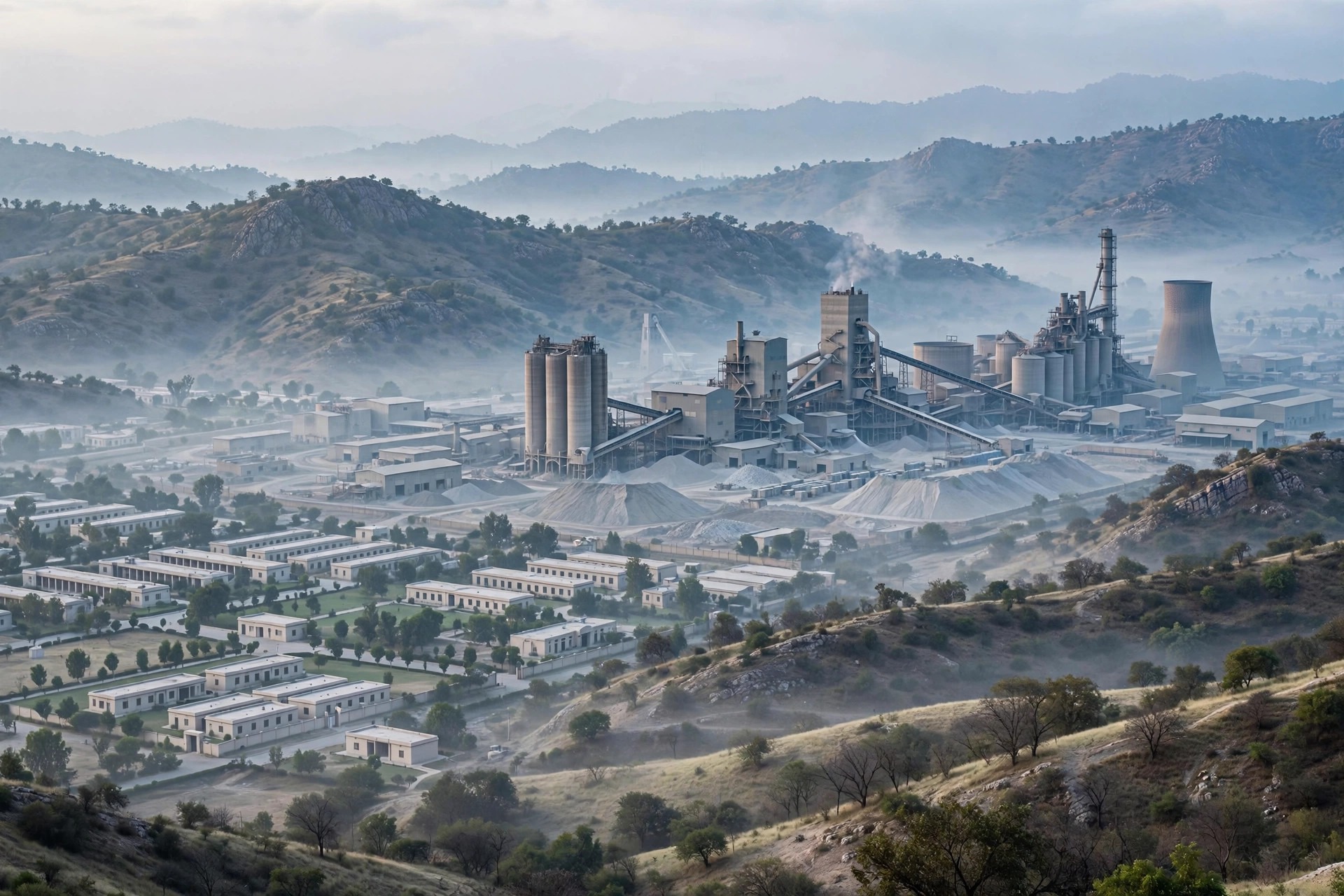
KARACHI: The cement plant at Jhang Bahtar, in the hills of Attock district not far from Wah, was built to a simple brief: make ordinary Portland cement well enough for dams, motorways and bridges to trust it. Fauji Cement Company — FCCL on the Pakistan Stock Exchange — has spent three decades outgrowing that brief. Sponsored by Fauji Foundation in 1992, in production from 1997, enlarged line by line at its home site, then transformed in the 2020s by the merger of Askari Cement and new plants at Nizampur and Dera Ghazi Khan, it now ranks — in its own and industry descriptions — as the third-largest cement manufacturer in Pakistan and the second-largest in the northern market. It is the heavy-industry sibling of the Fauji family's fertilizer giant, and a clean example of how Pakistan's cement map gets redrawn: not by greenfield romance, but by mergers between foundations.
What FCCL makes and where
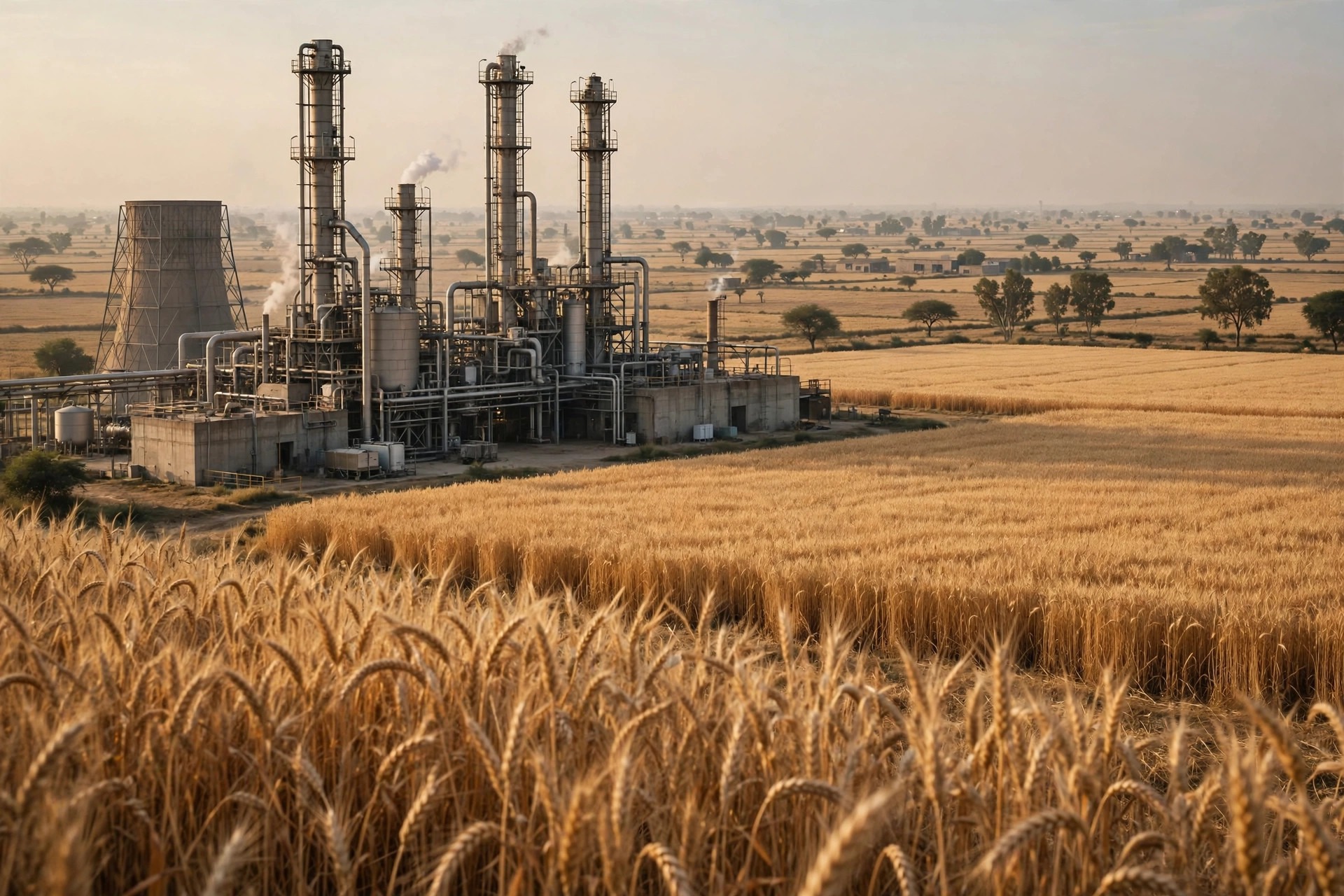
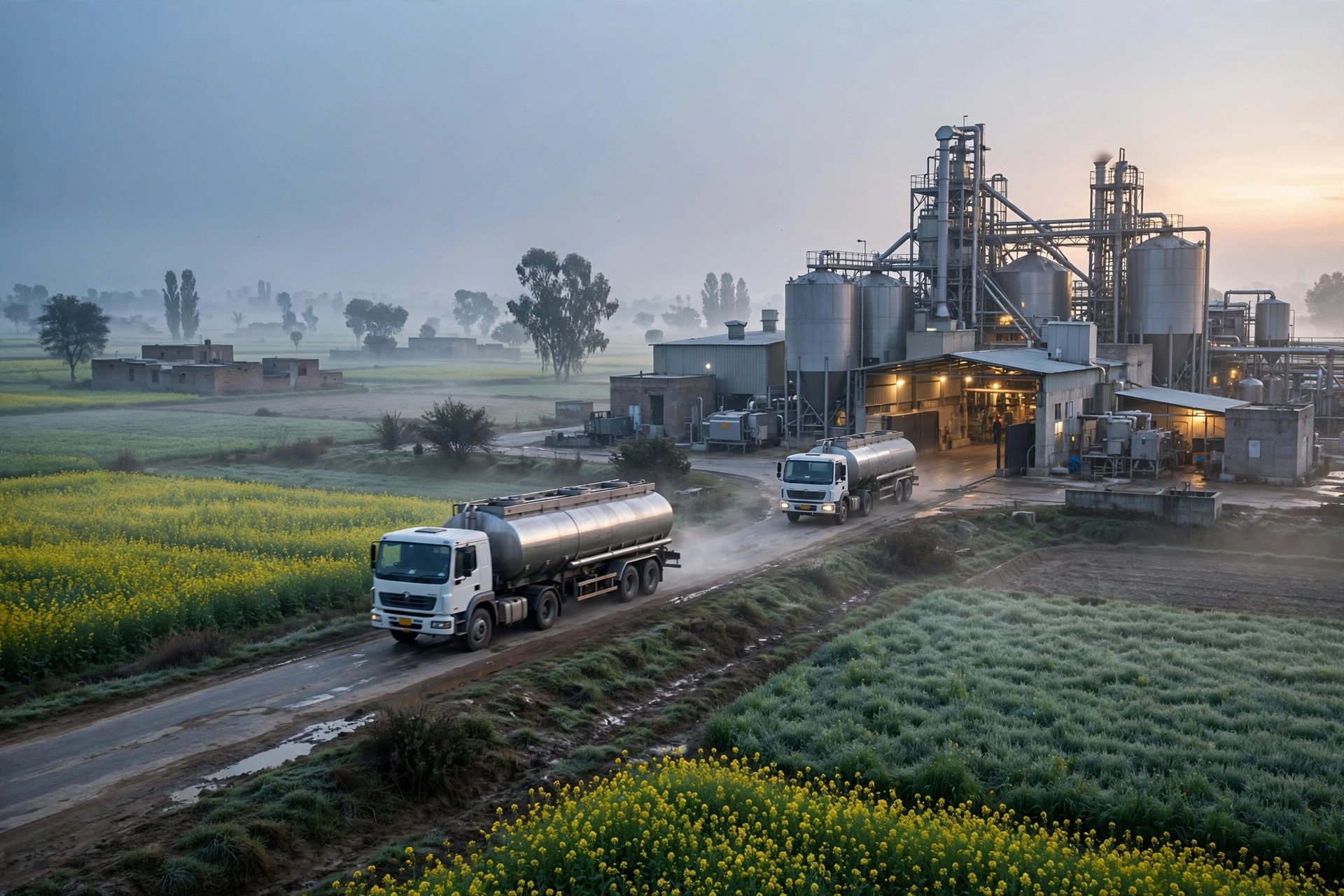
FCCL produces ordinary Portland cement and related cement types, sold in bags and bulk to dealers, contractors and mega-project builders across its territories, with a long-standing reputation — cultivated in its own reporting — for quality suited to highways, bridges, dams and large commercial structures. Its historic home is the Jhang Bahtar plant near Fateh Jang in Attock district, Punjab, within economical reach of Islamabad, Rawalpindi, Wah's industrial belt and the northern construction markets. After the Askari merger the map widened: Askari's plant at Nizampur, near Nowshera in Khyber Pakhtunkhwa, came into the fold and was then expanded, and a further expansion was developed at the Dera Ghazi Khan site in southern Punjab. The result is a multi-site northern-heavy producer in the industry mapped by our guide to cement stocks on the PSX — a guide worth reading alongside this profile, because FCCL's economics are unintelligible except against the north-zone rivals it prices against every day, including D.G. Khan Cement, itself an expansion-era neighbour at DG Khan.
Sponsored by a foundation: 1992 to 1997
Fauji Cement was sponsored by Fauji Foundation — the welfare foundation established for ex-servicemen and their families, whose industrial profits fund schools, hospitals and welfare programmes — and incorporated as a public limited company on 23 November 1992, receiving its certificate of commencement of business in May 1993. Cement was a deliberate choice: Pakistan was building, the Foundation already ran the country's emerging fertilizer champion, and a cement plant offered long-lived industrial cash flows for welfare spending. The Foundation chose its technology carefully, contracting the Danish cement-plant specialist F.L. Smidth in an agreement effective 1 January 1994 to design, build and commission a plant of about 3,000 tonnes of clinker per day; physical work began in August 1994, commissioning started in May 1997, the first clinker was produced on 26 September 1997 and cement production followed in November 1997. Company accounts of its earliest configuration describe daily capacity in the low three-thousands of tonnes — a respectable single-line plant of its time, and a fraction of what the site would become.
Growing the home plant: bigger lines, waste fuel and waste heat
The next fifteen years were spent making Jhang Bahtar bigger and cheaper to run. Capacity was raised in 2005 to about 3,700 tonnes of clinker a day. Then came a step change: a new line supplied by Germany's Polysius (ThyssenKrupp) interests — described at the time as the largest single line yet commissioned in Pakistan, at about 7,200 tonnes of clinker a day — whose production began in 2011 and carried the site's total well past 11,000 tonnes a day. Around the kilns, FCCL built the cost-saving apparatus modern cement economics demands. In 2009 it installed what it describes as Pakistan's first refuse-derived fuel (RDF) processing plant, turning hundreds of tonnes a day of Rawalpindi and Islamabad municipal waste into kiln fuel — displacing fossil fuel, cutting greenhouse-gas emissions, yielding compost as a by-product and giving two cities a disposal route for garbage. Waste-heat recovery generation followed the industry pattern of squeezing electricity from exhaust gases. Each of these projects attacked the same enemy: cement's enormous energy bill.
The Askari merger and the 2022 expansion wave
The defining transaction of FCCL's modern history was a marriage within the wider military-welfare family. Askari Cement was a subsidiary of the Army Welfare Trust — the other great ex-servicemen's welfare institution — with its plant at Nizampur. In November 2021 FCCL's board approved merging Askari Cement into Fauji Cement through a scheme of arrangement, on a share-swap basis under which Askari shareholders received FCCL shares (the reported ratio was five FCCL shares for each Askari share). Two welfare foundations thus pooled their cement assets into one listed company instead of competing with each other for the same northern demand — a consolidation logic Pakistani cement, with its chronic overcapacity, regularly rewards.
On the enlarged base, FCCL immediately built. In October 2022 it brought a third production line at Nizampur into operation — a line of about 6,500 tonnes of clinker a day, adding roughly 2.05 million tonnes of annual capacity, in a project reported at about Rs 27 billion, financed with a mix of debt and equity. A matching expansion of about 2.05 million tonnes at Dera Ghazi Khan followed, targeted for completion around 2024. The combined effect, in industry descriptions, lifted FCCL to second place in the northern market and third in the country — the "national footprint" its recent reporting claims, anchored from Khyber Pakhtunkhwa through Attock to southern Punjab.
How FCCL makes money
The cement equation is shared across the sector: revenue is dispatches multiplied by the retention price per bag after taxes and trade margins; costs are dominated by fuel — imported, local and Afghan coal, plus RDF and other alternatives — electricity, raw materials and the heavy fixed cost of kilns that must be fed whether demand is strong or not. FCCL's specific levers follow from its history. Its scale after the merger spreads head-office and distribution costs over more tonnes. Its fuel flexibility — coal sourcing choices, RDF, waste-heat power — defends the margin when imported coal spikes or the rupee falls. Its project franchise, built on a quality reputation with dams, motorways and bridges, supports its position in the institutional segment where price is not the only criterion. And its ownership sets its financial personality: a welfare foundation as sponsor values steady dividends to fund welfare work, while the 2022 expansions loaded the balance sheet with debt that must be serviced through the cycle — the classic cement tension between paying out and building ahead of demand.
The Fauji family around it
FCCL does not stand alone. Its sponsor sibling Fauji Fertilizer Company is the group's flagship and one of the market's largest companies; the wider Fauji Foundation portfolio spans fertilizer at Bin Qasim, food, energy and more. Cross-holdings and associated-company relationships link FCCL into that system, and its board has traditionally included figures from the Foundation's world. For investors the group connection cuts both ways: it brings sponsor strength, project credibility and a preference for orderly governance, and it means some decisions — like the Askari merger itself — are shaped by the welfare institutions' collective interests as much as by the listed company's alone. Our explainer on Pakistan's conglomerates gives the general framework for reading such family-and-foundation structures.
Reading the expansion gamble
Cement expansions are bets placed years in advance on demand that may or may not arrive, and FCCL placed two of them almost simultaneously on top of a merger. The arithmetic that justifies such a programme runs like this: a new line costs tens of billions of rupees, financed substantially with debt while interest rates in Pakistan were at historic highs, and pays for itself only if regional demand grows into the added tonnage at prices that hold. The counter-argument is written in the merger itself — combining Fauji and Askari removed a direct competitor from the northern market, and consolidation across the industry has historically been the surest route to the pricing discipline that makes expansions survivable. The DG Khan site adds a further option: sitting in southern Punjab, it can lean towards the southern market and export routes in a way the Attock and Nizampur plants cannot, softening the company's dependence on any single region's construction cycle.
There is also a technology thread worth noticing. Between the Danish first line, the German second line at Jhang Bahtar, the RDF plant burning city waste, waste-heat recovery and the newest Nizampur line, FCCL's fleet spans three decades of cement engineering in one company. Managing that spread — different vintages, different fuel appetites, different maintenance rhythms — is the unglamorous core of cement management, and the company's cost position in any given year is largely the sum of how well those vintages are run. When analysts describe a cement maker as "efficient" or "high-cost", this fleet management, plus where its quarries and customers sit, is most of what they mean.
The welfare dimension deserves one more word, because it shapes how the company talks about itself. Fauji Foundation's industrial profits are not an abstraction: they fund a nationwide welfare system of hospitals, schools and support for ex-servicemen's families, and FCCL's annual reporting sits inside that mission in a way an ordinary commercial rival's does not. Plant towns feel it directly — employment, contractor ecosystems and foundation services concentrate around Jhang Bahtar, Nizampur and the other sites — and the company's social-investment habits, from technical training in Attock district to the municipal-waste fuel project that serves two capital cities, are part of its licence to operate as much as its marketing. For the long-term reader, that is the context in which FCCL's choices — steady rather than spectacular dividends, expansion in considered waves, mergers kept inside the welfare family — make sense as a single, consistent philosophy.
Finally, place FCCL in the frame its title promises: the road from Wah. The Attock–Wah corridor is one of Pakistan's original industrial belts — ordnance, engineering, heavy machinery and the workforce culture that goes with them — and a cement plant built there in the 1990s drew on that skilled-labour inheritance. From that single corridor site, the company's centre of gravity has shifted steadily outward: west to Nizampur in Khyber Pakhtunkhwa, south to Dera Ghazi Khan, and through the merger into markets its founders never served. The footprint is national now, but the operating personality — engineering-led, quality-obsessed, foundation-owned — was formed at Jhang Bahtar, within sight of the Margalla foothills, and it still shows in how the company describes itself.
Standing back, FCCL's three decades trace the standard biography of Pakistani cement in one company: a state-era technology choice made well, a foundation's patient capital, capacity added in bold single lines, green credentials earned early through the waste-fuel plant, and consolidation when the market matured. The next chapter — digesting the expansions while the north's pricing holds — is unwritten, but the materials it will be written from are all visible in the story so far.
What investors typically watch in FCCL
- Northern dispatches and utilisation — monthly volumes against the enlarged post-merger capacity base.
- Retention prices in the north zone — the pricing discipline among northern producers, where FCCL is now a price-maker rather than a price-taker.
- Coal mix and fuel costs — the balance of imported, local and Afghan coal, RDF usage and waste-heat generation.
- Debt from the expansion wave — repayment pace on the Nizampur and DG Khan projects as interest rates move.
- Public-sector demand — development budgets, dams and road programmes that anchor institutional sales.
- Foundation priorities — dividend policy balanced against welfare funding needs and further consolidation in the sector.
FCCL's KSE-100 membership tracks its enlarged scale — the mechanics of that are in how the KSE-100 is calculated. This profile is educational content, not financial advice. Its arc is worth holding onto: a foundation's single Danish-built kiln of 1997 became, through patient enlargement and one foundation-to-foundation merger, a three-region producer — a reminder that in Pakistani cement, the map is redrawn by ownership as much as by geology.
Key takeaway: Fauji Cement grew from Fauji Foundation's 1997 Jhang Bahtar plant into a top-three national producer by expanding its home site, pioneering waste-derived kiln fuel, and merging with Askari Cement in 2021 before building at Nizampur and DG Khan.