KARACHI: Every country has a project that changes what its private sector believes is possible. For Pakistan, that project was Hub. The Hub Power Company Limited — HUBC, almost always called Hubco — was the country's first independent power producer, built in the 1990s as a huge oil-fired power station on the Balochistan coast when private generation on this scale was still a new idea. The financing was international, the politics were fierce, and the disputes that followed shaped how Pakistan writes power contracts to this day. Three decades on, Hubco is no longer one plant but a portfolio: hydroelectric power in Azad Kashmir, coal plants at Thar, a share of a major coastal coal project, and even oil and gas interests. This profile tells the history; for the tariff mechanics — capacity payments, fuel pass-through and the rest — read our companion explainer on how Hubco makes money, and consider this the story behind those numbers.
1991: a first-of-its-kind company
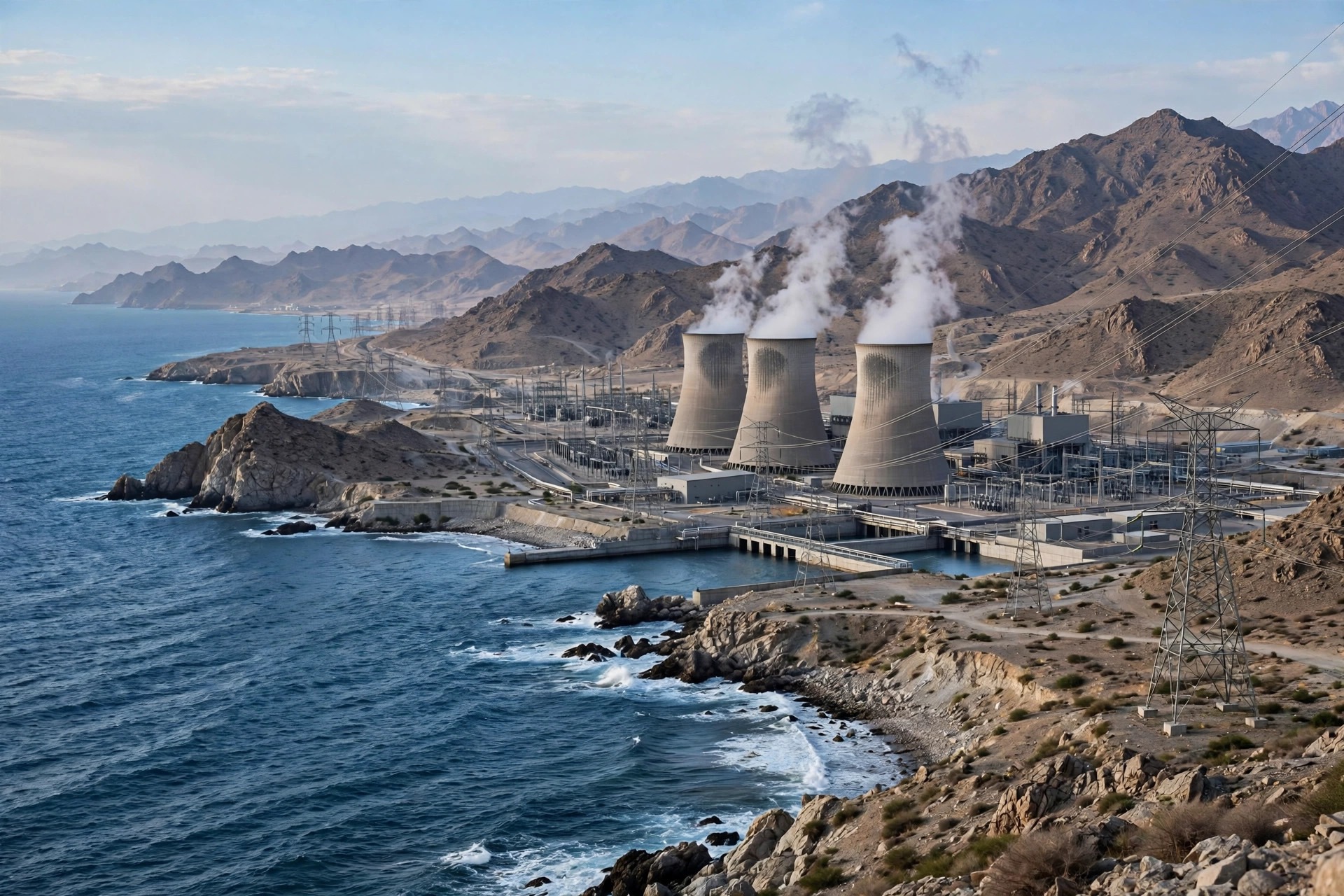
The Hub Power Company Limited was incorporated in Pakistan on 1 August 1991 as a public limited company. Its purpose was singular: develop, own, operate and maintain a power station at Hub, in Balochistan's Lasbela district near the Hub River, roughly sixty kilometres from Karachi. The project emerged from a longer policy story — Pakistan, facing chronic power shortages, had decided with international encouragement to invite private capital into generation, a sector previously dominated by the state utility WAPDA.
The scale of the financing announced the era. The project was backed by hundreds of millions of dollars in international loans and equity, with early investors including Britain's National Power, Saudi Arabia's Xenel and the American firm Entergy. Hubco raised money from global investors through global depositary receipts listed in Luxembourg, alongside a local share offering on the Karachi Stock Exchange. By the late 1990s it had become one of the largest listed companies in the country by market value — a single power station, still young, sitting near the top of the market. That fact alone tells you how starved Pakistan's market and power system both were for assets of this size.
The plant itself consisted of four oil-fired generating units with a combined gross capacity of about 1,292 megawatts — net output to the grid of around 1,200 megawatts — supplied with furnace oil by pipeline. In a system where load-shedding was a fact of life, a plant of that size was not just a business; it was national infrastructure delivered by private money, and it became the template — and the test case — for every independent power producer (IPP) that followed.
The dispute years: tariffs, allegations and renegotiation
Hubco's early history cannot be told honestly without its conflicts. The late 1990s brought a change of government mood toward the IPP programme. In 1998, parts of Hubco's power purchase arrangements were cancelled amid allegations of corruption and complaints that its tariff was too high, and the dispute escalated into international arbitration claims by its foreign investors against the state purchaser.
The settlement reached around 2000–2002 reset the relationship. Investors forgave a substantial portion of what the state utility owed, the tariff and operating arrangements were revised, and the project's expected return was reduced. The episode left marks on everyone involved: Pakistan learned that power contracts signed in one political era would be re-litigated in the next, investors learned to price political risk into Pakistani infrastructure, and Hubco itself emerged smaller in ambition but still standing — the plant kept generating, and the company kept its listing and its role at the centre of the sector. Anyone who wants to understand why Pakistani power contracts are written the way they are, with sovereign guarantees and capacity payments at their heart, should start with this chapter.
From one plant to a portfolio
The second act of Hubco's history is diversification. For its first decade and a half the company was essentially one asset; from the late 2000s it began, step by step, to become a group.
In 2008 Hubco acquired a controlling stake of about seventy-five per cent in Laraib Energy Limited, developer of the New Bong Escape hydropower project — an 84-megawatt run-of-river plant on the Jhelum downstream of Mangla Dam in Azad Jammu and Kashmir. When it began commercial operations in March 2013, it was Pakistan's first hydropower IPP, and it remains a distinctive asset in the portfolio: no fuel bill, but output that follows the river's flows.
The Narowal plant added a different kind of thermal capacity: a furnace-oil-fired station of about 225 megawatts in Punjab, which reached commercial operation in 2011 and was later held through a wholly owned subsidiary, Narowal Energy Limited. Hubco also created Hub Power Services Limited to run operations and maintenance for its plants in-house, and Hub Power Holdings Limited as the vehicle for new investments — a structure that turned a single-plant company into a platform.
The Thar turn and the China partnership
The third act is coal — specifically, Pakistan's own coal. The Thar desert in Sindh holds vast lignite reserves, long known and long undeveloped. In the 2010s, under the China–Pakistan Economic Corridor, Thar moved from geological curiosity to working mines and mine-mouth power plants. Hubco positioned itself across that story: it holds a majority stake in Thar Energy Limited, whose 330-megawatt lignite plant in Thar Block II began commercial operations in October 2022; a substantial stake in ThalNova Power Thar, a neighbouring 330-megawatt plant that followed in early 2023; and a small stake in the Sindh Engro Coal Mining Company that digs the fuel.
At Hub itself, the company partnered with China Power International in China Power Hub Generation Company, which commissioned two 660-megawatt coal-fired units at Hub in 2019 — imported-coal capacity on the same coastline as the original oil plant. Hubco holds a large minority stake in that venture. The pattern across all of these projects is the modern Pakistani IPP model: project companies with mixed Pakistani, Chinese and institutional shareholding, long-term power purchase agreements, and financing raised against the contract rather than against the sponsor alone.
Diversification has continued beyond electricity. Through a joint venture called Prime International Oil and Gas Company, Hubco acquired the Pakistani upstream business of the Italian energy group Eni, completed in late 2022 — a move that took a power company into exploration and production leases. More recently, its holdings arm has taken a stake in a venture to assemble and sell BYD electric vehicles in Pakistan. Whether those bets define the next decade is an open question, but the direction is clear: Hubco now describes ambition well beyond a single power station.
Ownership: from foreign sponsors to Mega Conglomerate
The shareholder register tells the same story in miniature. The founding foreign sponsors gradually exited: Xenel sold its stake in 2011, and National Power's successor interests were sold in 2012 to Pakistani buyers including Dawood Hercules and Allied Bank. In 2018, Dawood Hercules in turn sold its holding to Mega Conglomerate, the group associated with the Habib family of Mega Conglomerate (Private) Limited, which became Hubco's largest shareholder. A company created by British, Saudi and American utilities is today anchored by a Pakistani conglomerate with interests from cement to media — a neat summary of how Pakistan's infrastructure ownership has localised over thirty years.
How Hubco makes money — the short version
The detailed mechanics live in the companion explainer, so here is only the shape. Pakistani IPPs sell electricity to a central purchaser under long-term agreements with two broad components: an energy payment that covers fuel and variable costs when the plant runs, and a capacity payment for being available, which covers fixed costs, debt service and the investors' return. Returns under the original contracts were dollar-linked, which is why Hubco's earnings have historically moved with the exchange rate as well as with dispatch. Subsidiaries and associates contribute through dividends and share of profit, so today's Hubco result is a blend of its own plants and its stakes in Thar, coastal coal and other ventures.
Two sector shadows hang over the model. The first is circular debt — the chain of delayed payments running from consumers through distribution companies to the central purchaser and on to generators. Hubco's profits can be sound on paper while cash arrives late, and receivables from the purchaser are a permanent item to watch in its accounts. The second is contract politics: in October 2024, as part of a wider government push to renegotiate IPP terms, Hubco agreed to the early termination of the Hub plant's energy purchase agreement. The founding asset's original contract thus ended ahead of schedule, closing the circle that began in 1991 — and underlining that in Pakistan, a power contract is a living political document, not just a legal one. Our sector overview of PSX power generation stocks sets Hubco alongside the other listed generators facing the same system.
What remains after the founding contract
The early termination of the Hub plant's purchase agreement in October 2024 closed the company's founding chapter but did not close the company. The distinction matters for anyone reading Hubco today. The listed parent's earnings now rest principally on its portfolio: dividends and profit shares from Thar Energy and ThalNova as those young plants settle into operation, its interest in the China Power Hub plant, Laraib's hydro generation under its own long-term arrangements, Narowal, the services business that operates and maintains plants, and the newer oil and gas venture. In other words, the termination accelerated a transition already two decades old — from owner-operator of one famous asset to holding company of many stakes.
It also underlined the sector's central bargain. Pakistani governments, facing unaffordable electricity prices, periodically return to the IPP contracts of earlier decades and press for revision; investors, remembering the 1990s dispute and the 2024 terminations alike, price that possibility into every new project. Hubco has lived on both sides of that bargain — as the beneficiary of the original dollar-linked terms and as the counterparty asked to surrender them — which is why its announcements are read by the whole sector as signals, not just as company news. The operations-and-maintenance arm is a quieter hedge against the same risk: fees for running plants are less exposed to tariff politics than returns on owning them, and the skills involved are exportable to other owners' assets.
Finally, there is the water and vehicle frontier. Company disclosures in recent years have included a proposal to recycle Karachi's industrial wastewater for reuse — an infrastructure problem as severe as power ever was — alongside the electric-vehicle assembly venture. Neither defines Hubco yet. But a company that began by importing a power model is, characteristically, prospecting for the next infrastructure gap Pakistan cannot fill from public money alone.
Hubco's dividend history deserves a sentence of its own, because for many retail holders the shares have functioned as an income instrument as much as a growth one. Earnings from dollar-linked tariffs, in years of strong collections, funded substantial payouts; in years when circular debt trapped cash inside the system, the same profits produced receivables instead. That alternation — generous cash returns when the sector's plumbing works, patience required when it does not — is the lived experience of holding Pakistan's flagship IPP, and it is why the company's results presentations devote as much space to cash collection as to generation statistics.
What investors typically watch in Hubco
This is educational content, not financial advice, but regular readers of Hubco tend to follow a consistent checklist:
- Dispatch and load factors — how much each plant actually generates, which depends on the national merit order and fuel economics, not just capacity.
- Receivables and circular debt — the gap between billed revenue and cash collected, and any government settlement packages.
- Contract milestones — renegotiations, terminations and new agreements, which can matter more than a year of operations.
- Contributions from Thar and associates — dividends and profit shares from TEL, ThalNova and China Power Hub as they mature.
- Diversification moves — the oil and gas venture and newer interests, and whether they grow into material earnings.
Hubco's weight in the KSE-100 means these questions matter beyond its own shareholders; how index weight follows free-float market value is covered in market capitalisation explained. The company's real legacy, though, is institutional: it proved in the 1990s that private capital would build Pakistani infrastructure, survived the backlash that followed, and spent the next two decades turning one famous plant into a diversified energy group. Few listed companies carry so much of their country's economic history in a single ticker.
Key takeaway: Hubco began in 1991 as Pakistan's first IPP — a single 1,292 MW oil-fired plant financed from around the world — survived a landmark tariff dispute, and rebuilt itself into a diversified group spanning hydro, Thar coal, coastal coal and oil and gas.