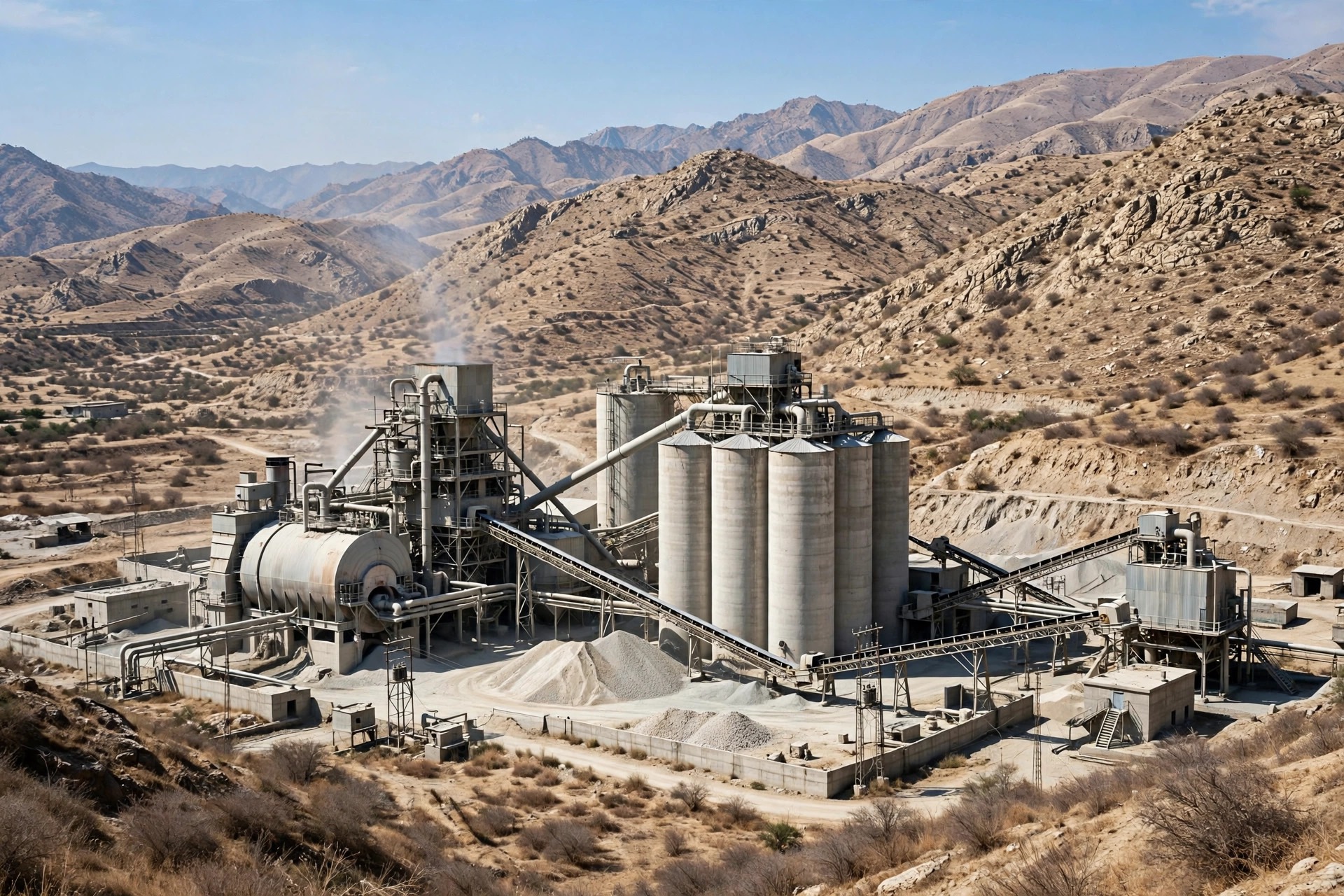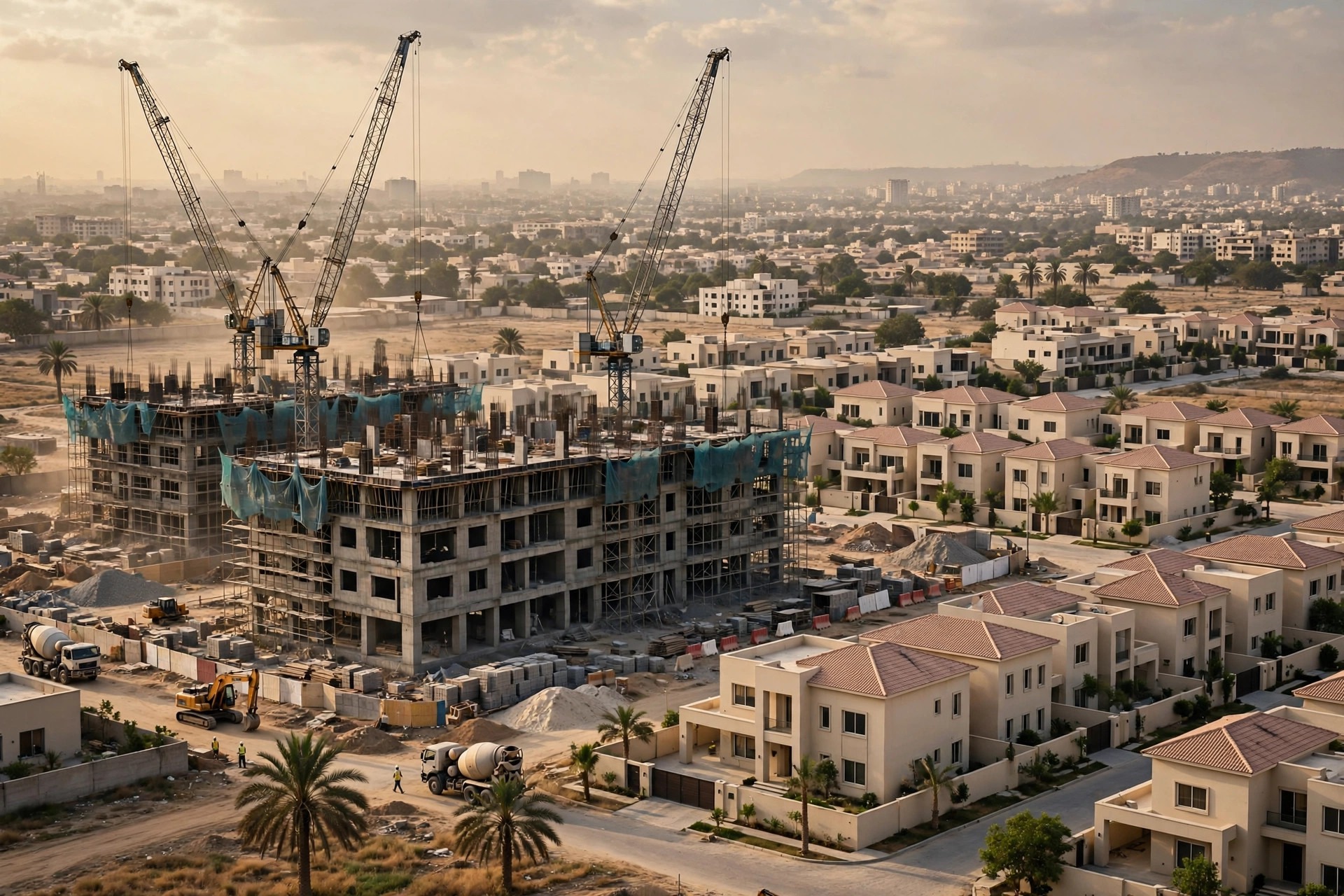
KARACHI: No company in the KSE-100 has changed its business as completely as Javedan Corporation Limited — JVDC. It began life in 1961 as a cement manufacturer, spent decades as Javedan Cement, a state-owned and then privatised plant on Karachi's north-western edge — and then, in 2010, it stopped making cement altogether. The factory was dismantled, and on its vast land bank the company began building Naya Nazimabad, a planned housing city of plots, bungalows, apartment sites and commercial areas adjoining the old neighbourhoods of Nazimabad and North Karachi. The listed shell remained; everything inside it changed. Javedan's story is therefore two stories — a mid-century industrial company, and a twenty-first-century property developer wearing its name — and it is one of the most debated corporate transformations in Pakistan's market history.
1961–1972: Valika Cement and nationalisation
The company was incorporated in Pakistan on 8 June 1961 as Valika Cement Limited, owned by the Valika family, one of Karachi's established industrial families. Its cement plant and associated mining land sat at Manghopir, on the city's expanding edge — close enough to serve Karachi's construction, with limestone-bearing land attached. In 1972, under the Bhutto government's nationalisation programme that swept up much of Pakistani industry, the company was taken into state ownership and renamed Javedan Cement Limited — the name it would carry for the next four decades.
The state era followed the familiar pattern of Pakistan's nationalised industries: the plant operated for decades as a public-sector cement producer, part of the state cement apparatus, serving a growing city from a site that each year became less peripheral as Karachi spread around it. That creeping urbanisation is the buried premise of everything that happened later. Land allotted and assembled in 1960 and 1961 for a factory and its mining leases — later company disclosures describe a holding of about 1,367 acres in total, mixing long leasehold, freehold and later allotments — was, by the 2000s, sitting inside the fabric of a megacity chronically short of planned housing. The cement business earned modest industrial returns; the land underneath it had quietly become one of the most valuable development sites in Karachi.
Privatisation and the end of cement
Javedan Cement was eventually privatised — group histories of the Arif Habib Group record its acquisition of Javedan Cement in 2006 — and control passed to private sponsors associated with the Arif Habib Group and allied investors. The new owners' assessment was the one the land values invited: the highest use of the site was no longer cement. The company ceased its cement business with effect from 1 July 2010, the plant was closed and dismantled, and management adopted an explicit diversification strategy — to develop the land as a housing scheme. In July 2011 the company changed its name from Javedan Cement Limited to Javedan Corporation Limited, formally retiring the industrial identity.
The transformation was and remains controversial, and an honest profile should say so. The privatisation price and the subsequent conversion of industrial and mining land into a housing project many times its value were publicly criticised — in the press and in commentary on the deal — as an example of state assets passing cheaply into private hands. Defenders of the project point to the development actually delivered: a large, planned, serviced housing scheme in a city where most growth is informal. Both readings are part of the record, and any investor studying JVDC should understand that the company's foundational asset carries a political history that periodically resurfaces in public debate.
Naya Nazimabad: building a city in phases
The project that replaced the factory is Naya Nazimabad — "new Nazimabad" — named for the planned mid-century neighbourhood it adjoins. The master plan was approved by the Lyari Development Authority in March 2011, with revised plans approved in 2013 and again in 2022, and building-control NOCs obtained from the Sindh Building Control Authority. The scheme spans the company's land — about 1,366 acres in project descriptions — and is being developed in phases aimed principally at middle and upper-middle-income households: open residential plots, built bungalows, sites for apartment buildings, and commercial plots, together with the roads, utilities, parks, mosques, schools and sports facilities a self-contained township requires. Development proceeded block by block; rating-agency updates describe Phase I's residential blocks as substantially developed and handed over, with later phases and apartment projects — including schemes structured with REIT participation — launched progressively into the 2020s. Subsidiaries handle township maintenance and newer development ventures, keeping the group structure aligned to a multi-decade build-out.
The sponsorship remains the Arif Habib Group: Arif Habib himself chairs the company, its registered office sits in Arif Habib Centre in Karachi, and group entities have held significant stakes. That sponsorship matters commercially — the Arif Habib name is one of Pakistan's strongest in finance and development, associated also with the Dolmen City REIT — and it matters analytically, because Javedan is best understood as the group's listed land-development vehicle rather than an independent housebuilder.
The project's physical challenges have also entered the public record. Naya Nazimabad is built around the Manghopir lake area, and during Karachi's extreme monsoon flooding of 2020 some blocks were inundated, with residents temporarily displaced — an episode widely reported at the time, which management said it addressed with drainage and disposal improvements. For a development sold partly on planned infrastructure, the episode is a standing reminder that execution quality, not land value alone, determines the project's reputation.
How a land developer makes money
Javedan's economics are those of a land bank monetised over decades, and they differ fundamentally from a manufacturer's. The core asset — land carried on the books at historical values far below development worth — is sold in slices: plots and bungalows are marketed, often on instalment plans, and revenue is recognised as development milestones and transfers complete. Development costs — roads, utilities, amenities — are the price of converting raw acreage into sellable neighbourhoods, and they are incurred years ahead of the revenue they enable. Later phases can be structured through REIT arrangements, in which land is contributed to a fund and the company participates through units and dividends rather than direct sales — a model Pakistan's market knows from the REIT discussion in property versus stocks in Pakistan.
Three features follow for readers of the accounts. First, earnings are lumpy: a phase launch can produce a surge of bookings and recognised profit, followed by quiet years of construction. Second, the balance sheet's book value understates the land's economic value by design of historical-cost accounting, so conventional ratios mislead more than usual. Third, the investment case, such as it is, rests on the pace of Karachi's housing demand, the company's ability to keep approvals and infrastructure moving, and the governance of a sponsor-controlled developer — not on any operating margin. Javedan's presence in the KSE-100 under the property sector, via the index rules in how the KSE-100 is calculated, gives the market a rare listed window onto large-scale Pakistani land development, a business usually conducted entirely in private.
Karachi's housing shortage: the demand beneath the land
To grasp why Javedan's land bank commands such attention, consider the city around it. Karachi is one of the world's largest cities and among its most housing-short: population growth and migration have outrun formal housing supply for decades, much of the city's expansion has been informal, and planned, serviced, legally clean housing schemes are scarce relative to the number of households seeking them. A single, contiguous, master-planned site of more than thirteen hundred acres, already inside the urban fabric and adjoining established neighbourhoods, is therefore a genuinely rare asset — there is no second Naya Nazimabad waiting to be assembled, because the land assembly itself, done in the 1960s for a cement plant, could not be repeated at any sensible cost today.
That scarcity explains the project's phased, decades-long design. Releasing the whole township at once would overwhelm both the market and the infrastructure budget; releasing it in phases lets each completed block raise the value of the next, as roads, utilities, parks and occupied homes convert a buyer's leap of faith into visible fact. The apartment and REIT-structured projects of the 2020s extend the same logic upward — literally — serving buyers who cannot stretch to plots and bungalows, and letting the company monetise land through fund structures that share development risk with institutional investors. The maintenance subsidiary, meanwhile, reflects the unglamorous truth of township development: the developer's job does not end at possession, because the scheme's reputation — on which all future phases depend — is set by water, power, security and upkeep in the blocks already sold.
For the student of Pakistani markets, JVDC also performs an educational service. It is the rare listed vehicle whose value debate can be followed on the ground: any Karachi resident can drive through Naya Nazimabad, count the occupied blocks, and compare the reality with the annual report's phase descriptions. Land development is usually Pakistan's most opaque business; here, uniquely, the asset advertises itself.
The name itself records the journey. "Javedan" survived every transformation — nationalisation, privatisation, the end of cement, the corporate renaming of 2011 — because it was the one asset no transaction could improve upon: a recognised Karachi name attached to the land itself. The ticker JVDC likewise preserves the initials of Javedan Cement in the market's daily vocabulary, a fossil of the industrial company inside the property developer's code. Investors who buy the shares today are reminded by both name and ticker that they own a claim on a story still being converted, block by block, from the Karachi that made cement to the Karachi that needs homes.
Completion risk, in this case, is measured in decades rather than quarters, and that cuts both ways. A land bank of this size cannot be hurried without destroying the value it exists to realise; equally, every year of delay carries financing, security and administrative costs against land that earns nothing while it waits. The balance between patience and pace — visible in the sequence of phase launches, apartment schemes and REIT structures — is therefore the central management judgement at Javedan, and the one on which the market's valuation of the whole enterprise ultimately rests.
There is a final, practical reason the market watches Javedan closely: it is one of very few KSE-100 constituents whose value is dominated by a single, inspectable asset rather than by operations spread across plants, branches or networks. That concentration makes the investment debate unusually tangible — bulls and sceptics argue about the same acres, the same phases and the same Karachi demand — and it makes management's capital-allocation choices, from pricing a new block to structuring a REIT, visible in a way conglomerate decisions rarely are. For readers learning to analyse companies, JVDC is therefore a useful training ground: one asset, one city, one multi-decade plan, and a share price that reprices the plan every trading day.
What investors typically watch in Javedan Corporation
This article is educational content, not financial advice. The observation points that recur for JVDC include:
- Phase launches and sales pace — bookings for new blocks and apartment projects, the leading indicator of future recognised revenue.
- Development progress — infrastructure completion, possessions handed over, and delivery against announced timelines.
- Approvals and master-plan revisions — the regulatory permissions on which each new phase depends.
- Land-bank accounting — how plots are valued and transferred, including any REIT-structured transactions.
- Karachi property conditions — city-wide housing demand, interest rates for mortgages, and construction costs.
Javedan Corporation is, in the end, a parable of Pakistani economic geography: a 1961 cement plant whose land became worth more than its industry, nationalised in 1972, privatised into the Arif Habib orbit, and reborn in 2010–11 as the developer of Naya Nazimabad. Whether one views that transformation as value creation or as a cautionary tale about privatisation, no other KSE-100 company lets shareholders own, in listed form, the conversion of industrial Karachi into residential Karachi. The Aktzien learning library covers the property, REIT and index basics behind stories like this one.
Key takeaway: Javedan began in 1961 as Valika Cement, was nationalised and renamed in 1972, ended cement production in 2010 and renamed itself Javedan Corporation in 2011 — today it is the Arif Habib-sponsored developer turning its 1,300-plus-acre Karachi land bank into Naya Nazimabad.