KARACHI: Most listed companies sell a product. Kot Addu Power Company — KAPCO, on the Pakistan Stock Exchange — spent most of its life selling something more specific: electricity from one large plant in southern Punjab, under one long contract, to one state-backed buyer. That simple shape made KAPCO for years one of the market's most closely watched power stocks, and it also explains the company's unusual present. Its original power purchase agreement expired in October 2022, its plant has since sat largely in preservation mode awaiting a new operating regime, and the shares now trade on a story of receivables, negotiations and optionality rather than on megawatts dispatched. To understand KAPCO you have to understand the plant, the privatisation that created the company, and the contract that defined — and then ended — its first era.
A power station built by the state
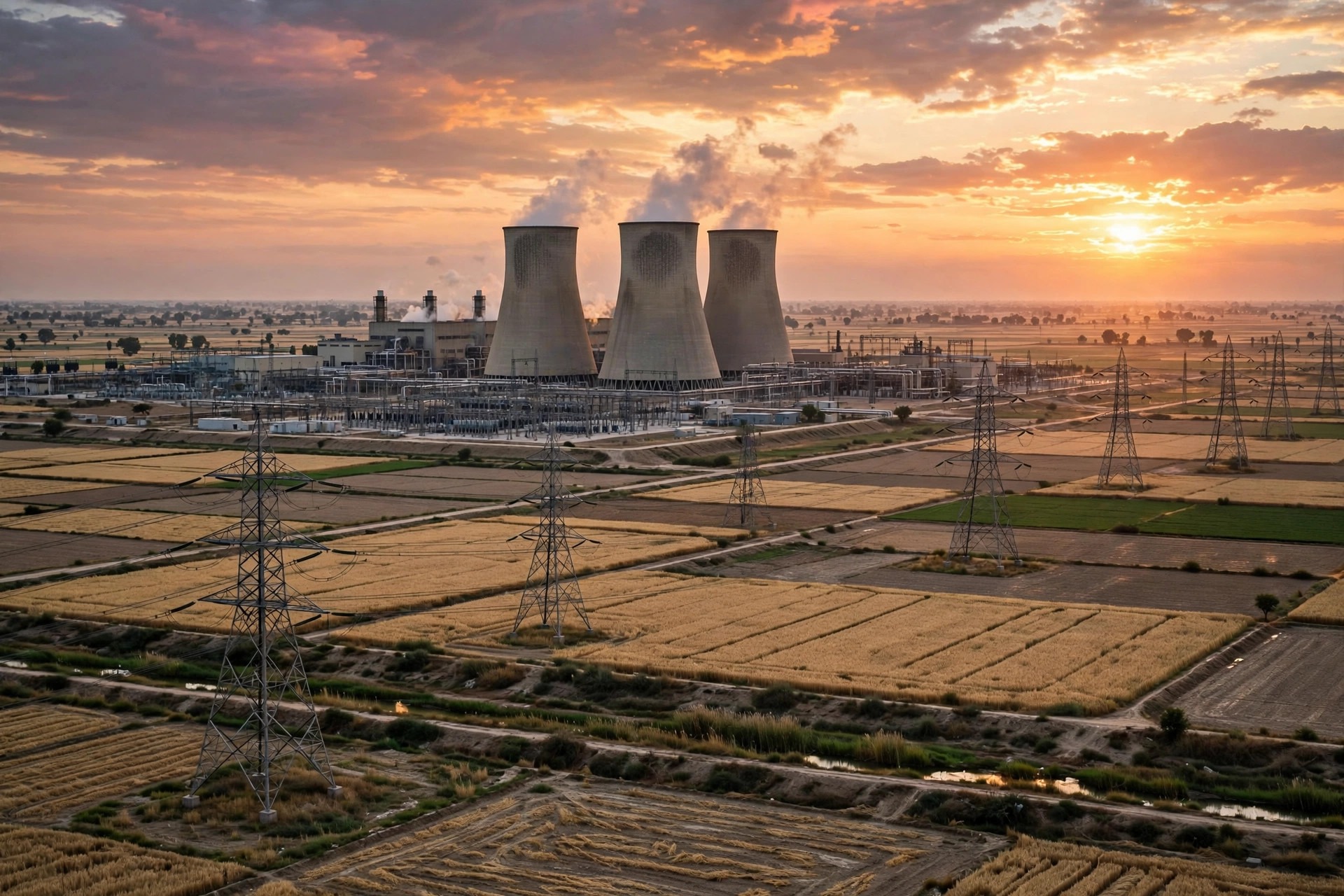
The physical asset came first, and it was a state project. The Kot Addu power station was built by the Water and Power Development Authority (WAPDA), then Pakistan's state power monopoly, in five phases between 1985 and 1996. The site sits in Kot Addu district in Punjab, near the Indus river and the Taunsa Barrage, roughly ninety kilometres north-west of Multan. Location was logic: a large plant in the agricultural heartland of southern Punjab could feed the national grid close to farming and small-industry demand, with river water available for cooling.
The finished complex was substantial. It combined ten multi-fuel gas turbines with five steam turbines, arranged in three energy blocks, for a total nameplate capacity of about 1,600 megawatts — for a long time among the largest single power plants in the country. The turbines were built to run on more than one fuel: natural gas as the preferred input, with low-sulphur furnace oil and high-speed diesel as alternatives. That flexibility mattered in a country where gas allocations to power plants have always competed with homes, fertiliser factories and industry. The plant also used combined-cycle technology in its blocks: exhaust heat from the gas turbines is captured to raise steam, and the steam drives additional turbines, squeezing more electricity from the same fuel than a simple-cycle plant could. One further detail became part of the plant's lore: it was designed with the ability to self-start — to restart itself without drawing power from the grid — a valuable trait after a nationwide blackout.
1996: the company is carved out and sold
KAPCO the company was created to own this plant, and its birth certificate is dated 25 April 1996, when Kot Addu Power Company Limited was incorporated as a public limited company with the explicit purpose of acquiring the Kot Addu plant from WAPDA. The context was Pakistan's 1990s privatisation programme, which sought foreign capital and private management for state assets. Power was at the front of the queue, and Kot Addu was the programme's flagship generation asset.
On 27 June 1996, after international competitive bidding run by the Privatisation Commission, management control passed to National Power of the United Kingdom — later part of International Power — which bought an initial stake of about 26 per cent and later increased it to 36 per cent. WAPDA retained the largest shareholding. The transaction made KAPCO, in effect, Pakistan's biggest independent power producer: a privately managed generator selling all of its output into the state system under a twenty-five-year power purchase agreement (PPA) signed at privatisation. For readers placing KAPCO among its peers, our guide to power generation stocks on the PSX explains how the listed generators differ in fuel, contract vintage and buyer.
Listing, and the slow exit of the state
For its first nine years KAPCO was unlisted, owned by WAPDA, the British sponsor and a small group of others. That changed in February 2005, when the Privatisation Commission, acting for WAPDA, sold a further 18 per cent of the company to the general public through an offer for sale. On 18 April 2005 KAPCO listed on Pakistan's stock exchanges — then the separate Karachi, Lahore and Islamabad bourses, since merged into the PSX. The listing turned a privatisation vehicle into a widely held public company and gave ordinary investors direct exposure to a power plant's cash flows for the first time.
Ownership kept evolving after listing. In 2014 the British sponsor — by then International Power — sold its entire shareholding to local investors, ending the foreign-management chapter that had begun in 1996. The government, holding its remaining stake of roughly forty per cent through WAPDA, repeatedly considered selling it down; in 2016 the Privatisation Commission approved offloading that stake through the stock market as part of an understanding with the International Monetary Fund, though the state's holding remained a defining feature of the register for years afterwards. The result is a company with no single controlling sponsor in the classic sense: a large residual state stake, institutional holders, and a substantial public float — a structure that makes KAPCO's governance and its negotiations with government doubly intertwined, since the state has simultaneously been shareholder, regulator and, through the power purchaser, its only customer.
How a PPA plant makes money
Under the 1996 agreement, KAPCO's economics followed the classic independent-power template used across Pakistan's 1990s generation fleet. Revenue came in two broad streams. The first was the energy purchase price, paid for each unit of electricity actually dispatched, designed mainly to pass through fuel costs. The second was the capacity purchase price, paid for making the plant's capacity available to the system whether or not it was called on to run — the stream that covered fixed costs, debt service and the shareholders' return. For an investor, the capacity stream was the annuity-like part: steadier than generation volumes, and the reason mature IPPs could pay regular dividends even in years when demand was soft.
That template also carried the template's famous weakness. The buyer of KAPCO's power sat inside a sector that chronically failed to collect enough cash from end consumers to pay its generators in full and on time. The resulting chain of arrears — circular debt — meant that KAPCO, like its peers, often reported profits well before the matching cash arrived, with the gap accumulating as receivables from the power purchaser. Periodic government settlements of those arrears would then release large catch-up payments. Reading KAPCO in the PPA years therefore meant watching two clocks at once: the accounting clock of capacity and energy charges, and the cash clock of how quickly the sector actually paid.
The long negotiation, and the end of the contract
As the 1996 PPA approached its original expiry in June 2021, KAPCO became part of the government's broader renegotiation with the 1990s IPP fleet. Under a master agreement reached in early 2021, the company accepted reductions to its capacity payments and variable operating charges and changes to indexation arrangements, in line with the settlement applied across that generation of plants. The PPA's term was then extended by 485 days under a third amendment that also settled a long-running dispute over liquidated damages linked to outages and fuel shortages in earlier years. For that extension period the company kept the plant available without charging capacity payments — an unusual coda to a twenty-five-year contract.
The agreement finally expired on 24 October 2022. From that date, with no operating regime in place, the plant was placed in preservation mode and stopped dispatching electricity to the Central Power Purchasing Agency; the company reported no generation in the following financial year, and it has publicly clarified that no capacity payments have been received since expiry — only the collection of receivables earned up to the contract's end. In May 2025 the regulator, NEPRA, approved the signing of a new tripartite power purchase agreement involving the Central Power Purchasing Agency and the national grid company, conditional on capacity and heat-rate tests verified by an independent engineer — the procedural doorway through which the plant could return to service. Whether and on what terms Kot Addu generates again is the central question hanging over the stock, and it is a regulatory and political question as much as a commercial one.
What KAPCO is while it waits
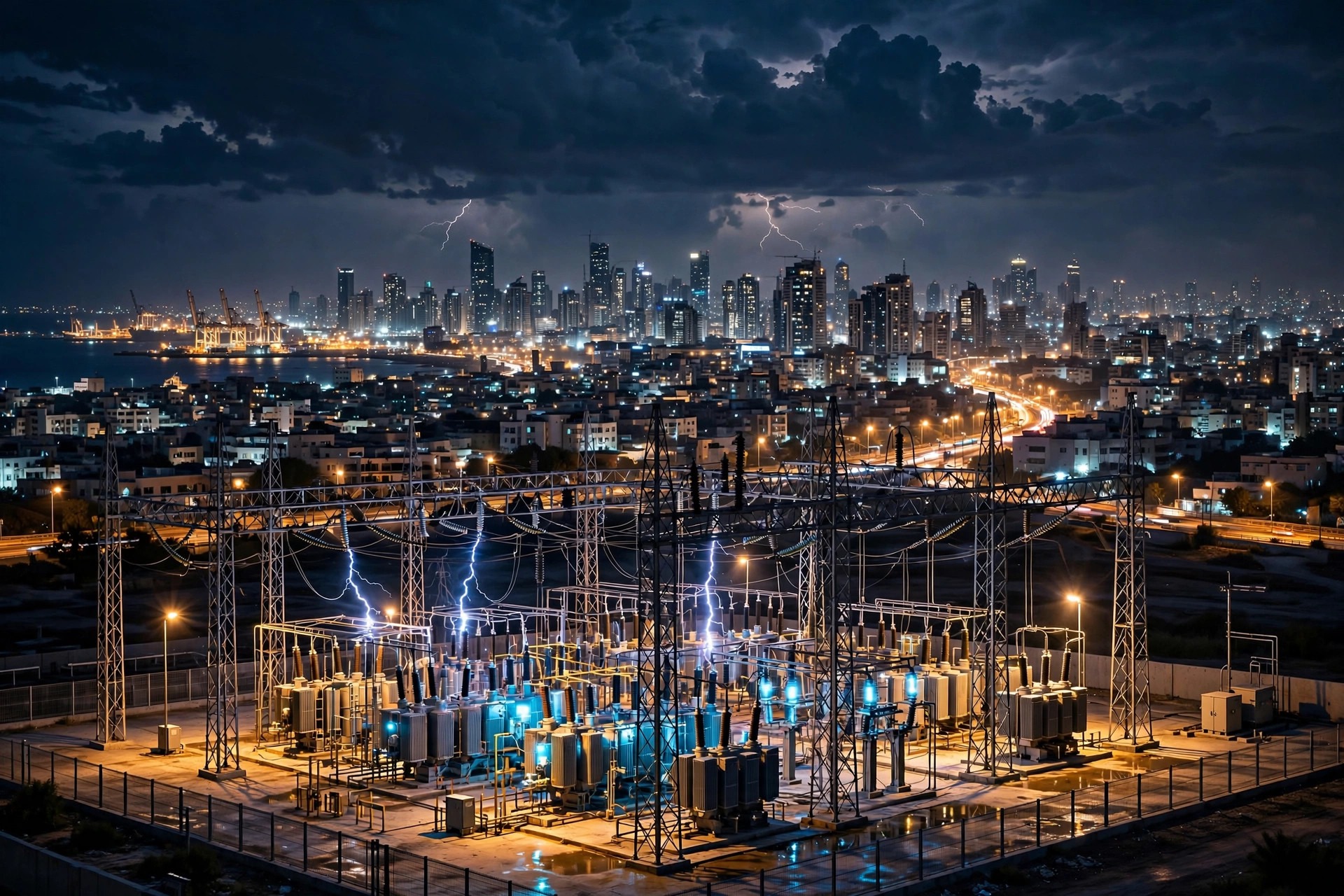
A power company without a power contract is an odd creature, and KAPCO's interim existence is worth describing plainly. The company still owns and maintains a large, preserved generating complex and its associated switchyard — which, notably, has continued to be used for grid operations in the region at the power purchaser's request, keeping the site woven into the national system even while its turbines rest. Its balance sheet carries the legacy of the PPA years: accumulated cash and investments built from past capacity payments and settled receivables, against the carrying value of an ageing plant. Its income, in the preservation period, has leaned on returns from that financial asset base rather than on selling electricity.
This is why KAPCO is frequently discussed in the market less as an operating utility and more as a bundle of possibilities: a possible new agreement and a return to generation; the value realisable from its site, switchyard and remaining plant life; and the cash already inside the company. Each possibility depends on decisions — tariff determinations, government power policy, the treatment of older thermal plants in a system adding cheaper renewables — that sit outside management's full control. The way the KSE-100 is calculated helps explain why a company in this suspended state can remain an index constituent: membership follows free-float market value and the index's selection rules, not whether the underlying plant ran last quarter, and periodic reviews described in our guide to KSE-100 rebalancing can move companies in or out as those values change.
A plant town, and a place in the grid
It is easy to discuss Kot Addu purely as a contract, but the plant is also a physical anchor in its district. A complex of this scale, built in stages over a decade, brought roads, housing colonies, schools and a permanent industrial workforce to an agricultural area on the Indus, and generations of local engineers and technicians have passed through its control rooms. In the national system its role was baseload and mid-merit generation close to the load centres of southern Punjab and upper Sindh, and its switchyard — the junction where its output and regional transmission lines meet — made the site a node in the grid's geography, which is why the switchyard has remained in use for regional grid operations even while generation is paused. Plants like this also explain why power policy is never only about prices: closing, reviving or replacing a station of this size touches employment, grid stability and the fuel logistics of an entire region, and those considerations run through every negotiation over KAPCO's future.
What investors typically watch
Observation points for KAPCO follow directly from its situation. First, the regulatory track: tariff applications, test results and any signed successor agreement that would restore dispatch. Second, collections: the pace at which old receivables from the PPA era are finally settled in cash. Third, preservation and restart costs, and any decisions about retiring or repurposing parts of the complex. Fourth, the treatment of the state's residual shareholding, which has been earmarked for sale more than once. And finally, sector policy: how Pakistan's capacity-planning and its push toward competitive electricity markets values an existing, grid-connected thermal site in southern Punjab. None of these are fast-moving variables; KAPCO rewards readers who follow regulatory filings rather than daily prices.
KAPCO's arc — state build, flagship privatisation, public listing, contract renegotiation, expiry — is a compressed history of Pakistan's power sector itself, which is why the profile rewards study beyond the single stock. This article is educational content, not financial advice. Aktzien, the investing app being built for Pakistan, plans to offer plain-language company guides like this one alongside its trading tools; for now, the wider learning library covers the sector explainers and index guides linked throughout this profile.
Key takeaway: KAPCO was created in 1996 to own WAPDA's Kot Addu plant under a 25-year contract; with that contract expired in 2022 and a successor arrangement still being finalised, the company today is a preserved power station, a pool of collected cash, and an open question about the plant's second life.