KARACHI: Some companies are born in boardrooms; Kohat Cement was born in a state plan. Its plant in Kohat, on the road between Rawalpindi and Peshawar, began life as a project of Pakistan's state cement corporation, was sold to private owners in the privatisation wave of the early 1990s, and was then rebuilt — expanded, converted to coal, extended into white cement and captive power — into a substantial northern cement producer. Kohat's shares, traded as KOHC, give investors exposure to a focused, single-location cement business in the north zone of Pakistan's industry. Its story is a clean example of what Pakistan's 1990s privatisations were supposed to achieve, and of how much patient capital expenditure separates a bought plant from a built business.
The state builds a plant in Kohat
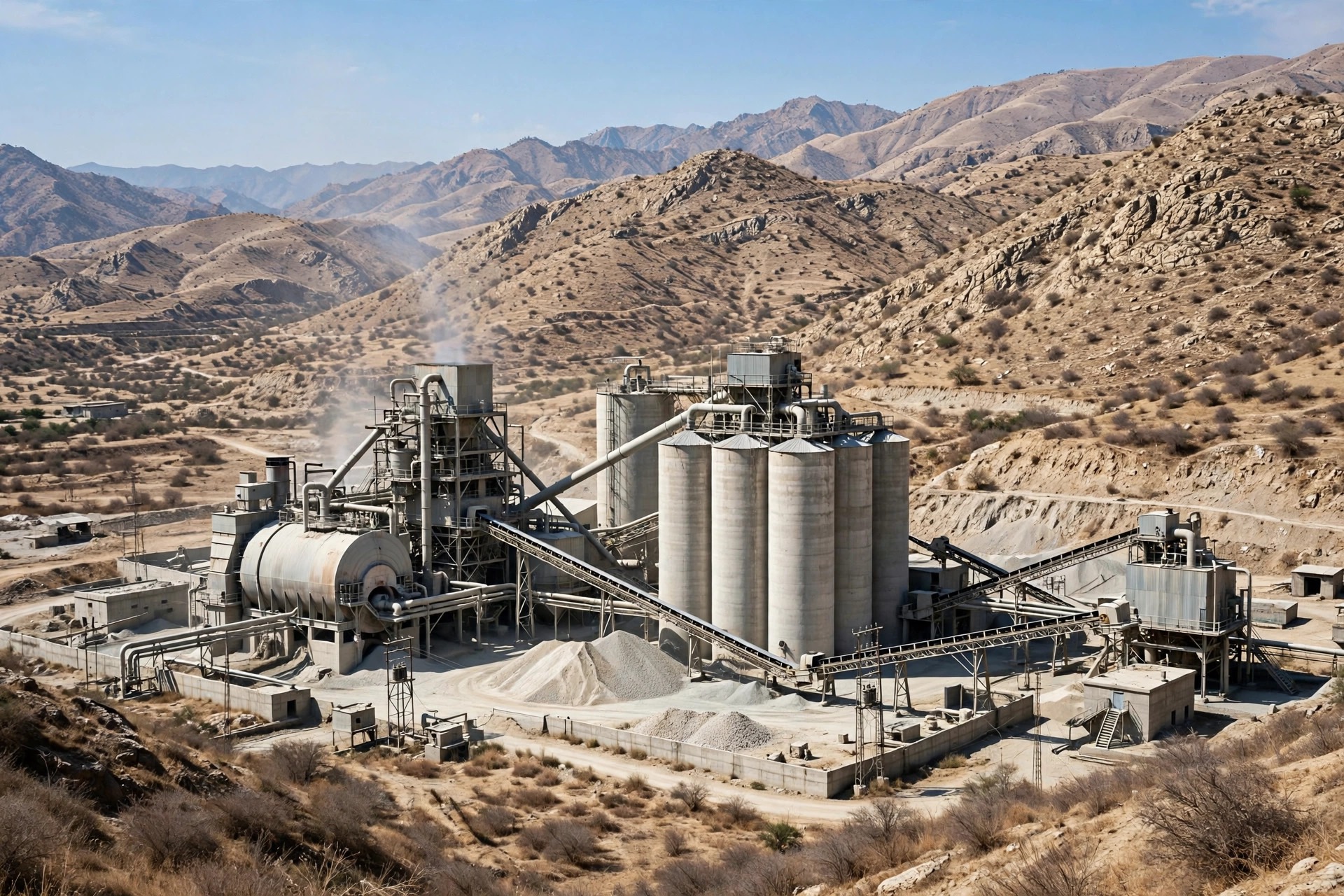
The company itself was incorporated in 1980, but the operating story starts with the plant. In 1984 the State Cement Corporation of Pakistan — the SCCP, the state body that then owned much of the country's cement capacity — set up a cement line at Kohat rated at about 1,000 tonnes per day, built with Romanian plant and technology. The location was chosen the way cement locations always are: for the raw material. Cement making begins with limestone, and the hills around Kohat in what is now Khyber Pakhtunkhwa offered suitable deposits within economical haulage of a plant site, with road links north to Peshawar and east towards Rawalpindi and Punjab's markets.
The state era was not a success story for Pakistani cement. Through the 1980s the industry was characterised by administered prices, capacity shortages alongside inefficient plants, and investment that lagged demand — a combination that made cement a perennial candidate for reform. When the government of the early 1990s launched its privatisation programme, the SCCP's plants were among the assets offered to private buyers, on the theory that owners with their own money at risk would modernise what ministries had not. Kohat was part of that wave: in 1992 the company was privatised through competitive bidding, passing into the hands of the private group — led by the Sheikh family interests that still anchor it, through ANS Capital — that has run it ever since. In 1994 the company was listed on Pakistan's stock exchanges, giving the public a stake in the turnaround and giving the new owners a route to public capital for what came next.
Rebuilding: BMR, coal and white cement
What the buyers acquired in 1992 was a small, ageing line. What stands at Kohat today is largely what they built on the same site. From the mid-1990s the new management, led for many years by chief executive Aizaz Sheikh, embarked on a balancing, modernisation and rehabilitation programme — BMR, in the industry's shorthand — financed through a public offering and commercial debt. Working with the German engineering firm KHD, the plant's capacity was raised from 1,000 to about 1,800 tonnes per day. That first step set the pattern for three decades: retain the site's advantages, replace its limitations piece by piece.
The subsequent expansion steps track the wider industry's evolution. The kilns were converted to coal firing, the fuel switch that transformed Pakistani cement economics as gas grew scarce and expensive. A dedicated white cement plant — about 450 tonnes per day — made Kohat one of the small club of Pakistani producers of white cement, the higher-priced product used for decorative finishes, tiles and architectural work rather than structural concrete. A much larger grey cement line, of roughly 6,700 tonnes per day, lifted the plant into a different league altogether, and a standby captive power plant of about 22 megawatts reduced dependence on an unreliable grid — a recurring theme for energy-intensive industry in Pakistan. The company began exporting in 2002, selling into Afghanistan, the natural overflow market for northern Pakistani plants. Industry recognition followed operating performance; the company's history records a place among the stock exchange's Top Companies award winners for 2013. The sequencing of those expansions carries a lesson about the industry's economics: each step was sized to the balance sheet of the day rather than to ambition, so the company entered the sector's recurring downturns with its newest capacity already absorbed and its debt serviceable — a conservatism that creditors and long-term shareholders learned to price into the stock. Our sector guide to cement stocks on the PSX sets Kohat alongside the larger multi-plant groups it competes with.
What the company sells, and where
Kohat's product shelf is short and legible. The main line is ordinary Portland cement — grey cement — sold in 50-kilogram bags and in bulk, under the Kohat brand, into its home markets of Khyber Pakhtunkhwa and northern Punjab. Alongside it sits the white cement business, smaller in volume but distinct in character: white cement is a speciality product whose buyers — tile and sanitaryware makers, terrazzo and finishing trades — care about whiteness and consistency as much as strength, and it typically commands a premium over grey cement. The company also sells clinker, the intermediate product of the kiln, when its grinding capacity and market conditions make that worthwhile.
Geography frames everything about this business. Pakistani cement divides into a north zone and a south zone, because cement is heavy relative to its price and road freight quickly eats margin: a plant sells first where it can deliver cheapest. Kohat is a north-zone producer, competing for the demand of Peshawar, the tribal districts' reconstruction trade, Rawalpindi-Islamabad's construction market and the Afghan export route through Torkham. Its rivals include some of the country's biggest names with plants scattered across the same northern limestone belt, which is precisely why single-plant focus cuts both ways: Kohat carries no underperforming distant plant, but it also has no second location to fall back on when its home region slows or its own kiln stops for maintenance.
How a cement plant makes money
The revenue mechanics of cement are worth learning once, because they apply across the whole listed sector. A plant quarries limestone, crushes and blends it with corrective materials, burns the mix in a rotary kiln at very high temperature to produce clinker, then grinds the clinker with gypsum into cement. Revenue is tonnes dispatched multiplied by the retention price — the share of the bag price the manufacturer keeps after dealers, transport arrangements and taxes take their parts. Costs are dominated by energy: the coal (or alternative fuel) burned in the kiln and the electricity used in grinding, together commonly accounting for well over half of production cost. Add raw materials, packing, maintenance, freight and finance costs, and the margin that remains is the spread between a commodity price the market sets and a cost base management largely controls.
Three levers therefore decide a cement maker's year. The first is utilisation: kilns are expensive, largely fixed-cost assets, so tonnes spread fixed costs thinner. The second is fuel economics: which coal — Afghan, local Darra or imported — is cheapest in energy terms at the plant gate, and how much waste-heat recovery and captive generation trim the electricity bill. The third is price discipline in the north zone: when regional demand is strong, producers hold prices and margins widen; when it sags, the temptation to chase volume with discounts compresses everyone's retention. Kohat's expansions can be read as bets on all three levers at once — more tonnes, newer and more efficient lines, and a scale that lets a single plant negotiate fuel and freight like a bigger group.
Ownership and character
Kohat Cement is controlled through ANS Capital, the vehicle of its sponsor family, whose members have supplied the company's leadership across the privatisation era. That continuity shows in the company's profile: a single flagship plant developed over decades rather than a portfolio assembled by acquisition, a product range kept narrow, and expansion funded in steps as cash flows allowed. For students of Pakistani corporate structure, Kohat is a useful contrast with a sibling profile in this series, Maple Leaf Cement, where the listed cement maker sits inside a wider family group: at Kohat the listed company is essentially the business, rather than one division of it — the sponsors hold other private interests, but the cement plant is the enterprise public shareholders own.
Its KSE-100 membership carries the usual mechanical explanation rather than a judgement on quality: the index selects on free-float market value and liquidity under the rules our guides to how the KSE-100 is calculated and market capitalisation describe, and a profitable mid-cap with a real public float can hold a seat for long periods.
Kohat in the north-zone contest
To understand the company competitively, picture the northern industry it sells into. The north zone's demand is anchored by the Islamabad-Rawalpindi conurbation, Peshawar and the Khyber Pakhtunkhwa towns, the motorway-linked construction corridor of central Punjab's edge, and the episodic surges of public development spending and Afghan reconstruction demand. Its producers — Kohat among much larger groups with several plants each — draw on the same limestone geology and compete on delivered cost into each market town, a competition measured in rupees per bag per kilometre as much as in brand strength. In that contest a focused producer like Kohat holds specific cards: a plant sited close to both Peshawar and the Afghan border crossing routes; a cost base unencumbered by corporate layers above the plant; and a white cement sideline whose buyers are scattered nationally and less hostage to northern construction cycles than grey cement demand. Its vulnerabilities are the mirror image: total dependence on one kiln complex's reliability, one region's politics and security climate — Khyber Pakhtunkhwa's operating environment has never been a formality — and fuel logistics that run through the same border corridors as its exports, so that a closed crossing can squeeze the coal supply and the cement outlet simultaneously. The Afghan trade illustrates both sides of the coin at once: in strong years it has absorbed northern surplus at remunerative prices and rewarded the plants nearest the border; in disrupted years it has vanished as an outlet almost overnight, leaving those same plants most exposed to the domestic market's discipline. Kohat's long history of exporting since 2002 means its management has priced that volatility through several cycles — experience that shows in the sector as a reputation for operational steadiness rather than for spectacular expansion announcements.
What investors typically watch
The watch list for a northern cement maker is concrete — literally. Sector watchers track monthly industry dispatch data for the north zone, split between domestic sales and exports to Afghanistan, since those volumes set the utilisation backdrop for every northern plant. They watch coal: the prices and availability of Afghan and local coal against imported grades, and the rupee's effect on each. They watch retention prices in the north, and whether increases announced by producers hold. Company-specifically, they watch Kohat's own capacity utilisation, the performance of its white cement niche, the state of its limestone reserves and any announced expansion or efficiency project — in cement, today's capital expenditure announcement is tomorrow's cost advantage. Interest rates matter more than in many sectors, because construction demand, the industry's ultimate driver, is among the most rate-sensitive parts of the economy.
Kohat Cement's journey from a 1,000-tonne state line to a modern multi-line plant is one of the cleaner privatisation stories on the exchange — which does not make its future automatic, only legible: the same fuel, freight and demand variables that built its margins will decide them next year too. This article is educational content, not financial advice. The Aktzien learning library carries the sector and index guides linked above for readers who want the wider frame.
Key takeaway: Kohat Cement began as a state-built 1,000-tonne-a-day plant in 1984, was privatised in 1992 and listed in 1994, and grew by steady reinvestment — bigger grey lines, a white cement niche, coal firing and captive power — into a focused north-zone producer whose fortunes turn on utilisation, fuel costs and regional prices.