KARACHI: In 2025 the company long known as Mari Petroleum changed its name to Mari Energies — a small corporate event that captured a large truth. The business began as the custodian of a single asset, the Mari gas field in Sindh, discovered in 1957 and developed to feed Pakistan's fertiliser industry. For its first decades that field was practically the whole company. But the Mari of today is one of Pakistan's leading exploration and production companies, operating and partnering in blocks across the country, announcing discoveries in Waziristan and Sindh, and bidding aggressively for new acreage. Its shares, MARI, are among the heavyweight constituents of the KSE-100. The rename simply admitted what the portfolio already said: this is no longer a one-field gas company. Its story, though, starts underground, in the 1950s, with an American oil major and a well called Mari X-1.
1957: Esso finds gas at Daharki
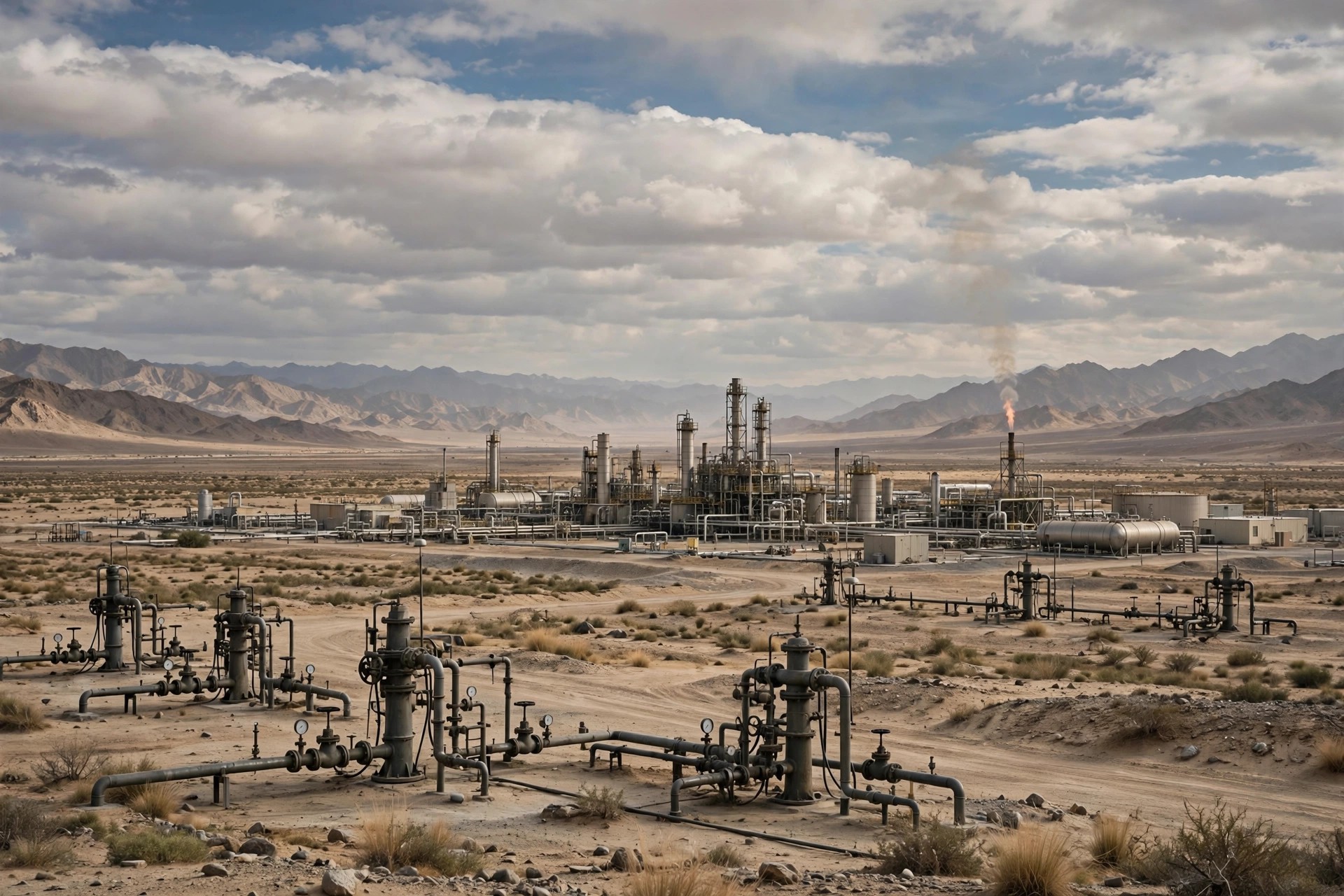
The Mari field lies near Daharki in Ghotki district, Sindh, roughly ninety-six kilometres north-east of Sukkur, in the central Indus Basin. It was discovered in 1957 by Esso Eastern, operating through the Pak-Stanvac Petroleum Project — a joint venture between Esso interests and the Government of Pakistan, which held the majority stake. The discovery well, Mari X-1, found gas in the Lower Kirthar limestone at a shallow depth by industry standards, and appraisal wells confirmed a very large, relatively flat gas structure. Contemporary estimates put the field's original gas in place in the trillions of cubic feet, ranking it among Pakistan's largest gas accumulations.
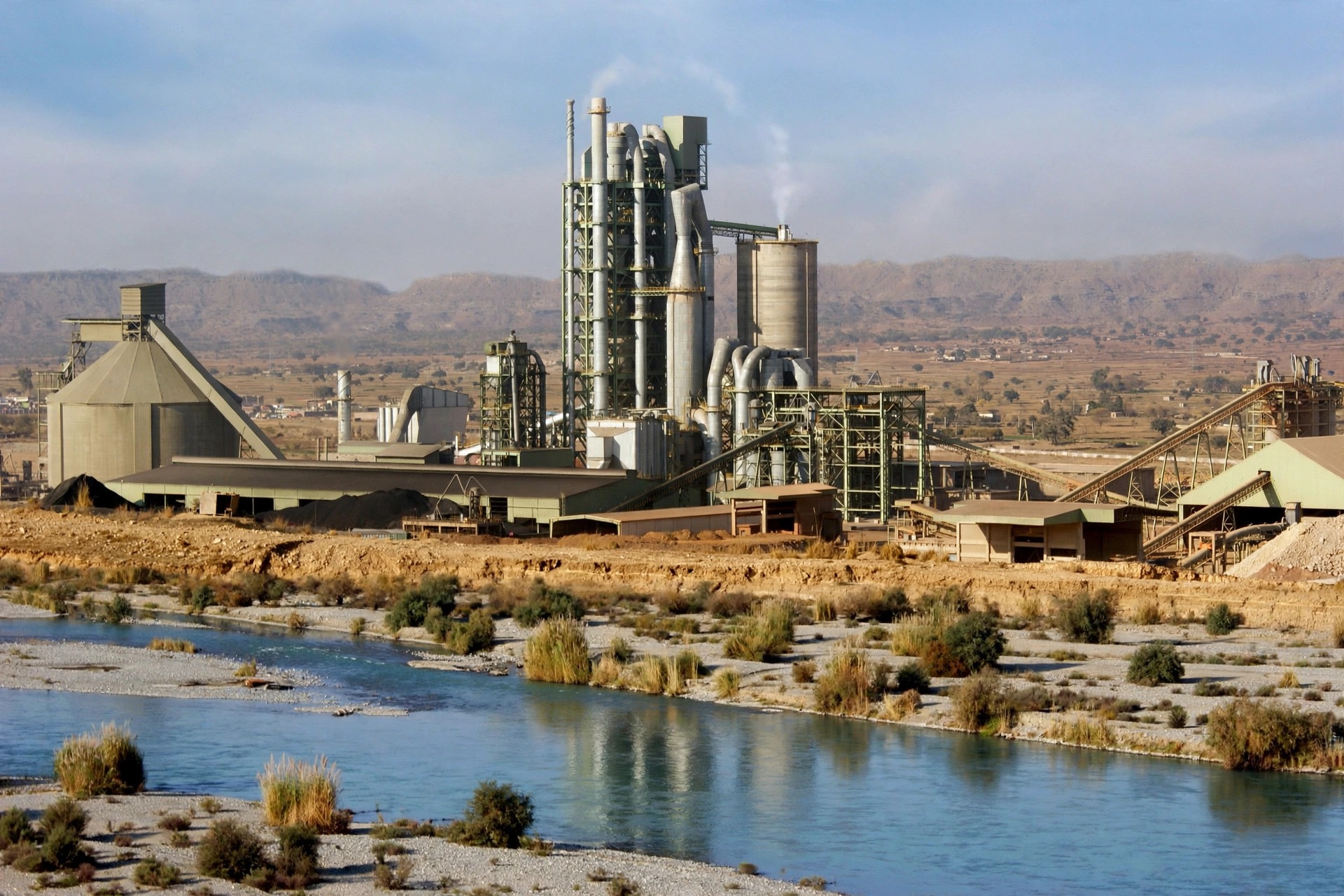
Yet the field then did something that surprises modern readers: it waited. Through the late 1950s and early 1960s there was no market large enough nearby to justify development — pipelines are expensive, and gas, unlike oil, cannot be trucked to a distant buyer. The market arrived in the form of fertiliser. Mari gas has a chemical character — notably higher carbon dioxide and nitrogen content — that makes it particularly suitable as a feedstock for urea production, and the field was first developed in the mid-1960s to supply gas to the fertiliser plant at Daharki run by Esso's own chemical affiliate, the business that later became Engro. More fertiliser plants followed: by the early 1980s the field's entire output was committed to fertiliser factories at Daharki, Mirpur Mathelo and Goth Machhi — the plants of what became Engro, Pak-Saudi Fertilizer and Fauji Fertilizer — with gas also flowing to the Guddu thermal power station. Mari had become, in effect, the gas well of Pakistan's Green Revolution: the nitrogen in a large share of the country's urea started as Mari gas.
1984: the Fauji Foundation takes the field into a company
In the early 1980s Esso decided to exit its Pakistan investments, and its interest in the Mari venture passed, through the government, to the Fauji Foundation — the welfare foundation for ex-servicemen whose industrial holdings would become one of Pakistan's defining business groups. On 4 December 1984 the foundation incorporated Mari Gas Company Limited to take over the field, with shareholding settled at Fauji Foundation 40 per cent, the Government of Pakistan 40 per cent, and the state explorer OGDC 20 per cent — a structure whose bones remain visible in today's register, where the Fauji Foundation still holds about 40 per cent, OGDC 20 per cent and the government roughly a fifth.
The young company's economics were unlike any modern E&P's. Its gas was priced under the Mari Gas Wellhead Price Agreement of 1985, a cost-plus arrangement that effectively guaranteed shareholders a defined return on equity — initially 22.5 per cent, raised in later years with incentives for higher production. The government captured the difference between that modest wellhead price and the higher prices charged to end customers, collecting it through taxes and surcharges. Mari Gas was thus run for decades less like a commodity producer and more like a regulated utility with one field: steady, formula-driven returns, a captive customer list of fertiliser plants, and development carried out in phases — the late 1980s and early 1990s brought expansion programmes, financed partly by the International Finance Corporation and foreign banks, that drilled dozens of new wells and lifted the field's output step by step. In 1994 the government sold part of its stake to the public at Rs 25 a share and Mari Gas listed on the Karachi Stock Exchange, introducing the stock to the market it would one day help to lead.
2001 onwards: learning to explore
The turn of the century changed the company's ambition. Around 2001 Mari Gas began moving beyond producing a known field into exploration — hunting for new hydrocarbons in its own right. In 2002 it signed production sharing agreements alongside international partners including Total, Petronas and OMV, a formal entry into the explorer's world of seismic surveys, wildcat wells and dry holes. The logic was necessity wearing opportunity's clothes: the Mari field, however large, is finite, and a company whose only asset depletes must either buy reserves, find them, or plan its own decline. Exploration also changed the company's risk personality, from utility-like steadiness towards the explorer's lumpier profile, where a single discovery announcement can matter more than a year of production.
The transformation was marked in the name. In November 2012 Mari Gas Company became Mari Petroleum Company Limited — "Petroleum" announcing the wider remit of oil, condensate and exploration acreage beyond the home field. Through the following decade the company built a portfolio of operated and partner blocks across Pakistan's basins, developed additional production from within and around the Mari lease — including deeper and satellite reservoirs — and grew into one of the country's largest gas producers by volume, a remarkable position for a company that started with one field and a cost-plus formula. Its low operating costs, a legacy of the shallow, prolific home field, became a competitive signature: Mari could produce profitably at prices that strained higher-cost rivals, and it converted that advantage into the cash that funded exploration. That cost position also shaped its dividend capacity and its resilience in years when gas prices or collections disappointed — the home field's economics provided a floor under the whole enterprise while the exploration portfolio supplied the variance above it.
2025: Mari Energies, and the frontier push
The second renaming, to Mari Energies Limited in 2025, completed the arc the 2012 change began. "Energies" is the vocabulary of a company presenting itself as a broad energy enterprise rather than a petroleum producer — the same period in which it pressed its exploration frontier hard. In the Waziristan block in Khyber Pakhtunkhwa, where Mari operates with a majority working interest alongside OGDC and Orient Petroleum, the Spinwam-1 well delivered a sequence of gas and condensate discoveries across multiple formations in 2025, and production began from the block's Shewa discovery — exploration success in one of the country's most difficult operating environments. In Sindh's Sujawal block, the Soho-1 well made what the company described as the first discovery in a new geological play for that area. And in the government's 2025 bid round Mari provisionally secured ten new onshore exploration blocks, most of them in Balochistan — the largest single acreage grab in its history, signalling that management intends the exploration engine, not just the legacy field, to define the next decade. Security, community relations and provincial politics are inseparable from that frontier strategy, and the company's announcements routinely credit the support of government and law-enforcement agencies — a disclosure that tells its own story about where Pakistan's remaining hydrocarbons lie.
How Mari makes money — and what differs from OGDC
The revenue model is the E&P standard described in our sector guide to exploration and production stocks: produce gas, crude and condensate, sell them at regulated wellhead prices that are, for newer concessions, linked to international crude benchmarks and the dollar. Two Mari specifics matter. First, the legacy Mari field's gas historically sold under its own pricing arrangements into fertiliser and power customers, giving the company's revenue a steadiness and its costs a lowness unusual in the sector; as newer production under standard petroleum-policy pricing grows, the blend shifts towards the sector norm. Second, like every Pakistani gas producer, Mari sells into a system whose payment chain is strained — fertiliser plants and state-linked buyers pay through the same energy economy that produces circular debt, so receivables deserve the same attention here as at its peers. Royalty, taxes and the state's multiple roles — shareholder through OGDC and directly, licensor, and price-setter — complete the picture. Readers comparing Mari with the state's own explorer will find the sibling profile of OGDC in this series a useful counterpoint.
The home field: six decades of phased development
The Mari field itself repays a closer look, because few Pakistani assets have been developed so methodically. After the initial development of the 1960s around the shallow Habib Rahi reservoir — the horizon Esso found — the field grew in deliberate phases: new production wells, gathering lines measured eventually in hundreds of kilometres, compression and processing facilities, and successive capacity expansions financed in the 1980s and 1990s with the International Finance Corporation among the lenders, lifting daily output step by step from its early levels past 300 and then 400 million cubic feet a day in the expansion plans of that era. Later development reached for the field's deeper and tighter horizons, applying modern drilling and completion techniques to rock the 1957 discoverers could see but not economically produce. The customer map grew with the capacity: from the original Daharki fertiliser plant to a roster spanning the big urea producers of upper Sindh and southern Punjab and the Guddu power station, with the field's gas moving by dedicated pipelines into each. That combination — a giant, shallow, low-cost reservoir, developed patiently for sixty years, selling into the fertiliser economy that feeds the country — is the foundation under everything the modern company attempts elsewhere. It is also a wasting foundation by definition: every development plan in the company's disclosures is, in part, a negotiation with the home field's maturity, stretching its plateau with infill wells and compression while the exploration portfolio is built to outlive it. The tension between harvesting a legendary field and replacing it is the central strategic drama of Mari's next decade, and long-term shareholders follow the reserves disclosures — how much each year's drilling adds against what production withdrew — as its scorecard.
What investors typically watch
The observation list starts with production: total output and its split between the legacy Mari field and newer areas, since the two carry different pricing and decline profiles. Next, exploration results — discoveries, dry wells and the conversion of bid-round acreage into drilled prospects — because reserve replacement is the company's long-run licence to exist. Then pricing: changes in wellhead price notifications and petroleum policy, which can revalue existing production without a single new well. Collections and the dividend sit alongside, given the company's history as a substantial payer when cash allows. Finally, the frontier variables unique to Mari's current strategy: security and access in Khyber Pakhtunkhwa and Balochistan blocks, and the pace at which discoveries like Spinwam and Shewa become producing fields with pipelines and processing. Its index weight, as ever, is a mechanical consequence of size and free float under the rebalancing rules, not a verdict on any of this.
A field found by Esso in 1957, a company founded by a soldiers' welfare foundation in 1984, a rename in 2025 — Mari's biography runs from the age of the foreign oil major to the age of the domestic exploration champion. This article is educational content, not financial advice. The Aktzien learning library carries the E&P and index guides linked above for the full frame.
Key takeaway: Mari Energies — Mari Gas from 1984, Mari Petroleum from 2012 — was built on the 1957 Esso discovery at Daharki that supplied Pakistan's fertiliser plants, is controlled by the Fauji Foundation alongside OGDC and the state, and has grown from a one-field, cost-plus gas producer into a frontier explorer with discoveries from Waziristan to Sujawal.