KARACHI: There is no company on the Pakistan Stock Exchange quite like Murree Brewery. It has been making drinks since 1860 — before Pakistan existed, before the stock exchange existed, before most of the country's industries had names. It was founded in the Murree hills to supply beer to British soldiers and officials escaping the summer heat of the plains. It survived Partition, which placed it in a new Muslim-majority country. It survived the prohibition era that began in 1977, when alcohol sales to the Muslim majority were banned and exports were stopped. And it did all that not by standing still, but by becoming something broader: a drinks group whose juices, malt drinks, mineral water and food products — sold under its Tops division — and whose glass bottles, made by its own glass division, reach customers who have never touched its beer. Run for generations by the Bhandara family, a Parsi family whose association with the company dates to the 1940s and who took majority ownership in the years after Partition, Murree is at once a heritage business, a regulated oddity and a case study in how a company adapts when the law redraws its market.
1860: a brewery in the hills
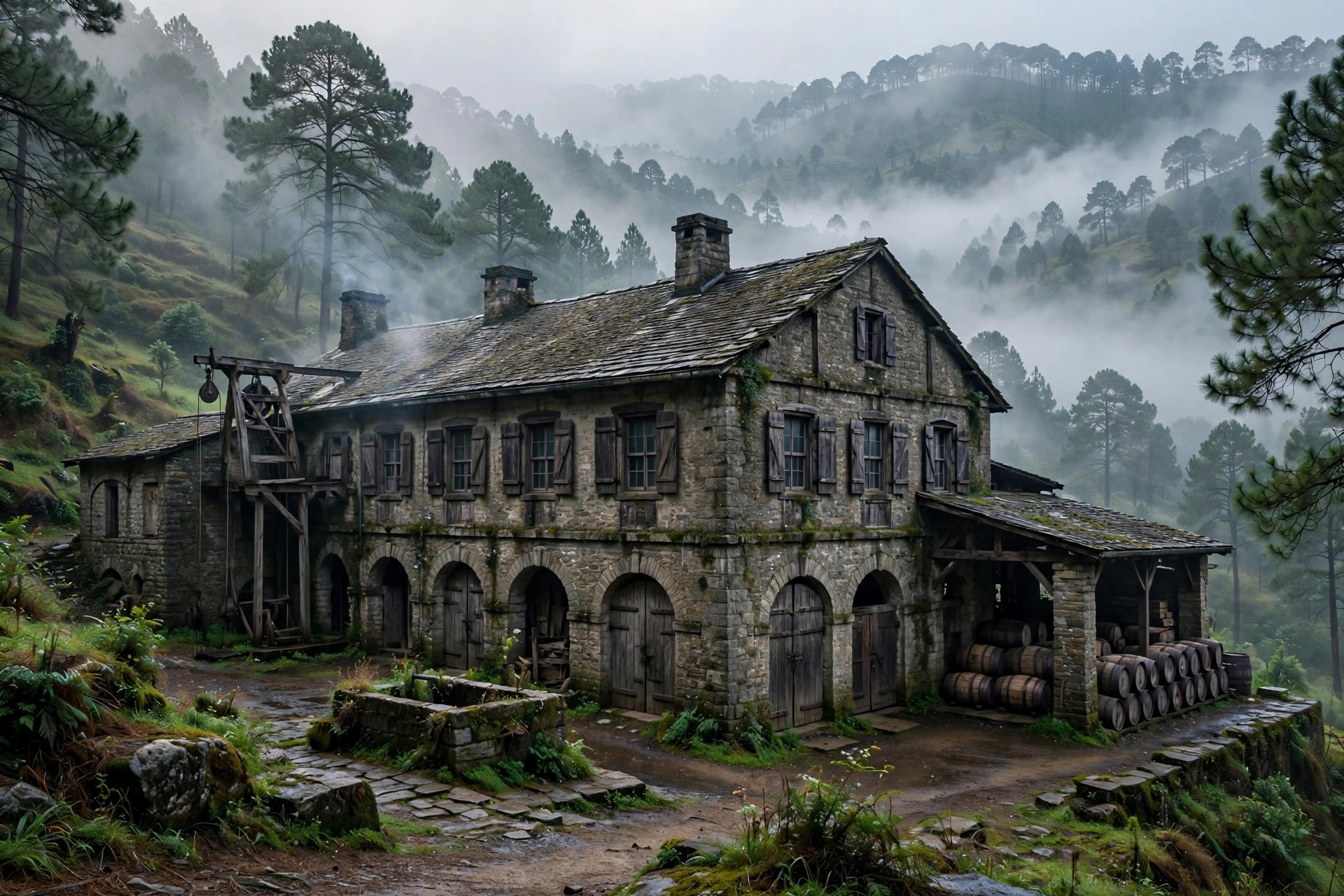
The brewery was established in 1860 at Ghora Gali, near the hill station of Murree, by British founders — Edward Dyer and Edward Whymper are the names recorded in accounts of its early years. The location was practical, not picturesque. Before refrigeration, cool mountain air and clean hill water were production advantages, and Murree was where the British military and civilian establishment of the northern Punjab spent its summers. Beer brewed in the hills supplied messes and bars across British India, and the Murree name became famous well beyond the hills; the company still points to the medal for excellence its beer won at the Philadelphia Exhibition of 1876.
In the 1880s the company expanded down from the hills, establishing a brewery in Rawalpindi — which grew into its main production home — and a distillery in Quetta. Malting continued at Ghora Gali into the 1940s, but brewing gravity shifted to Rawalpindi, where the red-brick brewery still operates. The original Ghora Gali site was burned in the violence around Partition in 1947, closing the first chapter physically as well as politically.
Partition, the Bhandaras, and a shrinking legal market
Partition in 1947 cut Murree's world in two. Its market had been the whole of northern British India; now it stood in Pakistan, a country founded as a homeland for Muslims, for whom alcohol is religiously prohibited. Demand did not vanish — Pakistan had non-Muslim minorities, foreign residents and its own quiet drinking culture — but the legal, open market of the Raj was gone, and with it any assumption of normal growth.
Into that uncertainty stepped the Bhandara family. The family's association with the brewery dates to the 1940s, and they bought majority shares in the company in the early 1960s — one widely repeated account dates the majority purchase to 1961. Minoo Bhandara, who led the company for decades until his death in 2008, became one of Pakistan's most recognisable business figures precisely because his product was so improbable: a teetotal Parsi running the country's only brewery. His son Isphanyar Bhandara leads the company today. Family continuity has been central to Murree's strategy — long horizons, careful relations with regulators, and a refusal to treat the alcohol licence as the whole business.
That breadth began before prohibition. Tops Food and Beverages, the division handling non-alcoholic products, was established in 1969. What looks in hindsight like preparation for 1977 was partly that and partly simple diversification: a drinks company with bottling lines, distribution and glass-making skills can sell many things besides beer.
1977: prohibition redraws the business
In 1977, Prime Minister Zulfikar Ali Bhutto's government banned alcohol for Muslims, a policy consolidated under the Islamisation programme of General Zia-ul-Haq that followed. Sales were restricted to non-Muslims and foreigners under a permit system administered by the provinces, and alcohol exports were halted on the reasoning that an Islamic country should not be seen exporting a prohibited product. For a brewery, this was an existential rewrite: its largest product could now be sold legally only to a small minority of the population, through controlled channels, at government-influenced prices.
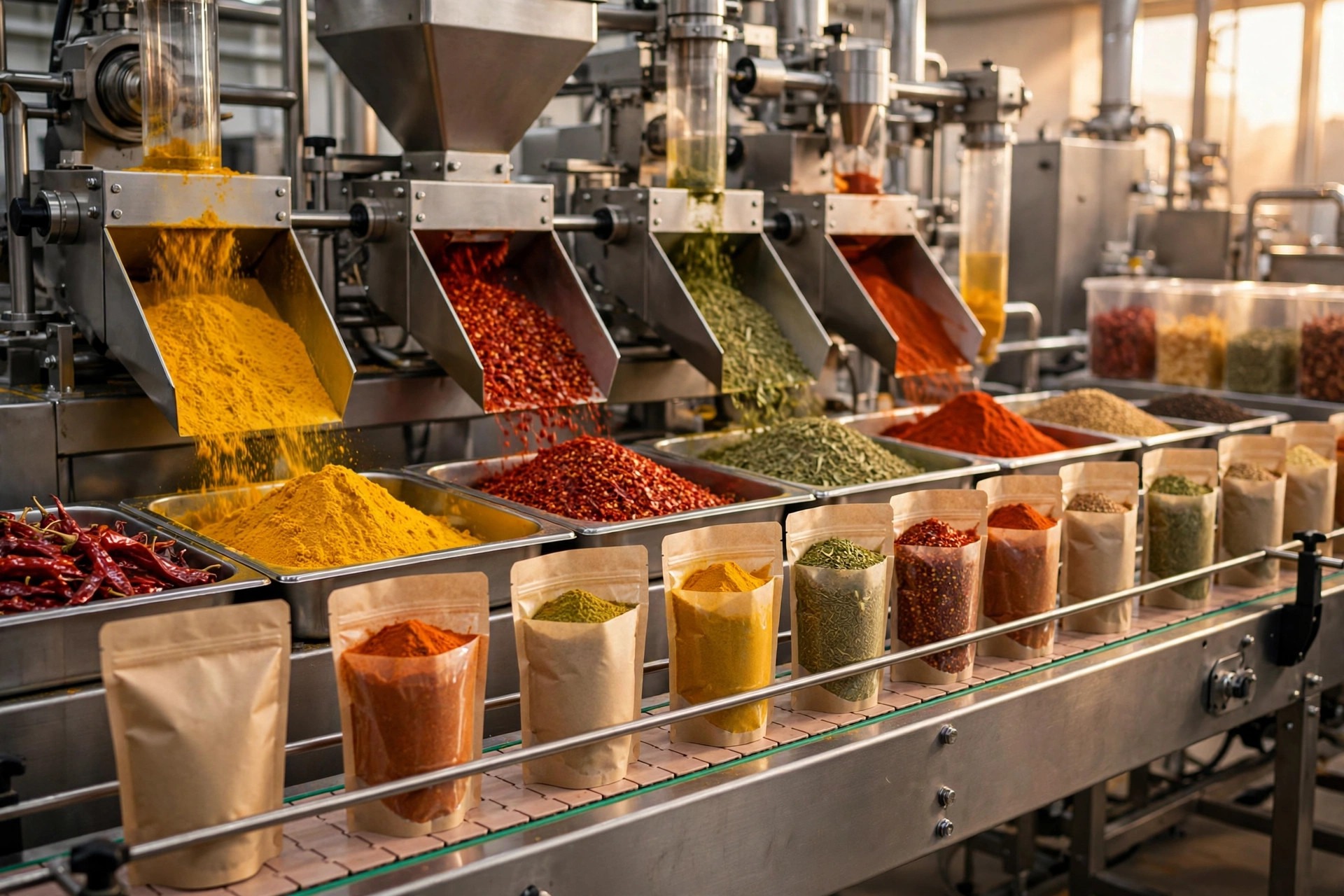
Murree survived by leaning on the other two legs it had built. The Tops division expanded its range of juices, squashes, jams and other food products, malt-based non-alcoholic drinks and, later, bottled water under the Murree Sparkletts name — a business the company acquired in 2011 and expanded with new filling lines at Hattar in 2015. The glass division, which makes bottles and jars, sells container glass whose demand comes from the wider food and drinks industry, not from beer alone. A second manufacturing site at Hattar, in Khyber Pakhtunkhwa, was installed in the early 1990s, and a Tetra Pak packaging facility was added in 2001, extending the non-alcoholic side into modern carton packaging.
The alcohol business itself continued — legally, taxed, and perennially debated. Murree remains Pakistan's principal licensed producer of beer and Pakistan-made foreign liquor, including single malt whiskies matured in its vaults. Its executives have, across two generations, made the pragmatic case to successive governments: a licensed, taxed domestic industry serves the permitted market more safely than smuggling and illicit distilling would. Readers should hold that argument as the company's position, stated openly for decades, rather than as a settled public consensus — few Pakistani businesses operate amid a comparable moral and political argument about their core product.
Three divisions, three different businesses
Murree reports its life through three divisions, and a reader who separates them understands the company far better than one who sees only the brewery headline.
- Liquor division — beer, spirits including whiskies, vodka and gin, and non-alcoholic malt drinks. This is the heritage business: permit-restricted domestic sales, excise and licence regimes that vary by province, and pricing in which the state has a heavy hand. Volumes are constrained by law, not by brand strength — the Murree name is known nationwide, including by the vast majority who may not legally buy the product.
- Tops division — juices, fruit drinks, squashes, jams, jellies, ketchup, vinegars and bottled water, including Sparkletts. This division competes in the open consumer market against local and multinational food brands, where shelf space, distribution reach and price points decide outcomes — the normal FMCG contest described in our guide to food and personal care stocks on the PSX.
- Glass division — bottles and jars manufactured at its glass works. Container glass is a classic derived-demand business: it prospers when Pakistan's drinks, food and pharmaceutical makers prosper, and it gives Murree an industrial revenue stream uncorrelated with drinking habits.
The blend is the strategy. Alcohol provides high recognition and, within its legal limits, durable cash generation. Tops provides growth headroom in categories open to everyone. Glass provides industrial ballast. A bad year in one division need not be a bad year for the company — the definition of diversification inside a single listed firm.
The export door reopens — cautiously
For nearly five decades the export ban was a fixed fact of Murree's life. It began to move only recently. A policy revision in 2022 opened the possibility of alcohol exports to countries outside the Organisation of Islamic Cooperation, with permissions granted case by case, and in 2025 Murree received clearance and dispatched its first trial shipments, reported as going to the United Kingdom, with further consignments to markets including Portugal and Japan. The company frames exports as a multi-year build into a crowded global beer market, not an overnight transformation — domestic production remains the centre of the business, and each shipment requires its own clearances. For a profile written for education rather than prediction, the honest summary is this: a restriction that defined the company for two generations has loosened, the first steps have been taken, and the scale of what follows is genuinely unknown.
How Murree makes money
Strip away the romance and Murree is a beverage manufacturer with three tills. It brews, distils, bottles and cans drinks; it processes fruit into juices and foods; it melts sand and soda ash into bottles. Revenue in each division is volume times realised price, minus the heavy hand of excise duty and taxes on alcohol, the cost of imported inputs such as barley and malt — good brewing barley is not grown at scale in Pakistan and is imported — glass furnace fuel, packaging, and distribution across a large country.
Two features distinguish its economics from an ordinary food company. First, regulatory pricing and permission in the liquor division: what it may sell, to whom, where, and often at what price, is set by government, so profit growth there comes from mix, efficiency and permitted volume rather than from marketing reach. Second, scarcity value: as Pakistan's long-standing licensed brewery, Murree occupies a niche that cannot simply be contested by a new entrant opening a rival brewery — entry itself requires licences that history shows are rarely granted. Set against that is an equally real fragility: a single policy decision can redraw the niche again, as one did in 1977.
What investors typically watch
Followers of Murree watch the divisional split first: how much of revenue and profit comes from liquor, from Tops, and from glass, and how that balance is trending. They watch excise and tax changes in provincial and federal budgets, licence and permit developments, and any movement on exports — trial shipments are news; repeat orders would be a business. On the Tops side, they watch distribution gains, new packaging and competition from much larger food groups. On the glass side, furnace operations and energy costs dominate, since melting glass is fuel-intensive and furnace rebuilds are periodic, heavy capital events.
There is also a governance and continuity question common to family-led heritage companies: the Bhandara family's stewardship has lasted generations, and the market reads succession and professional management through that lens. Murree's place in the KSE-100, meanwhile, is a function of the same size and liquidity rules that govern every constituent — explained in our articles on how the KSE-100 is calculated and market capitalisation. This profile is educational content, not financial advice; it describes a business, and offers no view on its shares.
Water, oak casks and a brewery that moved downhill
Some of Murree's most telling history is about place rather than product. Brewing had mostly transferred from Ghora Gali to Rawalpindi as early as the 1920s, because water was scarce in the hills, even though malting continued at Ghora Gali into the 1940s. The Quetta outpost faced a different fate: the Quetta brewery was destroyed in the earthquake that devastated that city in 1935, a reminder that the company's early geography was shaped by natural as well as political hazards. What survived in Rawalpindi, by contrast, accumulated the slow assets that spirits makers depend on. In the 1960s the brewery imported oak casks from North America, Australia and Spain, and its underground cellars came to hold large volumes of malt whisky maturing for varying periods, in some cases up to twelve years — a production cycle measured in decades, in a business where most drinks are sold within months of being made.
Later investment followed the same practical pattern. A modern beer canning line and bottle-filling facility, imported from Germany, were installed in the 1990s, modernising packaging at the Rawalpindi site. The site's age has also brought friction: in 2001 the brewery was temporarily closed under an environmental protection order relating to polluting waste, an episode company histories and press reports record as part of operating a nineteenth-century industrial plant inside a modern, densely populated twin city. For readers, these details matter because they explain costs that never appear in a brand story — water supply, cellaring time, packaging machinery and environmental compliance are the quiet economics underneath the heritage.
A company the whole country recognises
There is a final, unquantifiable asset on Murree's balance sheet: recognition. The Murree name, its labels and its red-brick Rawalpindi brewery are landmarks known to Pakistanis who have never bought a single product the company makes, because the brewery predates almost everything around it and because its story — colonial founding, Partition survival, prohibition endurance — is retold in newspapers roughly once a decade. Heritage of that depth cannot be bought by a competitor, and it supports the Tops and water brands on ordinary shop shelves, where a familiar name from 1860 competes against the marketing budgets of multinationals. It also raises the stakes of stewardship: a company this visible is judged as a piece of national furniture, not merely as a drinks manufacturer, and its conduct is news in a way a younger firm's would never be. This profile is educational content, not financial advice.
Key takeaway: Murree Brewery, founded in 1860 in the Murree hills and led for generations by the Bhandara family, survived Partition and the 1977 prohibition era by building three businesses — liquor for a permit-restricted market, Tops foods and water for everyone, and its own glassworks — and has only recently begun exporting again.