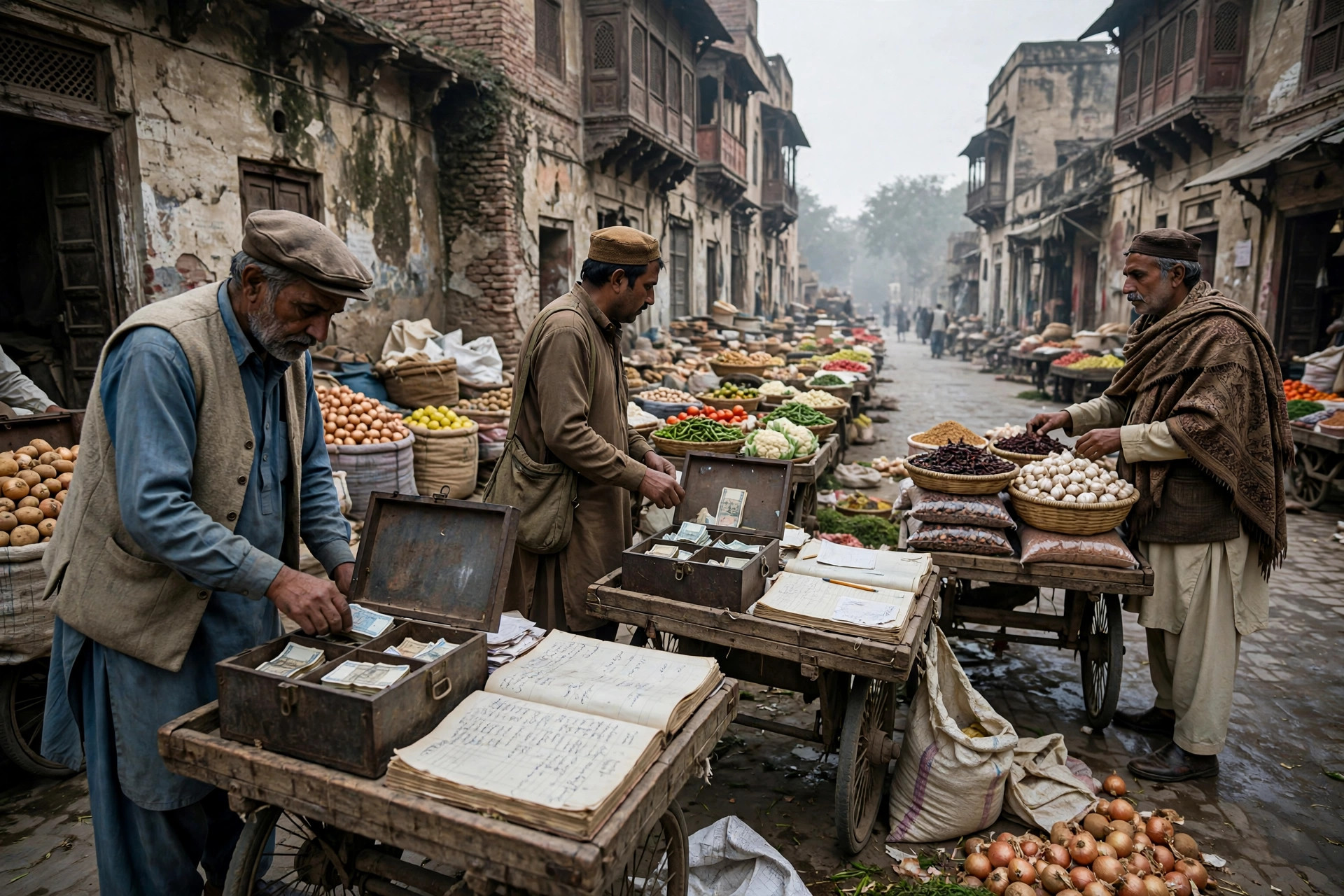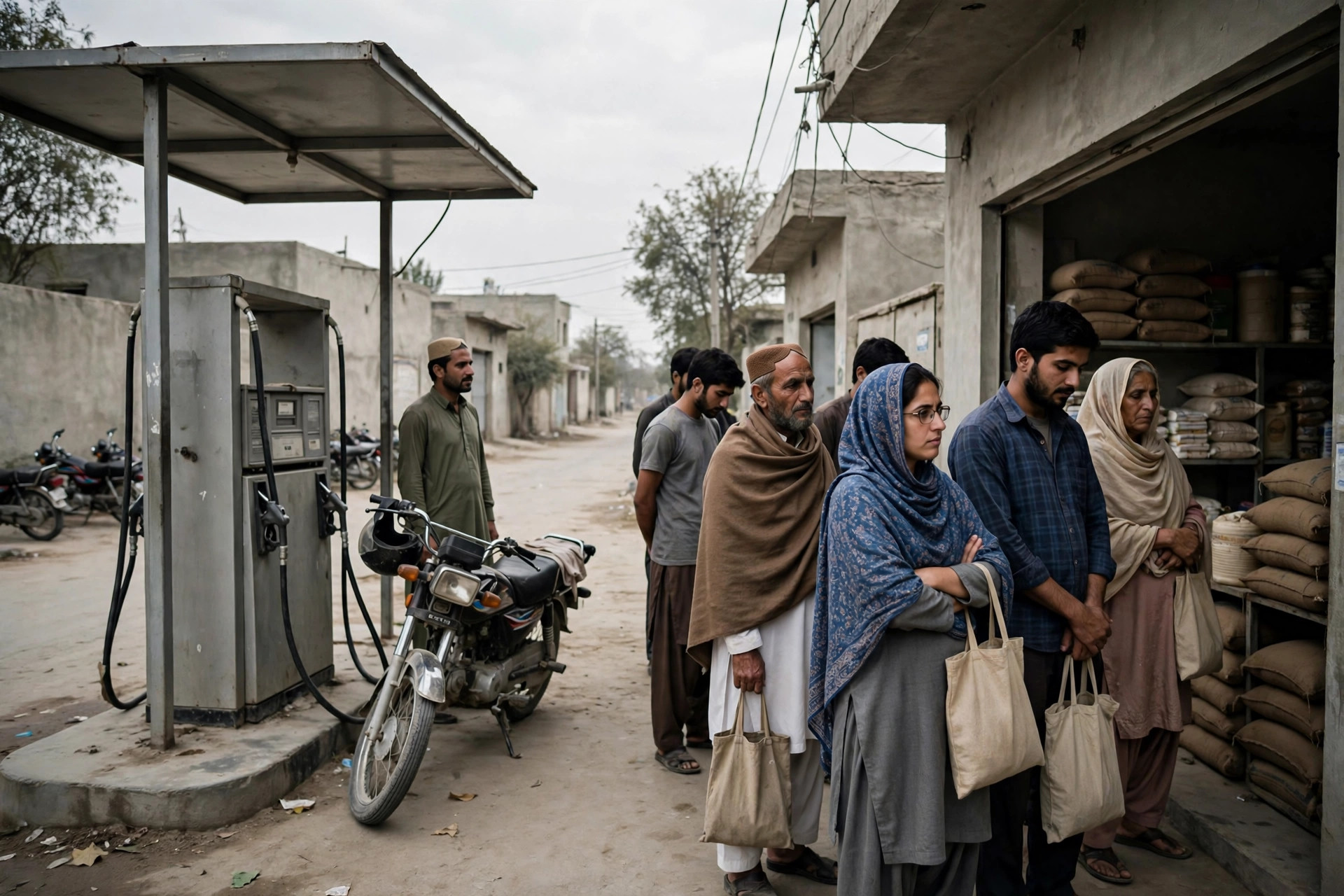
KARACHI: Stand in any Pakistani bazaar, classroom or bus queue and the country's defining economic fact is standing around you: Pakistan is extraordinarily young. It is one of the most populous countries on earth, its population is still growing faster than most, and a very large share of its people are children, teenagers or young adults who have not yet reached their peak earning and spending years. Demographers call the opportunity hidden in that age structure a potential demographic dividend; sceptics, looking at the same numbers, see a jobs emergency on a timer. Both are describing the same reality from different ends. This guide explains the shape of Pakistan's population, the mechanics of the dividend and the conditions that decide whether it is collected, and what a young country means for the consumers, workers, savers and stock market of the next thirty years. Population figures are deliberately kept general here, because estimates differ by source and are revised with each census — the Pakistan Bureau of Statistics (PBS) and the UN population division are the references to check for current counts.
The shape of the population: a broad-based pyramid
Demography starts with three broad facts. First, scale: Pakistan's population is well above two hundred million people, placing it among the five most populous countries in the world — a market and a labour force of continental size contained in one economy. Second, growth: the population has grown rapidly for decades because birth rates, while falling, remained above the replacement level for a long time, and because each generation of parents is larger than the last, growth continues even as family size shrinks — the momentum effect. Census results have repeatedly come in above official projections, a reminder that planning on assumed slowdowns is risky. Third, youth: the median age is in the early twenties by most estimates — roughly a decade younger than the global median and far younger than China or Europe — with a very large share of the population under thirty. Exact medians and shares vary by source and census vintage; verify with the PBS, but the qualitative picture is not in dispute.
Inside the national picture sit three sub-stories investors should hold separately. Urbanisation: Pakistan's cities are growing faster than its villages as young people move for work and education, though measurement is contested because official definitions of "urban" lag the reality of sprawling peri-urban settlements around Karachi, Lahore, Faisalabad and the twin cities. Urban consumers behave differently — more formal retail, more banking, more branded goods — and listed consumer companies' strategies are essentially bets on this transition. Regional spread: population and growth are uneven across provinces, with consequences for the National Finance Commission transfers in the federal budget, for political representation, and for where factories, schools and hospitals must be built. The diaspora: millions of Pakistanis live and work abroad, concentrated in the Gulf, and their decisions to send money home, invest through channels such as the Roshan Digital Account, or eventually return form a demographic-financial bridge examined in remittances explained.
The demographic dividend: the mechanics of the promise
The dividend is not magic; it is arithmetic about dependency. Every economy supports its non-working members — children and the elderly — from the output of its working-age members. When fertility falls, the child share shrinks while the large generations born earlier move into working age, and for a window of a few decades the ratio of workers to dependents improves: more producers per mouth, more potential savers per household, more taxpayers per pensioner. East Asia's growth era rode exactly this window, deliberately paired with export factories to employ the workers and schools to skill them. Pakistan's window is open now in structural terms: the working-age share is rising and will keep rising for years as today's enormous cohorts of children become adults.
The second half of the dividend is financial. A young workforce in its peak earning years is a population forming households, buying homes, motorcycles, phones and insurance, opening bank accounts and — the part this website exists for — beginning to invest. Economists call the later stage the second dividend: workers who save for their own retirement accumulate capital that funds investment across the economy. Pakistan's formal savings and pension coverage is thin today, which means the second dividend is available but uncollected: the Voluntary Pension System and mutual fund industry described in our learning guides are small relative to the cohort that will need them. If even a modest share of the young workforce begins regular investing, the domestic bid underneath the PSX changes character — steadier, longer-horizon, less dependent on foreign flows of the kind foreign investors on the PSX describes.
An illustrative example makes the arithmetic concrete — round invented numbers, real mechanism. Imagine two economies of 100 people. In Economy A, 50 are of working age and 50 are dependents: each worker supports one dependent besides themselves. In Economy B, after a fertility transition, 65 are working-age and 35 dependent: each worker supports about half a dependent. If workers in both economies produce and earn the same, Economy B's households have far more left after feeding, clothing and schooling dependents — money that becomes savings, investment and discretionary consumption without anyone working harder. That surplus, aggregated over tens of millions of households over two or three decades, is the dividend. It arrives automatically in the arithmetic; whether it arrives in fact depends entirely on whether the 65 actually have jobs and skills, which is the next section.
The conditions: jobs, schools, health and women
The dividend literature is unanimous that age structure only sets the table; four conditions decide the meal. Jobs at scale is the first: Pakistan must absorb well over a million new entrants to the labour force every year — the precise flow varies by estimate — into productive work, not just any work. The sectors that have historically absorbed young labour at scale in developing Asia are labour-intensive manufacturing and tradable services; Pakistan's versions are the textile and garment factories of Pakistan's exports explained and the IT services sector growing within it, plus construction and domestic services. Every year the economy grows too slowly to employ its entrants, the queue lengthens and the informal economy — explained here — absorbs them at low productivity.
Education and health are the second condition, and the honest assessment is demanding. Pakistan carries a large population of out-of-school children — among the world's largest in absolute terms — and independent assessments of those in school find widespread learning poverty, with many children unable to read a simple text by the age they should. Stunting from early-childhood malnutrition affects a strikingly large share of young children by international health survey measures, with lifelong consequences for learning and earnings. These are not social footnotes to an economic story; they are the economic story, because a workforce's productivity twenty years from now is being set in today's classrooms and kitchens. Female participation is the third condition, and Pakistan's largest untapped margin: women's participation in the formal labour force is low by regional standards, constrained by safety, transport, social norms and the availability of suitable work — our guide to women and investing in Pakistan covers the financial side of the same gap. An economy that educates and employs its daughters collects the dividend twice; one that does not leaves half the window closed.
The fourth condition is fertility completing its transition. Pakistan's fertility decline has been slower than in comparable countries such as Bangladesh and Iran, whose faster transitions are the regional benchmark; each year of delay adds another large cohort and pushes the dependency improvement further out. Family planning access, girls' secondary education and urbanisation all push in the same direction in the evidence. None of these four conditions is a stock-market variable in the quarterly sense — and together they will matter more to a thirty-year investor than everything else in this series combined.
The second dividend: when a young country starts to save
There is a later chapter to the demographic story that receives far less attention than the jobs debate, and it is the chapter most directly about capital markets. The first dividend is about production: more workers relative to dependents. The second dividend is about assets: those workers, as they move into their forties and fifties with dependents grown, save at the highest rates of their lives, and a society with a large cohort in its peak saving years accumulates financial wealth quickly — pension funds, insurance reserves, mutual funds and bank deposits that deepen the financial system and lower the cost of capital for everyone. Countries that built funded pension pillars while their windows were open converted demography into a permanent stock of domestic investment capital; countries that relied entirely on pay-as-you-go state pensions and informal family support reached old age with the bill still to pay. Pakistan today stands early in this chapter: formal retirement provision covers mainly government employees and the organised corporate sector, the Employees' Old-Age Benefits Institution serves a fraction of the workforce, and most Pakistanis still expect — increasingly unrealistically, as family sizes fall and children migrate — to be supported by their children. The gap between that expectation and the shrinking family that must meet it is, person for person, the strongest argument for the young to begin building their own long-term savings early, and in aggregate it represents an enormous potential flow into exactly the regulated savings and investment products that Pakistan's capital markets are trying to grow.
What a young country means for markets and companies
For the PSX, demography is the slow tide under sector analysis. Consumer companies sell into a market adding millions of first-time buyers of packaged food, personal care, mobile connections and motorcycles each year — the demand base behind the pricing power discussed in PSX food and personal care stocks. Banks and microfinance institutions face a vast unbanked young population whose first financial product is a mobile wallet, not a branch account. Housing carries a structural shortage measured in millions of units by most estimates, against which cement, steel and construction earnings ultimately rest. Education, healthcare and telecom services all have demographic runways visible in the age pyramid itself, which is why long-horizon investors read the census with the same care as a balance sheet.
Demography also stresses every system this series has covered. A young, growing population imports more food and fuel in absolute terms, pressing on the current account; needs schools, hospitals and subsidies the federal budget must somehow fund; competes for the energy in Pakistan's energy mix; and supplies the workers whose remittances, if they emigrate, support the balance of payments today while their absence is debated as brain drain tomorrow. Emigration itself is demography's pressure valve — Gulf construction and services have absorbed Pakistani labour for fifty years — and its scale in any period tracks the domestic economy's failure or success in creating jobs at home.
For the individual young investor, the demographic fact is personal: a twenty-five-year-old Pakistani has a forty-year horizon over which compounding — the subject of the power of compounding — is the most powerful force in finance, and a domestic market whose long-run demand story is written into the population pyramid. Time is the one asset this generation holds in abundance; the task of products being built now, Aktzien among them with its planned low-cost access and fractional shares — in development, not yet live — is to make starting early practically easy rather than merely advisable. This article, like all in this series, is educational content and not financial advice: demography makes long horizons valuable, but it does not remove risk from any individual investment, and population projections are estimates that the PBS and UN revise as new censuses and surveys arrive.
Key takeaway: Pakistan's youth is a multi-decade window in which a rising share of workers could raise savings, demand and growth — a dividend that is paid only if jobs, education, health and women's participation arrive to meet the generation already born.