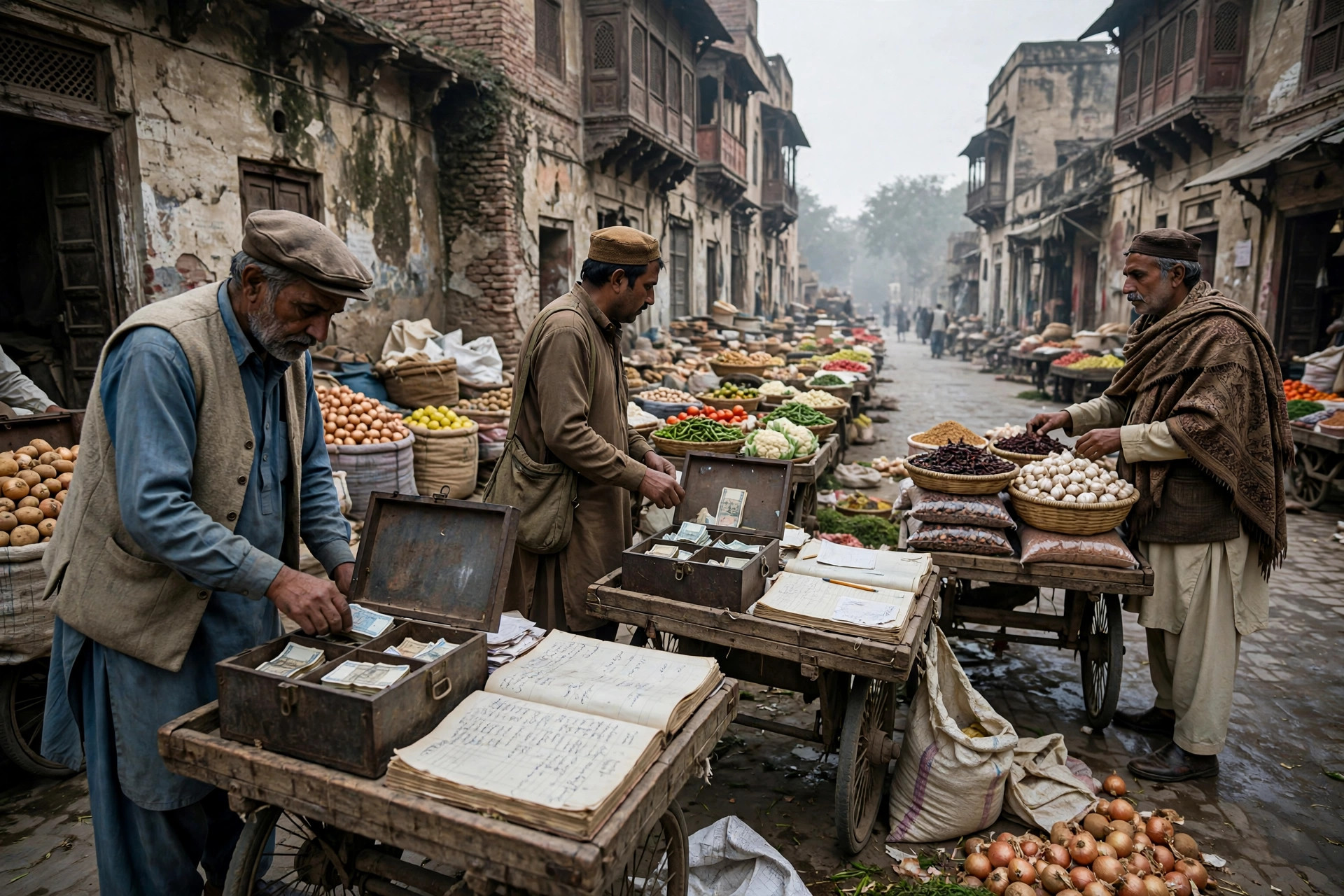
KARACHI: A shopkeeper in a busy bazaar takes cash all day, pays his supplier in cash, pays his assistant in cash at the end of the week, and keeps no ledger that any tax officer will ever see. Multiply that scene by millions of shops, workshops, transporters, clinics, tutors and small builders, and you have Pakistan's informal economy — not a fringe, but a parallel system that employs a very large share of workers, moves a very large share of money, and sits largely outside income tax, sales tax documentation and formal regulation. Understanding it explains a puzzle that confuses many new investors: how can an economy with so much visible activity raise so little tax, borrow so heavily, and leave its stock market representing only a slice of real business life? The answer runs through documentation, incentives and trust, and it connects directly to the subjects covered in our guides to Pakistan's demographic moment and external financing.
What "informal" actually means
Informal does not mean illegal, and it does not mean small in every case. Economists generally use the word for economic activity that is not fully recorded, registered or regulated in the way the formal system expects. A street vendor with no registration is informal. So is a profitable trader who is registered for some purposes but under-reports sales, pays part of wages off the books, or settles large deals in cash to avoid creating a paper trail. So, in a different way, is a domestic worker, a daily-wage labourer or a home-based piece-rate worker whose employment exists in practice but not in any contract, payroll or social protection system.
It helps to separate three overlapping ideas. The first is informal employment: work without a written contract, paid leave, pension contribution or other protections, whether the employer itself is formal or informal. The second is the informal sector: unregistered or lightly registered businesses, often family-run, with few employees and simple accounts, if any. The third is undocumented activity inside otherwise formal businesses: the unrecorded sale, the second set of books, the cash payment designed to stay invisible. Public debate often lumps all three together as "the black economy", but the remedies differ. A pushcart vendor needs simple registration and protection from harassment. A large under-reporting trader raises an enforcement and fairness question. A garment worker stitching at home needs labour protection more than a tax notice.
Measurement is therefore inherently fuzzy. By definition, activity that avoids records is hard to count, so estimates of the informal economy's size vary widely depending on method — surveys of workers, gaps between electricity use and reported output, currency in circulation, or comparisons of household spending with declared incomes. Treat any single precise percentage you hear with caution. What is not in serious dispute is the direction of the story: informality in Pakistan is large by international comparison, tax collection as a share of the economy is low, and the documented, listed sector — the world the Pakistan Stock Exchange, or PSX, represents — is much narrower than the economy as a whole. For an investor, that narrowness matters: many successful Pakistani businesses will never appear on the exchange, and many listed-company competitors operate with very different cost structures because they do, in fact, pay their taxes.
Where informality lives: cash, land and the bazaar
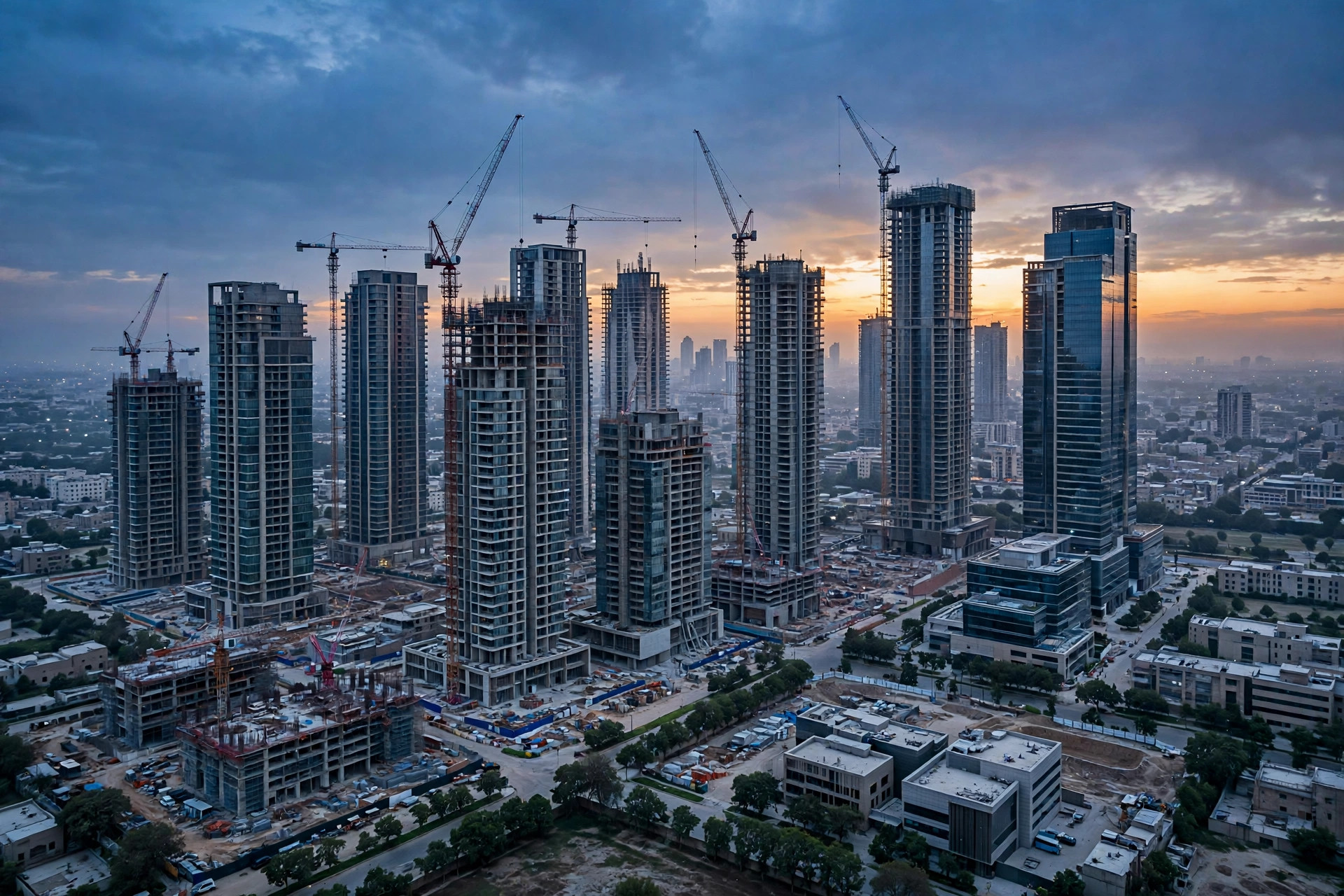
Walk through the economy sector by sector and the pattern repeats. Retail and wholesale trade is the classic home of informality: vast networks of wholesalers, commission agents and retailers where credit is personal, records are private notebooks, and settlement is in cash or through informal transfer arrangements. Agriculture, still a major employer, operates largely outside income tax in practice, with production sold through middlemen and mandis where documentation is thin. Small-scale manufacturing — workshops making furniture, garments, auto parts, footwear or food products — often sits below registration thresholds or splits operations to stay there. Construction and real estate have historically absorbed large amounts of undocumented money, because property transactions allowed value to be recorded at official rates well below market prices, and because plots and files could change hands with limited scrutiny.
Services are no different. Private tuition, clinics, salons, repair shops, transport — from rickshaws to intercity trucking — and domestic work all run substantially on cash and word of mouth. Even the digital economy has an informal edge: social-media sellers taking payment on personal accounts, freelancers receiving foreign income without consistent documentation, and online traders operating without sales tax registration.
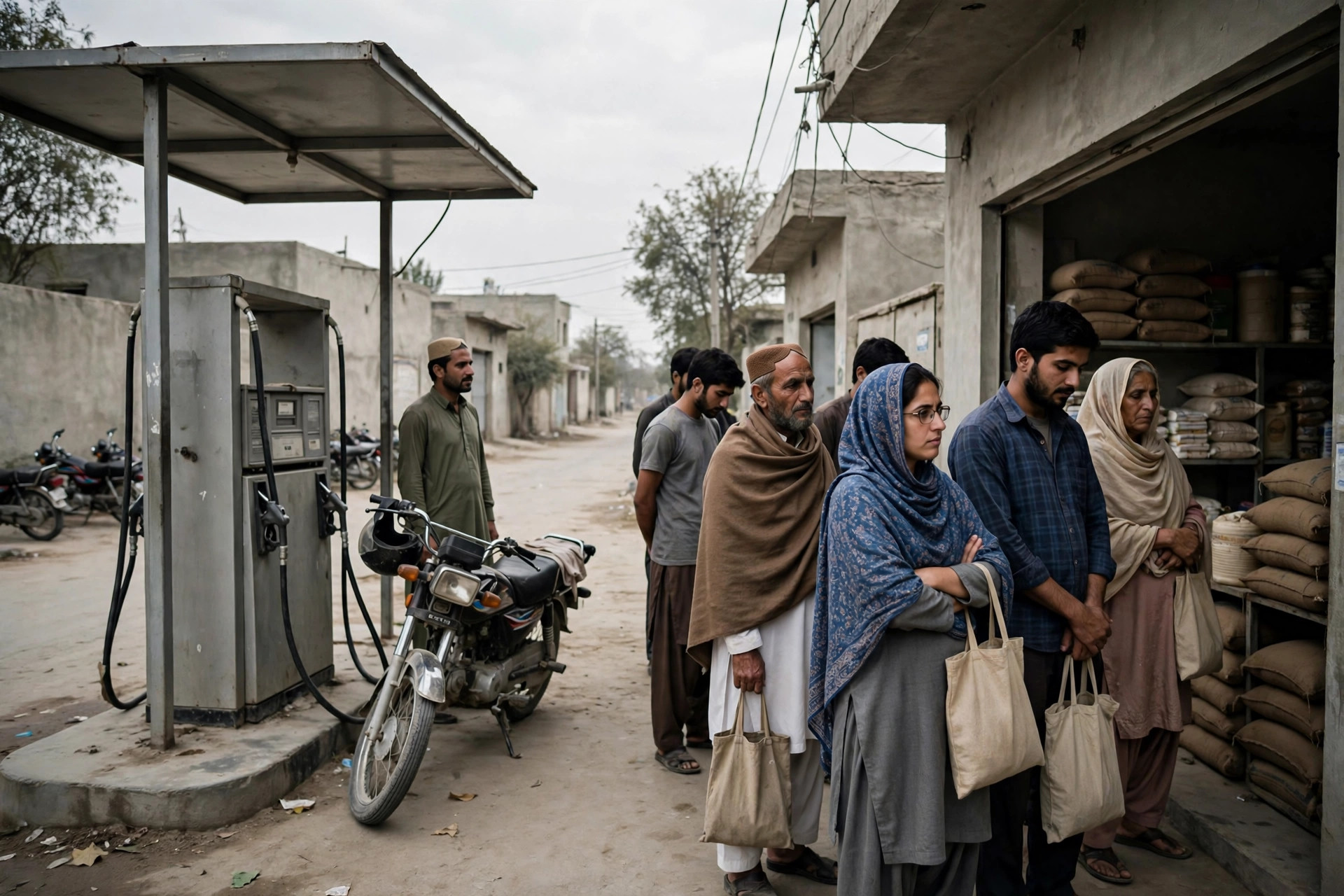
Two enablers run through all of it. The first is cash. Cash leaves no automatic trail, needs no bank account, no identity check and no connectivity, and it settles instantly between people who may not trust banks or the state. Pakistan's cash-based habits are reinforced every time a formal payment creates a visible record that a citizen fears will be used against them. The second enabler is distrust and complexity. Registering, filing, and staying compliant takes time, professional help and repeated interaction with officials. If the perceived return — access to finance, legal protection, government contracts — feels small, and the perceived cost — taxes, inspections, demands for bribes — feels large, staying informal is, from the individual's narrow viewpoint, a rational choice. Economists call this a low-trust, low-compliance equilibrium: everyone stays out because everyone else stays out, and the state, starved of revenue, cannot deliver the services that would make joining feel worthwhile.
Why it holds the wider economy back
The costs are real, and they fall even on people who never think about tax policy. Start with public finances. When a large share of activity escapes direct taxation, the state leans heavily on those it can see: salaried employees whose tax is deducted at source, formal companies, and consumers paying sales tax and customs duties embedded in prices. That creates a resentful, lopsided system — a narrow base taxed hard — and it still does not raise enough, so governments borrow, feeding the debt and financing pressures described in our guide to subsidies and in the federal budget story. Less revenue also means less room for the schools, hospitals, water systems and courts that a young, fast-growing population needs.
Second, informality traps businesses at small scale. A firm that must stay invisible cannot advertise openly, bid for large formal contracts, export through documented channels, or borrow cheaply from a bank that needs audited accounts and collateral records. So it stays small, uses family labour, rents equipment informally, and pays high rates to informal lenders. Its productivity stays low — hand methods instead of machines, no specialised staff, no training — not because the owner lacks ambition, but because growing would mean becoming visible before the business can afford the costs of visibility. Multiply that across an economy and national productivity, wages and export sophistication all suffer.
Third, it penalises honest formal firms. Imagine, as an illustrative example, two competing traders selling the same goods. Trader A documents sales, pays sales tax and income tax, contributes for employees and keeps audited books. Trader B documents half his sales and pays a fraction of that burden. Trader B can undercut Trader A on price while earning the same margin — not through efficiency, but through evasion. Over time, formal firms either lose market share, lobby for protection, or drift into partial informality themselves. On the PSX, this is not abstract: listed companies are among the most documented businesses in the country, so when you compare a listed firm's margins with the anecdotal riches of undocumented trade, part of the gap is simply the cost of being visible.
Fourth, informal workers themselves pay a price. No contract means no security against arbitrary dismissal, no workplace safety enforcement, no pension, no health cover, and little access to formal credit except through employers or moneylenders. Women working from home and daily-wage labourers are especially exposed. Informality offers entry — anyone can start selling tomorrow — but very little ladder.
Why crackdowns alone keep failing
Every few years, a government announces a drive: register the traders, document the economy, widen the tax net. The traders strike, negotiations follow, deadlines slip, an amnesty or a softer scheme appears, and the equilibrium reasserts itself. The cycle is predictable because it treats informality only as evasion, when much of it is also a response to how the formal system behaves. If registration brings a flood of notices but no bank loan, no faster court, no reliable electricity and no protection from rent-seeking officials, the bargain looks one-sided. If tax law changes with every budget, if refunds are delayed for years, and if honest filers feel they are audited more than non-filers are pursued, compliance looks like a penalty for honesty.
Amnesties illustrate the dilemma. A one-off scheme that lets undocumented money enter the formal system for a modest payment can raise revenue and bring assets — especially property and foreign holdings — onto the record. Pakistan has used variants of this repeatedly. But repeated amnesties teach the opposite lesson: why comply every year if waiting brings a cheaper settlement later? Each amnesty therefore needs to be paired with a credible change in what follows — simpler ongoing compliance and consistent enforcement afterwards — or it deepens cynicism instead of ending it.
Withholding taxes are the state's other favourite tool, and they cut both ways. Levies collected through banks, utilities, telecoms and large purchasers do reach into informal activity, because even undocumented traders use phones, electricity and bank accounts. But heavy reliance on withholding turns the tax system into a maze of transaction charges, raises the cost of using banks at all, and pushes activity back into cash — the opposite of documentation. The distinction that matters, and that filers feel keenly, is between withholding as an advance, adjustable tax for people inside the system, and withholding as a final, unavoidable cost for people outside it. Policy in this area changes frequently, so check current Finance Act and Federal Board of Revenue, or FBR, guidance rather than relying on any older summary.
What formalisation that works actually looks like
International experience and Pakistan's own partial successes point in the same direction: make formal status useful, simple and safe, in that order. Useful means the documented business gets something it wants — a bank account it can operate without friction, the ability to accept card and mobile payments cheaply, access to formal credit scored on its transaction history, eligibility for government and corporate supply chains, and a credit record that lowers its borrowing cost over time. Pakistan's mobile and branchless banking, instant payment systems and digital invoicing pilots all push in this direction, because every digital payment creates the record that a loan officer — and, yes, the tax system — can later use.
Simple means one registration instead of many, filings a small trader can complete on a phone, presumptive or turnover-based arrangements for very small businesses that trade precision for predictability, and thresholds that genuinely leave micro-enterprises alone. Safe means predictability: no retrospective surprises, a clear separation between registering to do business and inviting harassment, functioning appeal processes, and enforcement visibly aimed first at large evaders rather than small registrants. Technology helps — point-of-sale integration with invoicing systems, digital payment trails, and data matching across banks, utilities, property registries and customs can find large under-reporting far more efficiently than raids — but technology without trust simply teaches people to avoid the systems being watched.
Real estate is a useful test case. When official valuation tables sit far below market prices, under-declaration is built into every transaction, and property becomes a parking place for undocumented wealth rather than a productive asset. Moving valuations towards market levels, taxing transactions transparently, and digitising land records attack informality at one of its biggest reservoirs. The same logic applies to retail: a simple, low-rate, credible regime for traders, negotiated and then actually held stable for years, is worth more than a theoretically perfect tax that no one joins.
What this means for investors
For PSX investors, informality is background that shapes almost everything in the foreground. It explains why the listed universe is concentrated in banking, energy, fertiliser, cement and a handful of large manufacturers — the sectors too big, regulated or capital-hungry to be informal — while vast areas of trade, services and light manufacturing have no listed presence at all. It explains why tax measures in every budget matter so much to listed earnings: listed companies are the tax base, so new levies, super taxes, minimum taxes and changes to withholding fall disproportionately on them and on their salaried customers. And it explains why formalisation, when it genuinely advances — a digital payments surge, a documented retail scheme that sticks, property valuation reform — is quietly bullish for listed firms over time: their undocumented competitors' unfair cost advantage shrinks, banks gain deposit and lending business from newly documented customers, and government finances gain room that reduces crisis risk for everyone.
It also counsels humility in comparisons. A listed company's return on equity, tax rate and compliance cost are public and audited; the bazaar competitor's are neither. Judging the listed firm a poor business because an undocumented rival seems to thrive confuses evasion with efficiency. Conversely, when a listed company operates in a sector where informal competition is retreating — branded packaged foods replacing loose commodities, documented dealerships replacing informal yards — that shift of share from informal to formal channels can drive growth even in a slow economy.
None of this will resolve quickly. Informality built over decades, rooted in cash habits, property practices and justified distrust, unwinds over years of consistent policy, not in a single budget speech. Watch the indicators that move slowly and matter most: tax filers and revenue broadening beyond withholding, digital payments as a share of transactions, documented retail schemes surviving contact with reality, and property valuations converging with markets. This article is educational content, not financial advice, and tax rules change frequently — always check current FBR and SECP guidance for anything you act on.
Key takeaway: Pakistan's informal economy is a rational response to cash habits, complex rules and low trust — and it narrows the tax base, traps firms at small scale and penalises the documented companies that list on the PSX.