KARACHI: In Pakistan, natural gas has a name, and the name is a place: Sui. When a household in Karachi or Lahore turns on a stove, the fuel is still called "Sui gas" — after the field in the Bugti tribal area of Balochistan where, in 1952, a young company called Pakistan Petroleum Limited proved one of the largest gas discoveries in the world at that time. PPL — incorporated in 1950 from the Pakistani business of the Burmah Oil Company — did more than find a field. Its discovery created Pakistan's gas industry: the pipelines, the utilities, the fertiliser plants and the household connections that followed all trace back to Sui. Today PPL is one of the country's largest exploration and production companies, majority-owned by the Government of Pakistan, operator of Sui and Kandhkot, partner in fields from Sindh to the Tal block, and a fixture of the KSE-100 whose history is, in large part, the history of Pakistani energy itself.
What PPL does today
PPL explores for, develops and produces natural gas, crude oil, condensate and LPG. It operates major fields including Sui — still, after seven decades, among the country's largest single gas fields — Kandhkot in Sindh, and Adhi in Punjab, a gas and condensate field it runs with partners including Pakistan Oilfields. It also holds non-operated interests in some of Pakistan's most important producing assets, among them the Qadirpur, Sawan and Miano gas fields and the MOL-operated Tal block, where its partners include POL and OGDC. Its exploration portfolio spans concessions across Balochistan, Sindh, Punjab and Khyber Pakhtunkhwa.
Within the listed exploration sector — mapped in our guide to PSX exploration and production stocks — PPL occupies the middle ground between the state giant OGDC (OGDC), created a decade later, and the private-sector Pakistan Oilfields (POL), created in the same year. All three sell into the same pricing system; what differs is their asset mix. PPL is the gas-heaviest of the three, and Sui is the reason.
1950–1952: a Burmah Oil inheritance
PPL was incorporated on 5 June 1950, following the Pakistan Petroleum Production Rules of 1949, which — as with POL — required petroleum rights to be held by companies incorporated in Pakistan. PPL inherited the assets and liabilities of the Burmah Oil Company (Pakistan Concessions) Limited, the local arm of the British group that had pioneered oil in Burma and India, and commenced business on 1 July 1952. At incorporation Burmah Oil held the majority of the shares, with the Government of Pakistan holding a substantial minority and the balance with Pakistani investors — a public-private template common to Pakistan's founding industrial companies.
Burmah's geologists were looking for oil in Balochistan. Drilling at Sui Well No. 1 began on 10 October 1951, and gas was encountered at a depth of around 4,000 feet; the well was drilled deeper, to over 10,000 feet, still hunting oil. What the drilling proved instead was gas on an enormous scale: the Sui structure held reserves then estimated at around 13 trillion cubic feet, ranking it among the largest gas fields known anywhere at the time and comfortably the largest in Pakistan. Commercial exploitation began in 1955, and gas from Sui began flowing to Karachi and upcountry — to power stations, fertiliser and cement plants, industry and, in time, to millions of homes.
Sui: the field that built a gas economy
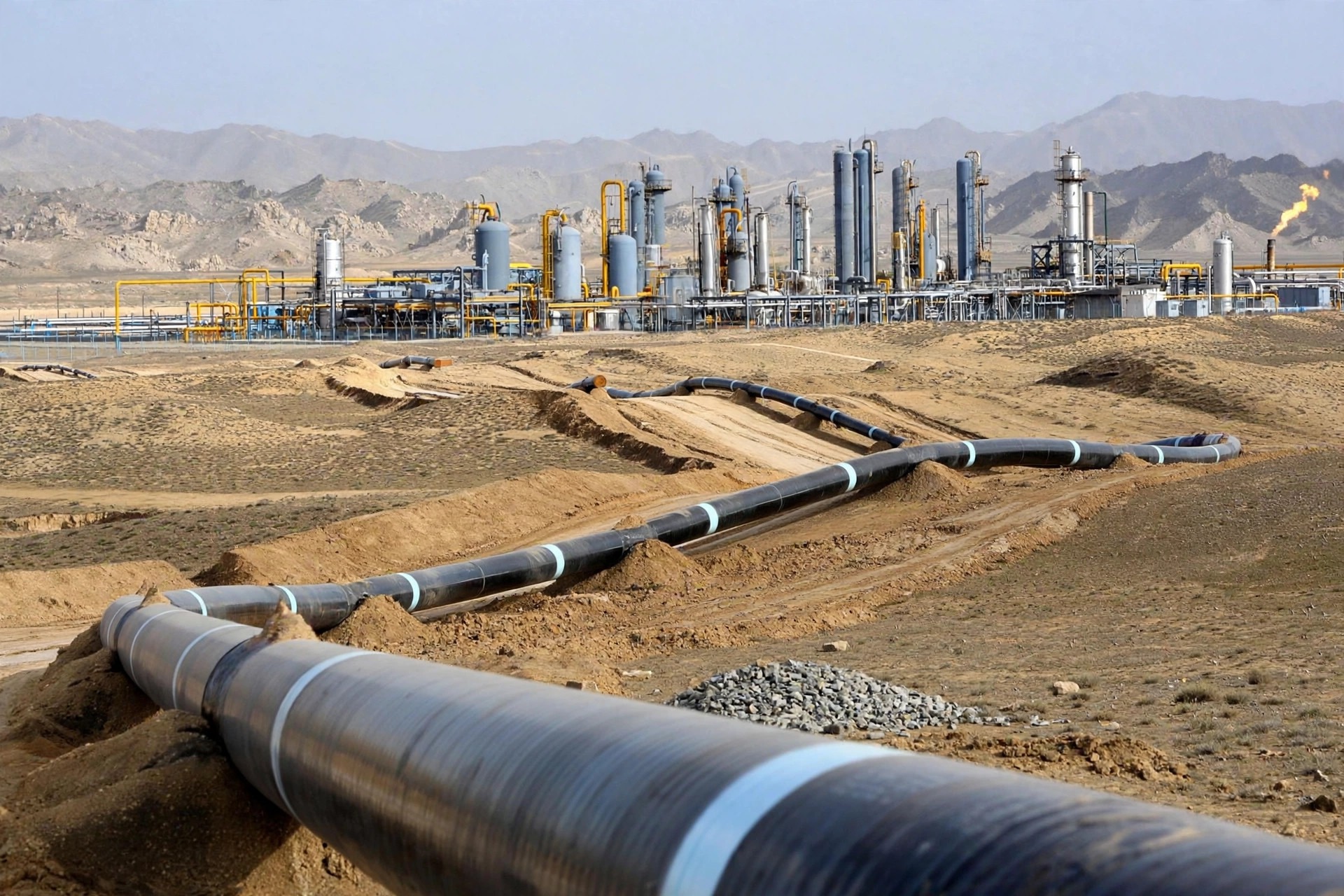
It is hard to overstate Sui's consequences. Before Sui, Pakistan's energy ran on coal, firewood and imported oil. After Sui, the country built a natural-gas economy from scratch: transmission pipelines from Balochistan to Sindh and Punjab; the two great gas utilities that still distribute to cities today; fertiliser plants sited to consume Sui and Kandhkot gas; and a generation of engineers for whom PPL — professionally managed under its Burmah inheritance, with a reputation as an employer of choice for new graduates — set the technical standard. The word itself entered the language: "Sui gas" became the generic Pakistani term for piped natural gas from any source, a branding accident no marketing department could buy.
The field also wrote Pakistan's first great resource-federalism story. Sui sits in Balochistan, the country's poorest province, while its gas has historically flowed to richer markets elsewhere — a geography that has made royalties, lease renewals and provincial shares recurring subjects of negotiation between PPL, the federal government and Balochistan. When the Sui lease came up for renewal in the last decade, the agreement struck provided for substantial royalty payments to the province and committed exploration spending — a reminder that for this company, geology and politics have never been separable. Sui itself is now a mature field in long decline from its peak, kept producing through compression and workovers; its remaining life is measured carefully in every reserves statement.
Building beyond Sui: Kandhkot, Adhi and the partnership fields
PPL's exploration record extended well beyond its founding discovery. Its credited discoveries over the decades included the Kandhkot gas field in Sindh — on production since 1987 and a mainstay of supply to power and fertiliser customers — the Adhi field in Punjab, producing gas and condensate since 1980, and earlier finds at places such as Mazarani, while some discoveries, including fields in what became Bangladesh, passed out of the portfolio with history. As the industry matured, PPL increasingly grew through partnerships: taking minority interests in fields operated by others — Qadirpur, Sawan, Miano and Tal among them — which spread geological risk and gave it production without operatorship.
Ownership, meanwhile, completed a long journey to the state. Burmah Oil sold a small stake to the International Finance Corporation in the early 1980s, and in 1997 the British group exited entirely, selling its remaining shareholding to the Government of Pakistan, which became the majority owner. In July 2004 the government sold a minority stake to the public in a successful stock-market offering — the transaction that made PPL a widely held listed company while leaving the state in control. That structure persists: a professionally run explorer, answerable to a government majority shareholder and a public minority, operating fields whose output the whole economy notices.
One PPL venture sits entirely outside oil and gas, and it closes a neat loop. Bolan Mining Enterprises, a 50:50 joint venture with the Government of Balochistan, mines and grinds barytes — the heavy mineral weighed into drilling mud to control pressure down an oil well — at Khuzdar in Balochistan. Its grinding mill, with a capacity of around 50,000 tonnes a year, produces barytes to American Petroleum Institute specifications and has historically supplied the great majority of the drilling-grade barytes used by exploration companies operating in Pakistan, saving the country imports. An explorer that also makes an essential ingredient of drilling is a small monument to import substitution — and, like Sui's royalties, a standing Balochistan partnership inside the company's structure.
How PPL makes money
The mechanics are the upstream standard, gas-flavoured. PPL sells its gas to the state-linked gas utilities and to bulk consumers such as fertiliser and power plants, at wellhead prices determined under the petroleum policy and gas pricing agreements applicable to each field — dollar-linked formulas in which international crude prices and the exchange rate feed into rupee realisations, though individual fields carry the pricing vintage of their era, as the replacement of PPL's old Sui pricing agreement by a newer one in the 2000s illustrated. Crude and condensate go to refineries at benchmark-derived prices; LPG is sold at market-linked rates. Royalties are paid to the state — with Balochistan the major recipient for Sui — and the balance after operating costs, exploration expense and tax is profit.
Two Pakistan-specific features shape the cash reality behind that profit, both shared with its peers. The first is circular debt: PPL's utility customers sit inside an energy chain chronically short of cash, so receivables can accumulate even as reported earnings look strong; experienced readers therefore track PPL's trade debts and operating cash flow alongside its profit, exactly as with OGDC. The second is depletion arithmetic: Sui and Kandhkot are old fields, and every year of production must be replaced by exploration success, development drilling or acquisitions if output is to hold — PPL's results carry periodic reminders of the risk, from dry-hole write-offs to a much-criticised overseas acquisition of a foreign company's Pakistan assets in the early 2010s that investigators later said had been overpaid for. The exploration lottery, in other words, applies to national champions too.
From wellhead to burner tip: PPL inside the gas chain
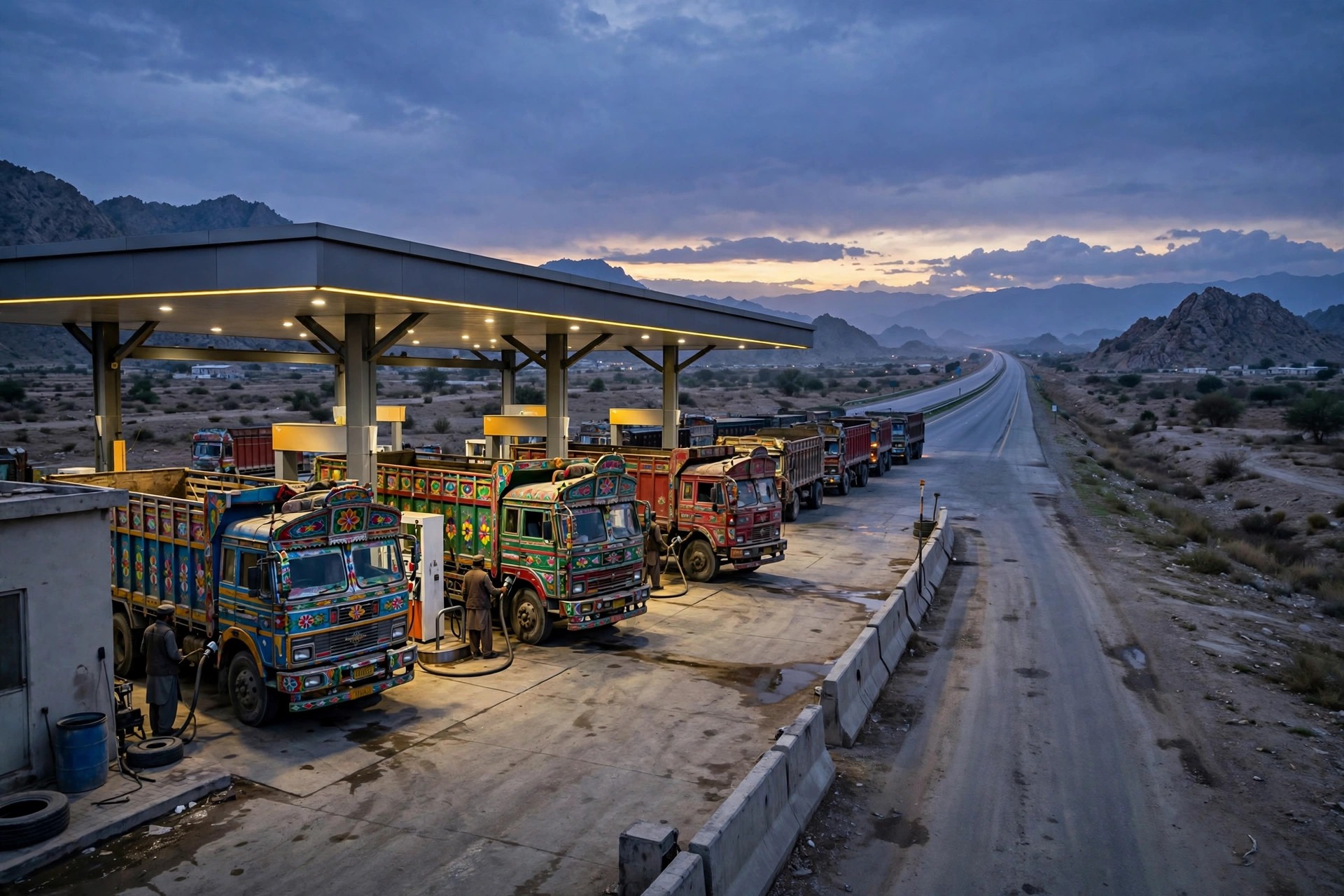
PPL produces gas; it does not sell it to your home. Between the wellhead at Sui or Kandhkot and the burner tip in a Karachi kitchen stands the chain Pakistan built on the back of the 1952 discovery: transmission pipelines carry the gas across provinces, and the two great utility companies — Sui Northern and Sui Southern, themselves listed companies named for the field that started it all — distribute it to power stations, fertiliser plants, industry and households under a regulated tariff system. PPL's customers are those utilities and large direct buyers, and the price it receives is set at the wellhead under each field's pricing agreement, long before the consumer's bill is calculated. That separation explains a recurring public confusion: household gas tariffs can be frozen for political reasons while producer prices move on their dollar-linked formulas, or the reverse — the two prices live in different parts of the same chain, connected by the utilities' finances and, too often, by the arrears that become circular debt.
The pricing agreements themselves carry history. Fields discovered under different petroleum policies earn different prices for identical molecules; Sui's gas, produced under agreements first struck generations ago, has historically been priced under older terms than a field developed under the 2012 policy, and the phased replacement of PPL's old Sui pricing agreement in the 2000s was watched by the whole sector as a template for how legacy fields migrate toward modern pricing. For the reader of PPL, the practical translation is this: the company's average realised gas price is a blend of vintages, and policy decisions in Islamabad about legacy pricing can be worth as much to its earnings as a new discovery.
The frontier problem: replacing a giant
Every profile of PPL ends, sooner or later, at the same arithmetic. Sui was so large that replacing it is not a task but a national project: Pakistan has found many fields since 1952, but none of Sui's singular scale, and the country's gas production has been living off the long decline of its founding giants — Sui, and the fields of the following decades — for years. PPL's exploration effort therefore runs on two tracks at once. Near its existing assets, development and appraisal drilling squeezes more from known structures, and compression keeps mature fields flowing against falling pressure. Further out, its exploration blocks in Balochistan, Sindh and the frontier districts carry the higher risk and higher prize — country where geology is promising, operating conditions can be difficult, and security and community relations are part of the cost of doing business, as they have been around Sui itself for seventy years. The partnership model hedges the same risk from the other side: minority stakes in other operators' blocks, Tal among them, give PPL production growth it does not have to drill for alone. Whether the two tracks together can hold the company's output against Sui's decline is, in the end, the question its reserves statement answers a little more each year.
What investors typically watch
Followers of PPL watch production trends at Sui and Kandhkot above all, since decline rates there set the company's base; exploration and appraisal results across its operated blocks; contributions from the non-operated portfolio, Tal in particular; gas pricing developments, including any reform of wellhead pricing and the treatment of older fields; collections from the gas utilities and the state of circular debt; and the dividend, which reflects both the government's appetite as majority owner and the cash actually received. Lease and royalty negotiations with Balochistan form a standing item on the list. These are observation points for understanding the company — this profile is educational content, not financial advice.
Key takeaway: Pakistan Petroleum turned Burmah Oil's Pakistani concessions into the 1952 Sui discovery — the giant Balochistan field that created Pakistan's gas economy and gave the fuel its everyday name — and remains a state-controlled, gas-heavy explorer built around Sui, Kandhkot, Adhi and its partnership fields.