KARACHI: Karachi runs on gas it cannot see. The power stations, the textile mills, the fertiliser plant, the steel mill, the CNG stations and several million stoves of Pakistan's largest city draw their fuel from wells hundreds of miles away in Balochistan and Sindh — and almost all of it arrives through one company's pipes. Sui Southern Gas Company Limited, SSGC, is the integrated gas transmission and distribution utility for Pakistan's south: Sindh and Balochistan. Its biography is practically the biography of Pakistani gas itself, because SSGC's ancestor built the country's very first long-distance gas pipeline in 1954–55, when the Sui field had gas, Karachi had industry, and between them lay 350 miles of desert. The company that resulted from that pipeline, assembled in its modern form by merger in 1989, remains a state-controlled, exchange-listed utility whose fortunes are set by regulators, geology and the national gas shortage.
What SSGC does
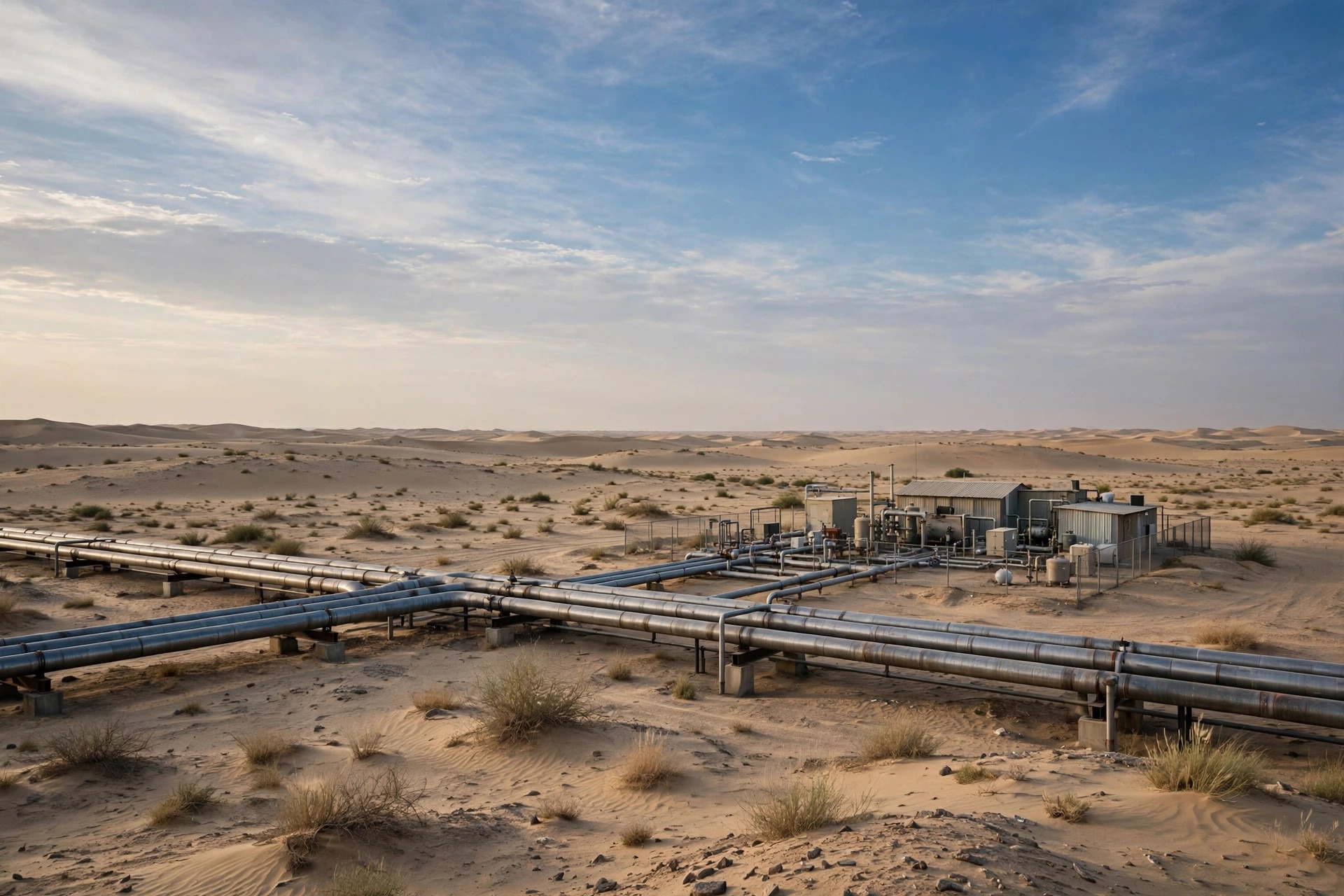
SSGC buys natural gas from exploration and production companies — from the Sui field and many others in Sindh and Balochistan, supplemented in the modern era by regasified imported LNG landed at Karachi's terminals — purifies and processes it where required, and transmits it at high pressure through its trunk pipeline system, which extends from Sui in Balochistan to Karachi, with branches serving towns and industrial zones across both provinces. It then distributes gas through its low-pressure networks to well over two million customers: households, commercial users, industrial units, power plants, a refinery cluster, fertiliser production and Pakistan's largest integrated steel mill among them.
Two sidelines complete the picture. SSGC owns and operates Pakistan's only gas meter manufacturing plant, making the meters installed on its own network and supplied to its northern sister utility under a long-standing technical arrangement originating with Schlumberger of France. It has also historically been a distributor of LPG. The company's headquarters is in Karachi, its franchise area covers two provinces, and its northern twin — Sui Northern Gas, profiled separately — does the same work for Punjab and Khyber Pakhtunkhwa. Together the pair are classified among the PSX's oil and gas marketing names, though their business is regulated utility work rather than marketing in any ordinary sense; our guides to oil marketing stocks and PSX energy stocks untangle the classification.
1952–1955: the Sui discovery and Asia's pioneering pipeline
The story begins with a discovery that changed Pakistan's energy geography. In 1952, Pakistan Petroleum Limited discovered natural gas at Sui in Balochistan — the first major gas find of the young country, with commercial production following in 1955. Gas in a remote field is a curiosity; gas in Karachi, the industrial and commercial capital, is an economy. The vehicle created to connect the two was the Sui Gas Transmission Company (SGTC), established in 1954 to purchase gas from Pakistan Petroleum and transport it to Karachi and intermediate markets.
SGTC's financing tells its own story about 1950s Pakistan: contributions came from the Pakistan Industrial Development Corporation, the Commonwealth Development Finance Company, Burmah Oil and the general public, and the pipeline itself was built with support including a loan from the International Bank for Reconstruction and Development, the World Bank's lending arm. The line itself — 347 miles of 16-inch pipe, built by a joint venture of Morrison-Knudsen and William Press — was laid between July 1954 and April 1955 and was among the earliest long-distance, high-pressure gas pipelines in Asia. By September 1955 gas was flowing to Karachi consumers. SGTC was listed on the Karachi Stock Exchange following an initial public offering in 1955, making the gas business one of the Pakistani market's earliest industrial listings.
Distribution was organised separately at first. In Karachi, the Karachi Gas Company was formed to reticulate gas within the federal capital area; outside it, the Indus Gas Company — set up under PIDC's supervision with technical support from Italy's Snam — served the towns of Sindh along and beyond the pipeline route. Transmission in one company, distribution in two: it was a workable 1950s architecture that the next three decades would gradually consolidate.
1989: three companies become SSGC
The modern company is a merger product. The two distribution companies were first combined in 1985 into the Southern Gas Company. Then, on 30 March 1989, the Sui Gas Transmission Company and the Southern Gas Company were amalgamated to form Sui Southern Gas Company Limited — one integrated utility owning the whole chain from the Sui purification facilities to the customer's meter in Karachi, Hyderabad, Quetta and hundreds of smaller towns. The integration simplified accountability and planning, and it mirrored the structure of the northern utility, leaving Pakistan with exactly two regional gas monopolies, each state-controlled, each listed, each regulated.
The Government of Pakistan holds the large majority of SSGC's shares — historically around seventy per cent — with the remainder in institutional and public hands. A privatisation of the gas utilities has been discussed by successive governments for decades without being executed; the utilities are treated as strategic infrastructure, and their boards and managing directors are appointed through the federal petroleum ministry. Later milestones were operational rather than corporate: major capacity expansions in the early 2000s under its gas infrastructure rehabilitation programmes roughly doubled the system's throughput to serve power-sector demand, the meter plant's quiet monopoly continued, and from the mid-2010s the arrival of LNG imports at Port Qasim added a new supply stream — and a new set of allocation and pricing controversies — to the southern system SSGC operates.
How SSGC makes money: the utility formula
SSGC's earnings model is the regulated-utility model shared with its northern twin. The company does not own the gas it sells, and it does not price it freely. Under the framework administered by the Oil and Gas Regulatory Authority (OGRA), SSGC is entitled to recover its gas purchase costs and operating expenses through consumer tariffs, plus an allowed return calculated on its regulated asset base — the pipelines, compressor stations, distribution networks and plants that OGRA recognises. Consumer prices themselves are set by the federal government, on OGRA's determinations of what revenue the utility requires.
Two structural strains dominate the out-turn, exactly as they do in the north. The first is UFG — unaccounted-for gas: gas bought and injected into the system but never billed, through leakage, theft (a serious problem in parts of the franchise), faulty metering and data errors. OGRA permits a benchmark UFG level within the tariff; excess losses are borne by shareholders, and in difficult years the disallowance can turn a modest utility return into a reported loss. Reducing UFG — through network rehabilitation, metering, pressure management and anti-theft enforcement — is therefore the closest thing SSGC has to a profit lever of its own. The second strain is tariff lag and arrears: when the government holds consumer prices below cost for extended periods, or when big customers — power and industrial users embedded in the circular-debt chain — pay late, the utility finances the gap from its own balance sheet. Periodic government settlements and price corrections then repair it in lumps. Anyone learning to read SSGC's results learns to read them as regulatory documents first and trading results second — a skill our learn hub covers for regulated utilities generally.
Cost pressures specific to the south deserve note: an ageing Karachi distribution network laid across a sprawling, dense megacity; a franchise that extends to high-loss and remote areas of Balochistan where supply obligations are social as much as commercial; and the operational complexity of blending declining indigenous supplies with imported RLNG whose price must be ring-fenced and recovered from specific customer classes.
SSGC in everyday life
For Karachi — a city of well over fifteen million people, the country's port, financial centre and industrial engine — SSGC is as fundamental as the water utility, and considerably more reliable. Its gas fires the power plants of the city's electricity supplier, feeds the export factories of the SITE and Korangi industrial areas, and cooks the food of millions of households. In Balochistan, its network serves Quetta's bitter winters, where piped gas is not a convenience but the difference between heating and hardship. Shortages therefore carry an immediate political charge: when indigenous production declines (the Sui field is long past its prime and Pakistan's overall gas output has been falling) and winter demand peaks, the choices SSGC must implement — industry versus homes, Karachi versus upcountry — are made by policy in Islamabad but felt at the stove and the factory gate, and blamed on the name on the bill.
In the market, SSGC is one of the energy sector's longstanding listed names; its index weight and membership follow the free-float rules explained in how the KSE-100 is calculated, alongside its sister utility in our SNGPL profile and the producers at the other end of its pipelines, such as Pakistan Petroleum, the discoverer of Sui.
The LNG era and the reform question
The defining operational change of the past decade arrived by ship. Pakistan commissioned its first LNG import terminal at Port Qasim in 2015, and regasified LNG — bought on world markets, landed in Karachi, and injected into the southern system SSGC operates — became a structural part of national supply. For SSGC the LNG era means new complexity: RLNG must be transported and swapped between the two utilities under allocation arrangements, its far higher cost must be recovered from designated customer categories rather than blended invisibly into average tariffs, and disputes over who bears the difference have generated litigation and regulatory determinations that reach directly into SSGC's accounts. The meter-manufacturing plant and the transmission network, by contrast, quietly extended their reach, with transmission capacity and town-gas schemes continuing to spread across Sindh and into Balochistan's district towns where security and terrain make pipeline work slow and expensive.
Hovering over both utilities is the reform debate that never quite concludes. Policy papers have proposed unbundling transmission from distribution, creating a separate national gas transmission company, introducing third-party access so private shippers could rent pipeline space, and moving domestic pricing towards cost-reflective levels. Each proposal would alter SSGC fundamentally — its asset base, its revenue formula, possibly its ownership. Successive governments have announced and deferred such reforms in turn, and the company's investors price that uncertainty as a permanent condition rather than a pending event: the utility that exists today, integrated and state-controlled, is the one whose cash flows must be analysed, whatever the white papers say.
The meter plant, easily overlooked, is a small parable of the company's character: a utility that manufactures its own measuring instruments — and supplies its sister utility's as well — controls a quiet chokepoint of the revenue chain, since every cubic foot billed anywhere in Pakistan passes through a meter, and a large share of those meters were made in Karachi under SSGC's roof.
What investors typically watch
Followers of SSGC begin with OGRA: the annual revenue-requirement determination, the allowed return, and above all the UFG benchmark versus the company's actual UFG, which together define what a year's operations can earn. They watch gas supply itself — indigenous field decline, new discoveries in Sindh and Balochistan, RLNG cargo flows and allocation policy — because volumes drive both relevance and cost recovery. They watch receivables and circular-debt developments for cash reality behind the accounts, capital spending on the Karachi network's rehabilitation for future loss reduction, and any movement on the perennial questions of utility privatisation and unbundling — proposals to separate transmission from distribution that surface in reform programmes and would, if enacted, remake the company entirely.
This profile is educational content about SSGC's history and business model. It is not financial advice, and it expresses no view on whether SSGC shares should be bought or sold.
Key takeaway: SSGC grew from the 1954 Sui Gas Transmission Company — builder of Pakistan's first great gas pipeline — into the merged 1989 utility for Sindh and Balochistan, earning a regulated return on its network while fighting gas losses, tariff lags and a shrinking national gas supply.