KARACHI: Some conglomerates announce themselves. Thal Limited does the opposite. From its head office on the fourth floor of the House of Habib building on Karachi's Shahrah-e-Faisal, Thal runs a collection of businesses most Pakistanis have used without ever hearing its name: the air-conditioner components and wiring inside locally assembled cars, the jute and paper sacks that bulk goods travel in, the laminate sheets on kitchen counters and office partitions — and, through investments, a share in the Thar coal fields and the cash-and-carry stores of Habib METRO. Thal is the industrial core of the House of Habib, one of Pakistan's oldest business houses, and its history runs from a single jute mill incorporated in 1966 to a six-division group with energy investments its founders could not have imagined.
The shape of the group today
Thal describes itself as a diversified national conglomerate, and its own financial statements list the holding company's trades directly: the manufacture of jute goods, engineering goods, paper sacks and laminate sheets. Around that core sit subsidiaries and investments that widen the picture considerably:
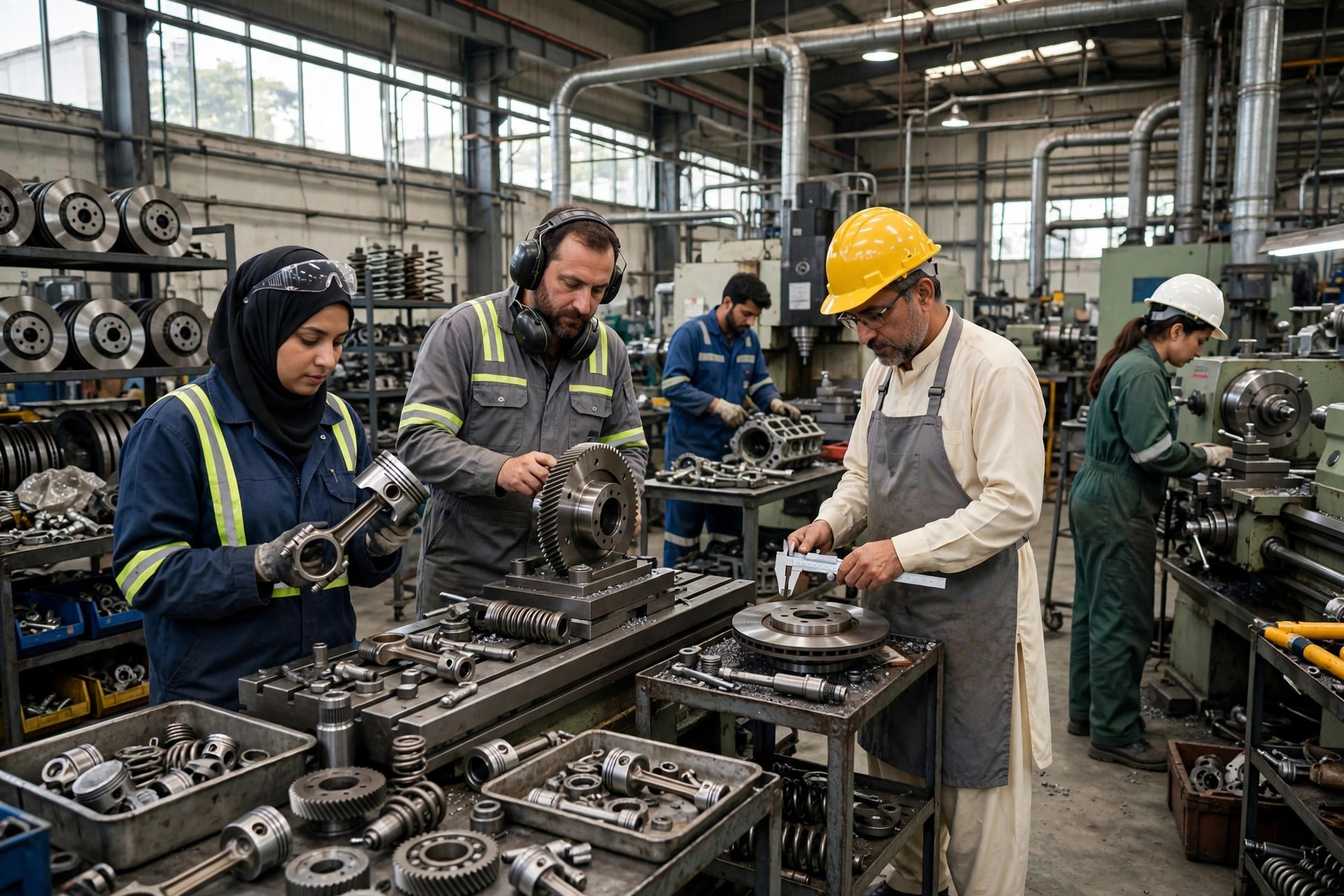
- Thal Engineering — the automotive division, split between thermal systems (car air-conditioners, heater blowers and related components) and electric systems (wiring harnesses), built on technical collaborations with Japanese leaders the company has long named, including Denso Corporation and Furukawa Electric.
- Thal Boshoku Pakistan — a joint-venture subsidiary (55 per cent held, with Toyota Boshoku and Toyota Tsusho partners) making car seats and interior components such as air-cleaner assemblies and seat-track sub-assemblies.
- Thal Packaging — paper sacks and polypropylene woven packaging for cement and other bulk industries, alongside the historic jute operation.
- Laminates — high-pressure and compact laminates and laminated boards, sold through the Baluchistan Laminates lineage.
- Habib METRO Pakistan — a 60 per cent joint venture with METRO's international cash-and-carry business, owning and managing store properties in Pakistan's major cities.
- Energy investments — an 11.9 per cent stake in Sindh Engro Coal Mining Company (SECMC) and a 26 per cent stake, through Thal Power, in ThalNova Power Thar, the 330 MW Thar coal power project developed with partners including Hubco, Novatex and CMEC.
Add smaller associates and service subsidiaries — Noble Computer Services for internal audit, IT and HR services, Pakistan Industrial Aids for trading, Thal Electrical — and the pattern is clear: Thal is less a single business than a portfolio that the House of Habib manages as one balance sheet. Our explainer on how Pakistan's conglomerates work uses groups of exactly this shape to show why they exist and how to read them.
1966: a jute mill at Muzaffargarh
Thal was incorporated on 31 January 1966 as a public company, and company materials describe it as the pioneer industrial project of the House of Habib — listed since 1967, by the group's account. Its first business was jute. The mill at Muzaffargarh in southern Punjab commenced commercial production in July 1969, with an annual capacity its early profiles put at 25,000 tonnes, spinning and weaving a fibre that Pakistan then imported in raw form and turned into the sacks and hessian the region's agriculture and trade ran on. For decades the company carried the name that described it: Thal Jute Mills Limited.
The jute business, against stereotype, was not simply left to decline with the age of synthetic sacks. Company accounts record that in 1995 Thal absorbed Pakistan Jute & Synthetics in a merger, then spent a three-year programme raising productivity at the combined operation, and — a genuine first that older company histories are proud of — became the first Pakistani jute maker to export, in 2000, developing markets from Iran to Europe and new products such as garden twine, fancy jute bags and food-grade bags for coffee and cocoa. Jute remains a Thal division today, a living link between the Karachi head office and a Muzaffargarh mill floor that has run since the 1960s.
Diversification: cars, sacks, laminates
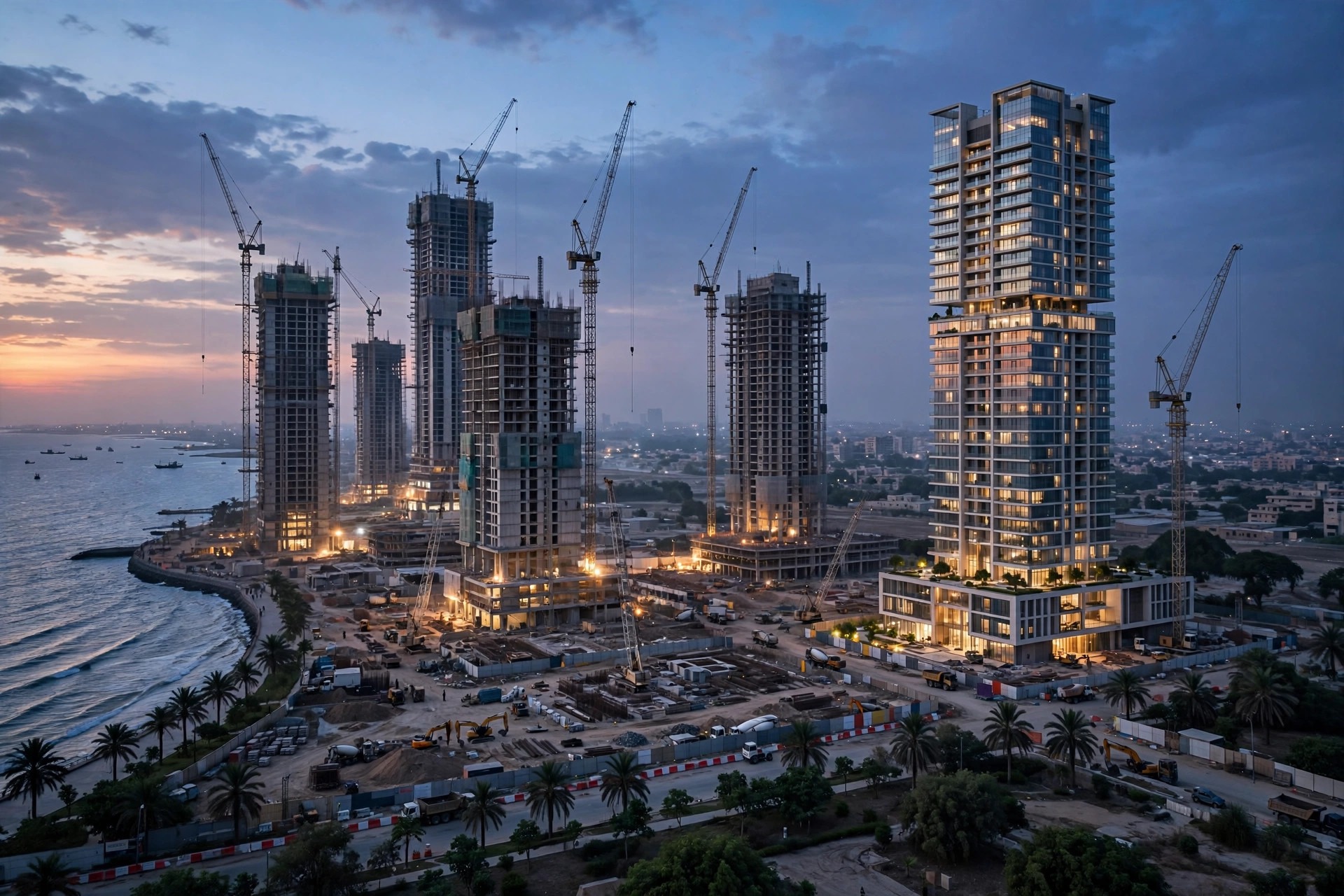
The modern Thal was built by adding divisions beside the mill rather than replacing it. In the mid-1990s the company set up its engineering operation in Karachi to assemble and manufacture auto air-conditioners in technical collaboration with Denso — entering the vendor industry that supplies Pakistan's car assemblers, and expanding from air-conditioning into wiring harnesses, heater systems and engine components as local car production grew. The papersack operation converted imported sack kraft paper into the multi-ply sacks in which cement and other powders are sold at retail — a business whose volumes shadow the construction cycle as faithfully as any cement plant's. Laminates brought a building-materials line whose high-pressure sheets feed furniture, kitchens and commercial interiors. In February 2004 the company formally acknowledged the transformation, changing its name from Thal Jute Mills Limited to, simply, Thal Limited — the jute mill had become the ancestor, not the description.
The joint-venture habit is the connective tissue. Thal Boshoku paired Thal with Toyota's interior-components family; Habib METRO paired it with a German wholesale group; the Thar investments paired it with Engro, Hubco and Chinese engineering partners. In each case Thal contributed local standing, land, management and capital to a venture whose technology or brand came from the partner — the classic House of Habib method, visible across the wider group's banking, insurance and automotive interests.
The Thar chapter: from sacks to coal and power
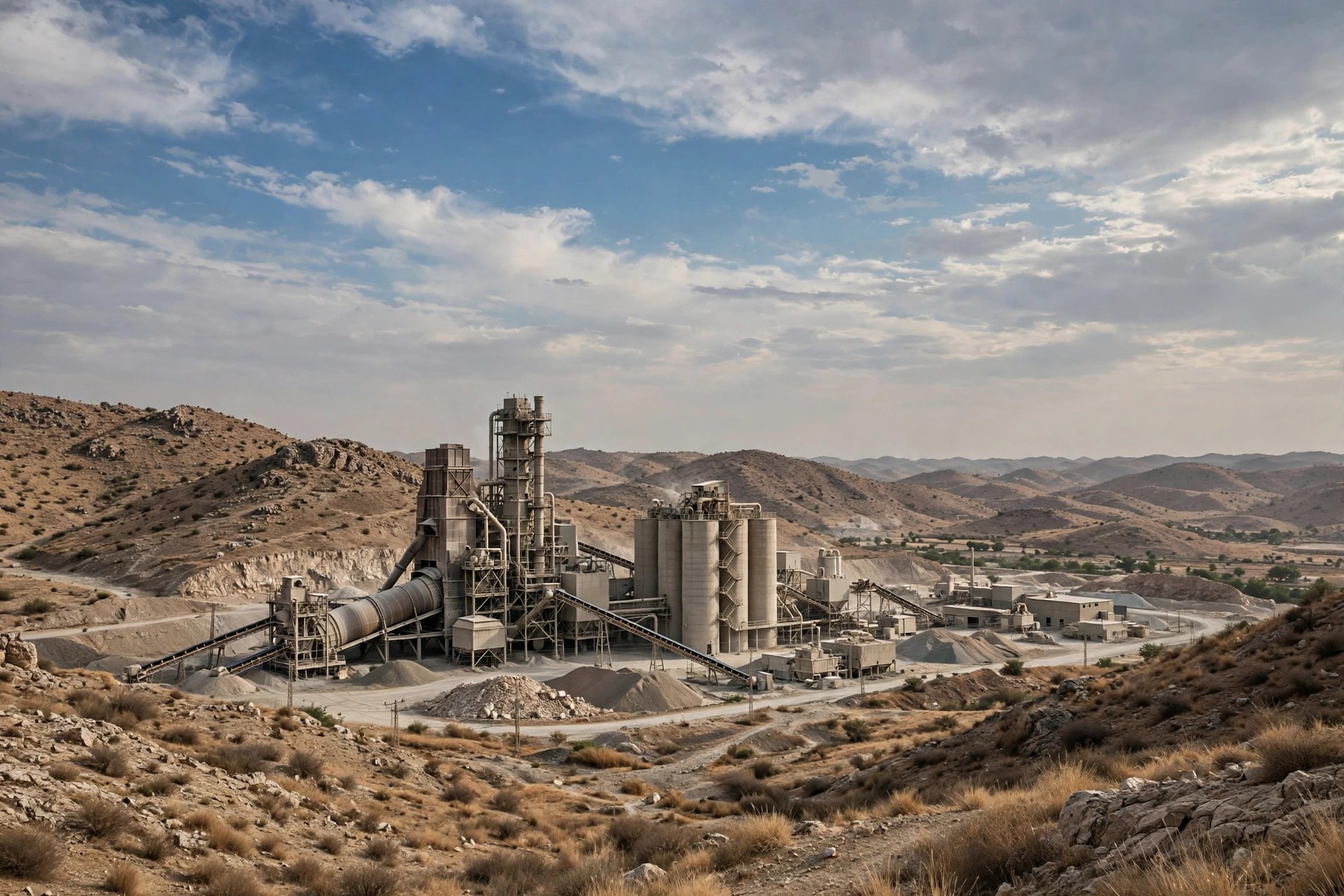
The boldest diversification came in the 2010s, into the Thar desert's coal. Through the SECMC mining venture, Thal holds 11.9 per cent of the company digging the Block II coal that feeds Thar's power stations — the same shareholding the sources record alongside the Government of Sindh, Engro, Hubco, HBL and CMEC — and through Thal Power it holds 26 per cent of ThalNova Power Thar, a 330 MW mine-mouth plant. For a company that began with jute, owning slices of a coal mine and a power station is a long stride; in portfolio terms it is the same stride the whole House of Habib took as Pakistan's energy frontier moved to Thar. Earnings from these holdings arrive as dividends and shares of profit rather than as sacks shipped — a distinction readers of Thal's consolidated accounts need to grasp, because a growing share of group profit is investment income from associates, not manufacturing margin.
How Thal makes money
Thal's income statement is really several income statements wearing one coat. The engineering divisions earn manufacturing margins on components sold to car assemblers — volumes that rise and fall with Pakistan's auto sales, priced under vendor arrangements where Japanese technical collaboration underwrites quality. Packaging and jute earn conversion margins: buy kraft paper, PP or raw jute, sell finished sacks against the cement and agricultural cycles. Laminates earn a building-materials margin tied to construction and furniture demand. The subsidiaries add their own trading, property and service income, and the associates — SECMC above all — contribute a share of profits from mining. Holding-company logic then applies: profits pool at the centre, dividends flow up from ventures, and the centre allocates capital to whichever division or investment it judges most promising. That is precisely why conglomerates deserve their own reading method, and why this series treats the conglomerate structure as a topic in itself.
Thal inside the House of Habib — and the KSE-100
The House of Habib is among Pakistan's foundational business groups, with interests the group itself lists across automotive, auto parts, building materials, energy, packaging and real estate — Habib Bank's founding family lineage, insurance, tiles and Toyota assembly all sit in the wider constellation. Thal is its listed industrial holding: the vehicle through which public shareholders own pieces of ventures that are otherwise private. Its founding chairman figure, Rafiq M. Habib, is recorded in rating-agency profiles as one of Thal's founding members and the House of Habib's group chairman — a reminder that in Pakistani conglomerates, the family stewardship layer is not decoration but the actual governance story.
As a KSE-100 constituent, Thal gives index holders diversified industrial exposure in a single line — auto parts, packaging, building materials and Thar energy — moderated by the fact that several of its best assets are minority stakes whose cash reaches Thal only when those companies pay dividends. Understanding market capitalisation and the index's calculation method helps explain why a comparatively low-profile name keeps its seat: sustained size and liquidity, accumulated over decades, count for more than visibility.
What investors typically watch
Car production volumes, because Thal Engineering and Thal Boshoku sell into assembly lines. Cement despatches, because papersack demand follows them. The jute division's exports and raw-jute prices. Thar milestones — SECMC's mining phases and ThalNova's operations — because associate income has become a pillar of group profit. And the dividend behaviour of the ventures beneath Thal, since a holding company can only pass on cash it actually receives. The Aktzien learning library walks through holding-company accounts for readers meeting this structure for the first time.
Thal has never been the loudest name in its group. Its six-decade arc — jute mill, auto vendor, packager, laminates maker, Thar investor — is instead a case study in the conglomerate as a survival strategy: when one division's century fades, another's is beginning. This article is educational content, not financial advice; the quiet, in this case, is the point of the story rather than a gap in it.
Why the conglomerate form suits Thal — and what it costs shareholders
Thal is a clean specimen for weighing the conglomerate bargain. On the credit side of the ledger, diversification is real insurance in an economy as cyclical as Pakistan's. When car sales collapse — as they periodically do when interest rates spike or import rules tighten — the packaging and jute divisions can still sell sacks into agriculture and cement. When construction slows, the engineering order book may be recovering. When all manufacturing is squeezed at once, dividends from a coal mine in Thar, whose economics are set by long-term power arrangements rather than by Karachi retail demand, can carry the holding company through. The centre also recycles cash without asking capital markets for permission: profits from a mature division can fund a new plant in a younger one, at the speed of a board meeting rather than a prospectus.
On the debit side, the same structure asks public shareholders to trust the centre's judgement across industries they may know unequally well, and to accept that the market usually values such collections at less than the sum of their parts — the conglomerate discount — because outsiders cannot easily see, or influence, capital moving between divisions. Minority stakes compound the opacity: Thal's interest in SECMC is valuable, but the cash it yields depends on another company's board and project timetable. Pakistani groups of the House of Habib's vintage answer these concerns the traditional way — with conservative balance sheets, long-held ratings (VIS profiles of Thal record strong credit ratings for the company) and a multi-decade record of paying dividends through cycles. Whether that answer satisfies a given investor is a judgement, not a fact; the facts are the structure, the record and the discount, and a careful reader keeps all three in view simultaneously.
There is also a national dimension worth registering. Companies like Thal are how much of Pakistan's industrial capability was actually accumulated: Japanese technical collaborations absorbed in the 1990s became today's engineering division; a 1960s jute mill financed later diversification; vendor skills learned supplying Toyota and Suzuki assemblers now underpin a joint venture with Toyota's own components family. Strip the listed conglomerates out of the economy and you would remove a large share of its formal manufacturing memory with them.
Longevity of this kind also creates an unusual documentary record. Because Thal has been listed since the 1960s, its divisions' histories — the 1995 jute merger, the Denso collaboration, the 2004 renaming, the Thar investments — are preserved in decades of published accounts and rating reports, a paper trail few unlisted industrial groups can match. For the student of Pakistani business, that archive is part of the company's value to this series: Thal can be shown, from sources, doing over sixty years what business histories usually only assert — diversifying one cash-generating division at a time, in step with the economy around it.
Key takeaway: Thal Limited grew from a 1966 Muzaffargarh jute mill into the House of Habib's listed industrial holding — auto components, packaging, laminates and property ventures, plus stakes in Thar coal mining and the ThalNova power plant — renaming itself in 2004 once the mill no longer described it.