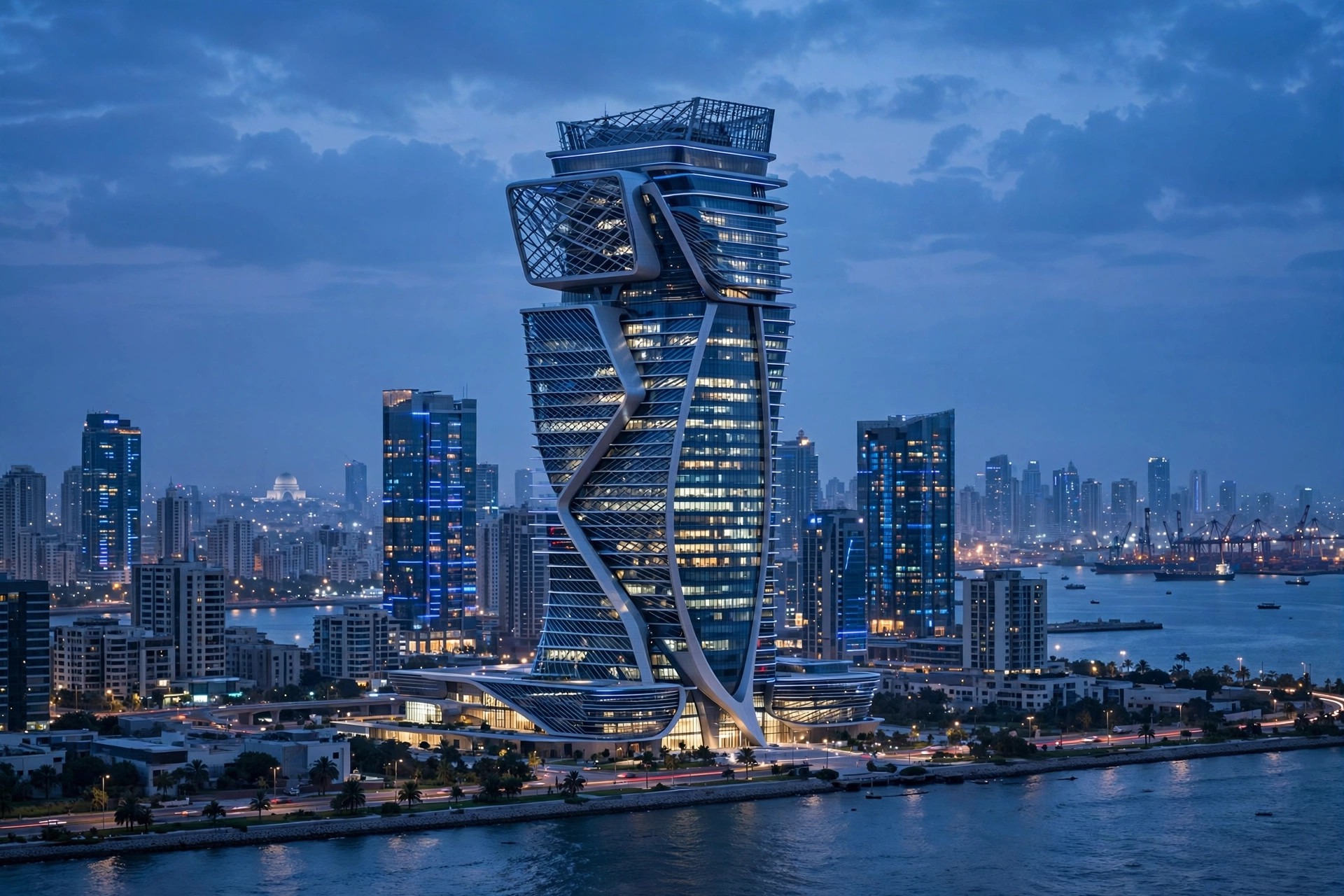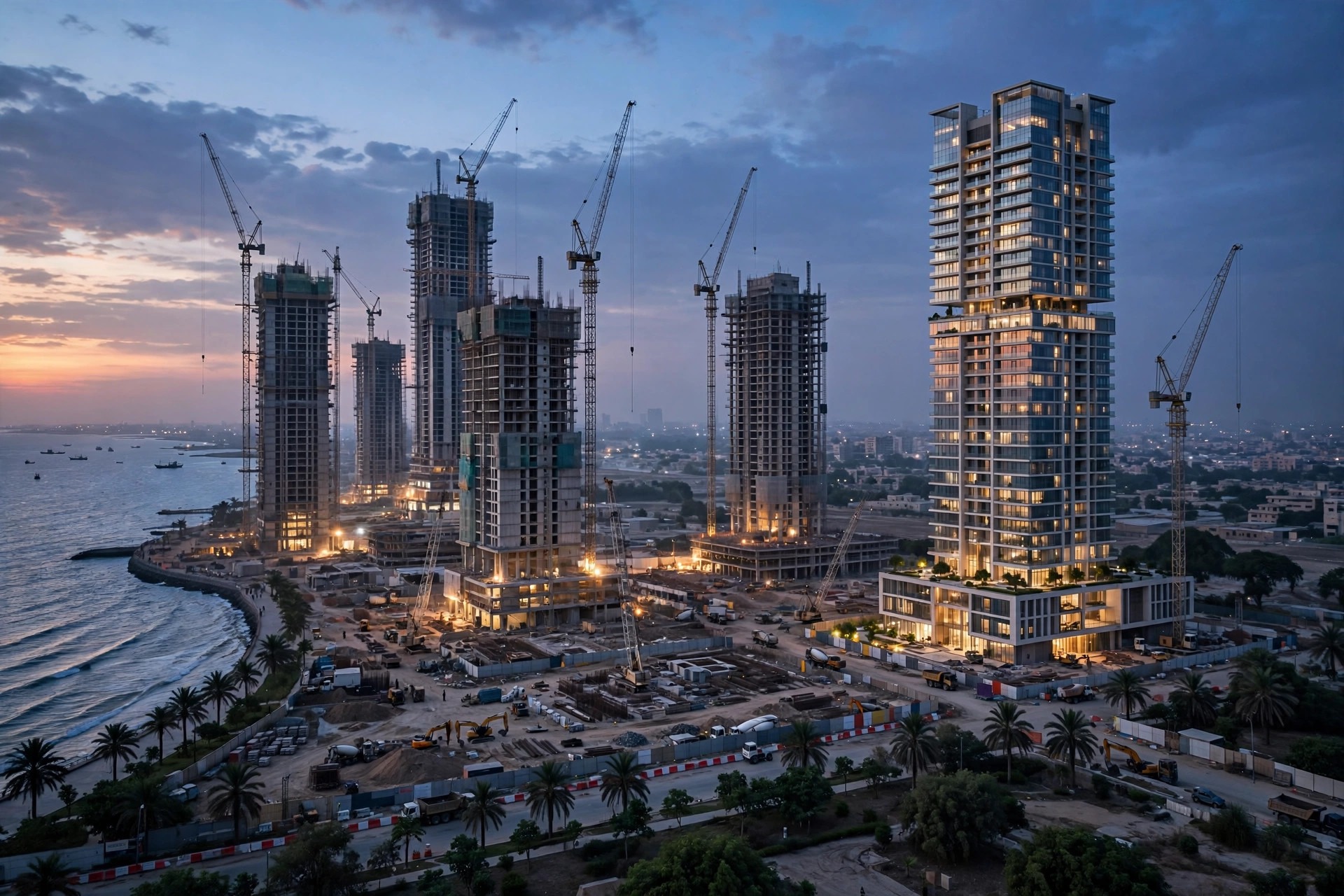
KARACHI: TPL REIT Fund I does not make anything, sell anything or lend anything. It is a pool of money, raised from banks and public investors, that owns — through special-purpose companies — three pieces of Karachi's future: a waterfront master-planned community at Korangi Creek called Mangrove, a premium residential tower called One Hoshang in Civil Lines, and a Technology Park. Its units trade on the Pakistan Stock Exchange under the ticker TPLRF1, and in 2026 it took a seat in the KSE-100 — which makes this fund, a property-development vehicle with no operating business at all, one of the most instructive members of the index. To understand it, forget factories. Think instead about how a city finances buildings it cannot pay for one buyer at a time.
First: what a REIT is
A Real Estate Investment Trust is a regulated fund that pools investors' money into property. Instead of buying an apartment yourself, you buy units in the fund; the fund owns the property (or, in a development REIT, builds it); and the returns — rent, sales proceeds, appreciation in value — flow back to unit holders as distributions and as movements in the unit price. The structure exists because property is lumpy: a tower costs billions, but a saver's ticket into it, through a listed REIT unit, can be small. Regulation is the trust's foundation. In Pakistan, REITs operate under the SECP's Real Estate Investment Trust Regulations — the current framework dates to 2022 — with a licensed REIT management company running the scheme, a trustee holding the assets on investors' behalf, and independent valuers, auditors and, for Shariah-compliant schemes, Shariah advisers checking the machinery. Our explainer on Pakistan's REITs works through the model in full, and this series' profile of Dolmen City REIT (DCR) covers the country's pioneering rental REIT — the natural sibling to compare with TPL's development-led version.
Three REIT flavours matter here. A rental REIT owns finished, income-producing buildings and lives off rent — Dolmen City REIT, built around Karachi's Dolmen Mall, is the local archetype. A developmental REIT raises money to build projects and earns from selling or holding what it constructs — riskier, because returns wait on construction and sales, but exposed to development profit rather than rent alone. A hybrid does both. TPL REIT Fund I is described by its own manager as Pakistan's first Shariah-compliant hybrid REIT — a fund whose early assets are developments, intended in time to generate a mix of sales income, rent and appreciation.
Who built it: the TPL group and the management company
The fund was launched by TPL REIT Management Company Limited — TPL RMC — which its materials describe as a wholly owned subsidiary of TPL Properties Limited, established in 2019 to apply the TPL group's real-estate development and management expertise through the REIT route. Above TPL Properties sits the wider TPL group, a Karachi conglomerate with businesses the group's own listings spread across insurance, tracking technology, property and related ventures, and a track record in development that the fund's documents illustrate with TPL Properties' Centrepoint project in Karachi.
The structure deserves a slow reading, because in a REIT the management company is the engine and the potential conflict in one. TPL RMC designs the scheme, selects projects, appoints developers and contractors, and earns management fees for doing so. The projects themselves were initially sourced from its own parent: TPL Properties, as strategic investor, sold the fund its three project companies in exchange for cash and units, committing to hold a strategic stake of at least 35 per cent. That alignment — the sponsor keeping a large unit holding — is the standard answer to the obvious question (why should the fund trust the sponsor's projects?), and it is why the documents emphasise trustee custody, independent valuation and SECP registration of the scheme, formally recorded as DCCL Trustee – TPL REIT Fund I, so heavily. Governance here is not boilerplate; it is the product.
The money: funding rounds and a public listing
The fund's first funding round, announced in a PSX filing by TPL Properties, secured commitments of Rs 18.35 billion, against a larger envisaged fund size the company described at the time. The initial investor register tells its own story about how Pakistani development finance works: TPL Properties as strategic investor, plus eight commercial banks as anchor investors — among them Habib Bank, National Bank of Pakistan, Bank of Punjab, Bank AL Habib, Bank Alfalah, Habib Metropolitan Bank, Askari Bank and Soneri Bank. In other words, before a single public unit was sold, the country's banking system had already underwritten the concept.
The public chapter followed: the fund listed on the PSX, with a public subscription held in May 2024 in which a small slice of units — the offer documents describe a base offer of under 23 million units with a green-shoe option for a similar number, priced at Rs 17.59 per unit — was sold to general investors, the great majority of units remaining with the strategic and anchor holders. That float structure matters for anyone reading its price today: a modest free float, a register dominated by institutions, and valuation driven by project appraisals rather than by daily trading. Its later entry into the KSE-100 follows the index's usual logic of market capitalisation and trading measures described in how the KSE-100 is calculated — another reminder, after SSOM and THCCL in this batch, that the index is a measuring instrument, not a merit badge, and that rebalancing regularly redraws its borders.
The three projects
The fund invests through special-purpose vehicles — separate companies, one per project, whose shares the fund holds — a structure that ring-fences each development's land, liabilities and accounts from the others. Its own descriptions list three:
- Mangrove. A master-planned, mixed-use community at Korangi Creek, on Karachi's waterfront — mid-rise residential apartment towers alongside commercial offices, a hotel and retail space, with the design work described in fund FAQs as ongoing and completion envisaged in phases running from 2027 toward 2033. A launch ceremony for Saima Mangrove Residences, being developed through the fund's SPV with a development adviser from the Saima Builders group, was announced by PSX disclosure for October 2026 — a milestone in marketing the first residential piece, though a launch, it should be said plainly, is a sales event, not a finished building.
- One Hoshang. A premium residential apartment tower with showrooms, on Hoshang Road in Civil Lines near the Marriott Hotel — among Karachi's most established upmarket districts. Fund materials describe construction as ongoing, with approvals in place, and completion targeted in the mid-2020s in earlier documents.
- Tech Park. A technology park — Grade-A office space aimed at Pakistan's growing IT sector — held through TPL Technology Zone Phase-I. Where Mangrove is a bet on housing and One Hoshang on luxury apartments, the Tech Park is a bet on Karachi's office economy and its technology tenants.
Notice what the portfolio is and is not. It is concentrated — three assets, one city. It is developmental — value sits in land, designs and partly built structures, not in rent already being collected. And it is long-dated: Mangrove's phasing alone stretches across most of a decade in the manager's own outline. A unit in TPLRF1 is therefore economically closer to a share in a patient development company than to the bond-like rent stream investors associate with mature REITs abroad.
How a development REIT earns — and pays
The fund's constitutive promise, in its PSX description, is long-term growth in net asset value plus dividend distributions, generated through rental income, capital appreciation and the sale of development property. In practice, for a fund at this stage, the sequence usually runs: land and projects are held at valuations assessed by independent valuers, so NAV can rise on paper as projects are approved and built; cash arrives in lumps when project phases are sold or completed; and distributions follow realised cash and the tax rules, which reward REITs that distribute the bulk of their income. The fund's IPO materials accordingly pointed to a first dividend expected after One Hoshang's completion — the earliest of its projects — rather than to any regular payout from day one. Construction risk, sales risk in a high-interest-rate housing market, approval timelines and valuation judgements all sit between the investor and that sequence, and the honest way to hold the idea is: the assets are real, the timetable is long, and the returns are back-loaded by design.
What investors typically watch
Project milestones, first of all — launches, construction progress disclosures and completion announcements, because the whole thesis is execution. Net asset value per unit and how it is valued, including who the valuer is and how often appraisals refresh. Sales velocity and pricing at Mangrove and One Hoshang, which convert appraisals into cash. Any addition of new projects, since the manager describes the fund as perpetual and able to grow. The sponsor's behaviour — whether TPL Properties maintains its strategic stake. And the distribution record as it emerges, which will show whether the hybrid promise becomes rental income over time. The Aktzien learning library explains NAV, closed-end discounts and property funds for readers meeting these ideas here for the first time.
TPL REIT Fund I is best understood as an experiment Pakistan's capital market is running in public: can the savings of banks and small investors, pooled under trust law and exchange rules, finance the housing and offices a megacity needs — transparently, and at a profit? This article is educational content, not financial advice, and the experiment's result will be written by cranes and sales offices over the next decade, not by any single year's unit price.
Why Pakistan invented this route to property
To see why a vehicle like TPL REIT Fund I exists at all, consider the alternatives for financing a project like Mangrove through Pakistan's traditional channels. A developer could borrow from banks — but bank credit for long-gestation development is scarce, expensive and short-tenored against projects that take a decade. It could pre-sell apartments off-plan to individual buyers — the dominant Pakistani model — which fragments ownership among hundreds of purchasers, ties the project's fate to instalment collections, and leaves buyers exposed if the developer falters. Or it could sell plots and files through informal market conventions that sit largely outside the documented economy. The REIT route is the regulator's attempted fourth way: institutional and public savings, pooled under a trustee, audited accounts, SECP-registered documents, exchange disclosure, and professional management — in exchange for tax treatment designed to reward schemes that pass their income through to unit holders. TPL's fund, with eight banks as anchor investors and the sponsor's own projects as its opening portfolio, is the development end of that experiment; Dolmen City REIT, collecting rent from a finished mall, is the experiment's conservative end. Watching both is the quickest education available in how Pakistan is trying to financialise its property market.
The Shariah-compliant label carries structural meaning as well. A Shariah-compliant scheme operates under a Shariah adviser's oversight, structuring its financing and contracts to avoid interest-based arrangements — a feature the manager presents as central to the fund's identity, broadening its appeal to investors who require it and constraining the leverage the fund can use. In a development vehicle, lower leverage means more equity must be raised for each project — slower, arguably; but also a different risk profile through construction cycles, since there is less debt to service while buildings are still rising.
Finally, the KSE-100 membership itself will test the market's understanding. Index inclusion is computed from market value and trading, yet a development REIT's unit price ultimately rests on appraisals of unfinished projects — numbers that are expert judgements, revised periodically, rather than the output of a competitive daily market in the underlying asset. Readers who grasp that distinction — between the liquidity of the unit and the illiquidity of what it owns — have grasped the essential fact about every listed property vehicle, in Karachi or anywhere else.
Key takeaway: TPL REIT Fund I is a Shariah-compliant hybrid development REIT managed by TPL RMC for the TPL group: bank-anchored money, a 2024 public listing, and three Karachi projects — Mangrove, One Hoshang and a Tech Park — whose value will be realised over years, not quarters.