KARACHI: Insurance is the quiet machinery behind everything else in an economy: ships sail, factories run and cars are financed because someone has agreed to carry the risk if things go wrong. In Pakistan, the name that has done that job longest at scale is Adamjee Insurance. Adamjee Insurance Company Limited — AICL — was incorporated as a public limited company on 28 September 1960, founded by A. W. Adamjee of the Adamjee family, whose business house was then one of the largest in the young country. Six and a half decades later the company describes itself as Pakistan's largest general insurance company, with branches across Pakistan, a presence in the United Arab Emirates and a window takaful operation alongside its conventional business. It is the flagship name of the PSX insurance sector and a KSE-100 constituent. It has also changed hands in the way of Pakistani corporate history: the Adamjee family's group was broken up by nationalisation in the 1970s, and Adamjee Insurance today sits inside the Nishat Group of Mian Muhammad Mansha, under the same umbrella as MCB Bank. This profile explains what the company does, how an insurer actually makes money, and what its long history does — and does not — tell an investor.
1960: an insurance company for a new country
Adamjee Insurance received its certificate of commencement on 30 November 1960 and began operations with a paid-up capital of Rs 2.5 million — small money even then, in an industry whose real capital is credibility. Its timing made sense. Pakistan's trade ran through Karachi's port; its jute, cotton and growing manufacturing base needed marine, fire and engineering cover that had previously been placed with foreign insurers. A locally owned general insurer, backed by one of the country's leading merchant families, could keep that premium income — and the expertise that comes with it — at home.
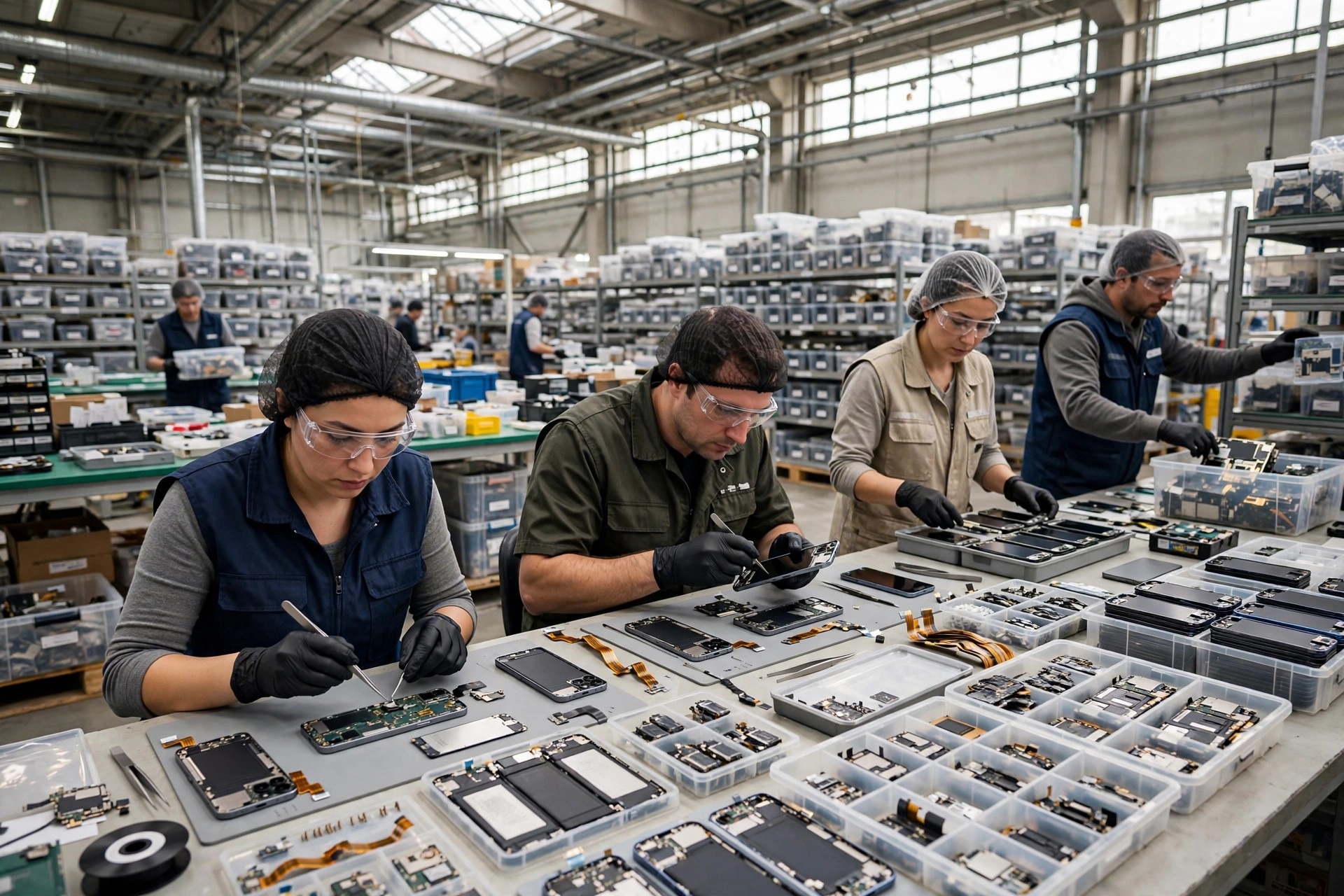
The Adamjee Group of that era was a sprawling house: jute mills, shipping interests, and, notably, a founding role in what became Muslim Commercial Bank. Insurance was the natural financial arm of such a group, insuring the group's own risks and, increasingly, everyone else's. Through the 1960s the company built a branch network across both wings of Pakistan and a reputation in the big-ticket classes — marine cargo, fire and industrial risks — that require the insurer to assess, price and sometimes reinsure very large exposures.
Nationalisation, survival and the Nishat era
The 1970s dismantled the Adamjee empire. Nationalisation under Zulfikar Ali Bhutto took the group's industrial and financial assets into state hands in stages — MCB was nationalised in 1974 — and the family's conglomerate ceased to exist as a unit. Insurance in Pakistan went through its own state experiments in that era, particularly in life insurance, but general insurance companies, Adamjee among them, continued as listed commercial entities, and Adamjee kept its name, its book of business and its market position through the decades that followed — a continuity few Pakistani institutions managed.
The modern chapter began when the privatisation era reassembled old pieces under new owners. The Nishat Group of Mian Muhammad Mansha bought the privatised MCB in the early 1990s, and accounts of the group date its association with Adamjee Insurance to the same period; in 2004, MCB acquired the management rights of the company, tying the insurer formally into the Nishat financial family. Today the company's chairman is Mian Umer Mansha, and Adamjee sits alongside MCB Bank, Nishat's textile, cement and power businesses as the group's insurance arm. The Adamjee name — retained deliberately — is a lesson in how brands outlive the families and regimes that created them.
What Adamjee Insurance actually sells
AICL is a general insurer: it does not sell life insurance (a sister company, Adamjee Life, handles life assurance separately). General insurance is the insurance of things and liabilities, sold mostly in annual policies. The main classes, in plain language, are:
- Fire and property — cover for factories, warehouses, shops and homes against fire and allied perils; the backbone of commercial insurance.
- Marine — cargo in transit by sea, air and road, and hull cover; essential to an import-dependent economy.
- Motor — vehicle insurance, from third-party liability to comprehensive cover; the class most households actually meet.
- Engineering — cover for construction projects, plant and machinery, including the big infrastructure and energy projects Adamjee highlights as a speciality, from petrochemical plants to wind and thermal power risks.
- Health and miscellaneous — group health cover for employers, travel, liability and other specialist lines.
Beyond Pakistan, the company operates branches in the UAE — historically Dubai and Abu Dhabi — serving the Gulf's large Pakistani-linked and regional commercial market, plus a branch in Karachi's Export Processing Zone. Since 1 January 2016 it has also run Window Takaful Operations, authorised by the Securities and Exchange Commission of Pakistan in December 2015: takaful is the Shariah-compliant, cooperative form of insurance, and a "window" operation lets a conventional insurer offer it through a segregated fund alongside its conventional book.
How an insurer makes money: premiums, float and the combined ratio
Insurance economics are unlike any other business on the exchange, because the customer pays first and the company's true cost is revealed later. When Adamjee writes a policy, it collects the premium upfront. Over the policy year it "earns" that premium as it provides cover, and it pays out claims as insured events occur — a factory fire, a stolen car, a damaged cargo. The difference between earned premiums and the sum of claims and operating expenses is the underwriting result. The industry summarises it in the combined ratio: claims plus expenses, divided by premiums. Below 100 per cent, underwriting makes money; above it, underwriting loses money and must be subsidised by the second engine.
That second engine is investment income. Between collecting premiums and paying claims, an insurer holds a pool of money — the float — plus reserves set aside for claims already incurred but not yet settled, and its own capital. A prudent insurer invests that pool mainly in government securities, bank deposits and blue-chip shares. In a high-interest-rate economy like Pakistan's in recent years, investment income can be the larger half of an insurer's profit, which is why insurance shares often behave partly like interest-rate plays. Two disciplines keep the model honest: reinsurance — Adamjee, like all large general insurers, cedes part of its biggest risks to global reinsurers, paying premium away in exchange for protection against a catastrophic single loss — and reserving, the actuarial art of guessing, honestly, what claims already in the pipeline will ultimately cost. Our guide to insurance stocks on the PSX sets this model alongside Adamjee's listed peers.
Why size and history matter in this trade
Insurance is a business where being old and large is a genuine competitive advantage, not just a boast. Corporate clients and project lenders choose insurers whose balance sheets can credibly absorb a very large claim; brokers place big industrial risks with names that have paid big losses before. Adamjee's self-description rests on exactly this: the largest paid-up capital and reserves in its market and a diversified portfolio, in its own words. Its historical trophy cabinet — top-company awards from the Karachi Stock Exchange over many years and export-performance recognition — belongs to an earlier era of corporate Pakistan, but the underlying point survives: in insurance, reputation compounds.
The company's specialisms tell the same story. Being a pioneer in covering oil and gas (upstream and midstream) and wind and thermal energy risks, and winning business from foreign investors building construction and infrastructure projects in Pakistan, requires engineering knowledge, reinsurance relationships and claims-paying credibility that a startup cannot rent. The UAE branches extend that franchise to the region's trade hub, insuring cargo and commerce that flows between the Gulf and Pakistan.
Adamjee in the KSE-100
AICL's seat in the benchmark reflects its scale in a small sector: insurance is one of the KSE-100's smaller corners by weight, and Adamjee is its anchor name. Index membership follows the mechanics explained in our guides to how the KSE-100 is calculated and market capitalisation — broadly, the value of freely traded shares and how actively they change hands. Because the insurer's free float and trading volumes are modest compared with the big banks, its index story is quieter, but for sector investors it is usually the first name studied. Periodic reviews, covered in our explainer on KSE-100 rebalancing, can move smaller constituents in and out as relative sizes change.
Scale also shapes the company's obligations. As one of the market's largest premium writers, Adamjee is a cornerstone of the reinsurance programmes and industry pools through which Pakistan's biggest risks — energy installations, aviation, large industrial complexes — are covered at all. When international reinsurers reassess Pakistan risk, after a flood year or a major loss, it is companies of Adamjee's size that negotiate the terms on which the whole market then operates. That systemic role rarely appears in a share-price headline, but it is part of what six decades of continuity actually purchased.
It is also worth noting what Adamjee is not, because first-time readers often blur the categories. It does not underwrite life policies — that is Adamjee Life's separate, regulated business. It does not take deposits or lend like its sister MCB. And its profits do not rise mechanically with premium growth: a year of aggressive price-cutting to win market share can grow the premium line while quietly storing up claims losses that surface later. Insurance rewards the patient reader who watches underwriting quality across several years, not the one who celebrates a single year's top line.
What followers of AICL watch
The checklist for a general insurer is distinctive. Premium growth — gross written premium, and how much is retained after reinsurance — shows whether the franchise is expanding. The combined ratio shows whether the core trade is profitable before investments flatter it. Claims patterns matter: a single large industrial loss, a flood season or a spike in motor theft can move a year's result. The investment book matters just as much: its size, its split between government securities and equities, and what interest rates do to its income. Followers also watch the takaful window's growth — Islamic finance is expanding across every Pakistani financial sector — and the UAE book, which adds geographic diversification rare among local insurers.
Group context completes the picture: Adamjee's bancassurance and referral relationships within the Nishat financial family, and the claims environment created by Pakistan's weather — flood risk is now a first-order underwriting question across the industry. None of these are judgements on the share's price. This article is educational content, not financial advice; readers new to the sector will find the foundations — float, reserves, reinsurance — in the Aktzien learning library.
Takaful and a changing risk map
The window takaful operation, running since 2016, deserves a moment's explanation, because it shows how a 1960 institution adapts to a twenty-first-century market. In takaful, participants contribute to a common fund from which losses are paid, on cooperative and Shariah-compliant principles, rather than buying a conventional policy from a shareholder-owned insurer. A window operation lets Adamjee run that fund separately inside its existing branch and claims infrastructure, under its own Shariah oversight, instead of building a standalone company. For the group, it opens the fast-growing Islamic-finance customer base; for the customer, it offers the Adamjee name in a form their convictions allow.
The other force reshaping a general insurer's world is the risk itself. Pakistan's recent history of devastating floods, urban fire losses in dense commercial districts and rising health costs has changed what insurers must price and how much reinsurance they must buy. A company with Adamjee's engineering book feels national events — a monsoon disaster, a major industrial accident — in its claims line in a way a pure motor insurer does not. Pricing that reality honestly, year after year, while keeping the trust of the industrial clients who have insured with the house for generations, is the unglamorous core of the business — and the real content of the phrase "a market fixture since 1960".
Key takeaway: Adamjee Insurance, founded by the Adamjee family in 1960 and now part of the Nishat Group, makes money the insurer's two ways — underwriting premiums for more than its claims and costs, and investing the float in between — at a scale few Pakistani rivals match.