KARACHI: Ask a Pakistani farmer to name a fertilizer and the answer, very often, is a brand before it is a chemistry: Sona — "gold" — the urea made by Fauji Fertilizer Company. FFC, listed on the Pakistan Stock Exchange, is the country's foundational urea producer: incorporated on 8 May 1978 as a joint venture between Fauji Foundation and Denmark's Haldor Topsoe, in production at Goth Machhi from June 1982, and expanded over four decades into a three-plant company headquartered in Rawalpindi whose output helps decide whether Pakistan feeds itself or imports food and fertilizer at punishing prices. This profile tells the company's story; the detailed money mechanics have their own companion explainer, how Fauji Fertilizer makes money, and the two are best read as a pair.
What FFC makes and where
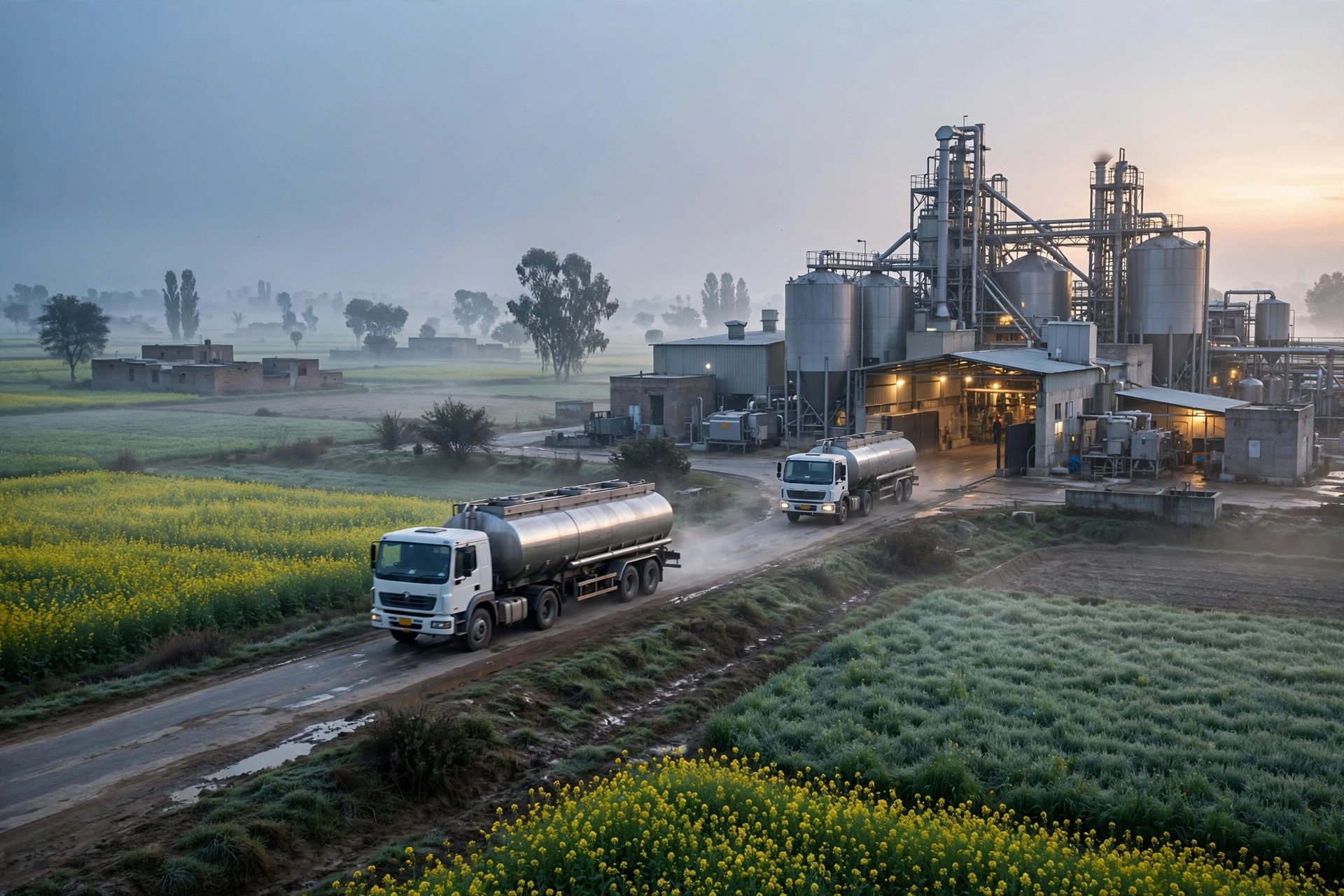
FFC manufactures and markets chemical fertilizers, above all prilled urea sold as Sona Urea, through its own national marketing division — a network of sales offices, warehouses, dealers and farm-advisory services that reaches from Karachi to Khyber. Its plants cluster in two places. At Goth Machhi, near Sadiqabad in Rahim Yar Khan district, sit its two original units, fed historically by gas from the Mari field, with combined designed capacity of about 1.3 million tonnes of urea a year after debottlenecking. At Mirpur Mathelo, in Sindh, stands the third plant, acquired from Pak Saudi Fertilizers in 2002 and later expanded, adding roughly another 0.7 million tonnes of annual capacity. Together the three units give FFC designed urea capacity of around two million tonnes a year — the largest urea manufacturing base in the country in most industry descriptions. Beyond its own bags, FFC is the parent of the Fauji fertilizer family at Bin Qasim — the DAP and urea producer now known as Fauji Fertilizer Bin Qasim — and holds interests across the Foundation's industrial portfolio, including in Fauji Cement. The sector as a whole is mapped in our guide to fertilizer stocks on the PSX.
1978: a foundation, a Danish partner and a national gap
FFC began as statecraft by other means. In the mid-1970s Pakistan was importing urea heavily to cover the gap between farm demand and domestic production, spending scarce foreign exchange to do it, and the government asked Fauji Foundation — the welfare foundation for ex-servicemen — to examine building a plant. The project was sanctioned on 17 December 1977, and FFC was incorporated the following May as a joint venture between the Foundation and Haldor Topsoe A/S of Denmark, the catalysis and plant-technology house whose expertise anchored the engineering. The first plant rose at Goth Machhi, close to the Lahore–Karachi highway and the main railway line, and commenced commercial production in June 1982 with designed capacity of 570,000 tonnes a year — a plant that, by company accounts, ran at its full designed capacity in its very first year, a feat presented at the time as exceptional for a unit of its size anywhere. In 1991 the company listed on the Karachi and Lahore exchanges, bringing the public — and its own employees — into ownership of what had become a national institution.
Building the three-plant company
The 1980s plant was only the start. The base unit at Goth Machhi was debottlenecked in April 1992 to about 695,000 tonnes a year, and an expansion unit at the same site began production in March 1993 with about 635,000 tonnes, taking the Goth Machhi complex to roughly 1.33 million tonnes. In 1993 FFC also became a founding investor in the Jordan-partnered venture that became Fauji Fertilizer Bin Qasim, extending the family into DAP. The third leg arrived by purchase: on 31 May 2002 FFC acquired Pak Saudi Fertilizers' plant at Mirpur Mathelo — another roughly 570,000-tonne unit, later debottlenecked to about 718,000 tonnes — and merged it into the company. Along the way FFC accumulated the habits of a model industrial citizen of its era: among the first in its sector to gain ISO quality certification in the 1990s, repeatedly among the country's highest corporate taxpayers (it was the highest in 1993–94, by its own histories), a fixture of the Karachi exchange's top-25 companies lists for years on end, and famous for operational safety records and for running farm-extension services — including a mobile farm advisory service dating to 1986 — long before corporate social responsibility was a reporting category.
How FFC makes money — the short version
FFC's earnings engine, in brief, is the fertilizer spread applied at very large scale with unusual operational discipline: regulated-price gas flows in, urea flows out at government-scrutinised prices, and the difference — protected by high plant utilisation, energy efficiency and a distribution machine that sells virtually everything the plants can make — becomes profit, a meaningful part of it returned to shareholders as dividends and part channelled, through the Foundation, into welfare. Its investment book adds a second engine: dividends and value from its Bin Qasim subsidiary and other Fauji holdings mean FFC's results are never only about urea. That is deliberately the summary version — the full treatment, including gas pricing tiers, the role of the Sona brand premium, and why FFC's dividend became one of the most famous on the exchange, is in how Fauji Fertilizer makes money.
The welfare logic underneath
To understand FFC's behaviour — its conservatism, its dividend culture, its patience — look at its owner. Fauji Foundation exists to fund welfare for ex-servicemen and their families: hospitals, schools, vocational programmes and stipends, paid for substantially by the profits of the Fauji companies. FFC is the Foundation's crown jewel and cash engine. That gives the company a distinctive stakeholder: not a family drawing wealth out, nor a state ministry drawing revenue down, but a welfare system drawing income across to clinics and classrooms. It also explains the company's prominent place in national life — its farmer services, its disaster-relief contributions and its presence in policy debates about gas allocation and food security, where it speaks as both producer and interested party.
Urea and the nation's table
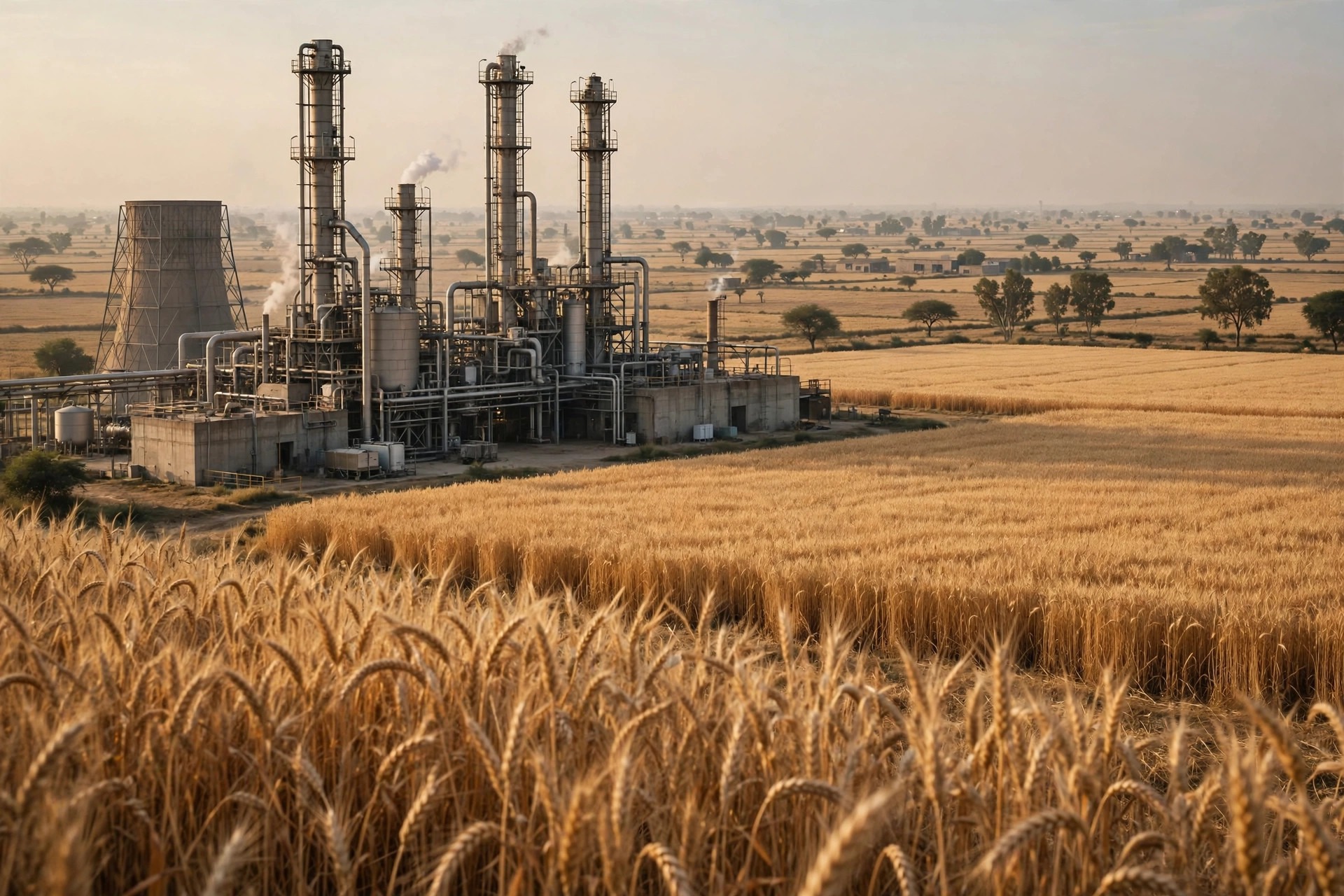
FFC's product is, quite literally, an ingredient in Pakistan's bread. Urea nitrogen drives wheat yields; wheat drives flour prices; flour prices drive politics. When FFC's plants run well on full gas, domestic urea substitutes for imports and saves the foreign exchange the 1970s planners worried about — company histories put the cumulative import-substitution saving in the billions of dollars. When gas is curtailed, the same arithmetic reverses: shortages, dealer queues, smuggling premiums and emergency imports. Few listed companies have their production line so directly wired into the cost of living, which is why FFC's plant news is national news and why its gas allocation is a matter of cabinet-level attention.
The culture that made Sona a byword
FFC's less tangible asset is a reputation for running plants unusually well. The first-year capacity achievement at Goth Machhi set a pattern that company histories return to repeatedly: production records above designed capacity, debottlenecking that extracted a fifth more output from the original unit, among the sector's earliest ISO quality certifications, safety performance measured in tens of millions of man-hours and recognised by international safety bodies, and annual reports repeatedly judged among the best in the chemical sector by Pakistan's accounting institutes. The marketing side matched it: at a time when fertilizer was simply allocated and sold, FFC built a genuine brand — Sona, "gold" — and a farm-advisory organisation, including mobile extension services dating to 1986, that put company agronomists in farmers' fields as teachers rather than salesmen. That combination — engineering discipline upstream, trusted advice downstream — is why the Sona bag commands the shelf position it does, and why competitors benchmark themselves against this company rather than the other way round.
It also explains FFC's recurring role in national arguments. A company that has been among the country's largest taxpayers, a fixture of best-company lists for decades and the single largest domestic source of the input wheat depends on is inevitably consulted — and criticised — whenever gas is rationed or urea prices are set. FFC's defence, mounted consistently over the years, is the import bill: every tonne made at Goth Machhi or Mirpur Mathelo is a tonne Pakistan does not buy abroad at world prices. Both things are true at once, and holding them together is the beginning of understanding Pakistan's fertilizer politics, in which FFC is less a participant than a permanent institution.
Succession and stewardship form the quieter thread of the modern story. FFC has been led over the decades by managing directors drawn heavily from engineering and the services world, presiding over a workforce of several thousand and plant communities — Goth Machhi and Mirpur Mathelo are substantially company towns — where the employer also shapes schools, clinics and local infrastructure. That paternal-industrial model, common to Pakistan's first-generation mega-plants, is gradually professionalising, but its imprint remains in the company's methodical disclosures, its long-serving technical cadres and its instinct, in a crisis, to behave like a public utility rather than a trading house. Investors who wonder why FFC rarely chases fashionable diversification will find the answer there: the institution understands itself as a trustee — of gas the nation allocates it, of a brand farmers trust with their one crop a year, and of welfare money that must still be there, predictably, every year.
The plants themselves, finally, are worth picturing. Goth Machhi is not a shed but a small industrial city — ammonia and urea trains, prilling towers, bagging lines, workshops, a township — built where the 1970s planners wanted industry planted in the interior rather than clustered at the ports, and still among the largest single-site employers of its region. Mirpur Mathelo carries the same DNA. Between them they embody the original 1978 wager: that Pakistan could run world-scale chemical plants, with Pakistani engineers, at world standards — a wager the production records say was won early and has had to be re-won, shift by shift, ever since.
One more distinction helps place FFC among its peers. Each of Pakistan's big fertilizer houses carries a different founding myth: Engro's is the professional buy-out, Fatima's is the challenger joint venture, and FFC's is the national project — a plant the state conceived, a welfare foundation built with Danish technology, and a workforce that treated a fertilizer factory as a form of public service. Those myths are not decoration; they predict behaviour under pressure, from pricing restraint in shortage years to the stubborn defence of gas allocations in Islamabad. Read FFC's announcements with that self-image in mind and its decisions — conservative, precedent-conscious, institutionally minded — rarely surprise.
What investors typically watch in FFC
- Gas supply to Goth Machhi and Mirpur Mathelo — volumes and any change in the pricing of feedstock and fuel gas.
- Plant utilisation and turnarounds — how close the three units run to their roughly two-million-tonne designed capacity.
- Urea pricing and offtake — the local price versus import parity, seasonal demand, and inventory across the industry.
- Income from the wider Fauji portfolio — dividends and results from Bin Qasim and associated companies.
- The dividend itself — FFC's payout is watched as both income and as a barometer of Foundation cash needs and sector health.
- Policy shifts — gas-sector reform, subsidy design and export rules that can reset fertilizer economics for every producer at once.
FFC's weight in the benchmark is that of one of the market's anchor industrials; how the KSE-100 is calculated shows why such companies rarely leave it, and the explainer on market capitalisation shows how the seat is measured. This profile is educational content, not financial advice. What it hopes to leave you with is proportion: FFC is a fertilizer company, yes — but also a 1978 act of import substitution, a Danish-Pakistani engineering partnership, and the financial engine of a welfare foundation, all inside one ticker.
Key takeaway: Founded in 1978 by Fauji Foundation with Denmark's Haldor Topsoe, FFC grew from one Goth Machhi urea plant into Pakistan's largest urea maker — and its profits fund both a famous dividend and a national welfare system.