KARACHI: Open a medicine cabinet anywhere in Pakistan and the odds are good that one box in it — an Augmentin course prescribed for an infection, a Betnovate tube, a child's Calpol suspension — traces back to the same listed company. GlaxoSmithKline Pakistan Limited, GLAXO on the Pakistan Stock Exchange, is the local arm of the British biopharma group GSK, and by the company's own long-standing description the largest pharmaceutical company in Pakistan. But the single company investors see today is really an archaeological site: layer upon layer of older businesses — Glaxo Laboratories, Wellcome, SmithKline and French, Beecham — each with its own century-deep history, merged one into another until a single nameplate remained. Telling GLAXO's story means excavating those layers, from a Lahore sales branch opened in 1937 to the Karachi factories that still supply the country's pharmacies.
Before Pakistan: Glaxo arrives in Lahore
The deepest layer is Glaxo itself, whose business in the region predates the country. In 1937 a director of Glaxo's Indian operation, R. A. M. Henson, opened a branch in Lahore to sell the company's products — then centred on infant foods and early pharmaceuticals — across the territory that would become Pakistan. Partition in 1947 nearly emptied that operation overnight: almost all of its local staff left for India. Glaxo's response was to rebuild in corporate form. In March 1948 it incorporated a separate local subsidiary, Glaxo Laboratories (Pakistan) Limited, headquartered not in Lahore but in Karachi, the new federal capital and port, with Henson as managing director.
The young subsidiary was financed in a way that set a pattern for multinational investment in Pakistan: a small starting capital, a loan from the Indian sister company, and — after government approval in 1950 — a public share offer in which a defined portion was reserved for Pakistani subscribers. The offer was heavily oversubscribed and closed within days. The company records with justified pride that its legacy business was the first pharmaceutical company listed on the Karachi Stock Exchange, in 1951, and it became a public limited company in 1953 — the first of Glaxo's subsidiaries anywhere to take that step. From the beginning, then, GLAXO's ancestor was both a multinational subsidiary and a Pakistani public company, a dual identity it has never lost.
It is worth excavating one layer deeper, because the names later merged into this company each began as a distinct nineteenth-century business, and their origins explain the catalogue the merged firm inherited. SmithKline's line starts in 1830, when John K. Smith opened a drugstore in Philadelphia; the firm he founded, later joined by Mahlon Kline, became Smith, Kline and Company. Beecham began in 1842 with Thomas Beecham's laxative pills in England, and in 1859 Beecham opened a factory at St Helens described as the world's first built solely for making medicines. Burroughs Wellcome was founded in London in 1880 by two American pharmacists, Silas Burroughs and Henry Wellcome, and grew into a research house of the first rank. Glaxo itself began far from Britain's pharmaceutical establishment, in New Zealand, where Joseph Nathan's trading company built a dried-milk business whose "Glaxo" brand name — registered in 1906 — eventually named the whole enterprise. Even older fragments survive inside the group: the Plough Court pharmacy in London, founded in 1715, became Allen & Hanburys, which Glaxo acquired in 1958. When a Pakistani pharmacist handles an old GSK brand, then, the box may carry the accumulated goodwill of businesses founded on four continents across three centuries — the true meaning of the "century of brands" this company trades on.
Building factories: West Wharf, Renala Khurd and Chittagong
Selling imported medicine was only the first stage; the 1950s subsidiary set out to manufacture. A Karachi factory planned from 1950 — intended to fill antibiotic vials and pack infant food locally — was delayed when the Pakistan Industrial Development Corporation took its first site for the Karachi Shipyard, and production finally began at the West Wharf Road factory in July 1955. That dockyard address remains the company's registered home and one of its manufacturing sites to this day. In 1959 the company settled on Renala Khurd in Punjab as a centre for collecting and drying milk, a relic of the era when infant nutrition was a core Glaxo trade. A rights issue in 1961 financed expansion eastward, and a Glaxo factory in Chittagong began production in the 1960s to serve East Pakistan — an operation separated from the Pakistan company when Bangladesh was created in 1971.
By the early 1990s, the profile of Glaxo Pakistan that older doctors still remember had formed: a leader in antibiotics, led by brands such as Ceporex; in anti-ulcer treatment, where Zantac was a landmark product of its era; and in dermatology, where the Betnovate range became a household name. It had also invested in making pharmaceutical raw materials locally, deepening its manufacturing roots beyond formulation and packing. Meanwhile its corporate surname kept changing with its parent's global marriages — the thread that leads directly to today's company.
Merger upon merger: how GLAXO was assembled
Modern GSK is a composite, and Pakistan mirrored every global step. In Britain, Glaxo merged with Wellcome in 1995, creating Glaxo Wellcome — including Glaxo Wellcome (Pakistan). In 2000 Glaxo Wellcome merged with SmithKline Beecham, itself the product of an American-British merger that had joined SmithKline and French with the Beecham group. In Pakistan, the combined company was created on 1 January 2001 through the merger of three local businesses — SmithKline and French of Pakistan Limited, Beecham Pakistan (Private) Limited and Glaxo Wellcome (Pakistan) Limited — into the single listed entity, GlaxoSmithKline Pakistan Limited. The "century of brands" in this profile's title is literal: Beecham's and SmithKline's product lines carried nineteenth-century origins, and the merged company inherited a catalogue of more than a hundred brands spanning antibiotics, respiratory medicines, dermatology, vaccines and consumer products.
The assembling did not stop in 2001. In December 2008 GSK Pakistan acquired the Pakistan operations of Bristol-Myers Squibb, and in December 2010 it acquired Stiefel Laboratories' operations in the country, strengthening dermatology. In February 2015 it took over the Novartis vaccines business (excluding influenza) as part of a global transaction between the two groups. Then came a subtraction as significant as any addition: in 2015 the consumer healthcare business — the over-the-counter medicines, oral care and nutritional products — was demerged into a separate company, GlaxoSmithKline Consumer Healthcare Pakistan, which listed in 2017 and is today Haleon Pakistan (HALEON). GLAXO was left as what its parent wanted it to be: a focused prescription-medicines and vaccines company. Readers comparing the two siblings will find the split explained from the consumer side in the Haleon profile, and the sector frame in our guide to PSX pharmaceutical stocks.
What GLAXO sells today
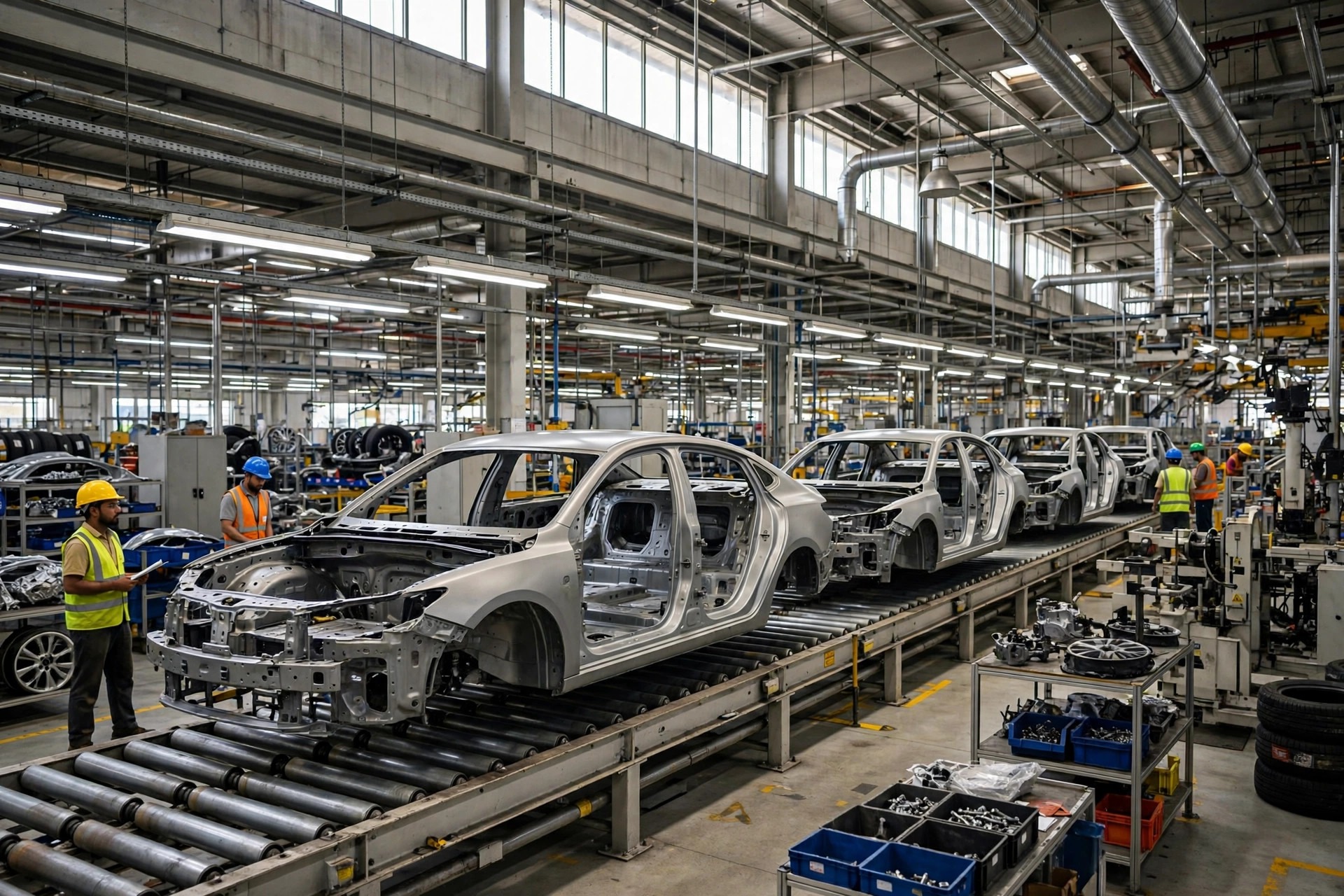
The modern portfolio is organised by therapy area rather than by the old company boundaries. Its best-known prescription brands include the antibiotic Augmentin — for many Pakistani families the default name in its class — alongside Amoxil and Velosef in anti-infectives; Seretide in respiratory care; Betnovate, Dermovate and related brands in dermatology; and Calpol in children's pain and fever relief, one of the brands that stayed with the prescription business. The vaccines portfolio, a strategic priority of the global parent, includes products such as Synflorix, Rotarix, Boostrix and Cervarix, with newer vaccines such as Shingrix in the range described in company profiles. The research inheritance behind that portfolio is substantial: legacy products developed within the group include several entries on the World Health Organization's list of essential medicines, among them the antibiotic amoxicillin, and the parent developed RTS,S, the world's first malaria vaccine — the kind of long-horizon science that a local subsidiary distributes but could never have financed alone, and the core of the argument for the multinational model itself. Production is centred on Karachi, where the company operates manufacturing sites at West Wharf, in the S.I.T.E. industrial area and in Korangi — plants that between them handle tablets, liquids, sterile products, dermatological preparations and dedicated antibiotic production blocks, with distribution and sales offices across the country.
Portfolio change is a constant, and not always voluntary. Zantac, once a flagship, illustrates the scientific-regulatory cycle: in 2019 the drug regulator ordered ranitidine medicines withdrawn after a probable carcinogen was detected in some products globally, GSK recalled its brand, and in 2020 it stopped making and supplying the drug in Pakistan. A medicine that had anchored the company's 1990s strength simply exited — a reminder that in pharmaceuticals, a brand is only ever as durable as its evidence and its regulator's confidence.
How a multinational pharma subsidiary makes money
GLAXO's revenue mechanics differ from a local generic maker's in ways that matter. It sells patented and branded medicines and vaccines developed by its parent's global research machine, manufactured locally under licence and quality systems, and marketed through one of Pakistan's largest medical-representative networks to doctors, hospitals and pharmacies. Three structural features follow:
- Pricing is regulated. Medicine prices in Pakistan are controlled by the Drug Regulatory Authority of Pakistan (DRAP), with increases for essential medicines tied to official mechanisms and non-essential categories treated differently at different times. A pharma company's rupee revenue can therefore be squeezed when costs inflate faster than approved prices — the sector's defining policy tension.
- Costs are partly imported. Active pharmaceutical ingredients and specialised materials are substantially imported, so the exchange rate runs through the cost line just as it does for assemblers, while prices are capped in rupees — the mirror image of an exporter's natural hedge.
- Brand and prescription share are the assets. Doctors prescribe what they trust; decades of presence, medical education and consistent quality are GLAXO's moat, and they show up as resilience in volumes rather than as pricing power, which regulation limits.
Profit, royalties and technical fees flow in part to the UK parent as shareholder and licensor, and dividends flow to all shareholders including the Pakistani public float — the standard multinational pattern, in which the local listing gives domestic investors a share of a global catalogue they could not otherwise own in rupees.
A fixture of Pakistani medicine
It is worth pausing on what a company like this means inside a health system. Pakistan's pharmaceutical market is supplied overwhelmingly by local manufacturing — most medicines consumed in the country are made in the country — and multinational subsidiaries such as GLAXO were the original teachers of that system: the good-manufacturing-practice standards, quality-control laboratories, sterile production disciplines and pharmacovigilance habits that the whole industry now works to were demonstrated first, and audited hardest, in plants like West Wharf and S.I.T.E. Generations of Pakistani pharmacists, chemists and production managers trained inside GSK and its predecessor companies before staffing the rest of the industry, in the same way that GHNI's ancestor trained the motor trade's first mechanics. That human inheritance rarely appears in accounts, but it is part of why the company's brands retain prescriber trust: the people recommending them often know exactly how they are made.
The vaccines side gives GLAXO a second, quieter public role. Vaccines are bought partly by private clinics and partly through public immunisation programmes and tenders, and their supply is a matter of national health security as much as commerce. A subsidiary plugged into one of the world's largest vaccine producers is, in effect, part of Pakistan's insurance against diseases that local industry alone does not cover — one reason governments court multinational pharma investment even while regulating its prices hard. Holding those two ideas together — price control at home, research dependence abroad — is the essential tension of GLAXO's business, and it surfaces in almost every policy debate about the sector.
What followers of GLAXO typically watch
Readers of GLAXO's results tend to focus on DRAP pricing decisions and the balance between essential and deregulated categories; on volume growth in the big therapy areas and vaccine tenders; on the exchange rate's pressure on imported ingredients; on portfolio events — launches inherited from the parent's pipeline, acquisitions, and withdrawals of the Zantac type; and on the performance of its demerged sibling Haleon Pakistan, whose consumer brands were once reported in the same accounts. Its benchmark membership follows the usual free-float market-capitalisation mechanics described in market capitalisation explained and KSE-100 rebalancing explained. This profile is educational content, not financial advice. Aktzien, the app being built for Pakistan, plans to explain every listed company in this story-first way; the learning library holds the background on regulated pricing, dividends and index construction that makes these profiles easier to use.
Key takeaway: GLAXO is the merged heir of Glaxo, Wellcome, SmithKline and Beecham in Pakistan — rooted in a 1937 Lahore branch and a 1948 Karachi subsidiary, assembled into one listed company in 2001, and focused since the 2015 consumer demerger on prescription medicines and vaccines sold under regulated prices.