KARACHI: Pakistan has no shortage of banks, but only a handful are known first for one thing done consistently well. Habib Metropolitan Bank Limited — traded on the Pakistan Stock Exchange as HMB and known to customers as HABIBMETRO — is the trade-finance name. Importers opening letters of credit, exporters discounting bills, and businesses moving money across borders have been its natural clientele for more than three decades. Its story has two beginnings: a new Pakistani bank launched in 1992, and an older Swiss-based Habib banking business whose Pakistani operations were folded into it in 2006. Understanding HMB means understanding both halves, and why the combination produced a bank that is deliberately specialised rather than simply large.
A bank born in the liberalisation of the early 1990s
HMB was incorporated in Pakistan in 1992 as a public listed company under a different name: Metropolitan Bank Limited. It began licensed, scheduled commercial banking operations in October 1992. The timing matters. Pakistan had only recently opened banking to new private entrants after decades dominated by nationalised institutions, and a generation of new banks was being created to serve a private sector that was expanding, trading more, and demanding faster service than the old system had offered.
Metropolitan Bank found its niche quickly. Through to September 2006 it operated a nationwide network of around fifty branches — small by the standards of the biggest banks — and built a reputation as a distinguished provider of trade finance services. That phrase, repeated in the bank's own historical summaries, is the key to the whole profile. Trade finance is the plumbing of commerce: letters of credit that guarantee payment to a foreign supplier, documentary collections, guarantees, and the short-term lending that lets goods move before the final buyer has paid. It is unglamorous, relationship-driven work, and it rewards banks whose staff understand documents, shipping, and foreign exchange as well as credit.
A trade-focused bank also lives close to the real economy's mood. When imports surge, its desks are busy. When the rupee comes under pressure and the central bank tightens import rules, volumes change just as quickly. Metropolitan Bank's first fourteen years established the skills and the client base; what it lacked was scale and an international network of its own. Both arrived with the merger.
2006: the Habib name arrives by merger
On 26 October 2006, the Pakistan operations of Habib Bank AG Zurich merged into Metropolitan Bank Limited, and the combined institution was renamed Habib Metropolitan Bank Limited. Habib Bank AG Zurich — HBZ — became, and remains, the principal shareholder. The distinction is worth making carefully, because Pakistan has several famous institutions carrying the Habib name. HMB is not Habib Bank Limited (HBL), the country's best-known bank, although both trace their roots to the same Habib family banking tradition. HMB's controlling lineage runs through Zurich.
That tradition is long. The HBZ group presents itself as heir to a banking and trading heritage stretching back more than a century and a half, built by the Habib family first in undivided India and then across the trading cities of the region. The family bank founded in Bombay in 1941 later became central to Pakistan's early financial history. HBZ, established in Switzerland, carried the family's banking into an international network spanning Europe, the Gulf, Africa and Asia. When its Pakistani branches merged into Metropolitan Bank, HMB gained something a fifty-branch local bank could not easily build: a parent with correspondent relationships, trade connections and a name that counterparties abroad already knew.
Within Pakistan's wider family of Habib-linked institutions, HMB sits alongside its sibling Bank AL Habib, another House of Habib bank in the KSE-100, though the two are separate listed companies with different controlling shareholders and strategies. Readers comparing the sector as a whole can place both in context through our guide to PSX banking stocks.
What the bank actually does today
HMB today is a full-service scheduled commercial bank headquartered in Karachi, operating across Pakistan's major cities. Its own descriptions consistently put two activities first: trade finance and retail banking. Around that core sits a broader offer — corporate and commercial lending, small and medium enterprise banking, cash management for companies, treasury and foreign exchange services, home remittances, and digital channels including internet and mobile banking, ATMs and a call centre.
The trade business deserves a closer look because it shapes the balance sheet. A typical transaction begins when a Pakistani importer asks the bank to issue a letter of credit in favour of an overseas exporter. The bank commits to pay against compliant shipping documents; the exporter ships with confidence; the importer repays the bank under agreed terms. Along the way the bank earns fees and commissions, may earn a financing margin if it funds the gap, and takes carefully documented risk rather than open-ended lending risk. Multiply that by thousands of shipments — textiles leaving Karachi, machinery and fuel arriving — and you have the engine room of HMB's non-interest income and much of its corporate lending.
The retail side is the second leg. Current and savings accounts gather deposits, which are the raw material of any bank. HMB competes for them with branch service, digital convenience and targeted consumer products rather than with the country's largest branch footprint. It also operates an Islamic banking division for customers who want Shariah-compliant products, run as a distinct offering within the conventional bank — a structure several Pakistani banks use alongside the fully Islamic banks.
How a bank like HMB makes money
The mechanics are the same as for any commercial bank, with a trade-flavoured accent. First, net interest income: the bank gathers deposits, keeps a portion in liquid assets and government securities, and lends the rest to companies and consumers at higher rates than it pays depositors. The gap — the spread — is the largest earnings source for most Pakistani banks in most years, and it widens or narrows with the State Bank's policy rate. When rates are high, banks earn handsomely on government paper; when rates fall, lending growth has to do more of the work.
Second, fee and commission income, where HMB's specialisation shows. Trade services, guarantees, remittances, cards, account services and foreign exchange dealing all generate income that does not require the bank to put its own balance sheet at risk in the same way a loan does. For a trade-heavy bank, this line is strategically precious: it ties earnings to transaction volumes and client relationships, not only to interest rates.
Third, treasury income from the investment portfolio — returns on government securities and, in some periods, gains when bond prices move. Against all of this stand the costs: staff and branches, technology, deposit insurance and regulatory costs, and above all credit costs — provisions set aside when loans sour. A bank's profit is therefore best read as a judgement about risk as much as a sales figure: earnings booked today can be revised by defaults that surface tomorrow.
Its place in everyday Pakistan
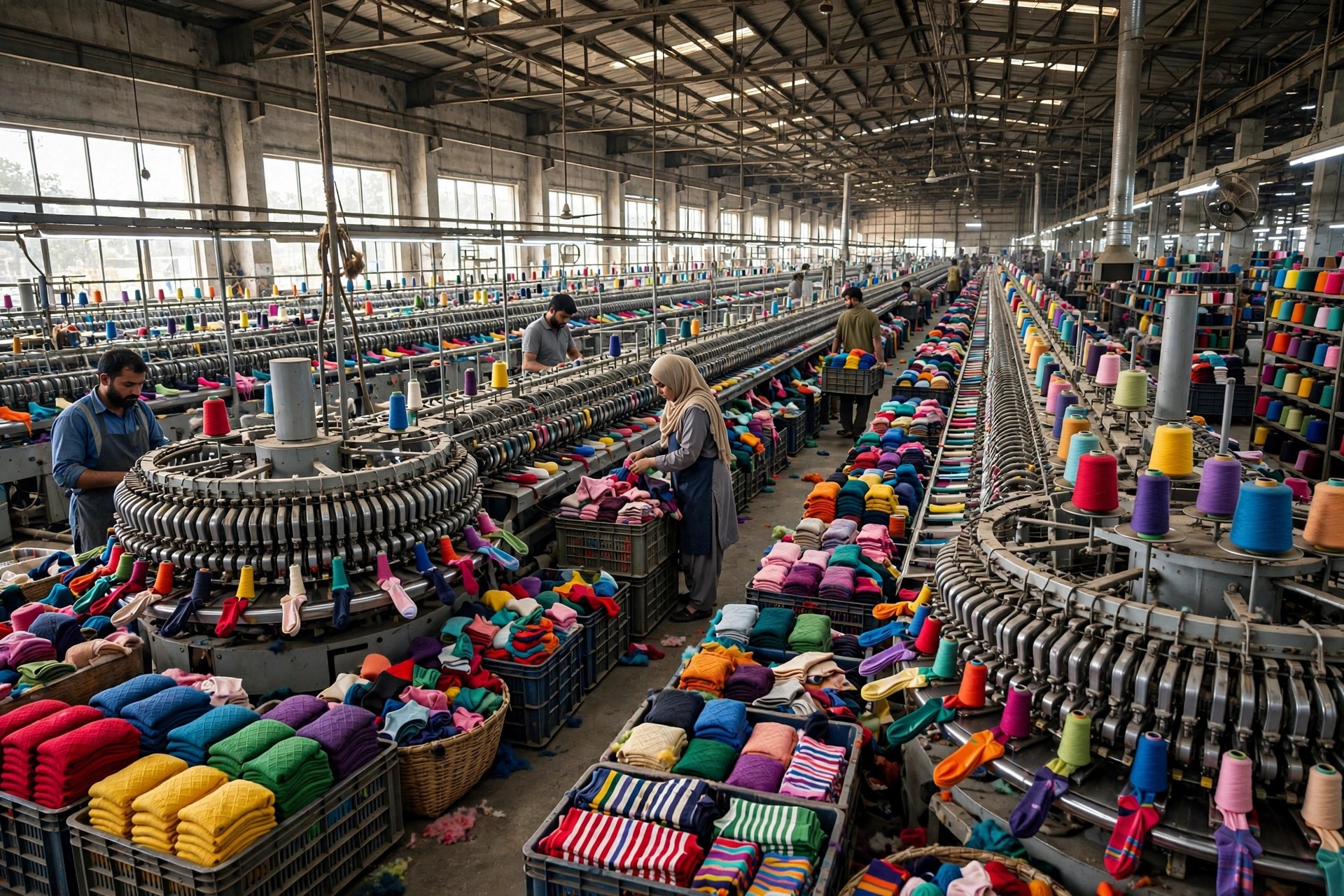
Few Pakistanis think about trade finance until it touches them, but it touches almost everything. The fuel at a petrol pump, the fertiliser on a farm, the phone in a shop window and the yarn in an export order have all, at some point, waited on documents moving between banks. A specialist like HMB sits inside those chains. Its corporate clients include the trading houses and manufacturers whose goods fill containers at Karachi's ports, and its remittance services connect overseas Pakistanis sending money home — a flow that supports household budgets across the country.
Inside the stock market, HMB plays a particular role too. It is a constituent of the KSE-100, the benchmark index whose construction through free-float market capitalisation is explained in our guide to how the KSE-100 is calculated. Its presence there reflects both its size and the liquidity of its shares, and it means index-tracking investors hold HMB whether or not they have a view on trade finance. Periodic reviews can add or remove constituents, a process covered in KSE-100 index rebalancing explained.
Specialisation in a market of giants
Pakistan's banking sector is top-heavy: a small number of very large banks hold a dominant share of deposits, and they compete on national branch networks, government business and sheer distribution. A bank of HMB's design cannot win that contest head-on, and its history suggests it has never tried to. Its founding niche — trade services for businesses that import, export and manufacture — is a defensible one precisely because it is knowledge-intensive. A letter of credit handled expertly, a documentary collection chased diligently, a foreign-exchange hedge explained clearly: these are services where competence is visible to the client within days, and where relationships compound over decades in a way that deposit-rate advertising does not.
That specialisation also shapes the bank's risk profile. Trade finance, properly documented, is short-tenored and self-liquidating: the loan is repaid from the sale of the goods it financed. A portfolio weighted toward such business behaves differently through an economic downturn from one weighted toward long-term project lending — a distinction analysts draw when they compare HMB's asset quality and earnings pattern through past cycles with those of the sector's generalists. The bank's Islamic banking division adds a second axis of diversification, serving customers whose deposits and financing must be structured without interest, inside the same branch and systems infrastructure.
Digital channels form the third leg of the modern strategy, as they do across Pakistani banking. Mobile and internet banking, card services and instant transfers were once the differentiators of a few aggressive banks; they are now the price of participation, and for a mid-sized bank they offer something branches cannot — national reach without national branch costs. For HMB, whose founding network was deliberately compact, the economics of that shift are particularly favourable: every customer who can be served well on a phone is a customer the bank can hold in a city where it has no branch at all.
One further habit distinguishes the bank's self-presentation: continuity of leadership and ownership. A principal shareholder that has held its position since 2006, through currency crises, rate cycles and a pandemic, gives a mid-sized bank something money cannot quickly buy — a sponsor whose horizon is measured in decades. For depositors, that steadiness is itself a product; Pakistani savers have long memories of bank failures and forced mergers, and a name associated with an old, international banking house carries reassurance that shows up, quietly, in deposit retention through stressed periods.
What investors typically watch in HMB
Because this profile is educational content, not financial advice, the useful question is not whether the shares are attractive but what experienced readers monitor. For a trade-focused bank the list usually includes:
- Trade volumes and fee income — Pakistan's import and export trends flow directly into the bank's busiest desks.
- Deposit growth and mix — especially low-cost current accounts, which determine how cheaply the bank funds itself.
- Asset quality — the non-performing loan ratio and provisioning coverage, the classic early-warning indicators in banking.
- Capital adequacy — the buffer of capital held against risk-weighted assets, overseen by the State Bank of Pakistan.
- The interest-rate cycle — which lifts or compresses spreads across the whole sector, whatever an individual bank does.
Set against the sector's giants, HMB is best understood as a mid-sized, deliberately specialised institution: large enough to sit in the benchmark index and serve national trade flows, focused enough that its name still means something specific to the businesses that use it. That combination — a 1992 liberalisation-era bank, a Zurich-rooted Habib parentage acquired by merger in 2006, and a trade desk at the centre of the business — is the company's identity, and the starting point for anyone reading its results. Beginners who want the foundations behind terms like deposits, spreads and dividends will find them in the Aktzien learning library.
Key takeaway: Habib Metropolitan Bank grew from 1992's Metropolitan Bank into a House of Habib trade-finance specialist through its 2006 merger with Habib Bank AG Zurich's Pakistan operations — a mid-sized bank whose earnings blend lending spreads with the fees of moving Pakistan's trade.