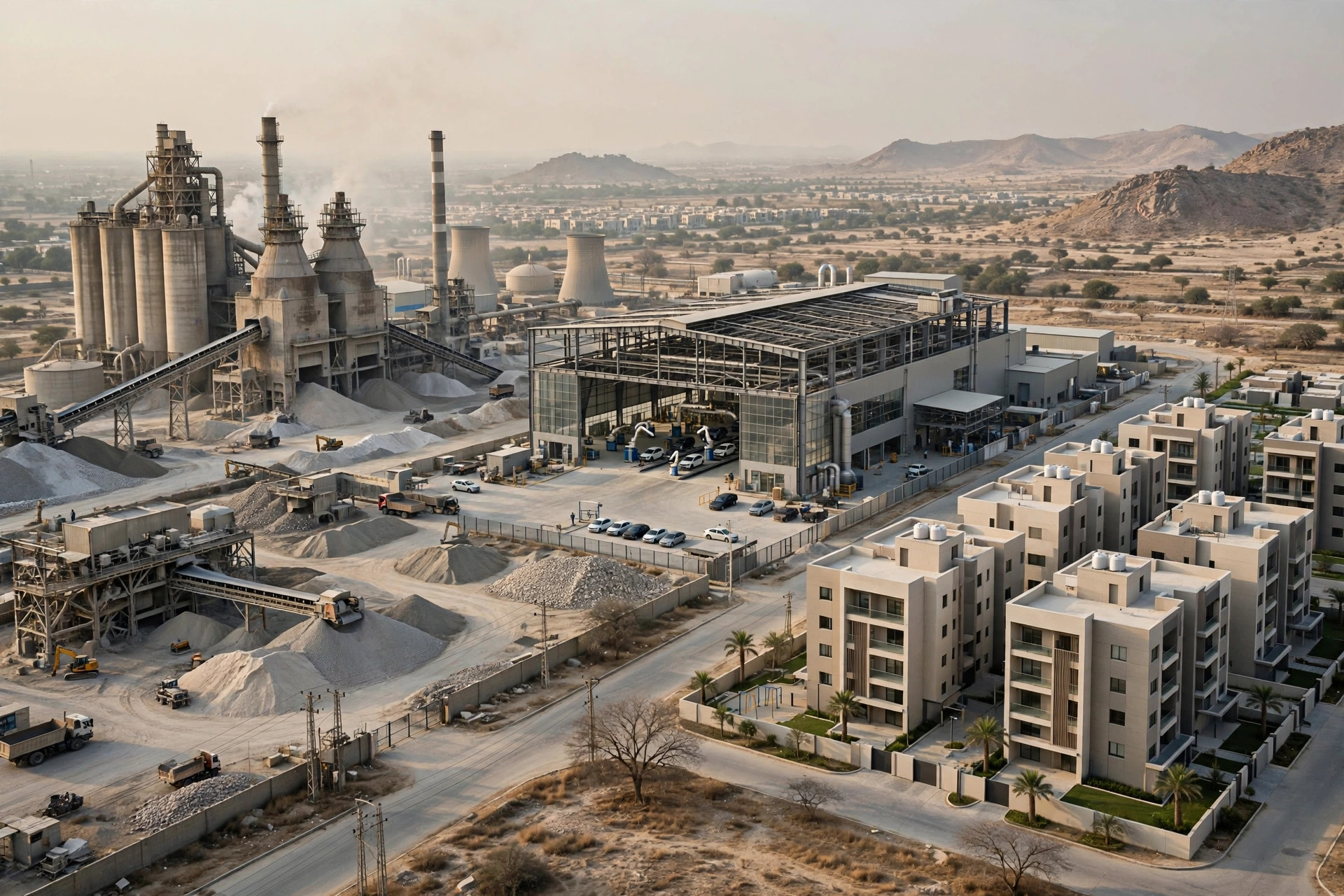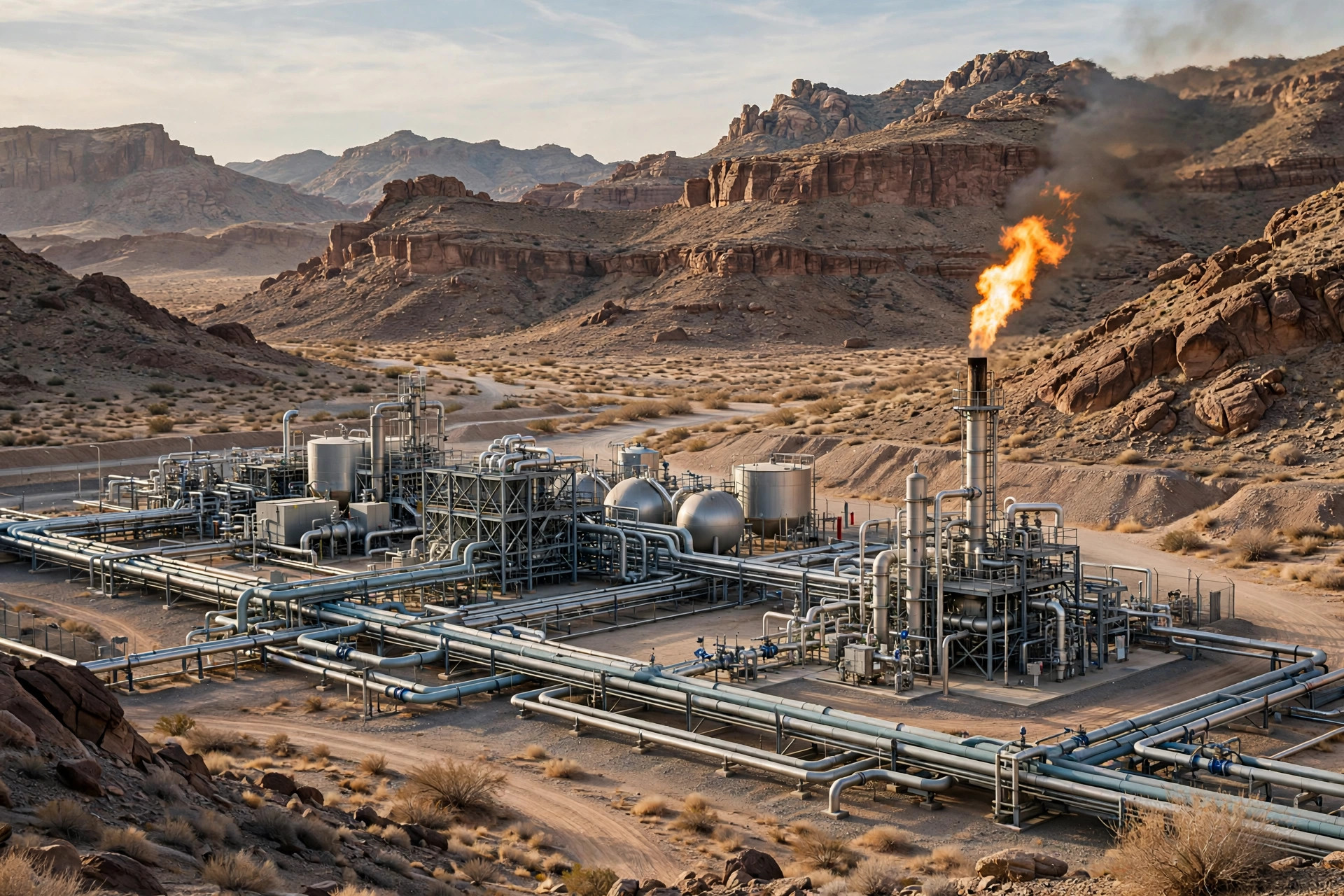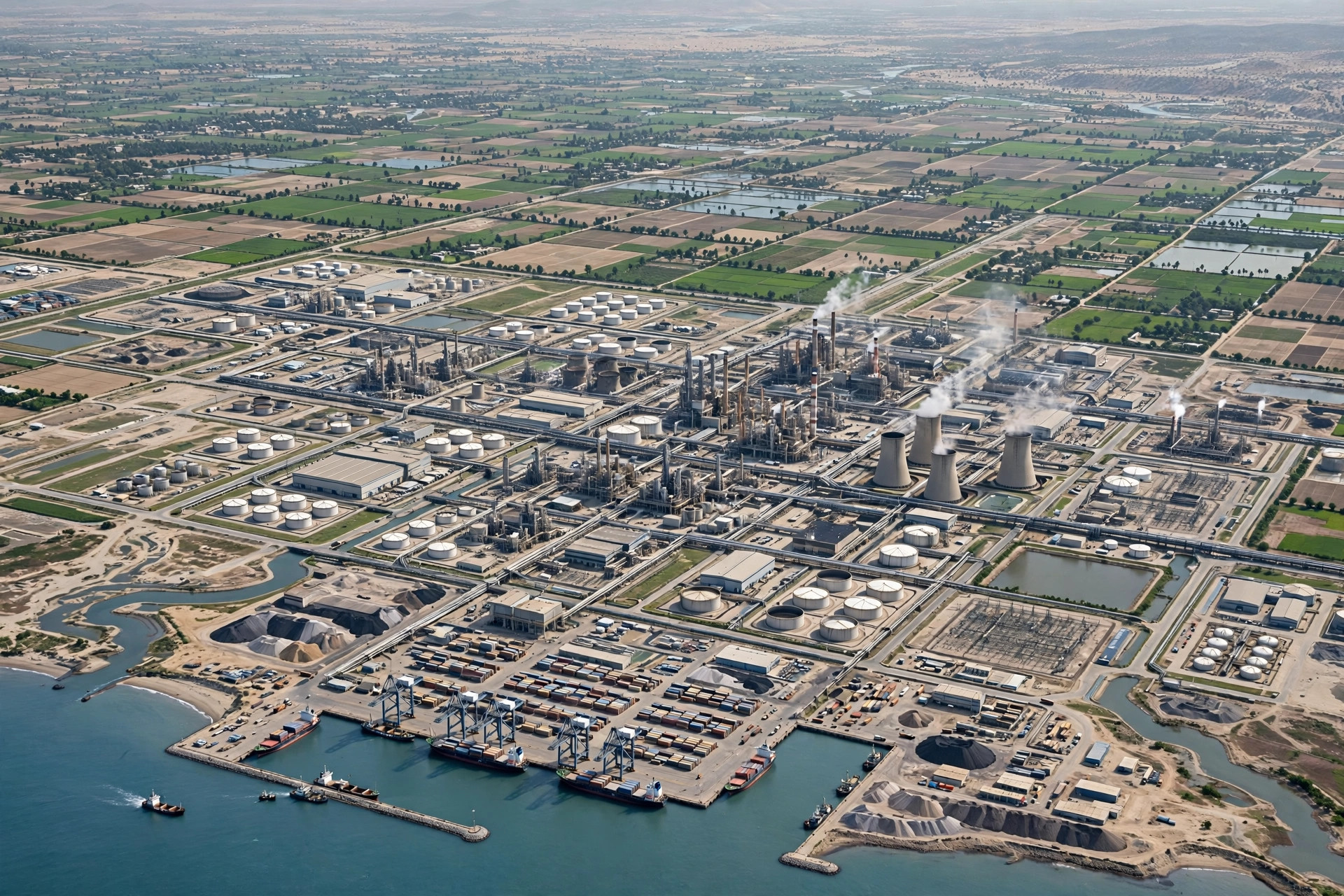
KARACHI: Engro Corporation is less a company than a portfolio with a head office. Its name sits on urea bags in wheat country, milk cartons in Karachi supermarkets, a coal mine and power plants in the Thar desert, chemical tanks at Port Qasim, telecom towers on rooftops and a trading desk moving rice and commodities around the world. Shareholders who buy Engro buy all of it at once, filtered through one of the Pakistan Stock Exchange’s most instructive structures: the listed holding company. This explainer walks through where Engro’s money is actually made, how it flows up to the parent, and why the market persistently prices the whole at less than the sum of its parts. It describes a business model; it does not recommend the share.
The shape: a parent that owns businesses, not factories
Engro began in 1957 as a fertilizer venture — originally an Esso-backed plant at Daharki in Sindh — became Pakistani-owned and renamed Engro in the early 1990s, and then spent three decades deliberately diversifying. A restructuring around 2010 completed its transformation into a holding company: the fertilizer business was placed in a dedicated subsidiary, and the parent, Engro Corporation, became the owner, capital allocator and strategy setter above a family of businesses. Its major shareholder is the Dawood group, and its chief executives have typically been professional managers recruited from multinationals — a governance flavour that distinguishes Engro from many family-run groups described in our conglomerates guide.
The portfolio’s main pillars, in the form they have taken in recent years — readers should confirm the current structure in Engro’s latest annual report, because holdings are bought, sold and reorganised — are: fertilizers through Engro Fertilizers; dairy and food through its stake in FrieslandCampina Engro Pakistan; energy through Engro Energy, spanning Thar coal mining and power, the Qadirpur gas plant and a large gas-fired plant held with partners; petrochemicals through Engro Polymer & Chemicals; an LNG regasification terminal held through Engro Elengy; telecom infrastructure through Engro Enfrashare’s tower portfolio; and commodity trading and terminals through Engro Eximp and related ventures, including a bulk terminal at Port Qasim held with a Dutch partner. Each pillar would be a respectable listed company on its own. Together they make the parent’s accounts a tour of the Pakistani economy.
Fertilizer: the historic engine
Engro Fertilizers makes urea and blended fertilizers, principally at Daharki, where it operates large plants including, historically, one of the world’s bigger single-train urea units built when new gas was allocated in the early 2010s. The economics are those of our fertilizer sector guide in miniature: buy natural gas as feedstock and fuel at prices set under government policy, convert it to urea through a capital-hungry chemical process, and sell into an agricultural market where the state watches prices, imports and subsidies closely because urea prices feed directly into food inflation.
Two features decide fertilizer profitability in any year. The first is gas — its price, and whether it flows at all; Pakistan’s depleting fields and winter shortages have periodically curtailed supplies to fertilizer plants, and pricing reforms that move feedstock gas towards market-based levels change the margin structure fundamentally. The second is the gap between local urea prices and international prices, which influences both profitability and the perennial political argument about whether farmers or shareholders benefit from Pakistan’s gas. Engro Fertilizers has historically contributed a large share of group profit and dividend upstream, and its own separate listing history and payouts make it the pillar outside investors can value most precisely — a fact that matters for the discount discussion below.
Food, chemicals and the consumer side
The food pillar runs through Engro’s dairy partnership with the Dutch cooperative FrieslandCampina, which took a controlling partnership role in Engro’s dairy business in 2016. The business collects milk from a vast rural network, processes it, and sells packaged milk, tea whiteners and related dairy products under brands every Pakistani shopper knows. Its economics invert fertilizer’s: raw material is bought daily from farmers at negotiated prices, brands and distribution are the moat, and margins are thinner but steadier, hostage to milk procurement costs and the pricing of loose, unpackaged milk that packaged players must compete against. It is a volume-and-trust business — food safety scares and purchasing power alike show up quickly in its results.
Engro Polymer & Chemicals, separately listed, makes PVC resin — the plastic of pipes, cables and construction — and caustic soda and related chemicals at its Port Qasim complex, importing much of its key feedstock. Its profits ride the spread between PVC prices, set internationally, and feedstock costs, plus construction demand at home; it has expanded capacity in stages and added downstream products such as hydrogen peroxide through a subsidiary. Between them, food and chemicals give Engro exposure to the consumer and industrial cycles that fertilizer lacks — diversification working as designed, at the price of complexity.
Energy: Thar, terminals and towers
Engro’s energy ventures show its project-development muscle. In Thar, its mining company — a joint venture with the Sindh government and partners — digs lignite from one of the world’s largest coal deposits, supplying mine-mouth power plants, including its own Engro Powergen Thar, under long-term arrangements of the kind explained in our power generation guide: capacity payments for availability, energy payments for generation, and receivables exposure to the national payment chain. Thar turned a long-stranded domestic resource into baseload power and made Engro a central actor in Pakistan’s energy map, with the returns and the circular-debt headaches that position implies.
The Elengy LNG terminal at Port Qasim, a floating storage and regasification unit operated with partners, earns capacity-style fees for converting imported LNG back to gas for the national grid — infrastructure income, steadier than commodity trading, tied to Pakistan’s structural gas deficit. The tower business, Enfrashare, took the infrastructure logic into telecom: build and own mobile towers, lease space on them to operators under long contracts, and let tenancy economics compound — selling connectivity real estate by the antenna. Engro has periodically explored strategic options for parts of this portfolio, a reminder that a holding company’s assets are always, in principle, for redeployment.
How the money reaches shareholders: dividends up, discount down
Strip Engro’s consolidated accounts down and the flow is: operating subsidiaries earn profits; some is reinvested in each business; the rest is dividended up to the parent, which pays its own costs, funds new ventures or acquisitions, services any parent-level borrowing, and decides the dividend Engro’s own shareholders receive. The consolidated income statement blends everything — including the shares of profit belonging to minority holders of partly owned subsidiaries — so the line that matters for the parent’s owners is profit attributable to shareholders, and the cash that matters is dividends received, visible in the parent’s separate accounts and cash flow.
Then comes the famous discount. Add the market value of Engro’s listed stakes to a reasonable value for its unlisted assets, and the total has persistently exceeded Engro’s own market capitalisation — the holding-company discount in action. Investors accept it for real reasons: a tax and cost layer at the parent, no choice over capital allocation, and the possibility that cash gets committed to long-gestation ventures rather than returned. Management teams dislike it for equally real reasons, and periodic buybacks, restructuring proposals and asset monetisations in the group’s history can be read as attempts to narrow it. Watching the discount is therefore watching the market’s running verdict on Engro’s capital allocation — which is, in the end, the product a holding company sells.
An illustrative calculation, with invented numbers: if look-through value were Rs 100 per Engro share and the share traded at Rs 78, the discount is 22 percent. A special dividend funded by an asset sale might narrow it; a large new commitment of capital to a risky venture might widen it. Neither movement tells you the “right” price — it tells you what other investors currently charge for trusting the allocator.
Risks and the honest summary
Engro’s diversification cuts some risks and concentrates others. Gas policy runs through fertilizer, power and LNG simultaneously; the exchange rate touches imported feedstocks, dollar-linked project returns and food inputs at once; and state receivables connect Thar power to the same payment chain as every IPP. Food safety, chemical cycles, Thar expansion politics and the execution risk of whatever venture comes next complete a risk map that is essentially a map of Pakistan’s economy itself — which is why Engro is so often used, fairly, as a proxy for the country in investor conversation.
The fair summary is that Engro makes money the way a skilled landlord of industrial assets does: by owning large, scarce, well-run positions in fertilizer, food, chemicals and energy infrastructure, collecting their cash flows, and reinvesting the surplus — with the market charging a standing discount for the arrangement. This article is educational content, not financial advice, and expresses no view on whether that discount makes the share cheap or dear. For the sibling story of a cement company that became a group, continue to how Lucky Cement makes money, or browse the learning library.
The people and the process: how Engro allocates capital
What distinguishes Engro from a passive portfolio is an internal process that has become part of its identity. New ventures are typically incubated inside a dedicated growth team, tested against group hurdle rates, partnered where Engro lacks an edge — the Dutch dairy cooperative in foods, international partners in terminals and towers — and scaled only after pilot economics prove out, with the failures, such as earlier experiments in retail and overseas food ventures, exited rather than endlessly subsidised. Its executive bench has been deliberately built from multinational talent, and its chief executives are usually promoted or hired as professional managers rather than drawn from the owning family — a structure the Dawood sponsors have maintained as a matter of stated philosophy.
Investors can observe this process in the group’s disclosure habits: investor presentations that walk segment by segment through strategy, conference calls where management fields detailed questions, and annual reports that discuss capital allocation with unusual frankness by local standards. None of that guarantees good decisions — Engro’s history includes ventures that were sold, closed or restructured at a loss, and periods when the market clearly doubted the latest commitment — but it does make Engro one of the more legible capital allocators on the exchange, and legibility itself narrows the information part of the holding-company discount.
The next decade’s allocation questions are already visible: how far to expand Thar and its associated mining and power chain, whether connectivity infrastructure is a permanent pillar or a harvest-and-exit asset, how much of the fertilizer windfall of strong pricing years should fund entirely new sectors, and whether the group’s sustainability commitments — water, emissions, community development around Thar — can be met at costs shareholders will bear. The answers will arrive one announcement at a time, and each will move the discount before it moves the earnings.
The consolidated accounts, translated
One reading skill unlocks Engro’s reports: keeping three statements separate in your mind. The consolidated accounts show the whole empire as one economy — every subsidiary’s revenue added, internal sales eliminated, and the minorities’ share of partly owned companies’ profits deducted at the end to reach what belongs to Engro’s shareholders. The parent’s separate accounts show the holding company alone: dividend income from subsidiaries, its own investment portfolio, head-office costs and the dividend it declares. And the segment reporting bridges them, apportioning results among fertilizer, food, energy, chemicals and other pillars.
Confusing the three produces the standard errors — crediting Engro’s shareholders with profits that belong to a subsidiary’s minorities, or judging the parent’s dividend capacity from consolidated cash that legally sits inside subsidiaries with their own lenders and covenants. Engro’s disclosure is good enough that a patient reader can avoid both errors, and the same three-statement discipline transfers directly to every other holding structure on the exchange, from the Fauji flagships to the tower and energy vehicles Engro itself has incubated.
Key takeaway: Engro is a holding company — subsidiaries in fertilizer, food, chemicals and energy earn the money, dividends carry it to the parent, and the holding-company discount is the market’s price for Engro’s capital allocation.