KARACHI: Some companies are as old as the country they serve. International Industries Limited — INIL, universally known as IIL — was incorporated on 1 March 1948, months after Pakistan itself came into being, and it has spent the intervening decades quietly becoming the pipes inside Pakistan's buildings, the tubes inside its furniture and machines, and the conduits inside its factories. IIL describes itself as Pakistan's largest manufacturer of pipes and tubes, exports to dozens of countries, and anchors the Chinoy Group — the family enterprise that also created International Steels and co-founded Pakistan Cables. Few KSE-100 companies offer a clearer lesson in how Pakistani industry actually grew: start as traders, learn what the market needs, then manufacture it, one product line at a time.
1948: a trading company in a new country
IIL was founded by Amir S. Chinoy and incorporated in 1948 as Sir Sultan Chinoy & Co. Ltd. — a trading company dealing primarily in electronic instruments. The Chinoy name carried weight in the commercial world of Bombay and Karachi, and the young company's first great venture showed an instinct for partnership: in 1952 IIL sponsored the setting up of Pakistan Cables Limited in partnership with Britain's BICC, and thereafter acted as its selling agent. Pakistan Cables remains an associated company of the group to this day — an early example of the pattern IIL would repeat for seventy years: spot an industrial need, bring in a credible partner, and build a local manufacturing institution around it.
Manufacturing in IIL's own name came later. It was not until 1966 that the company began producing cold-rolled tube for electrical conduit and steel furniture — its first step from selling other people's products to making its own. Towfiq H. Chinoy took over as managing director in 1977, and under his leadership the range broadened decisively: galvanised iron pipe production began in 1982, taking IIL into the plumbing and construction staple that would define its scale. In 1984 the company listed on the Karachi Stock Exchange, in an offering company histories record as heavily oversubscribed — an early sign of the reputation for conservative, competent management that has followed IIL ever since.
Building Pakistan's pipes champion
The decades after listing were spent widening the product range and the map. In 1989 IIL set up what it describes as Pakistan's first private-sector cold rolling mill, deepening its control over the steel strip from which its tubes are formed. Pipe exports began in 1996 and grew, by company accounts, to reach some sixty countries across six continents — a remarkable footprint for a product as heavy and freight-sensitive as steel pipe, achieved by concentrating on quality grades and specifications that distant buyers trust.
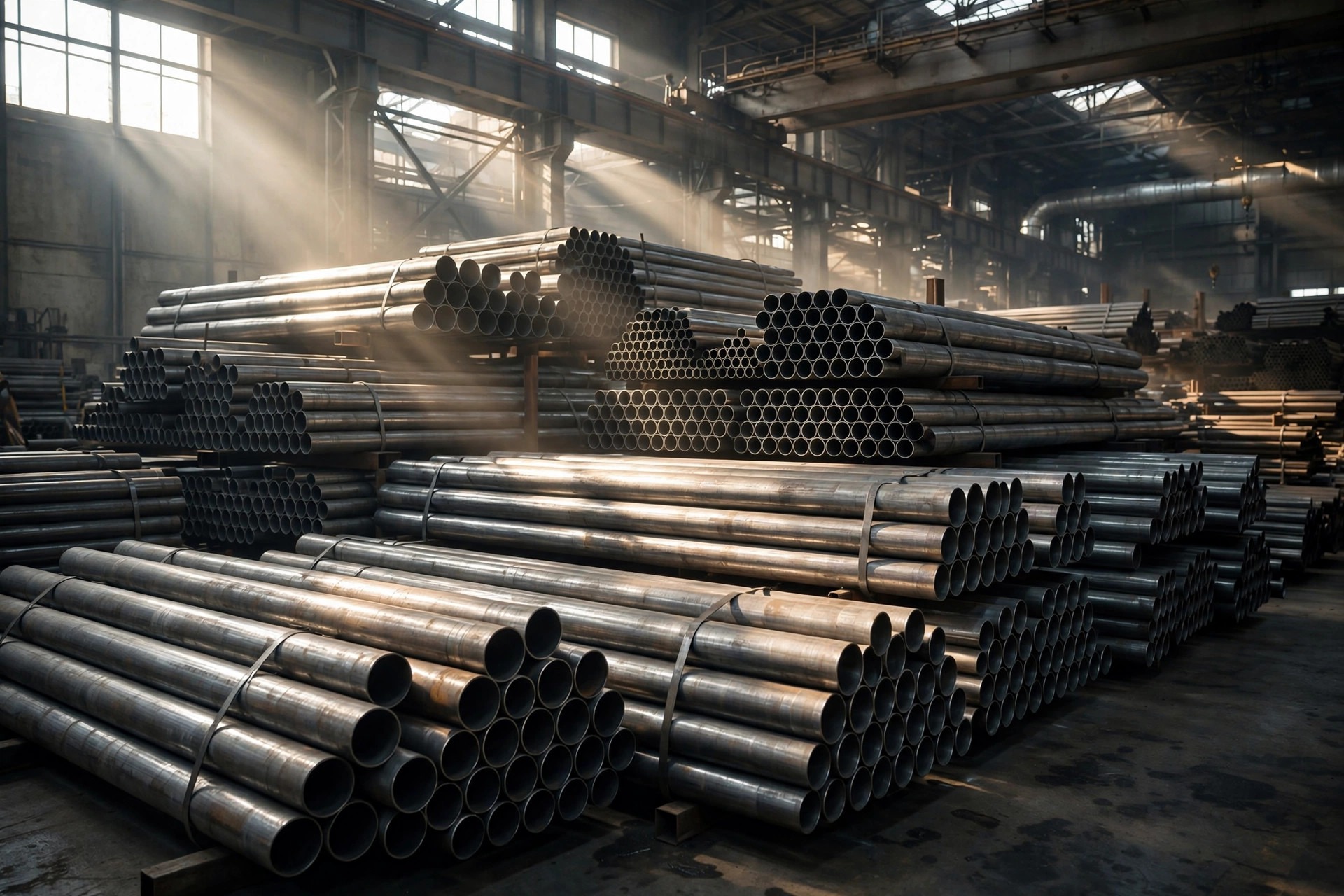
The product catalogue today spans the full working life of a pipe. Galvanised steel pipes carry water and gas in buildings across Pakistan. Precision steel tubes serve furniture, automotive and engineering uses. API line pipes, made to American Petroleum Institute standards, carry oil and gas. Structural hollow sections form the skeletons of warehouses, sheds and modern steel construction. Stainless steel tubes serve food, pharmaceutical and decorative applications. And since 2006, when IIL recognised a gap in the market, polymer pipes and fittings — HDPE and later PPRC — have carried water and gas in plastic, in diameters running to very large sizes for infrastructure projects. The company also offers customised construction solutions, a services layer on top of the product range.
Geography followed product. Manufacturing sits in Karachi's Landhi industrial area and on the Sheikhupura Road near Lahore, with sales offices in the major cities — and, since 2014, a wholly owned subsidiary in Australia distributing IIL pipes into that market, an unusual outward step for a Pakistani engineering firm. The crowning act of expansion, however, was corporate rather than geographic: the creation of a flat-steel business, International Steels, profiled separately as International Steels (ISL).
The Chinoy Group and the parent-company structure
IIL is both an operating company and a holding company, and readers of its consolidated accounts need to hold both ideas at once. The group consolidates International Steels Limited — in which IIL holds a majority stake of around fifty-six per cent — and its Australian distribution subsidiary, and it equity-accounts its long-standing interest in Pakistan Cables. The Chinoy family provides the leadership thread: Kamal A. Chinoy has chaired the board, and the family's stewardship across three generations is the group's defining governance fact. In Pakistan's market, where family control is common but family professionalism varies, IIL is frequently cited in an older, quieter tradition — the company featured for years in the stock exchange's top-companies recognition and collected corporate excellence awards in its sector — built on paying dividends, avoiding drama and compounding slowly.
How IIL makes money
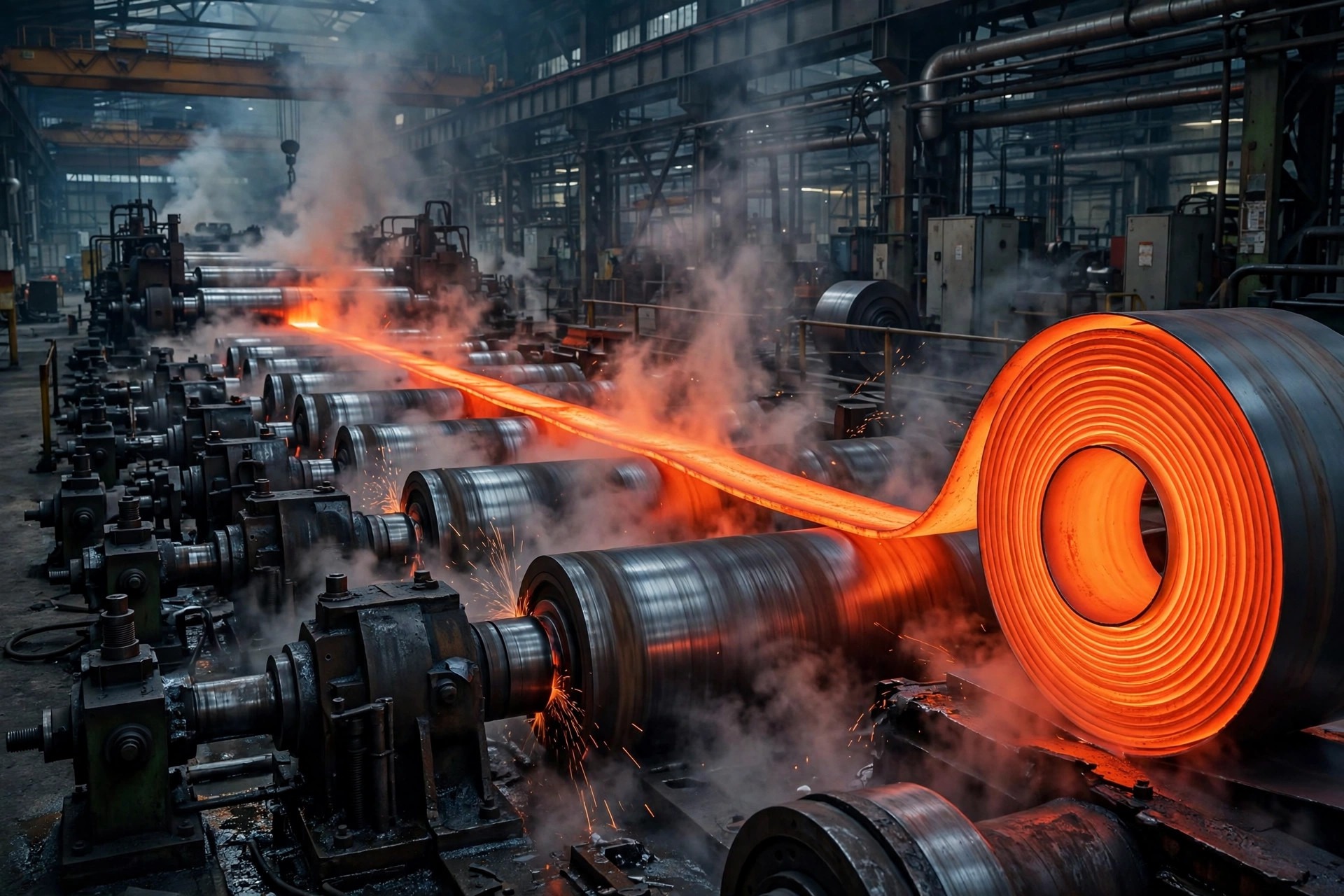
The core business converts steel into pipe. IIL buys hot-rolled coil and other steel inputs — priced off international steel markets and the exchange rate — cold-rolls, forms, welds, galvanises and finishes it, and sells the result at a conversion margin. Galvanising adds a zinc coating (and a zinc cost) that protects pipe from corrosion and commands a premium. Polymer pipes substitute petrochemical resin economics for steel economics. In each line the arithmetic is similar: the spread between the finished pipe price and the raw material, energy and conversion cost, multiplied by tonnage, minus the overheads of a multi-plant operation.
Demand is the swing factor, and it is overwhelmingly cyclical. Construction activity, government infrastructure spending, housing, and industrial investment decide how much pipe Pakistan absorbs; agricultural and energy projects drive the larger-diameter and API lines. Exports smooth the cycle partially and earn foreign currency, but they expose the company to global steel prices and freight markets. On top of operations, the consolidated result carries IIL's share of ISL's much larger flat-steel earnings and dividends from associates — meaning INIL's reported profit is never purely a pipes number, a point new readers often miss. The wider sector context is in our guide to PSX steel stocks.
Its place in Pakistan
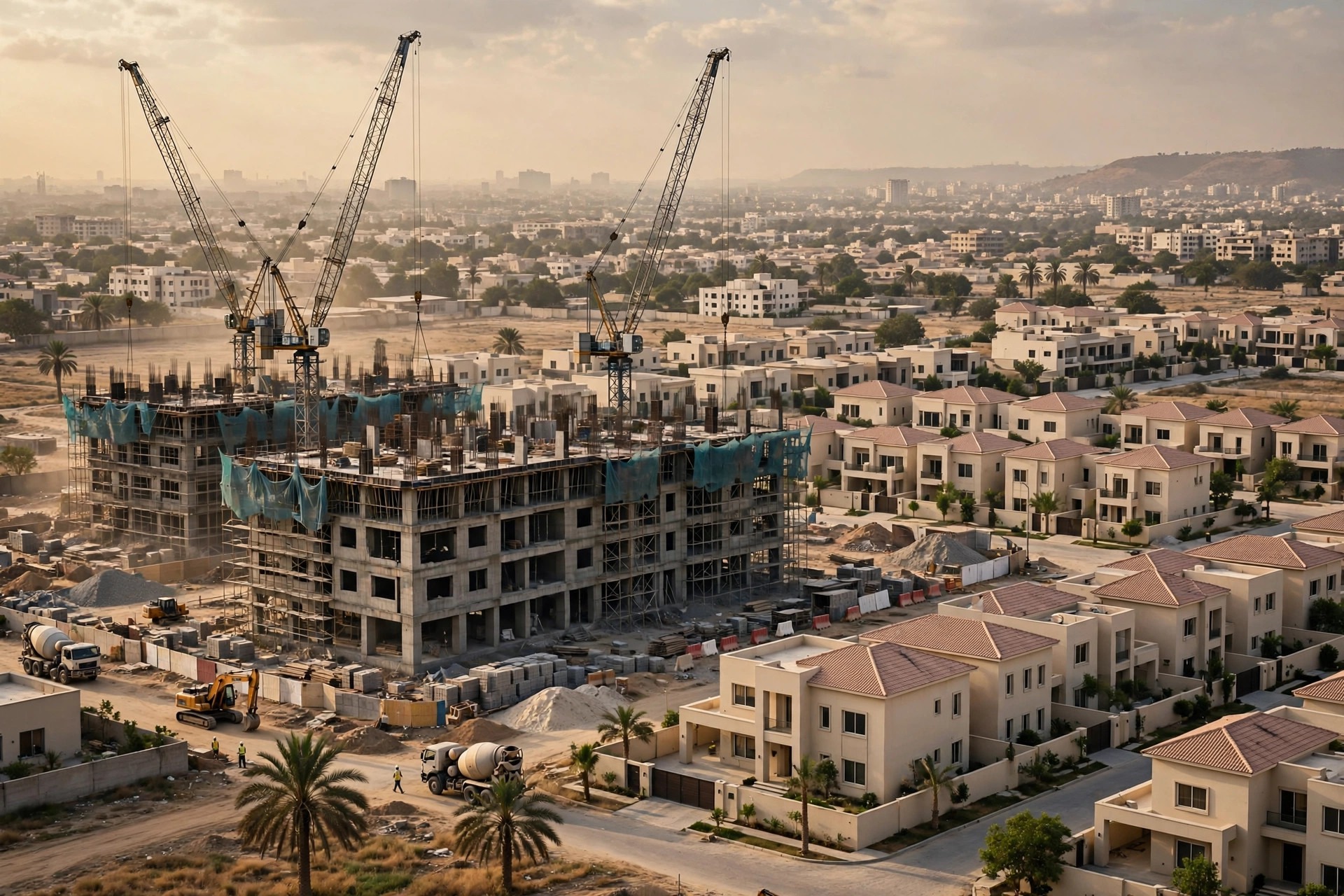
Pipes are the definition of invisible infrastructure. IIL's products carry drinking water into apartment blocks, gas into kitchens, scaffolding around construction sites and frames into the furniture industry; its large-diameter pipes serve the water and energy projects on which cities depend. A company incorporated in the first year of Pakistan's existence, still family-led, still exporting, and still in the benchmark index is itself a piece of economic history — proof that the country's industrial base includes firms built to outlast political cycles rather than ride them.
Standards: the quiet technology of trust
IIL's less visible achievement is standards. A pipe is a promise — that it will hold pressure, resist corrosion and match its stated dimensions for decades inside walls and underground, where failure is expensive and dangerous. The company's investment in certifications and specifications, from API licences for oil and gas line pipe to international quality systems, is what converts a commodity tube into a specified product that engineers write into tenders by name. That is also how a Pakistani pipe-maker exports to dozens of countries: foreign buyers cannot inspect every length, so they buy the system that produced it. Company histories record a long shelf of trade and management honours — repeated recognition among the exchange's top companies over the 2000s and exporter awards in engineering goods — consistent with a firm whose commercial religion is documented reliability.
The product-development thread continues in plastics. IIL's 2006 entry into polyethylene pipes, later extended to very large diameters and to PPRC systems, looks in retrospect like an early reading of Pakistan's infrastructure needs: water supply, sewerage and gas distribution increasingly specify plastic for its corrosion immunity and jointing ease, and mega-projects need diameters that few regional makers can extrude. Stainless steel tubes, made through a group company, serve the hygienic end of the market — food, beverage and pharmaceutical plants. Each extension follows the founding pattern of 1952: identify a pipe the country imports or makes badly, master its standard, and become its local reference producer.
For students of Pakistani business, IIL also demonstrates the holding-company craft. Its consolidated accounts blend a mature, cash-generative pipes business, a majority stake in a capital-hungry steel subsidiary, an Australian trading outpost and a historic cables associate — four different cycles under one roof. Reading INIL well means separating those cycles: pipes follow construction, ISL follows the global flat-steel spread, and the group's dividend to its own shareholders has historically been funded by the blend. That internal diversification is deliberate, and it is a large part of why the 1948 company still stands in the benchmark while most of its founding-era contemporaries have vanished from the board.
The Lahore plant tells a final part of the geographic story. Karachi gave IIL its port, its head office and its founding markets, but Pakistan's construction demand is weighted toward Punjab, and hauling heavy pipe the length of the country is a tax on every tonne. Producing on the Sheikhupura Road put IIL inside its largest demand basin, close to the same industrial corridor that hosts much of the country's engineering industry. Read together — Landhi and Lahore plants, five-city sales offices, an Australian beachhead and exports across six continents — the footprint of the 1948 trader now resembles a small multinational that happens to make pipes. That, more than any single product, is the Chinoy achievement: an institution built patiently enough to be simultaneously local everywhere it matters and present in markets its founders never saw.
Succession is the standing question for every family institution, and IIL's answer so far has been professionalisation within family ownership — family leadership at board level, career managers running operations, and a public listing since 1984 imposing disclosure discipline that many private groups avoid. The model has carried the company through the founders' generation and their successors'. Whether it carries through the next transition will be decided in boardrooms rather than markets, but the track record — no scandals, no dilutive rescues, dividends through cycles — is the empirical case for the arrangement as it stands.
The export record deserves one more line, because it disciplines everything else. A domestic champion can survive on relationships; an exporter to sixty countries survives on documentation, consistency and claims honoured across time zones. IIL's pipes leaving Karachi for construction sites on six continents subject the company to the world's least sentimental quality regime — foreign building codes — and the feedback loop from those markets has shaped the standards culture described above. In the long biography of Pakistani industry, firms that submitted themselves early to foreign scrutiny tend to be the firms still standing generations later; IIL, exporting since 1996, is among the clearest examples.
It is a record that explains why, in Karachi's industrial circles, the company's name is still spoken the way its founders would have wished: without embellishment, and with considerable respect across the wider industry today.
What investors typically watch in International Industries
This article is educational content, not financial advice. Recurring observation points for INIL include:
- Construction and infrastructure demand — the volume driver for pipes, hollow sections and polymer lines.
- Steel input prices and the rupee — hot-rolled coil costs set the floor under conversion margins; inventory gains and losses follow price turns.
- Export momentum — volumes into its many markets, including through the Australian subsidiary.
- ISL's contribution — the subsidiary's flat-steel cycle often moves the consolidated result more than pipes do.
- Energy costs — rolling, welding and galvanising are power-hungry processes exposed to industrial tariffs.
IIL's longevity in the KSE-100 also makes it a practical illustration of index mechanics — membership and weight respond to free-float market value over time, as covered in KSE-100 index rebalancing explained. The foundations for reading a manufacturer's accounts are in the Aktzien learning library.
Key takeaway: IIL began in 1948 as a Chinoy trading house, learned manufacturing step by step from cables to conduit to galvanised pipe, and grew into Pakistan's pipes-and-tubes champion — and the listed parent of International Steels.