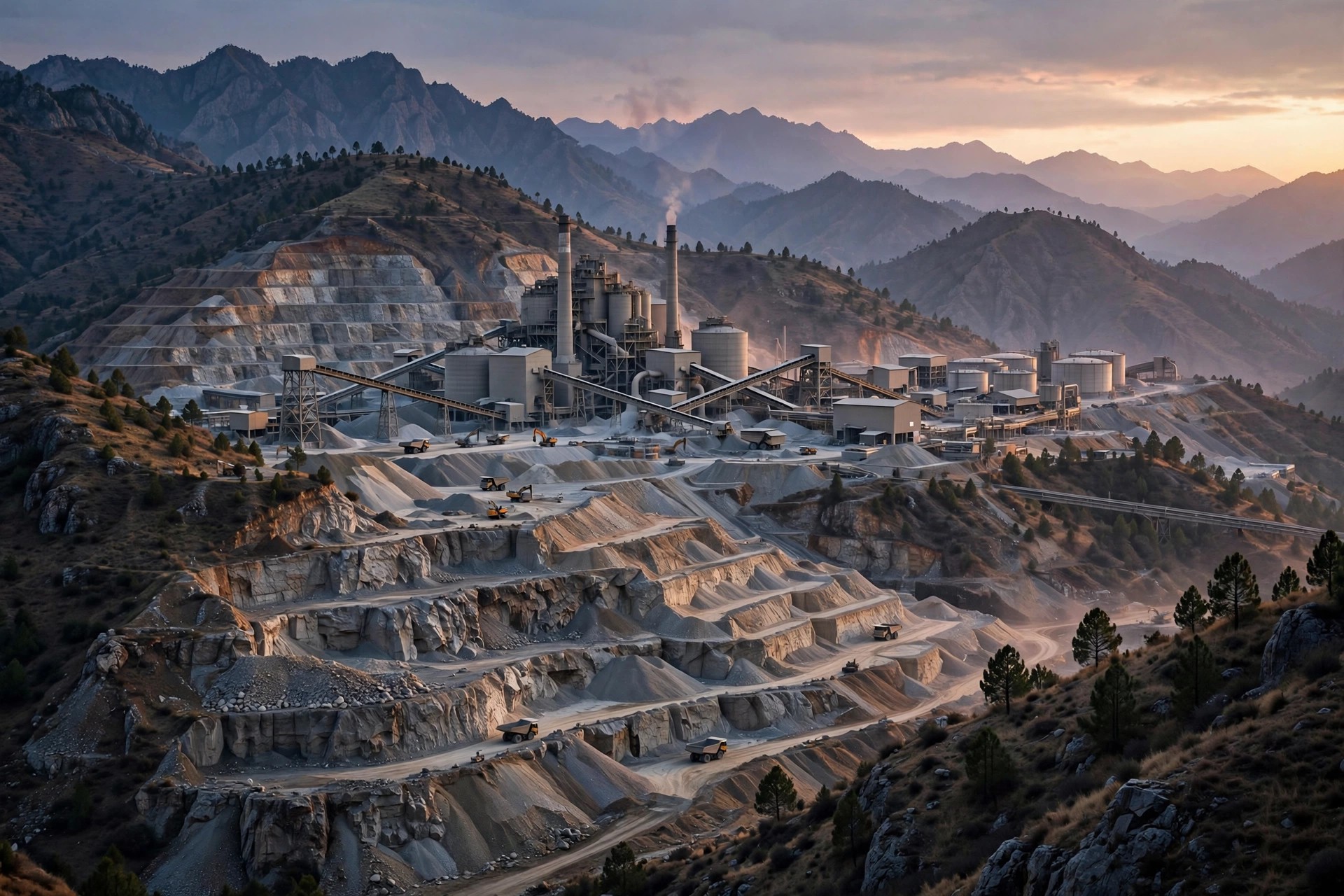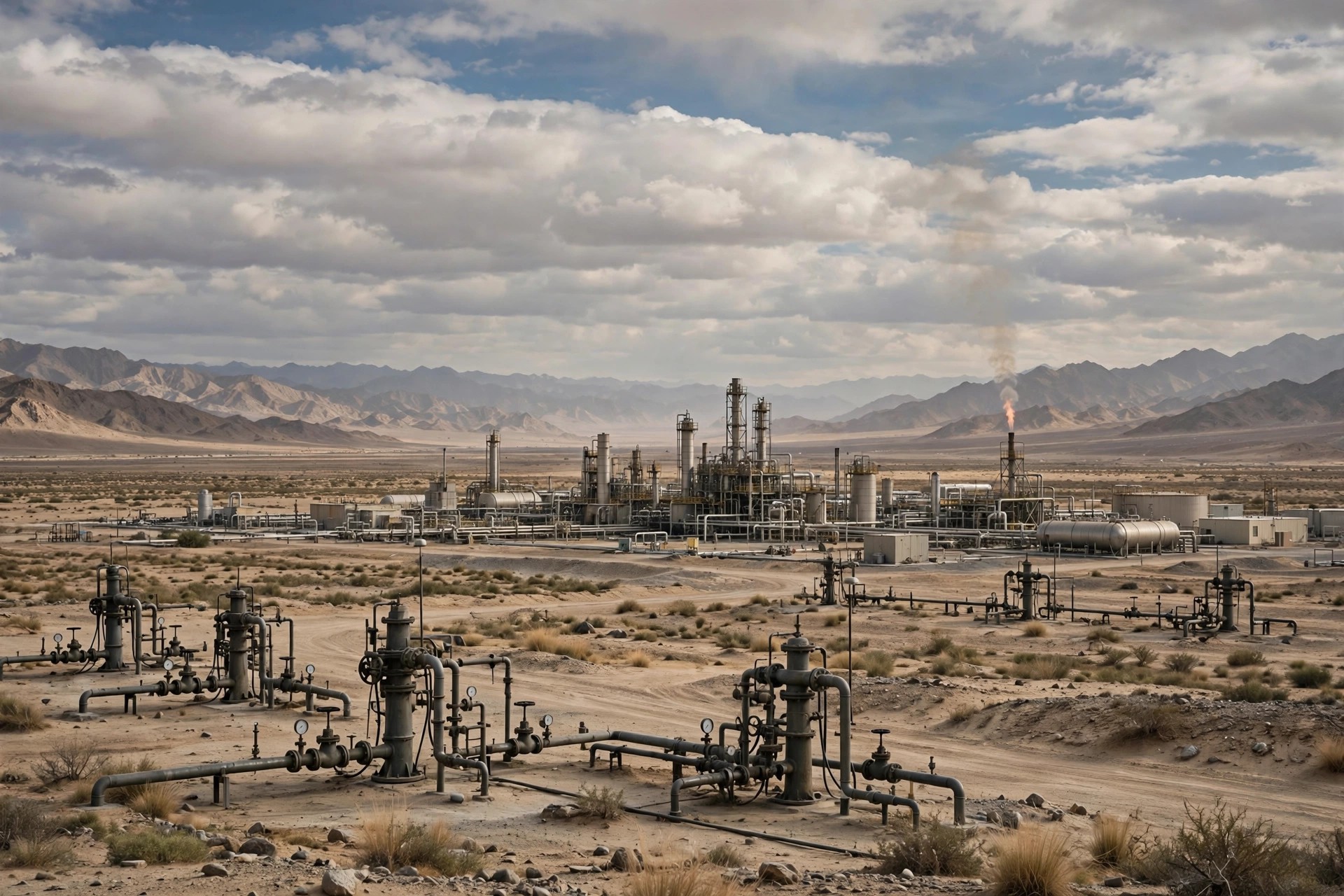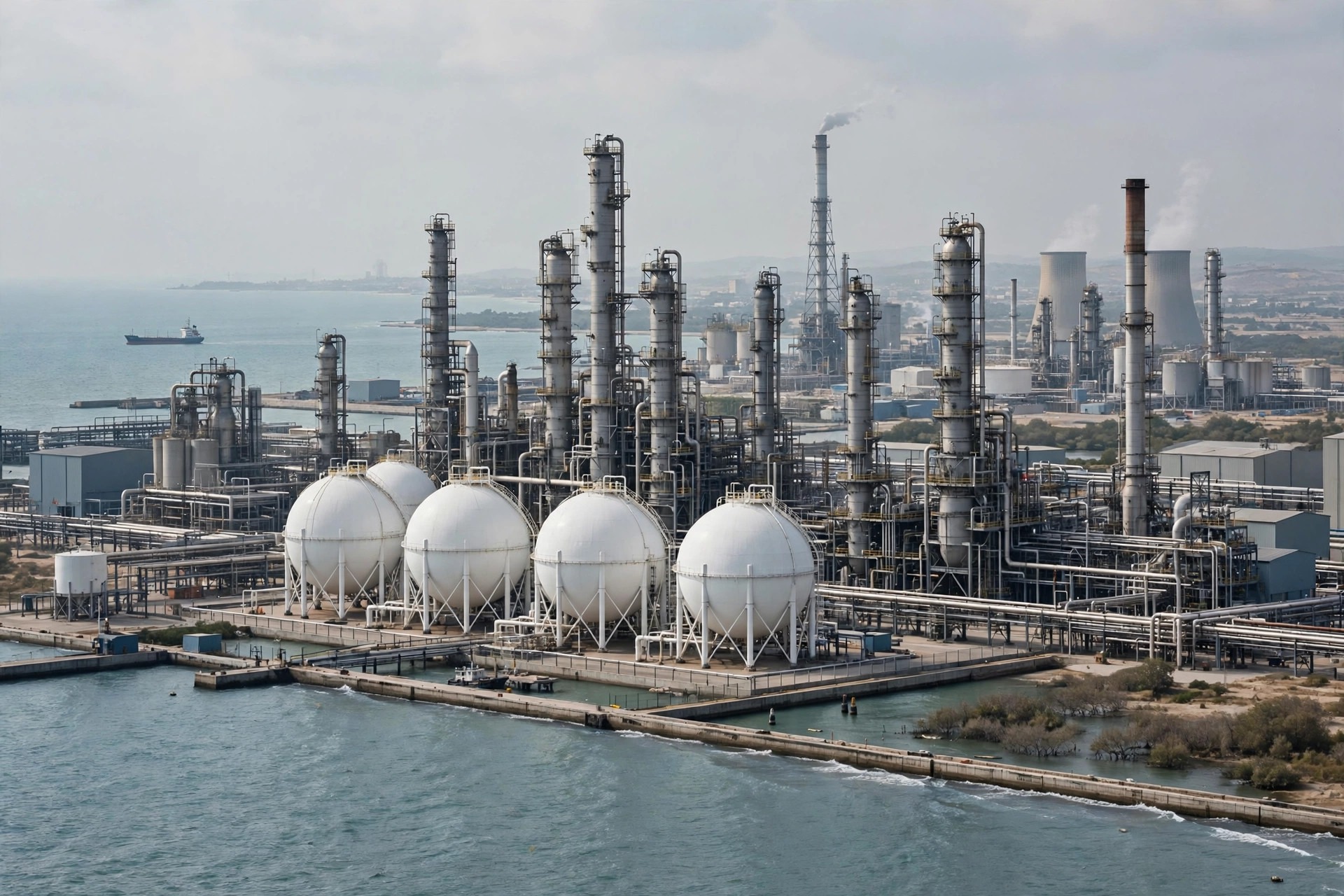
KARACHI: There is a category of company whose importance is invisible until you trace one ordinary object backwards. Take a plastic bottle, or a polyester shirt made in Faisalabad: both begin, a few chemical steps earlier, with a white powder called purified terephthalic acid — PTA. In Pakistan, essentially all of that powder comes from one plant, at Port Qasim, owned by Lotte Chemical Pakistan Limited, LOTCHEM on the Pakistan Stock Exchange. The company is a single-product, single-site business of a kind rare on the exchange, and its history is a tour of the Pakistani chemical industry's changing owners: conceived by ICI Pakistan in the 1990s, spun out as Pakistan PTA, carried through AkzoNobel's global takeover, bought by South Korea's Lotte in 2009, and sold on again in the mid-2020s. Understanding LOTCHEM means understanding PTA itself — what it is, who buys it, and why a whole country's polyester chain hangs on one coastal plant.
What PTA is, and why Pakistan needed a plant
PTA is a petrochemical intermediate. Refineries produce paraxylene from crude oil; PTA plants oxidise paraxylene into terephthalic acid and purify it; polyester plants then react PTA with another chemical, MEG, to make polyester polymer — which becomes staple fibre and filament yarn for textiles, film for packaging, and PET resin for bottles. Pakistan's textile industry, the country's export engine, runs substantially on polyester blended with cotton, and every tonne of that polyester needs its fraction of PTA. Before the Port Qasim plant, the entire requirement was imported, exposing the textile chain to shipping, currency and supply risk on a basic input.
The plant was an ICI Pakistan project. Construction began in 1996 on a roughly 100-acre site in the eastern industrial zone of Port Qasim, Karachi's deep-water port — a site chosen for imported feedstock: paraxylene arrives by ship, so a coastal plant beside a jetty avoids hauling a bulk chemical across the country. Building it required more than the process plant itself; the project included a long water pipeline, a dedicated high-voltage power connection and a grid station to serve the site. The plant was commissioned in May 1998 with an initial capacity of about 400,000 tonnes a year, later raised to around 500,000 tonnes. It was, and remains, a large and complex piece of chemical engineering by Pakistani standards: continuous oxidation reactors, purification trains and the utilities to run them around the clock.
Pakistan PTA: the demerger decade
The company's corporate identity was reshaped soon after commissioning. In 2000, ICI Pakistan demerged its PTA business under a court-approved scheme of arrangement, creating a standalone listed company, Pakistan PTA Limited. The separation had a certain logic: PTA is a globally priced commodity chemical whose economics — a spread over paraxylene — have little in common with ICI's branded pharmaceuticals or its Khewra soda ash, and a separate listing let investors price the commodity exposure directly. For readers tracing the family tree, the parent of that era is profiled in this series as Lucky Core Industries, the renamed ICI Pakistan.
Ownership then changed twice through deals struck far from Karachi. In 2008 AkzoNobel of the Netherlands acquired Imperial Chemical Industries globally, and Pakistan PTA came along inside the package. A year later, in 2009, KP Chemical — part of South Korea's Lotte conglomerate — acquired Pakistan PTA, and the company was renamed Lotte Pakistan PTA Limited. The Korean chapter brought investment, including a co-generation plant of about 40 megawatts commissioned in 2012 to supply the site's power more reliably. In 2013 the name was aligned with the parent's global chemicals branding, becoming Lotte Chemical Pakistan Limited — the name under which it is profiled here. The Lotte era lasted well over a decade, but it ended as the Korean group reordered its global portfolio away from commodity PTA: a previously agreed sale of the business to Lucky Core Industries was terminated in 2023 after conditions dragged, and in November 2025 Lotte completed the sale of its controlling stake to PTA Global Holding, a venture backed by Pakistani and Gulf-linked investors. The plant, the product and the ticker survived every change of the name over the gate.
One plant, one product: the shape of the business
LOTCHEM's simplicity is its defining feature. The company was incorporated in its current form on 30 May 1998, its registered business is the manufacture and sale of PTA, and that is essentially the whole enterprise: one site, one product, a few hundred employees, and a customer list made up of Pakistan's polyester producers — the polymer and fibre plants, including Lucky Core's polyester division, that convert PTA into the fibre the textile mills spin. There are no brands, no retail presence and no diversification to speak of; even the co-generation plant exists to serve the process. Among KSE-100 companies, few are as pure an exposure to a single industrial spread.
That purity has consequences investors should understand before anything else. A diversified group can have a bad division and a good year simultaneously; LOTCHEM cannot. When the PTA spread is wide and the plant runs at full rate, results are strong; when global PTA capacity floods Asia and the spread compresses, or when the plant must shut for maintenance or an unplanned outage, there is no second business to catch the fall. The company's history includes an early demonstration of the model's resilience as well as its risk: within a few years of commissioning, the plant was operating above its original nameplate capacity, as process improvements squeezed more tonnes from the same reactors.
How a PTA plant makes money: the spread
The economics reduce to a formula worth learning, because variants of it govern most commodity chemicals. Revenue is tonnes of PTA sold multiplied by the PTA price, which in Asia is set regionally and in dollars — Pakistani buyers effectively pay an import-parity price, meaning the cost of landing imported PTA in Karachi, since that is their alternative supply. The dominant cost is paraxylene, also globally priced and dollar-denominated, consumed in a fairly fixed ratio per tonne of PTA. The difference between the two prices — the PTA–paraxylene spread — is the pool from which the plant must pay its other costs: energy (substantial, since oxidation and purification are heat- and power-intensive), catalysts and chemicals, labour, maintenance, packaging and freight to customers concentrated in Punjab's textile belt.
Because both legs of the spread are dollar prices set in regional markets, management's influence sits mostly in operations rather than pricing: keeping the plant running at high utilisation, minimising energy per tonne, timing feedstock purchases well, and avoiding the unplanned shutdowns that are the scourge of continuous-process plants. Demand, meanwhile, is a derived number: it is the Pakistani polyester industry's operating rate, which is itself the textile industry's order book translated into fibre. A strong export season for Pakistani bedwear and garments pulls PTA demand up the chain; a slump in textile exports arrives at Port Qasim a few months later as quieter offtake. Students of the sector can follow that chain through our guide to chemical stocks on the PSX, which sets LOTCHEM beside the soda ash, fertiliser-adjacent and speciality producers with very different spread exposures.
Imports, exports and the strategic angle
LOTCHEM's role in the economy exceeds its size. As the sole domestic PTA producer, it anchors the import-substitution logic of the whole polyester chain: every tonne it makes is a tonne of PTA Pakistan does not import, even though its own feedstock is imported — the value added between paraxylene and PTA is captured at home, along with the reliability of a local supplier for the fibre plants. In tight global markets that reliability has strategic worth to the textile industry that no import contract fully replaces. At the same time, the import-parity pricing that makes the plant viable is a standing subject of debate between the company and its customers, who periodically argue for tariff or pricing arrangements that narrow the gap between local and landed prices; the polyester chain's internal tug-of-war over who keeps which margin is a permanent feature of sector politics.
Its index presence is, as usual, mechanical rather than judgemental: a company of this absolute size and trading liquidity qualifies under the free-float rules explained in how the KSE-100 is calculated, and its weight moves with the market capitalisation the spread cycle gives it — which is why LOTCHEM can drift up or down the index's ranks with Asian petrochemical cycles rather than with anything that happened in Karachi.
Running a continuous plant at Port Qasim
The operational reality behind the spread deserves a section of its own, because it is where this company's profits are physically made or lost. A PTA plant is a continuous-process facility: paraxylene and acetic acid flow in, oxidation reactors run at high temperature and pressure around the clock, and the purification train — hydrogenation, crystallisation, separation and drying — turns crude acid into the white powder that leaves in bulk bags and tankers for Punjab. Such plants are designed to run for long stretches between turnarounds, the planned shutdowns in which catalysts are changed, vessels inspected and accumulated fouling cleared. Every unplanned trip — a compressor failure, a utility interruption, a quality excursion that puts production off-specification — destroys value twice: the tonnes not made, and the restart losses in getting a coupled chemical train back to steady state. This is why the company's co-generation investment mattered: a plant whose chemistry cannot tolerate power flickers eventually builds its own power, and the 40-megawatt co-generation unit commissioned in 2012 was as much an insurance policy as an energy project.
Feedstock logistics shape the other half of operations. Paraxylene arrives by sea in parcels that must be timed against tank capacity and production plans, paid for in dollars under contracts linked to Asian petrochemical benchmarks, and financed through the working-capital cycle that every importer knows: cash out for the cargo weeks before the finished PTA is sold and collected from domestic customers. A weak rupee therefore hits this company from both directions — the imported feedstock and any dollar obligations cost more, while the import-parity selling price adjusts with the same exchange rate, but rarely in the same week. Managing that timing gap, and the inventory position across price cycles, is a quiet determinant of reported margins that no headline spread figure captures. It is also why the company's results can look strong or weak in a quarter for reasons that are partly treasury rather than chemistry — a nuance regular followers learn to allow for, and one more reason the profile rewards reading the production and volume disclosures before the profit line.
What investors typically watch
The professional watch list for LOTCHEM is short and specific. First, the Asian PTA–paraxylene spread itself, the single number that best predicts the direction of earnings. Second, plant operations: production volumes, utilisation and any announced turnaround shutdowns, because a continuous plant's lost weeks are lost for good. Third, the domestic polyester industry's operating rates and the textile export cycle that drives them. Fourth, the policy environment — import duties on PTA and paraxylene, energy pricing for industry, and any change to the import-parity framework. Fifth, ownership and strategy under its newest controlling shareholders, including any move into derivative products downstream. A reader who tracks those five items understands this company about as well as a single-product business can be understood — which is, in the end, the quiet appeal of the profile: everything that matters fits on one list.
This article is educational content, not financial advice. Aktzien, the investing app being built for Pakistan, plans to offer exactly this kind of single-page company anatomy at launch; the full set of sector and concept guides is already in the learning library.
Key takeaway: LOTCHEM operates Pakistan's only PTA plant, built by ICI at Port Qasim in 1996–98, spun out as Pakistan PTA in 2000, renamed under Lotte ownership from 2009 and sold on in 2025 — a pure play on the spread between PTA and paraxylene prices and on the health of the polyester-textile chain it supplies.