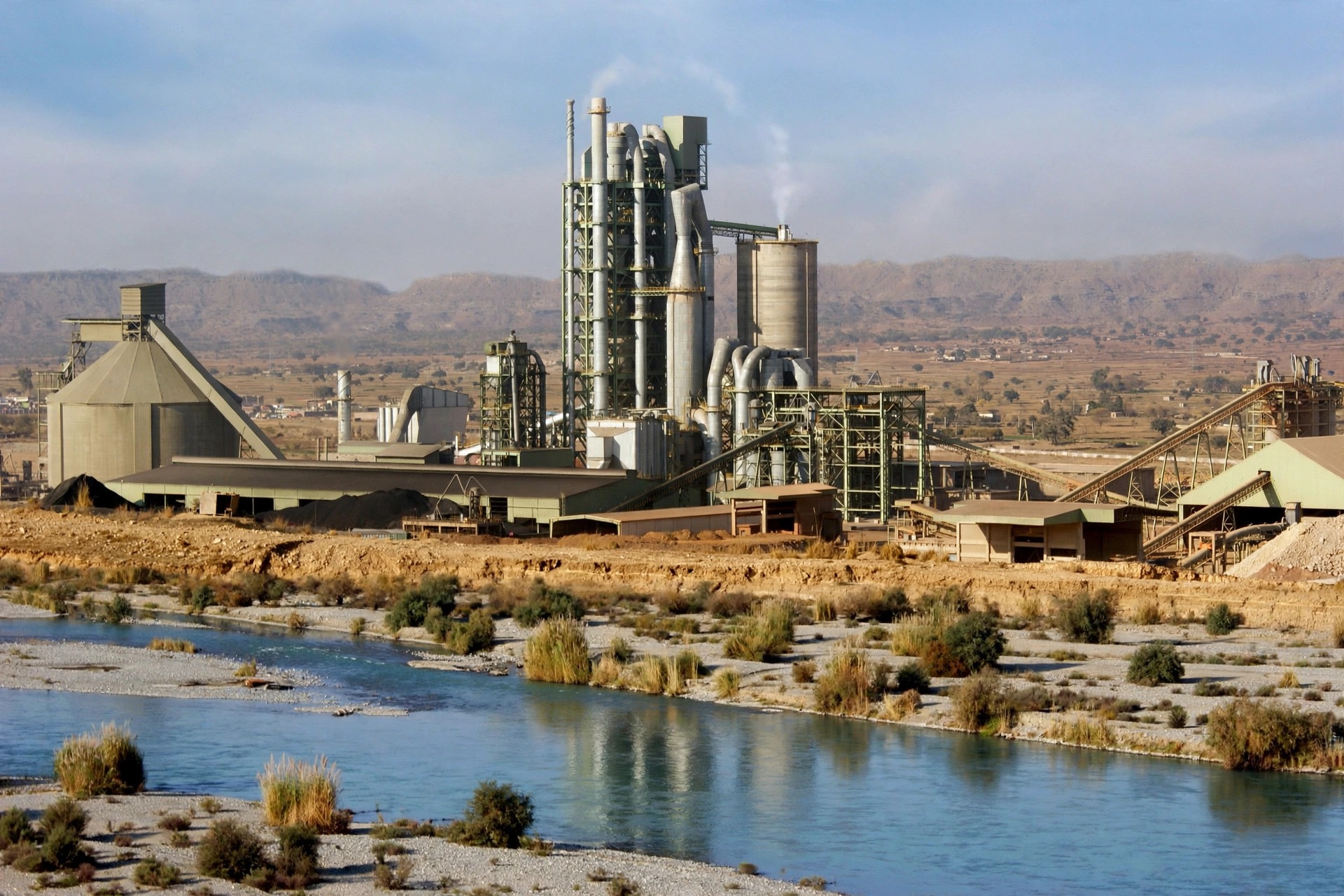
KARACHI: Some cement plants are built where the market is. Maple Leaf Cement Factory Limited was built where the rock is. Its plant sits at Daudkhel, in Mianwali district in northern Punjab, close to the limestone and other raw materials that cement making consumes in enormous quantities. From that one site, the company has supplied grey cement to builders across the north of Pakistan for decades, and it holds a distinction few rivals share: it also makes white cement, a smaller, more specialised product used for finishes, tiles and decorative work. Maple Leaf is the cement arm of the Kohinoor Maple Leaf Group, a business house that grew out of the Saigol family interests and pairs this plant with a large textile business. To understand the company, you have to follow three threads at once — a state-built factory from the 1950s, a privatisation in the early 1990s that changed its owners and its ambitions, and the economics of a heavy, fuel-hungry industry where location and energy costs decide who earns and who merely survives.
A state factory at Daudkhel
Maple Leaf was set up in 1956 as a collaboration between the West Pakistan Industrial Development Corporation and the Government of Canada, at a time when the young Pakistani state was building basic industry through public corporations because private capital for plants of this size was scarce. The company was incorporated in April 1960. Its early plant was modest by modern standards and used older production methods, but it established the essentials that still define the business: quarries and a works at Daudkhel, a workforce drawn from the surrounding area, and a brand that northern builders came to know.
Alongside the grey cement works, a sister business made white cement at the same location. White Cement Industries Limited, set up in 1967, was the first white cement facility in Pakistan, according to the company's own history. White cement is not simply grey cement in a different bag. It requires carefully selected raw materials with low iron content and tighter process control, and it sells into different uses — architectural finishes, mosaic and tile work — at different prices. Having both products on one site gave the Daudkhel complex a breadth that a single-product plant lacks.
A third unit later joined the same boundary wall. Pak Cement Company Limited was established at the site in the 1980s with Chinese technical and economic assistance. By the end of the state era, Daudkhel therefore held several related but separately owned cement businesses sharing raw material supply, power, water and other infrastructure — an arrangement that made operational sense and corporate untidiness at the same time.
Nationalisation, then the 1992 handover
In 1974, under the transfer arrangements of that period, Maple Leaf and White Cement Industries passed to the State Cement Corporation of Pakistan, the holding company the government created to run nationalised cement plants. For roughly two decades, Daudkhel was a state factory: investment decisions, prices and management appointments flowed through a public-sector system, in an industry the government treated as strategic because every road, dam, house and factory in the country is built with cement.
The decisive break came with the privatisation programme of the early 1990s. In 1992, ownership and management of the Daudkhel companies passed to the Kohinoor Maple Leaf Group, and on 1 July 1992 the three businesses — Maple Leaf Cement, White Cement Industries and Pak Cement — were merged into a single company, Maple Leaf Cement Factory Limited. The logic recorded at the time was synergy: plants inside a common boundary, sharing facilities, no longer needed three separate corporate shells. The merged company was later listed on Pakistan's stock exchanges in 1994, giving the privatised business public shareholders alongside its new private owners.
That sequence — state creation, state corporation, privatisation, merger, listing — is a compact version of Pakistan's wider industrial history, a story our explainer on privatisation in Pakistan follows across many sectors. Maple Leaf is a useful case because the asset did not change location or product when its ownership changed. What changed was who decided on investment, and how quickly.
Inside the Kohinoor Maple Leaf Group
The Kohinoor Maple Leaf Group emerged from the division of the older Saigol group of companies among family branches. Its two listed pillars are Maple Leaf Cement and Kohinoor Textile Mills, and Kohinoor Textile Mills is the holding company for Maple Leaf Cement, holding a majority stake. That structure matters for readers of either company. The textile business and the cement business have very different cycles — cloth exports follow global apparel demand and the cotton crop, while cement follows domestic construction — so the group pairs a dollar-earning exporter with a rupee-earning builder's supplier.
Group membership cuts both ways, as it does in most Pakistani business houses. A strong sponsor can support a company through a weak cycle, coordinate investment and lend reputation with banks and suppliers. It also means a shareholder in Maple Leaf is exposed, at one remove, to decisions taken at group level: where the next large investment goes, how much cash is paid out, and how related companies transact with each other. Our guide to Pakistan's conglomerates and business groups explains how to read those links in annual reports, including related-party disclosures.
The group has also invested around the cement core. Maple Leaf's own history records the merger of a power generation unit into the company in 2000, and in later years the group developed dedicated power capacity to serve the plant — a pattern across Pakistani cement, where makers who depend entirely on the national grid and purchased fuels look for more control over a cost that can decide their margins.
How a cement plant actually makes money
Cement looks simple — a grey powder in a paper bag — but the process behind it is heavy industry. Limestone is quarried, crushed and ground, blended with other materials, and burned in a rotary kiln at very high temperatures to produce clinker, the intermediate nodules that are then ground with gypsum and other additions into finished cement. Each step consumes energy, and fuel and power together are typically the largest cost block in the business, ahead of raw materials, packing, freight and people.
Revenue is volume multiplied by the price the market will bear, and both halves have a geography. Cement is expensive to move relative to its value, so plants compete mainly within a region: a northern maker such as Maple Leaf sells principally into Punjab, Khyber Pakhtunkhwa and nearby markets, where its delivered cost — plant cost plus freight — must beat rivals arriving from their own plants. When regional demand is strong and capacity is tight, prices hold and kilns run full. When several makers expand at once and demand softens, the same fixed-cost plant must spread its costs over fewer tonnes, and price competition squeezes everyone. This is why cement is called a cyclical industry, and why our sector guide to cement stocks on the PSX treats capacity, regional demand and fuel choices as the three lenses for the whole group of companies.
Exports are the release valve, but a limited one. Cement and clinker can be sold abroad, including by sea from Karachi and by land to neighbouring markets, yet export prices must absorb longer freight and compete with producers worldwide. Most northern plants therefore live or die on domestic construction: housing, infrastructure projects, dams, roads and commercial building, plus the repair and extension work that never makes headlines but consumes bags steadily.
White cement softens that cycle a little. It is a smaller market, with fewer producers, more specialised buyers and different pricing dynamics from bulk grey cement. It will never carry a plant of Daudkhel's scale on its own, but it diversifies the product mix and gives the company a premium shelf alongside its main product. Observers of the company tend to watch the balance: how much of the story is commodity grey volume, and how much is steadier, higher-value product.
Modernisation: the long conversion from old plant to new lines
The privatised company's history after 1992 is largely a history of replacing and expanding production lines. The old wet-process technology of the early plant was progressively superseded by modern dry-process lines, which use far less fuel per tonne — a decisive advantage in a business where energy is the biggest cost. The company's own chronology records a new dry-process grey cement line in the late 1990s, a coal conversion project in the mid-2000s, debottlenecking that raised line capacity, and conversion work on the older plant. Each project followed the same industrial logic: spend heavily once, then produce each tonne more cheaply for years.
Fuel flexibility is the other half of that story. Pakistani cement makers have, over time, worked with gas, furnace oil, coal and various alternative fuels as prices and availability shifted. Imported coal exposes a maker to world prices and the exchange rate; local coal changes the transport maths; waste-derived and alternative fuels require handling investment but can cut both cost and emissions. When you read a cement company's results, the fuel mix it reports — and how quickly it can switch — explains as much about its margins as the cement price does.
There is an environmental dimension that grows more important each decade. Cement making releases carbon dioxide both from fuel burning and from the chemistry of turning limestone into clinker, so producers face rising expectations on dust, emissions, water use and quarry rehabilitation. For a plant embedded in its local landscape at Daudkhel for nearly seventy years, those obligations are also a question of its licence to operate among the communities that supply its workforce.
Maple Leaf in everyday Pakistan
Most Pakistanis never think about which company made the cement in their home, their children's school or the bridge on their commute — and that invisibility is itself a measure of the product's importance. Cement is an input to almost everything built. A northern plant of Maple Leaf's longevity becomes part of the region's economy in other ways too: direct jobs at the works and quarries, trucking and distribution work across its market, dealers and retailers who stock its bags, and masons and contractors whose habits and trust decide which brand gets specified on small jobs where no engineer is involved. Brand, in cement, is not advertising gloss; it is the accumulated belief of thousands of builders that a bag will set as expected, every time.
The company's KSE-100 membership reflects its size and liquidity within that world. Index membership is a mechanical outcome of market capitalisation and free float rather than a quality medal, and the index itself is rebuilt periodically under the rules described in our explainer on KSE-100 rebalancing. Still, membership matters practically: index-tracking and institutional investors pay attention to constituents, and the company's results are read as one signal of northern construction demand.
What investors typically watch
Followers of Maple Leaf tend to track a familiar cement checklist. First, despatches — the tonnes actually sold, split between local sales and exports — because volume is the earliest sign of demand. Second, retention prices, the price the company keeps after dealer margins and taxes, and whether price discipline in the northern market is holding. Third, fuel and power costs: which fuels the kilns are burning, what coal is costing landed at plant, and how much electricity the company generates itself. Fourth, capacity and expansion — its own and its rivals' — since tomorrow's new line is tomorrow's price pressure. Fifth, the group's wider position, because the holding-company structure links Maple Leaf's story to Kohinoor Textile Mills and to group-level decisions on investment and payouts.
None of that watching requires a view on the share price to be useful. It is the habit of reading an industrial company through its physical operations — tonnes, fuel, freight, capacity — rather than through headlines. If you are building that habit, the lessons collected on our Learn page are a good place to start. This profile is educational content, not financial advice, and it deliberately offers no judgement on whether Maple Leaf shares suit any particular investor.
Key takeaway: Maple Leaf Cement is a 1956 state-built plant at Daudkhel — grey and white cement under one wall — that was privatised to the Kohinoor Maple Leaf Group in 1992 and merged into a single listed company; its fortunes turn on northern construction demand, fuel costs and the price discipline of a cyclical industry.