KARACHI: Most companies join the KSE-100 after long years in the market's front rank. Nishat Chunian Power Limited did something more unusual: it had been listed, quietly generating electricity in Kasur district, for well over a decade before the index came to it. In the Pakistan Stock Exchange's recomposition announced in September 2026, covering the review period from March to August 2026, NCPL was named among the four incoming companies, effective 1 October 2026, entering on the market-capitalisation-based rule. The plant itself did not change that day. What changed was the label the market puts on the company — a reminder that index membership is an outcome of size, liquidity and rules, not a verdict on quality. NCPL's own story is simpler and older than its new badge: a textile group that built a power station to serve a country short of electricity, a single state buyer, a 25-year contract, and the long national argument about what power should cost and who should pay for the system's arrears.
A textile group's power company
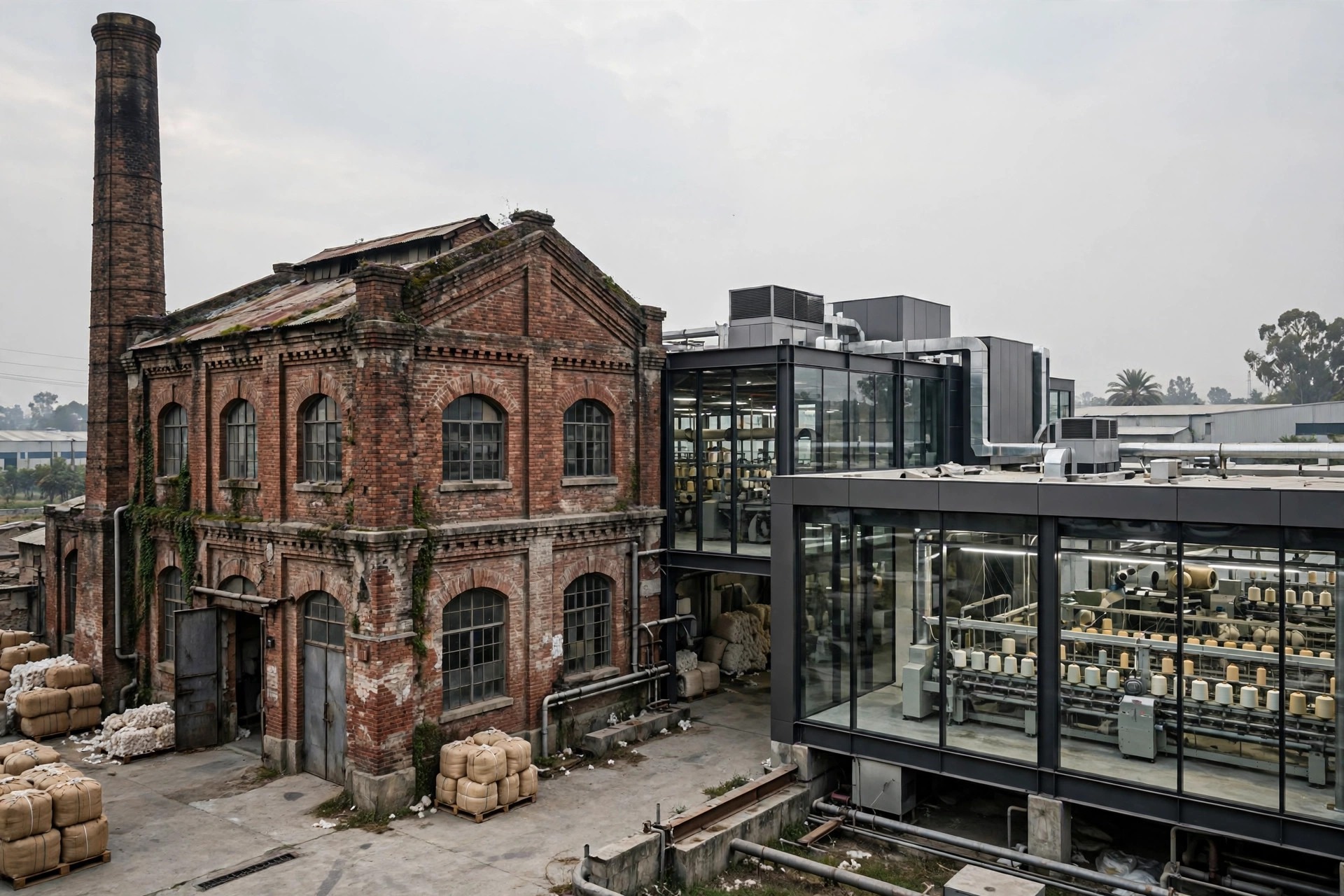
NCPL is a subsidiary of Nishat (Chunian) Limited — Nishat Chunian — the vertically integrated textile company founded in 1990 by Shahzad Saleem, a nephew of Mian Muhammad Mansha, within the wider Nishat family of businesses. Nishat Chunian began as a spinning mill, added weaving, processing and home textiles, and grew into one of Pakistan's larger textile makers, based in Lahore with factories in Kasur and Raiwind districts. Textile mills are heavy electricity users, and Pakistan's mills spent the 2000s confronting shortages and load-shedding that stopped looms and broke export schedules. Many industrial groups responded by investing in generation — some for their own use, some, as here, as independent power producers selling to the national grid.
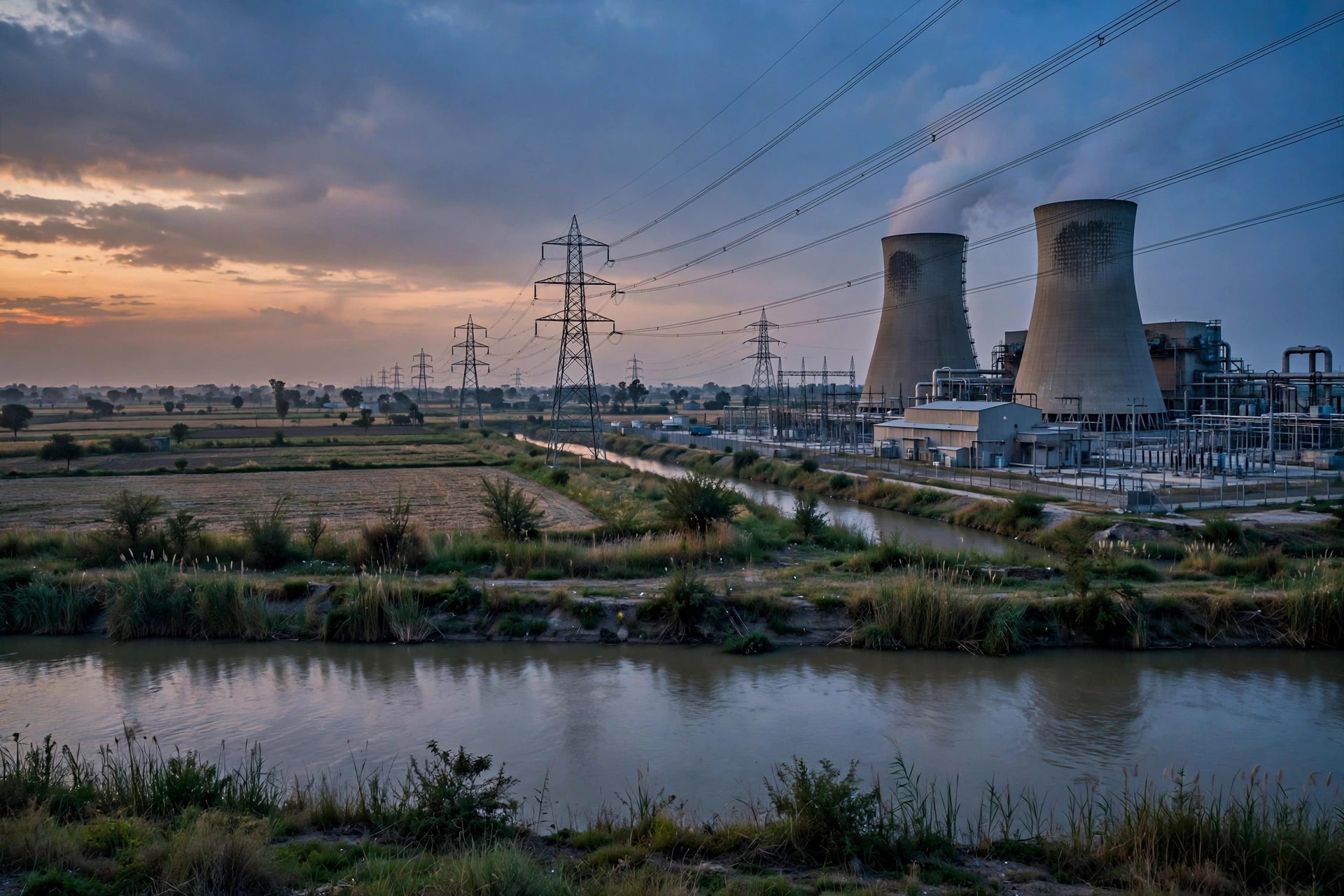
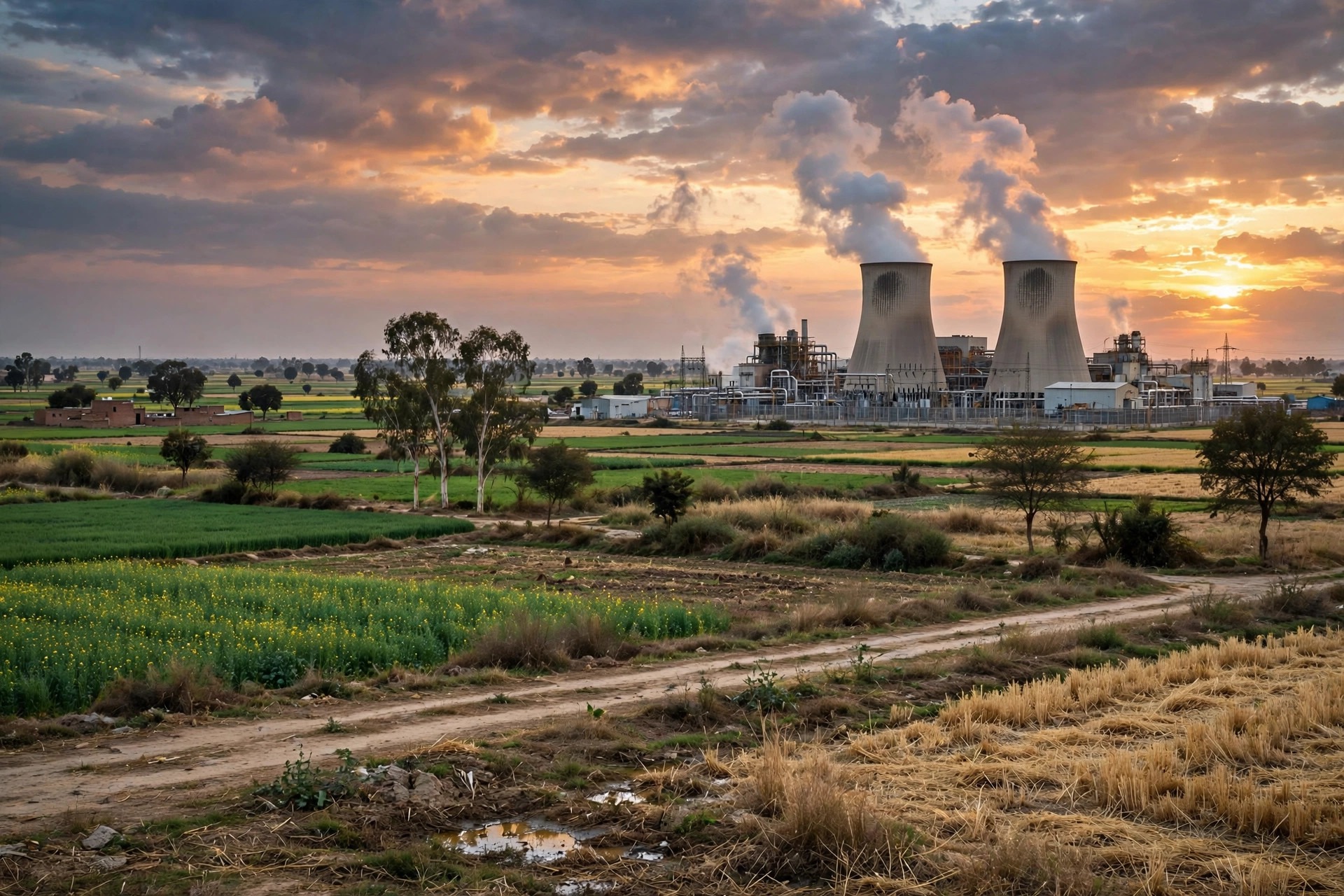
Nishat Chunian Power was incorporated on 23 February 2007 to build, own, operate and maintain a fuel-fired power station at Jamber Kalan, in Tehsil Pattoki, District Kasur, Punjab — in the same Kasur industrial belt where the sponsor's textile operations sit. Its registered office is in Lahore. The plant was built with gross capacity of 200 megawatts and net capacity of about 195.7 megawatts. On 13 November 2007 the company signed a Power Purchase Agreement with the National Transmission and Despatch Company, then the state buyer for grid power, for a term of 25 years. Commercial operations commenced on 21 July 2010, and the company was listed on the stock exchange, giving public investors a share in a single-asset generation business alongside its textile parent.
One plant, one customer, one contract
To understand NCPL you must understand the independent power producer model, because the company has essentially one product, one site and one customer. The product is electricity — more precisely, two things sold together: energy, the units actually generated and delivered, and capacity, the plant's availability to generate when called upon. The customer is the state power purchaser. Originally that was NTDC; on 11 February 2021 the PPA was novated to the Central Power Purchasing Agency (Guarantee) Limited, CPPA-G, which took over the buyer's rights and obligations. The contract's term, originally 25 years from July 2010, was extended by 75 days under a 2021 amendment agreement, running to 4 October 2035.
Within that structure, the generator's job is operational: keep the machines maintained, fuelled and available, generate when dispatched, and meet the technical standards the contract sets. The tariff it receives is determined under its regulatory approvals, with components designed to cover fuel costs for energy actually produced, and capacity payments that compensate the plant for being available and for its capital and fixed costs. Fuel is a pass-through in concept — when the plant runs on costlier fuel, the energy charge reflects it — while the capacity side is where the return on the shareholders' investment is earned.
This model, used across Pakistan's private generation fleet built under successive power policies, deliberately traded competition for certainty: investors were promised contract-backed returns in a country desperate for megawatts, and in exchange they built plants quickly that the state could not finance itself. Whether that bargain was priced fairly is the central controversy of Pakistan's power sector — but for reading NCPL, the essential point is structural, not political: its revenue is contract revenue, and its risks are contract, fuel and payment risks, not market-share risks.
The 2021 reset and the renegotiation era
NCPL's contract has already been renegotiated once in public view. In February 2021, alongside other independent producers, the company signed a master agreement and PPA amendment with the state buyer, adjusting terms as part of a government effort to reduce the power sector's cost burden; the novation to CPPA-G and the 75-day term extension formed part of that package. More recently, the company's financial statements record that after the Prime Minister constituted a task force in August 2024 to pursue structural reforms in the power sector, NCPL held rounds of discussion with it and, along with other producers, consented to amend its PPA. The recurring pattern is clear enough to state plainly: in Pakistan, a 25-year power contract is not a document that sits untouched in a drawer. It is a living political-economic bargain, revisited whenever the system's finances become unsustainable — which, given circular debt, has been often.
How the money flows — and where it gets stuck
NCPL invoices the power purchaser for capacity and energy under its tariff. Its costs are fuel — the dominant variable cost, linked to the fuel it burns and to the prices and exchange rates at which that fuel is bought — plus operations and maintenance, staff, insurance, financing costs on the debt raised to build the plant, and tax. The spread between tariff receipts and those costs, over the contract's life, is the shareholders' return.
The famous complication is timing. Pakistan's power sector suffers from circular debt: distribution companies collect less from consumers than the system's costs, subsidies and payments arrive late, and the purchaser in the middle accumulates arrears to generators. A plant like NCPL can therefore report accounting profit on electricity duly delivered while the cash sits in receivables from its single buyer. Experienced readers of any Pakistani IPP's accounts therefore track trade receivables and operating cash flow as closely as profit, and watch for government settlements, financing facilities or revised payment schedules that convert old receivables into cash. Our sector guide to power generation stocks on the PSX explains this dynamic across the listed generators, and the dedicated explainer on circular debt traces the full loop from consumer bill to generator's ledger.
Dividends from IPPs follow the same cash logic: they are paid not from profit in the abstract but from collections actually received and reserves the board judges spare after debt service and working capital. Periods of improved sector payments have historically been periods when generators' payout capacity improved together — a sector tide rather than a company-specific event.
A Nishat family of power plants
NCPL is easy to confuse with its near-namesakes, so it is worth drawing the family tree carefully. Its sponsor is Nishat Chunian, the textile company of the Chunian branch of the Nishat family. Separately, Nishat Mills Limited — the original 1951 Nishat company at the centre of Mian Muhammad Mansha's group — has its own power subsidiary, Nishat Power Limited, whose plant also stands at Jamber Kalan and also began operations in 2010. Two listed generators, two different listed textile sponsors, one extended family, one industrial neighbourhood. For an investor reading announcements, the tickers — NCPL and NPL — differ by a single letter and a world of corporate detail: different parents, different accounts, different dividend records. Confusing them is an easy beginner's error, and checking which company a headline names is a basic discipline.
Why did two branches of one family each build a 200 MW-class plant in the same district in the same policy era? Because the opportunity was general — Pakistan offered contract-backed generation investment to sponsors who could raise debt and equity — and both branches had the industrial base, land access and banking relationships to execute. The plants are siblings by circumstance as much as by blood.
Joining the benchmark: what index entry does and does not mean
NCPL's entry into the KSE-100 on 1 October 2026 is a clean illustration of how index rebalancing works. The exchange reviews constituents against published rules — principally free-float market capitalisation and sector representation — over a defined review period; companies that qualify enter, those that no longer do leave, and index-tracking funds adjust their holdings accordingly. Entry can increase a stock's institutional visibility and trading attention. It does not change the plant, the contract, the receivables or the fuel bill by one rupee. A reader who understands that distinction understands something essential about all index news.
What investors typically watch
The NCPL checklist is the IPP checklist, applied to one asset: despatch and availability — how much the plant was called to run and whether it was ready when called; receivables — the balance owed by the purchaser and how collections are trending; contract developments — any amendment, settlement or tariff proceeding, since the PPA is the business; fuel economics — the cost and supply of its fuel and how completely the tariff passes it through; debt and payouts — remaining project debt, and the board's dividend decisions against cash actually in hand; and the contract clock — the PPA runs to October 2035 under its amended term, so each passing year shortens the contracted horizon within which the original investment must earn its return, a fact long-term holders weigh explicitly.
For general readers, NCPL is a useful first IPP to study precisely because it is so simple: one plant, one buyer, one contract, one sponsor. Master its accounts and the more complex generators become variations on a theme you already know. The structured material on our Learn page builds that skill from the ground up. This profile is educational content, not financial advice.
Inside the Jamber Kalan plant: engines plus a steam turbine
The plant's engineering explains both its flexibility and its costs, and company descriptions of the project are specific about it. NCPL's station is a residual fuel oil — RFO — fired plant built on reciprocating-engine technology in a combined-cycle arrangement. Its primary equipment comprises eleven engine sets of the Wärtsilä 18V46 type, manufactured by Wärtsilä of Finland, together with a heat-recovery steam turbine and alternator set. In plain language, eleven large piston engines burn heavy fuel oil to drive generators, and instead of wasting all of their exhaust heat, the plant recovers part of that heat to raise steam and generate additional electricity from the same fuel — the combined-cycle element. Reciprocating engines of this kind can be started, stopped and run individually, which suits a grid that may call for part of the plant's output rather than all of it, and maintenance can be rotated engine by engine instead of shutting the whole station at once.
The same design carries the plant's main exposures. RFO is a heavy refinery residue whose price and supply follow oil markets and refinery operations, and an engine fleet needs regular overhauls, spare parts and specialist skills to hold its availability — the quality the capacity payment rewards. Fuel handling, heat-recovery equipment and emissions control all add to the operating discipline behind a tariff that can look, from outside, like a simple payment for megawatts. The company's registered office address, recorded in its financial statements, is in Shadman, Lahore — a small administrative detail that underlines how completely the business is managed from the sponsor's home city, with the plant itself run as a single industrial site in Kasur district.
Why a textile group keeps a power plant
A fair question about NCPL is why a textile group holds a power station at all, rather than selling it to a specialist utility investor. The answers are structural. The plant was built when sponsors were expected to stand behind their projects for the long term, and its cash flows, when collections run well, are steadier than textile earnings — a useful counterweight inside a group whose main business rides global apparel demand. The sponsor also brings operating patience: a family group with banking relationships and a multi-decade horizon can hold a contracted asset through payment crises that might force a leveraged financial owner to sell. Set against that, the plant ties group capital into a single regulated asset whose contract will expire in 2035, and whose renewal terms no one can know today. That balance — ballast now, horizon question later — is the honest summary of NCPL's place in the Nishat Chunian portfolio. This profile is educational content, not financial advice.
Key takeaway: Nishat Chunian Power, incorporated in 2007 by textile maker Nishat Chunian and operating a 200 MW plant at Jamber Kalan since July 2010, sells all its output to the state purchaser under a long PPA — and entered the KSE-100 on 1 October 2026 under the market-capitalisation rule.