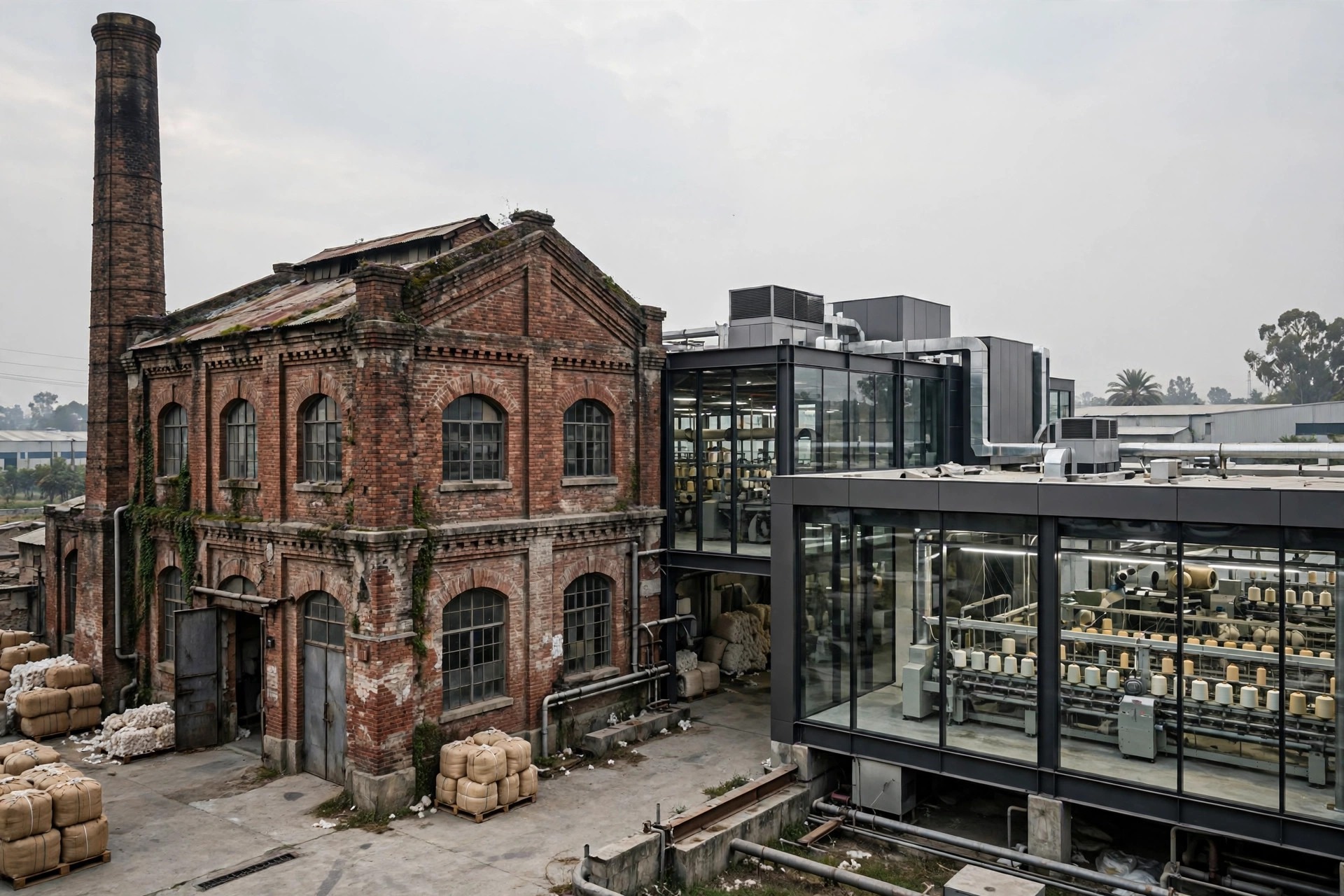
KARACHI: Nestlé Pakistan is the local face of the world's largest food company — but it was not founded by Nestlé, and it did not begin with the Nestlé name. It began in 1979 as Milkpak Limited, a Pakistani company founded by Syed Babar Ali, one of the country's most respected industrialists, to do something deceptively simple: put milk in a box that kept it safe for months without refrigeration. That single product — UHT milk from the Sheikhupura factory, where production began in 1981 — changed how Pakistan bought milk, and it built the asset Nestlé really wanted when the Swiss group bought into Milkpak in 1988: not just a factory, but the beginnings of a milk-collection system reaching deep into Punjab's villages. Nestlé took over the running of the company in 1992, renamed it Nestlé Milkpak in 1996 and Nestlé Pakistan in 2005, and layered onto that dairy foundation the global brand portfolio — infant and child nutrition, coffee, cereals, juices, culinary products and bottled water — that now fills its shelves. The money mechanics of that portfolio are covered in our companion explainer on how Nestlé Pakistan makes money; this profile tells the story of how the business was assembled, and why the milk still matters most.
Milkpak: the Pakistani company before the Swiss one
To see why Milkpak was revolutionary, picture Pakistan's milk market in the late 1970s. Milk was overwhelmingly loose: produced by small farmers, carried by middlemen on bicycles and in cans, sold unrefrigerated in cities, boiled at home against the ever-present risk of adulteration and spoilage. It was fresh, familiar and unreliable — watered, sometimes contaminated, and unavailable in any standardised form. Syed Babar Ali, whose family had already built Packages Limited into a leading packaging company, founded Milkpak in 1979 to apply ultra-high-temperature processing and aseptic packaging to that chaotic supply: milk heated briefly to sterilise it, sealed in carton packs, safe for months at room temperature. Production of long-shelf-life UHT milk began at the Sheikhupura factory in 1981, alongside cream, butter and fruit juices.
The hard part was never the factory. It was the milk. A UHT plant needs large volumes of consistent-quality raw milk, every day, from a countryside of tiny herds, no cold chain and powerful middlemen. Building collection — village collection points, chilling, testing, farmer payment systems — was the real industrial project of Milkpak's first decade, and it is the project Nestlé inherited and then industrialised.
Sheikhupura also shows the pattern of the company's growth: by the end of the 1980s the factory had widened from UHT milk into butter, cream, ghee and juices, and in 1990 it began producing Nido milk powder and cereals — the first layering of the parent-to-be's global brands onto the local dairy base.
1988–2005: Nestlé buys in, takes charge, renames
In 1988, Nestlé S.A. of Switzerland acquired a 40 per cent share in Milkpak. The staged nature of what followed is worth noting, because it is how multinationals often enter difficult markets: buy a substantial minority in the best local operator, learn the supply chain from inside, then take management control when the local partner's knowledge has been absorbed and extended. In 1990 a second major plant was acquired at Kabirwala, in Khanewal district — a site that became one of the group's very large milk-processing facilities. In 1992 Nestlé took over the running of the company and began developing the milk-collection network in earnest. In 1996 Milkpak Limited was renamed Nestlé Milkpak Limited, and in 1997 the Kabirwala plant became a fully owned unit of the company. By 1998, on the company's own milestone account, its Punjab milk-collection system had matured to the point where it could buy milk directly from farmers rather than relying on contractors. In 2005, Nestlé Milkpak was renamed Nestlé Pakistan Limited — the name it carries today, as a subsidiary of Nestlé S.A. listed on the Pakistan Stock Exchange with public shareholders alongside the parent.
Water arrived during the same build-out. Nestlé Pure Life bottled water was launched in Pakistan in 1998, and in 2001 the company acquired the Fontalia and AVA water businesses, which supplied homes and offices — extending water from retail bottles into the large-format delivery trade. Today the company operates two multi-purpose processing plants, at Sheikhupura and Kabirwala, and water facilities in Islamabad and Karachi, with its head office in Lahore.
The milk-collection machine
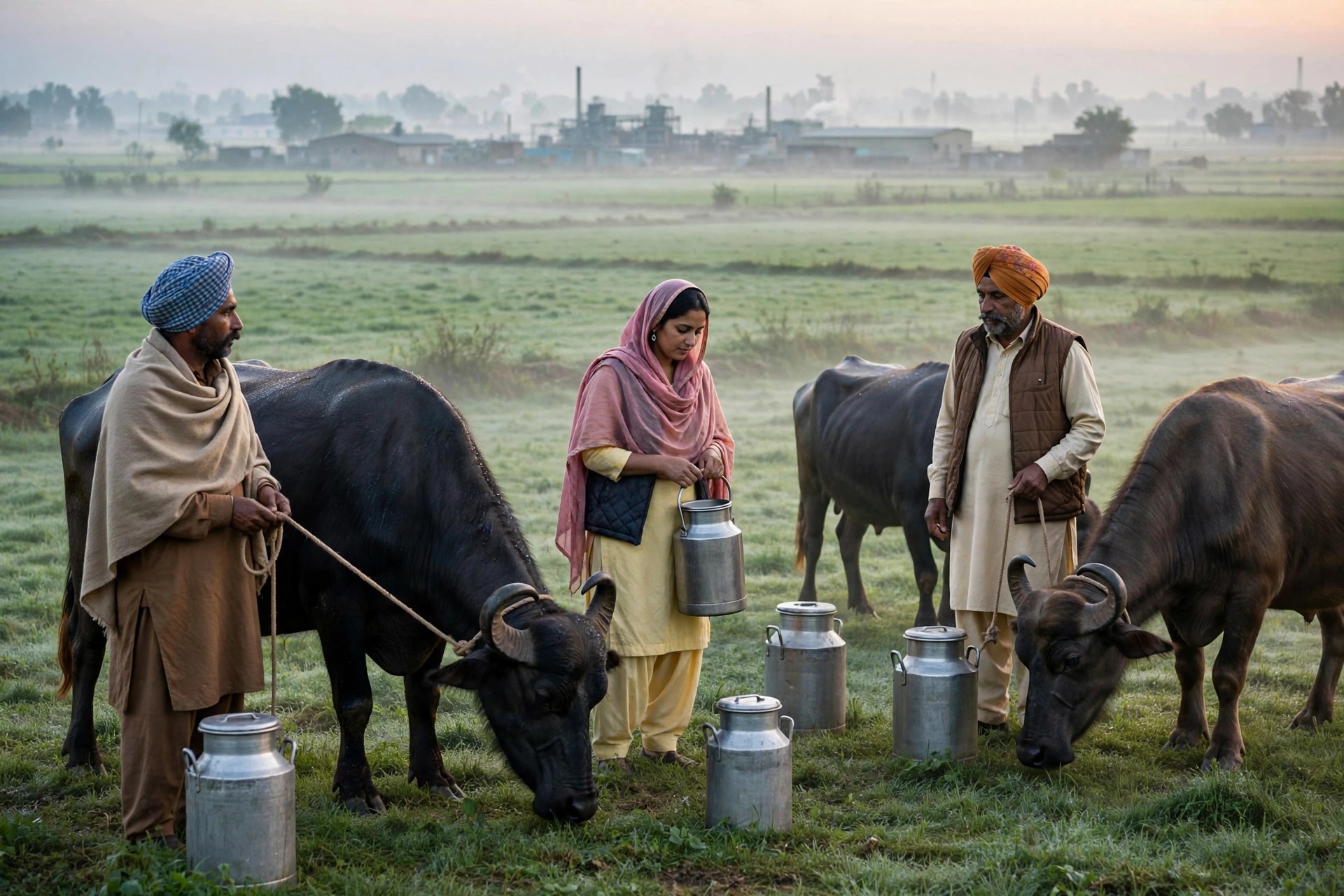
Every account of Nestlé Pakistan returns, sooner or later, to milk collection, and rightly: it is the company's moat, its social footprint and its biggest operational risk, all in one system. Thousands of small farmers — many with a handful of animals — deliver milk to collection points, where it is tested, chilled and aggregated, then tankered to Sheikhupura or Kabirwala. The company's agricultural services work with farmers on animal health, feed and breeding, because a healthier buffalo is, in the cold arithmetic of the business, a more reliable supplier.
Understand what this system buys. It buys supply security no rival can replicate quickly. It buys quality control from the first mile, in a category where a single contamination scare can destroy a brand. And it buys a rural presence — income reaching farm households daily, in cash, in districts where few formal employers operate — that makes Nestlé a genuine institution in the Punjab countryside, with the obligations to match. When milk is short, because of season, disease or competing demand from the vast loose-milk market, the system's cost rises and the factories feel it first. When you read that Nestlé Pakistan's results were squeezed by milk economics, this network is what the sentence means.
The portfolio on the dairy foundation
Onto Milkpak's base, Nestlé built the broadest branded-food portfolio in Pakistan. The categories, in plain language:
- Dairy and nutrition: Milkpak UHT milk remains the flagship, joined by Nido and other milk powders, Everyday tea whitening, yogurts, creams and Nesvita — the volume heart of the business, riding on the collection network.
- Infant and child nutrition: Cerelac and related products, among the most trusted — and most scrutinised — brands in the portfolio, where global debates about marketing practices follow the company into every market.
- Beverages: Nescafé coffee, Milo, juices under Fruita Vitals and related brands, and ready-to-drink lines — categories where the battle is for younger consumers and out-of-home occasions.
- Culinary: Maggi noodles and seasonings, localised to Pakistani tastes, made at Kabirwala, where a Maggi noodles plant was installed in the early 1990s build-out.
- Water: Nestlé Pure Life, from single bottles to home-and-office delivery — a business built on urban distrust of municipal water, and periodically challenged by regulators and critics over groundwater extraction, a controversy the company has faced in Pakistan as elsewhere.
- Confectionery and cereals: KitKat, Polo and breakfast cereals round out the shelf.
The strategic point of the breadth is resilience with a shared spine: the same distribution system that delivers milk to a small shop in Gujranwala delivers coffee, noodles and water to the same shelf, so each new category rides on logistics the dairy business already paid for. That is why Nestlé Pakistan is usually the first name in any discussion of food stocks on the PSX — it is less a single-product company than the country's branded-food infrastructure in corporate form.
Being a multinational subsidiary, in public
Nestlé Pakistan's listed status creates a productive tension that shareholders should understand. The controlling shareholder is one of the world's great food groups, bringing brands, technology, quality systems and management depth no local rival can match. The same relationship carries the standard subsidiary questions: royalties and fees for brands and technology flowing to the parent, transfer arrangements within the group, and dividend policy balancing local reinvestment against the parent's expectations. These are disclosed in the company's reporting and are part of reading any multinational subsidiary fairly — neither scandal nor irrelevance, but structure.
The company has also lived the sharper edges of operating at scale in Pakistan: regulatory disputes over water and standards, litigation, and public argument about infant-formula marketing that has followed the global Nestlé group for decades. A balanced profile records that these controversies exist and recur, that the company contests or addresses them through legal and regulatory channels, and that brand trust — its core asset — is the thing they put at risk. Readers forming their own view will find the company's sustainability and Creating Shared Value reporting its stated answer: development programmes for farmers, water stewardship commitments and nutrition initiatives, presented as integral to the business model rather than charity beside it.
What investors typically watch
Because the companion explainer covers the money mechanics in detail, here the watch-list is brief and story-shaped: milk volumes and collection costs through the seasons; volume growth versus price growth — whether revenue rises because Pakistanis buy more or merely pay more; the performance of the non-dairy categories that carry the growth story; water's regulatory weather; royalty and related-party lines in the accounts; and the dividend, historically a central part of how this subsidiary has rewarded its public minority. Index membership, as ever, follows the market-capitalisation and liquidity rules that govern the KSE-100.
Nestlé Pakistan rewards a particular reading skill: separating the global brand story from the very local operating system — villages, tankers, chillers, small shops — that actually produces the numbers. Both are real; only one of them appears in advertisements. This profile is educational content, not financial advice, and the Learn section offers more frameworks for reading companies of every kind.
Kabirwala's earlier life, and the cold chain step by step
Kabirwala had a history with Milkpak before Nestlé owned it outright, and the sequence is worth setting out because it shows how the dairy base was really built. Company accounts of the site record that in 1986 Milkpak acquired the services of Kabirwala Dairy Limited for the co-packing of UHT milk under the Milkpak brand — the Punjab plant was, in other words, already processing Milkpak milk before it joined the group. Nestlé acquired Kabirwala Dairy in 1990, installation work on a Maggi noodles plant there began in 1991, and that line became operational in 1992 with chicken and masala flavours. A second milk powder plant was commissioned at the site in 1996, producing Nido and other milk powders, and in April 1997 Kabirwala was merged into the company as a fully owned factory unit. In the same late-1990s build-out, Sheikhupura added a flexible confectionery line, and the company contracted to supply dairy mixes for soft serves and milk shakes — small details that show the factories serving food-service customers as well as retail shelves.
The collection system that feeds those factories also deserves to be pictured concretely, because company descriptions of it follow a clear chain. A small farmer delivers a few litres, typically milked twice a day, to a village milk collection centre, where the milk is checked for freshness and purity and the quantity entered in the farmer's logbook. From there it moves a short distance to a secondary reception and cooling station, where inspectors test fat content, non-fat solids and acidity before the chilled milk travels onward to a main reception and cooling station for further checking, and only then by tanker to Sheikhupura or Kabirwala, where it is checked again before processing. Between 1988 and 1992 alone, one hundred milk cooling tanks were installed in the field, and company accounts record that within a decade of Nestlé's arrival its fresh-milk purchases had roughly quadrupled, with the number of small farmers selling to it roughly tripling. That is the physical meaning of the phrase milk district: not a marketing territory, but hundreds of small daily transactions, each one tested, chilled and logged.
The local founder's long shadow
One thread of the Nestlé Pakistan story deserves its own paragraph, because Pakistanis notice it even when financial readers do not: the company exists because a Pakistani industrialist built its foundation first. Syed Babar Ali — founder of Packages, of the Lahore University of Management Sciences, and a central figure in Pakistani public life — created Milkpak as a national project as much as a business: proof that a local company could impose world-class process discipline on the country's most chaotic supply chain. Nestlé's later stewardship globalised that foundation, but the sequence matters to how the company is perceived. It is not a branch plant dropped into Pakistan by a multinational; it is a Pakistani institution that a multinational chose, over seventeen staged years, to make its own. That dual inheritance — local legitimacy, global systems — is rare among listed subsidiaries, and it explains much of the company's durability through political and economic weather that has shaken purely foreign ventures. This profile is educational content, not financial advice.
Key takeaway: Nestlé Pakistan began as Syed Babar Ali's Milkpak in 1979, built UHT milk production at Sheikhupura from 1981, and passed into Nestlé's control in stages — a 40 per cent stake in 1988, management control in 1992, the Nestlé Pakistan name in 2005 — with a Punjab-wide milk-collection network as the foundation under its global brands.