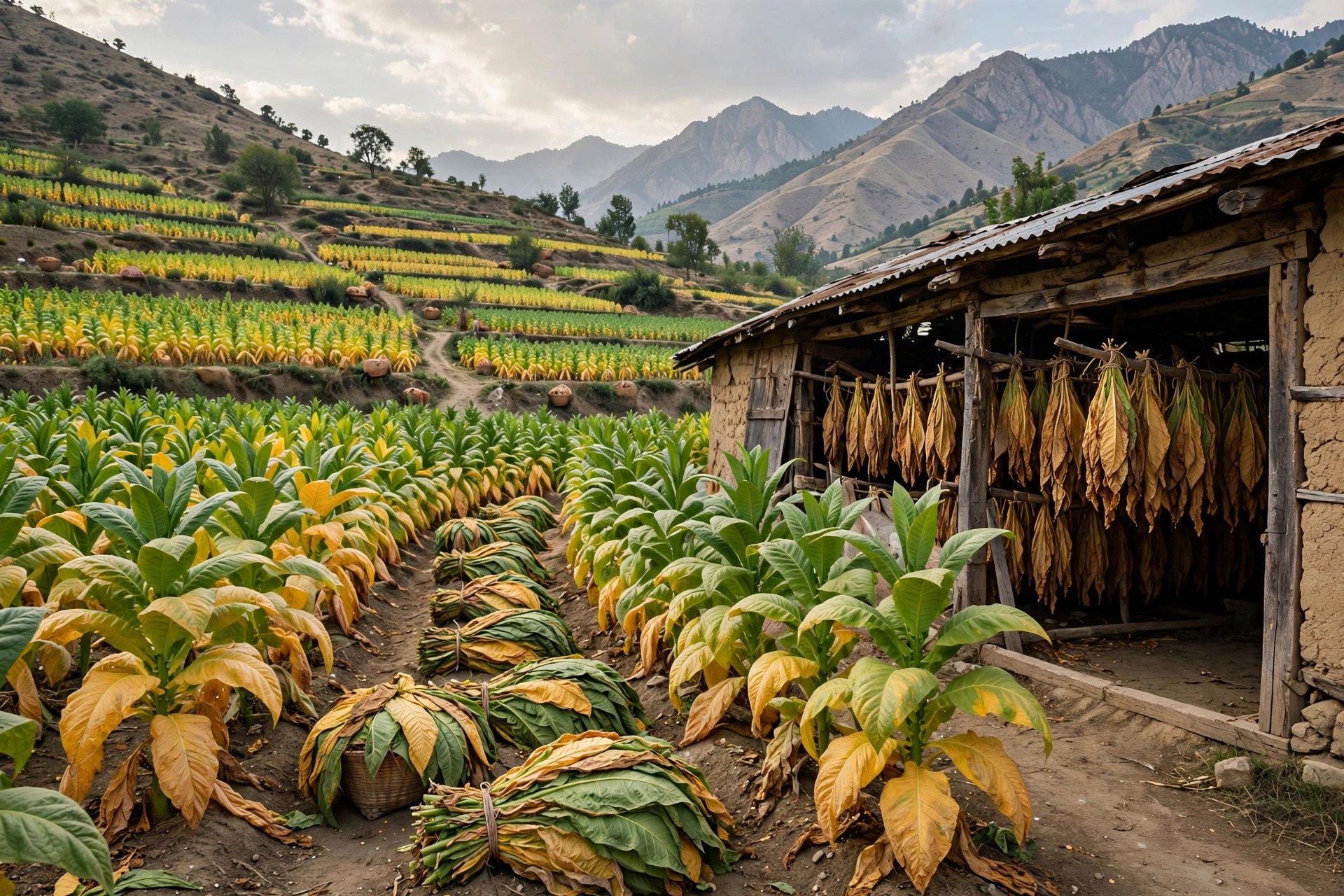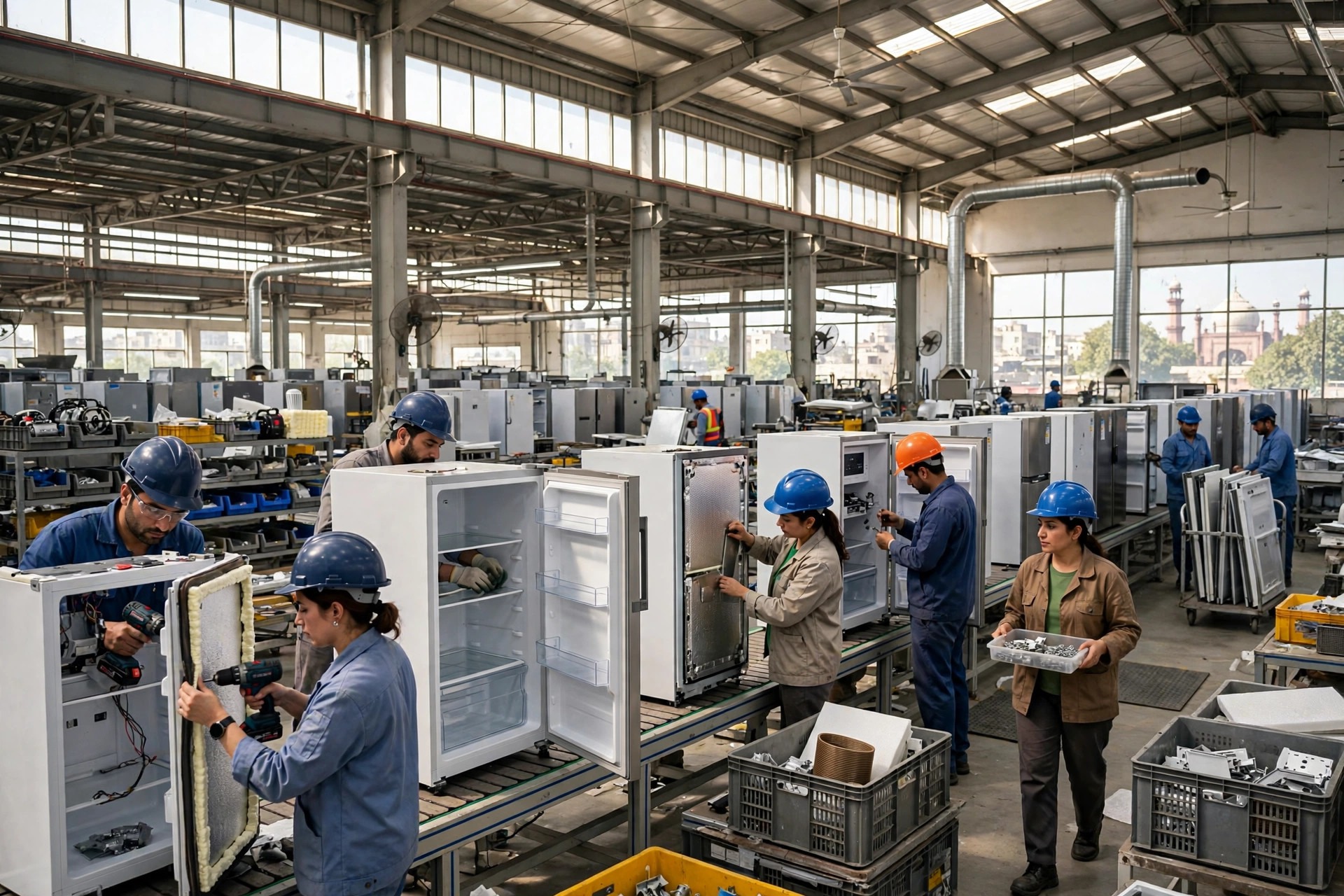
KARACHI: Open a kitchen in Lahore, Karachi or Multan and there is a fair chance the refrigerator humming in the corner carries three letters: PEL. Walk past a grid station or a factory substation and there is a fair chance the transformer behind the fence carries the same name. Pak Elektron Limited — PAEL on the Pakistan Stock Exchange — is unusual among listed companies because it lives in two worlds at once. One half of the business sells comfort to households: fridges, air conditioners, televisions and washing machines. The other half sells heavy electrical equipment to power utilities and industry: transformers, switchgear and energy meters. Both halves were built in Lahore, both sit inside the Saigol Group, and together they explain why this company, founded in 1956, still holds a seat in the KSE-100 index nearly seventy years later.
Two divisions under one roof
The Appliances Division is the half most Pakistanis know. It manufactures, assembles and distributes refrigerators, deep freezers, split and window air conditioners, microwave ovens, washing machines, water dispensers and LED televisions. These are classic consumer durables: relatively expensive, bought infrequently, often bought on instalments or at seasonal peaks, and judged by households on cooling performance, electricity consumption and after-sales service. PEL competes in this market against other long-established local manufacturers and against imported brands, in showrooms and, increasingly, online.
The Power Division is quieter but older. It makes distribution and power transformers, switchgear and energy meters, and undertakes engineering, procurement and construction work — building grid stations and carrying out electrification projects. Its customers are not households but institutions: electricity distribution companies, industrial groups, housing developers and project sponsors. Where the appliances business sells thousands of small tickets, the power business sells a smaller number of large, tender-driven contracts. Understanding PAEL means holding both models in your head at once, because the two divisions respond to different cycles — consumer spending on one side, utility investment and public-sector procurement on the other.
1956: an electrical pioneer with German help
Pak Elektron was incorporated on 3 March 1956 as a public limited company by the Malik Brothers, in technical collaboration with AEG of Germany, one of the great European electrical engineering firms of the era. Its original purpose was industrial, not domestic: to produce transformers, switchgear and electric motors in a young country that was building power stations, factories and transmission networks largely with imported equipment. AEG experts and PEL personnel designed and produced the equipment jointly, transferring engineering know-how that barely existed in Pakistan at the time.
The strategy worked. PEL equipment was selected for some of the country's most vital early power projects, including the Mangla, Tarbela and Kot Addu power stations, and the company developed capabilities that were firsts for Pakistan, such as dry-type power transformers. By the early 1970s PEL was also exporting electrical equipment to markets in the Middle East, the Far East and Africa — an unusual achievement for a Pakistani engineering firm of that period, and a sign that the AEG apprenticeship had produced genuinely competitive manufacturing.
1978: the Saigol family takes over
The turning point in PEL's ownership came in October 1978, when the joint venture arrangement with AEG concluded and the Saigol Group acquired the company. The Saigols are one of Lahore's established industrial families, with interests that have spanned textiles, cement and engineering; another branch of the family's listed empire, Kohinoor Textile Mills, is profiled in our piece on Kohinoor Textile Mills (KTML). Under Saigol ownership, PEL floated its shares to the public and listed on the Karachi and Lahore stock exchanges — the forerunners of today's unified Pakistan Stock Exchange.
Family control has remained the constant ever since. The chairman and chief executive roles have been held by members of the Saigol family, and PEL is generally described as the flagship of the Saigol Group of Companies. For a reader of the annual report, this matters in a practical way: strategy at PEL reflects a sponsor family's long horizon — keeping both divisions, investing through consumer downturns, and treating the power business as a permanent franchise rather than a sideline to be sold in a good year.
1980 onwards: the move into the Pakistani home
The appliances business that defines PEL for most consumers came later. An Appliances Division was established in 1980, and in 1981 PEL began producing window-type air conditioners in technical collaboration with General Corporation of Japan. Production of refrigerators and deep freezers followed in 1987, with Italian technical collaborations — IAR-Siltal for refrigerators and Ariston for deep freezers — and in 1993 the company began assembling refrigerator compressors under collaboration with Necchi Compressori of Italy, deepening its local manufacturing content in the most critical component of a fridge.
The timing was astute. Rising urban incomes, expanding electrification and the spread of consumer credit turned refrigerators and air conditioners from luxuries into middle-class expectations during the 1990s and 2000s. PEL's refrigerator lines — its Crystal range is among the brand's best-known — became fixtures of the market, and the product range widened steadily into microwaves, washing machines, water dispensers and LED televisions.
The pattern of foreign collaboration that began with AEG never really left the company. In 1995 PEL entered the television market through a joint venture with Daewoo Electronics of South Korea, an early example of a Korean electronics major manufacturing in Pakistan, and in 2009 it became the sole distributor of LG's home appliances in Pakistan — selling another global brand's products alongside its own, a distribution role quite different from manufacturing but built on the same dealer network. The power division kept the habit too: in 2005 PEL established a power-transformer manufacturing facility with technical assistance from Ganz Works of Hungary, extending a product line that stretched back to the company's founding purpose. The power division did not stand still either: energy meters became a significant product line as Pakistan's distribution companies invested in metering, and the division's project work on grid stations gave PEL a role in the physical build-out of the national grid.
How PEL makes money
The revenue mechanics differ by division. In appliances, PEL buys steel, plastics, compressors, motors and electronic components — some made in-house, many imported or priced off imported inputs — manufactures or assembles finished units, and sells them through a dealer and distributor network at retail prices. Profit is the gap between the selling price and the factory cost, distribution cost and financing cost of holding inventory. Because so many inputs are imported or dollar-linked, the rupee's exchange rate presses directly on margins, while retail demand presses on volumes: a hot summer, a good wedding season and easy consumer credit all lift sales; load-shedding worries, inflation and high interest rates do the opposite, because a fridge bought on instalments becomes expensive when borrowing costs rise.
In the power division, revenue arrives as contract and product income: transformers and meters sold against tenders and purchase orders from distribution companies and industrial buyers, plus project income from grid-station and electrification contracts recognised as work progresses. This income is lumpier — a few large orders can shape a year — and it carries the payment behaviour of Pakistan's power sector, where public-sector customers are not always quick payers. The mix is the point: when households stop buying, utilities may still be ordering meters; when public procurement slows, a heatwave may still fill appliance showrooms. Neither cycle fully cancels the other, but together they smooth the company's path compared with a pure play in either market.
PEL in everyday Pakistan
Few listed companies touch daily life at so many points. The same group brand sits on the fridge that keeps the milk cold, the air conditioner that makes a Lahore June survivable, the meter on the outside wall that records the month's electricity, and the transformer on the street that steps the grid's voltage down to household level. PEL's factories and offices in and around Lahore also make it a significant industrial employer, and its export history — appliances and electrical equipment shipped to markets from the Gulf to Africa — gives it a small but real place in Pakistan's manufactured exports. Its presence in the benchmark index, whose construction is explained in our guide to market capitalisation, reflects both its size and the liquidity of its shares rather than any official endorsement.
That breadth of presence also explains the company's resilience through Pakistan's stop-start consumer cycles. When construction and utility investment boom, the power division's order book fills; when they stall, replacement demand for refrigerators and air conditioners in a country of more than 240 million people still ticks over, because appliances wear out on their own schedule regardless of GDP. PEL is not the largest company in either of its industries, and it does not claim to be — its distinction is the combination itself, an engineering works founded for the grid that learned to furnish the home, and a home-appliance brand whose parent still builds pieces of the grid.
The instalment economy and the service network
Two features of the appliances trade deserve a closer look, because they shape PEL's results in ways a factory tour does not reveal. The first is how Pakistanis pay. Big-ticket appliances are frequently bought through dealer-arranged instalment plans, bank consumer finance or in-house credit schemes, which means demand is interest-rate sensitive in a way that, say, soap demand is not: when the State Bank's policy rate rises, the monthly payment on a financed refrigerator rises with it, and showrooms feel the tightening within weeks. PEL does not control that cycle, but it lives inside it — and its own working capital, tied up in inventory and dealer receivables, is financed at the same rates.
The second feature is after-sales service. A refrigerator or air conditioner is a ten-to-fifteen-year relationship: compressors fail, gas leaks, thermostats die in the ninth summer. Manufacturers compete on the reach and reliability of their service networks — company workshops, authorised technicians, spare-parts availability in small cities — because a brand that cannot be repaired locally does not get recommended to the next household. PEL's long presence gives it a deep installed base to service, which is both a cost and a moat: every PEL fridge still running in a Sargodha kitchen is an advertisement its owner did not pay for, and a future replacement sale that starts with an advantage.
The power division has its own version of this longevity logic. Transformers and meters are specified into networks that operate for decades, and distribution companies value suppliers whose equipment has survived Pakistani summers, dust and voltage swings. PEL's early presence at Mangla and Tarbela was therefore more than prestige: it was a reference list. When the company bids for metering or grid-station work today — including the electrification and EPC contracts it undertakes as a contractor, not just a manufacturer — it sells that accumulated operating history alongside the hardware. Engineering, procurement and construction work also changes the division's profile, adding project-management revenue that does not depend on winning a product tender, though it brings the contractor's familiar risks of delayed payments and cost overruns on fixed-price work. Tendering also carries compliance risk, as the company's own history shows: in February 2018 the World Bank debarred PEL for 33 months after finding collusive practices in bidding for Bank-financed electricity distribution and transmission projects in Pakistan; under negotiated resolution agreements, the company acknowledged its role and accepted corporate compliance conditions for release from debarment.
What investors typically watch
Followers of PAEL tend to track a handful of observation points. In appliances: seasonal demand patterns, especially summer cooling sales; the company's pricing power against rival brands and imports; and the cost of imported components when the rupee moves. In the power division: tender flow from distribution companies, the pace of grid investment, and how quickly institutional receivables are collected. Across both: finance costs, because appliance retail in Pakistan leans on consumer financing and the company itself carries working-capital borrowing, and group-level news from the Saigol sponsors. None of these observations is a recommendation — they are simply the dials that explain why earnings move. This profile is educational content, not financial advice, and the Aktzien learning library explains the underlying concepts, from margins to market capitalisation, for readers building their own framework.
Key takeaway: Pak Elektron is two businesses in one listed shell — a household-appliance brand Pakistani families have bought since the 1980s, and a power-equipment maker founded with German collaboration in 1956 — held together under Saigol Group ownership since 1978.