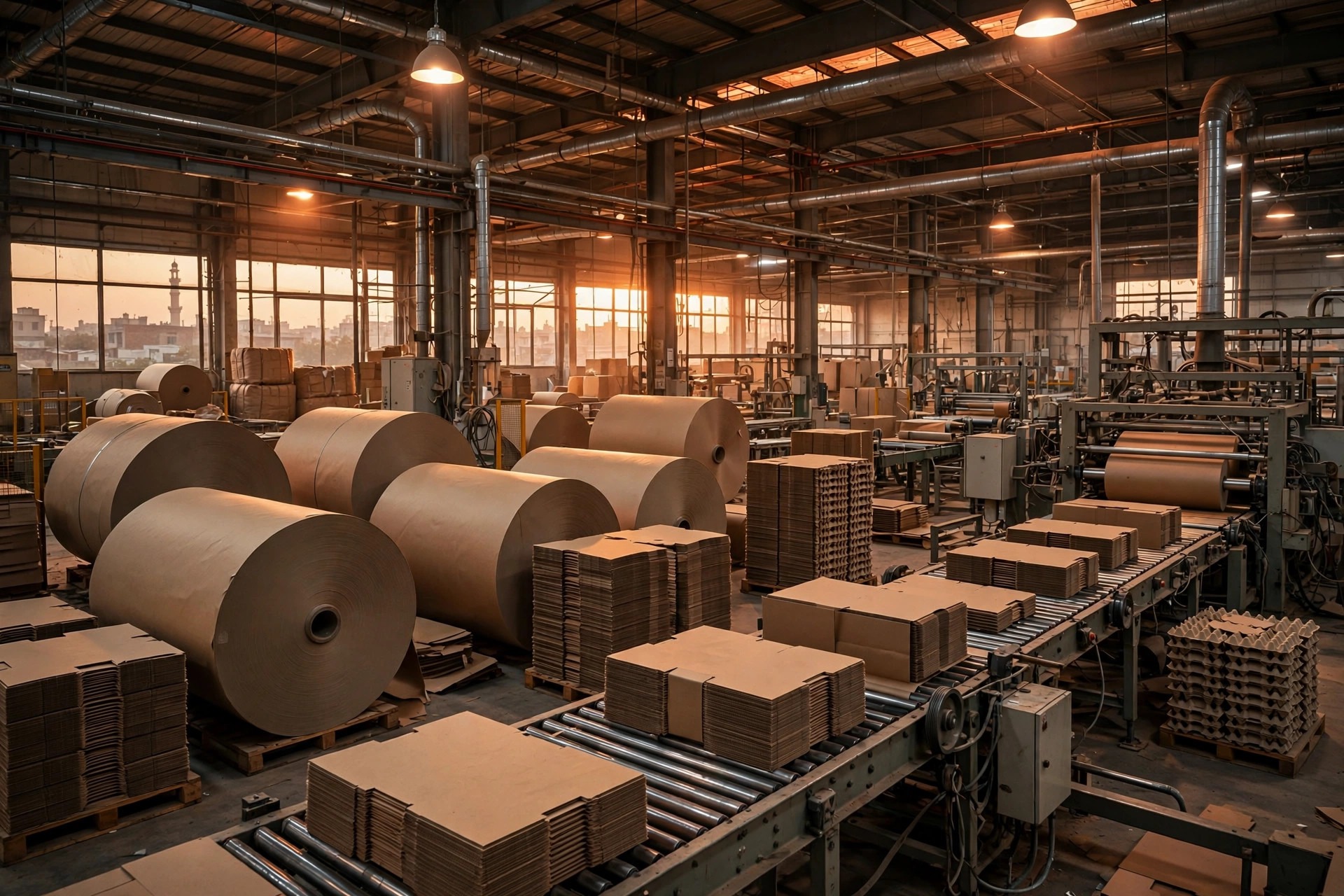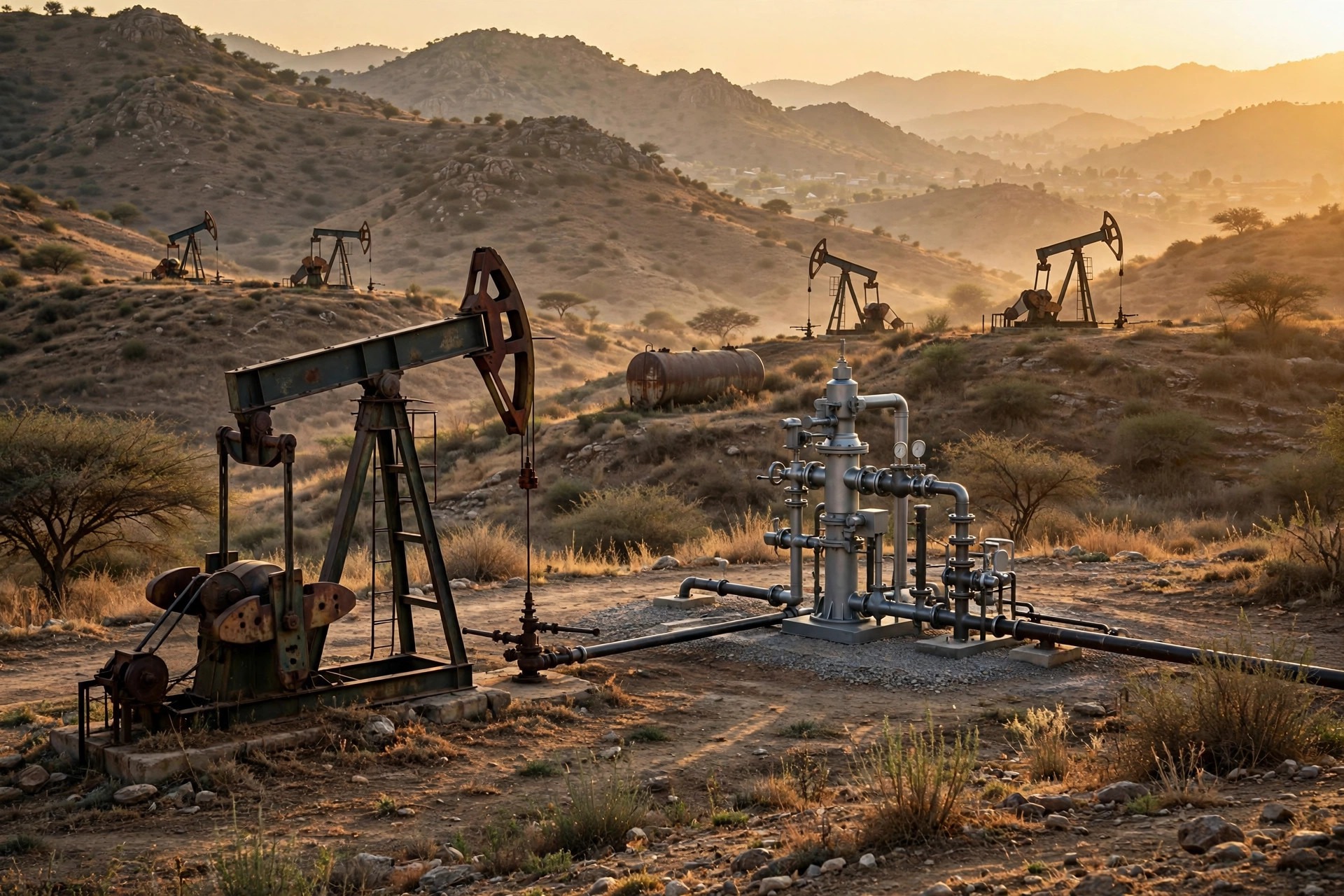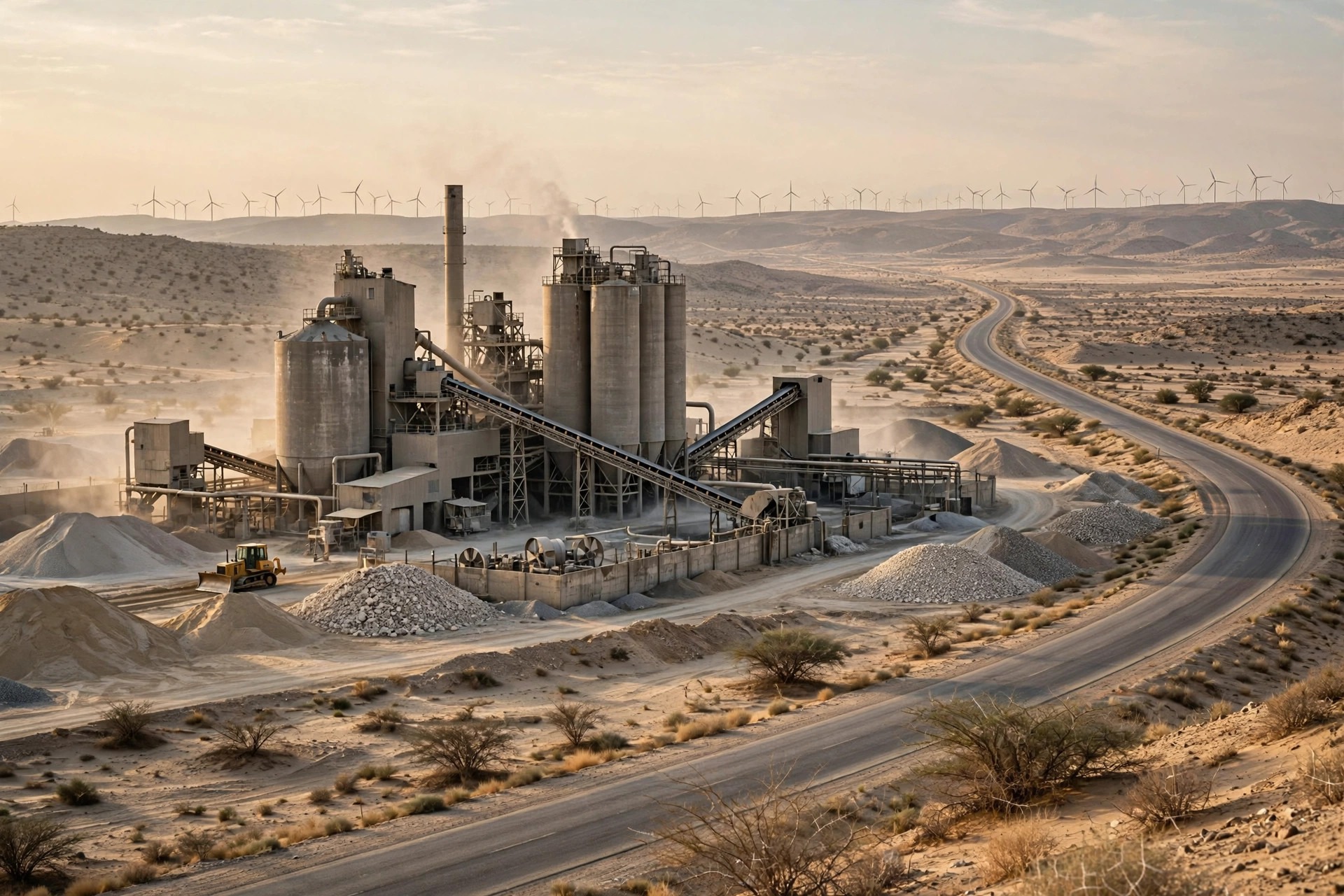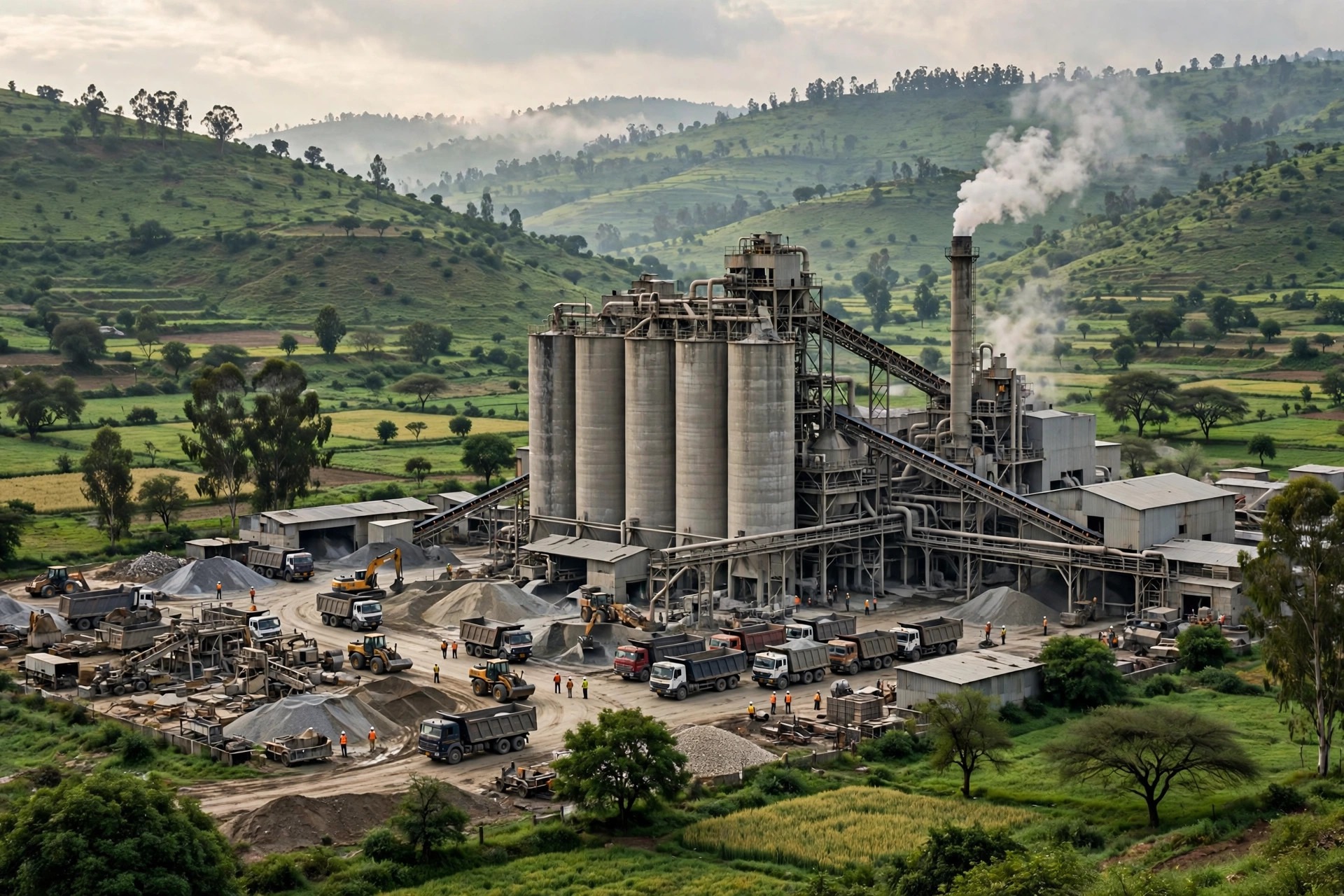
KARACHI: Cement is a local business wearing national clothes: the product is heavy, transport is expensive, and a plant's real market is the few hundred kilometres its trucks can profitably reach. Pioneer Cement Limited — PIOC — is a case study in that geography. Its single plant sits at Chenki, in Khushab district in central Punjab, on limestone reserves close to the Salt Range, within reach of Lahore, Faisalabad, Sargodha and the northern construction markets. Founded in 1986 and in production since the mid-1990s, Pioneer grew line by line into a mid-sized northern producer — and then, in one of the largest transactions in the sector's history, control passed in 2025–26 to Maple Leaf Cement, its neighbour and rival within the Kohinoor Maple Leaf Group. Its profile is therefore a story of limestone, capacity cycles and, finally, consolidation.
The plant and the product
Pioneer's principal activity is the manufacture and sale of cement — principally ordinary Portland cement, with sulphate-resistant cement among its products for structures exposed to water and aggressive soils. The production facility at Chenki, near Jauharabad and Khushab, draws on local limestone, the essential raw material: quarried rock is crushed, ground with corrective materials, burned in a kiln at very high temperature to make clinker, and ground again with gypsum to produce the grey powder that leaves the plant in bags and bulk tankers.
Like every cement maker, Pioneer sells into two broad channels: the retail market of dealers serving individual home builders — the single largest use of cement in Pakistan — and the institutional market of contractors, housing developers and infrastructure projects. Its registered office is in Lahore, its market is the north, and its competitive set is the crowded field of northern producers surveyed in our guide to PSX cement stocks — a market in which brands are strong, prices are posted and adjusted constantly, and a plant's delivered cost decides who earns a margin in a weak year.
1986–1994: a Noon Group project takes its time
Pioneer Cement was incorporated in Pakistan on 9 February 1986 as a public company limited by shares, and its shares were listed on the stock exchange. It was promoted as a project of the Noon Group, the business house founded by Malik Nur Hayat Noon, whose family interests spanned sugar, textiles and other industries; executives associated with the Noon Group conceived and implemented the project, and family members chaired the company in its early years. Development finance came with international support — the Asian Development Bank was involved in the project's financing and held an interest in the company in its early life, alongside Japanese and Singaporean co-financiers, a common pattern for large Pakistani industrial projects of the era.
Building a cement plant in that period was slow work, and Pioneer's timeline shows it: commercial production began only on 20 November 1994, nearly nine years after incorporation, with an installed clinker capacity of 2,000 tonnes per day. The company entered a difficult industry at a difficult time — the 1990s brought periods of overcapacity and thin prices to Pakistani cement — and its early reputation, as contemporary profiles put it, was as a relatively low-cost producer with a modern plant, living through the sector's slumps alongside everyone else. The Noon family's stake and board role defined this first era; in later years ownership broadened and control passed through other investor groups, before the company's final change of control in 2025–26.
Growing line by line: 2006 and the big third line
Pioneer's growth came in steps, each step a bet on the next construction cycle. The original line's capacity was optimised to about 2,350 tonnes of clinker per day by 2005. In April 2006 a second production line of 4,300 tonnes per day began commercial operations, roughly tripling the plant. The logic was the mid-2000s construction boom: housing, commercial building and public works were expanding, and northern producers raced to add capacity ahead of demand.
The third and largest step came in the following decade: a new brownfield line of about 8,000 tonnes of clinker per day at the same Chenki site, supported by captive power — a waste-heat recovery plant of about 12 megawatts, which generates electricity from the kiln's exhaust gases, and a coal-fired power plant of about 24 megawatts to insulate the factory from grid interruptions and tariff shocks. The expansion took Pioneer's installed cement capacity to roughly five million tonnes a year, placing it firmly in the industry's middle tier: far smaller than the southern and northern giants, but large enough to matter in every northern price discussion. Each expansion also raised the stakes of the cycle — more capacity means more fixed cost to carry through the downturns that reliably follow Pakistan's building booms.
The third line's supporting investments were completed in the following year: the company's own financial statements record that the 12-megawatt waste-heat recovery plant and the 24-megawatt coal-fired power plant were installed during 2021, giving the Chenki site — a plot of some 2,400 kanals — a substantial measure of energy self-sufficiency. The company's more recent annual reports also describe the apparatus of a modern regulated factory: ISO certifications for quality, environmental and occupational-health management systems audited by TÜV Austria, energy-efficient coal-firing burners and extensive dust-collection equipment on the new line, a tree-planting programme around the site, and community works including a medical centre and dispensary for Chenki village and support for local schools — the social licence, in practical form, of a large industrial neighbour.
How a cement plant makes money
The arithmetic is the same at Chenki as at every plant in the sector, and our batch-1 explainer on the industry works through it in detail. Revenue is tonnes dispatched multiplied by the retention price — what the manufacturer actually keeps from the bag price after dealer margins, excise duty and sales tax. Against that stand the costs of limestone and other raw materials, of fuel and power — coal is usually the largest single cost, and its price, imported or local, moves with global markets and the exchange rate — of bags, freight, maintenance and people. The gross margin per tonne that survives is therefore a joint product of three things management influences but never fully controls: the market price of cement in the north, the price of coal, and the plant's own efficiency — its heat and power consumption per tonne, its use of cheaper fuels, and the share of its energy it generates itself from waste heat and captive plants.
Two features of the model deserve emphasis. First, capacity utilisation is destiny: a kiln costs nearly as much to own at half output as at full output, so dispatch volumes in a strong construction year can transform profits, and a demand slump can erase them — the cycle that runs through the whole of Pakistan's cement history. Second, location is a permanent advantage or handicap: Pioneer's central-Punjab position puts large consuming markets within economic trucking distance and limestone at its doorstep, which is why the site attracted expansion capital repeatedly, and ultimately why it attracted a buyer.
2025–26: Maple Leaf takes control
In December 2025, Maple Leaf Cement Factory Limited — the Kohinoor Maple Leaf Group's cement flagship, profiled in our piece on Maple Leaf Cement (MLCF) — agreed to acquire a controlling stake of about 58 per cent in Pioneer from its then owners, and launched a public offer for a further slice of the shares under Pakistan's takeover regulations. The Competition Commission of Pakistan cleared the transaction after a Phase-I review, treating the relevant market as the production and sale of grey cement and noting that the combined share would remain moderate. The share purchase was completed in February 2026, and with holdings it and its associates already held, Maple Leaf's aggregate stake rose to roughly 88 per cent, making Pioneer its subsidiary while Pioneer remained a listed company with public minority shareholders. Subsequent reporting through 2026 described merger proceedings intended to fold Pioneer fully into Maple Leaf — the endgame of a consolidation that had been reshaping the northern market for years.
For the student of the sector, the deal's logic is the textbook logic of cement consolidation: two plants in the same region, selling a commodity product into the same cities, can share procurement, fuel sourcing, logistics and overheads, and can coordinate capacity in a market chronically tempted to overbuild. Whether any individual shareholder benefits from such a deal depends on prices and terms that this profile deliberately does not adjudicate — it records the transaction because it is the largest event in Pioneer's corporate life, and the one that closed its era as an independent company.
Limestone, the Salt Range and the northern price web
Pioneer's address — Chenki, district Khushab — is not an accident of land purchase. Cement plants are built where the limestone is, and the hills of the Salt Range and its adjoining districts hold some of Pakistan's finest limestone reserves, close to the surface and close to the Punjab plain's markets. The company itself has long described its location as a privilege: raw material at the gate, and the consuming cities of central and northern Punjab within economic trucking distance in every direction. Freight is the silent term in every cement equation — a bag of cement is cheap and heavy, and each additional hundred kilometres of road eats margin — so a plant's map position is a permanent feature of its cost curve, as real as its kiln's fuel efficiency.
The market that position serves is the north: in industry practice, Pakistan's cement map divides into a northern zone — Punjab, Khyber Pakhtunkhwa and the capital region, supplied by plants clustered near the limestone belts — and a southern zone around Karachi and Hub. Northern plants sell overwhelmingly to their home zone, at prices that form a regional web: list prices are posted per bag, dealer discounts and freight arrangements adjust them street by street, and a capacity addition anywhere in the zone — a new line at Daudkhel, an expansion at a rival's plant — ripples through everyone's retention within a season. Pioneer spent its independent life inside that web as a mid-sized participant: too big to be a niche player, too small to set the price, earning its keep when demand absorbed the zone's capacity and defending margin when it did not. Its sulphate-resistant cement served the specialist corner of that market — foundations, water-retaining structures and soils where ordinary cement deteriorates — a smaller, specification-driven business where quality certification matters more than the dealer's board price.
The retail bag: where northern cement is really sold
Outsiders often imagine cement as an infrastructure commodity, sold by the trainload to dam and motorway contractors. In Pakistan the centre of gravity is different: the largest single demand source is the individual home builder — the family in Gujranwala or Rawalpindi adding a floor, the returning expatriate building in his village — buying bags by the dozen through local dealers. That retail structure shapes everything: brand reputation among masons and dealers, bag weight and quality consistency, dealer credit and availability in the peak season all move volume as surely as price. Pioneer's decades in central Punjab built it a dealer network and a name recognised by the trade in its home districts — intangible assets that do not appear as a line in the balance sheet, but which a buyer of the company was, in part, paying for: distribution that would take a new entrant years to replicate. The Maple Leaf combination placed that network alongside the acquirer's own, in adjoining territories — the operational synergy, in plain language, of two sales maps that fit together.
What investors typically watch
Followers of PIOC have historically watched the standard northern-cement dials: monthly dispatches and capacity utilisation; retention prices in the northern market; coal and energy costs and the contribution of the waste-heat and captive power plants; and the progress of the Maple Leaf relationship — integration, any merger terms for minority shareholders, and what the combination means for dividends and governance while Pioneer remains separately listed. Index membership itself can change when control and free float change, a mechanism explained in our piece on KSE-100 rebalancing. These are observation points, not recommendations: this article is educational content, not financial advice.
Key takeaway: Pioneer Cement grew from a 1986 Noon Group project into a mid-sized northern producer on Khushab limestone, expanding to roughly five million tonnes of capacity — before Maple Leaf Cement's 2025–26 takeover made it part of the Kohinoor Maple Leaf Group.