KARACHI: Drive the M-9 motorway north from Karachi toward Hyderabad and, at Nooriabad, you pass one of the south's modern cement plants: three production lines, the newest built with European equipment, making cement for Karachi's construction market and for export ships loading at the city's ports. The company behind it is Power Cement Limited — POWER on the exchange. It was not always called that, and it was not always this size. Founded in 1981 as Al-Abbas Cement, it spent decades as one of the industry's smaller southern producers before the Arif Habib Group acquired it in 2010, renamed it, and financed the expansion that turned a sub-one-million-tonne plant into a producer of more than three million tonnes a year. Its profile is the southern mirror of the northern story told in our guide to PSX cement stocks: location, energy and the cycle decide everything.
The plant at Nooriabad
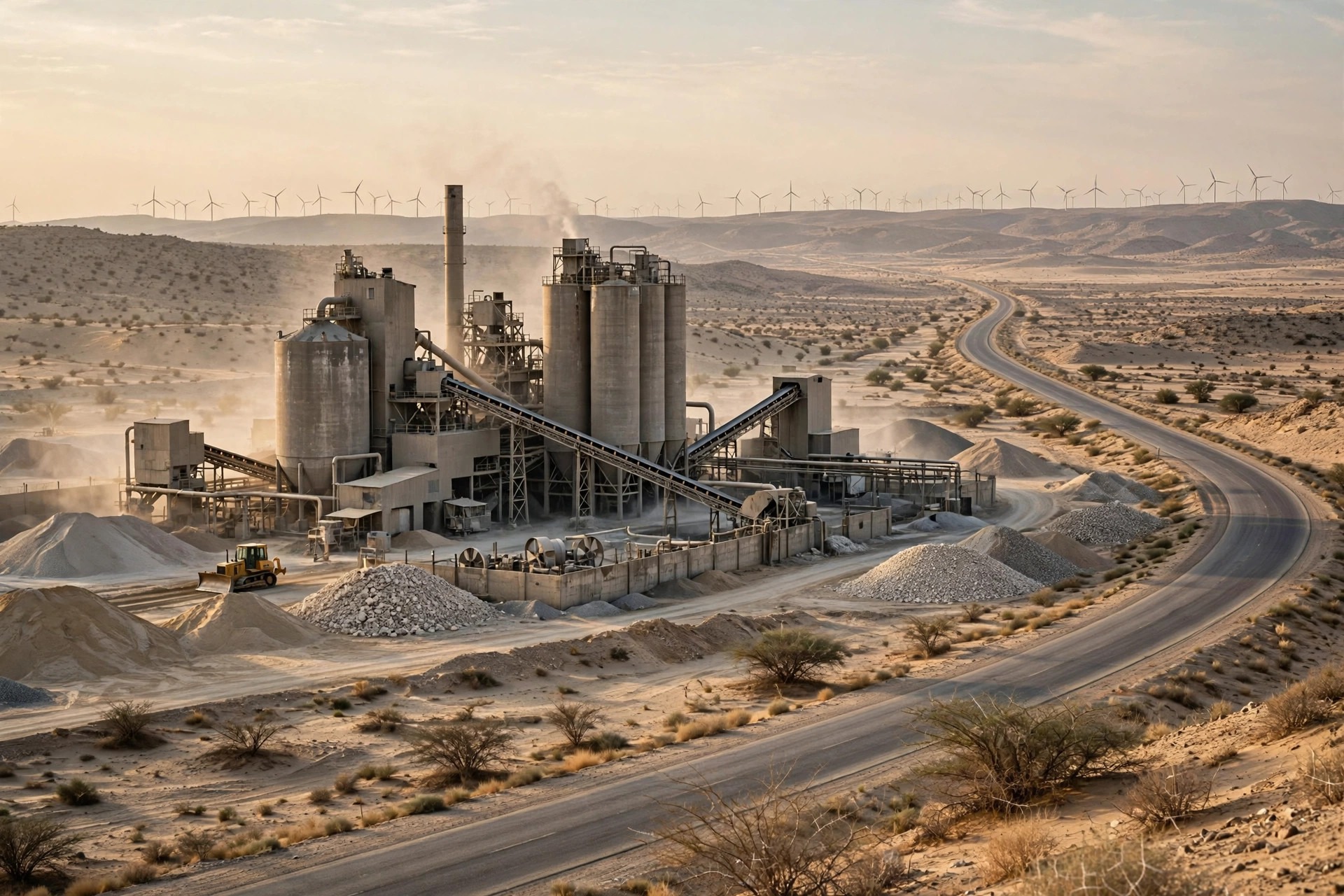
Power Cement's factory sits at Deh Kalo Kohar in the Nooriabad industrial estate, District Jamshoro, on the M-9 in Sindh — roughly midway between Karachi and Hyderabad. The location is the strategy. Karachi is Pakistan's largest single cement market, and Nooriabad plants can serve it by road while also reaching Port Qasim and Karachi Port for seaborne exports of cement and clinker, which the company ships to destinations including the Middle East, Sri Lanka, East Africa and, among others, the United Kingdom and the United States, under export certifications from several international standards bodies.
The plant today comprises three manufacturing lines with a combined nameplate clinker capacity of about 10,700 tonnes per day — an annual cement capacity of roughly three and a half million tonnes. The product range covers ordinary Portland cement, sulphate-resistant cement, Portland blast-furnace slag cement and ground granulated blast-furnace slag, sold under brands that have included Power Cement, Black Bull, Blue Star and Estate Cement. Around the kilns sits the energy infrastructure modern plants depend on: a waste-heat recovery system of around 10–11 megawatts generating power from kiln exhaust, a solar plant of about 7 megawatts commissioned on an equipment-rental basis, and a wind project under development — together intended to take the site's self-generated and renewable capacity to about 25 megawatts.
1981–2010: the Al-Abbas years
Power Cement Limited was incorporated in Pakistan as a private limited company on 1 December 1981 and converted into a public limited company on 9 July 1987, listing on the stock exchange. For its first three decades it traded as Al-Abbas Cement Industries Limited, and it was, by industry standards, small: accounts of the sector from the late 2010s still described the pre-expansion company as one of the smallest cement producers, with installed capacity of under a million tonnes against an industry total then above 45 million tonnes. Its market was the southern region — Sindh and Balochistan — and its economics those of a minor southern plant: exposed to Karachi's demand swings, to competition from larger neighbours, and to the freight economics of serving a port city from an inland site.
Those decades were not idle — the plant operated, added its second line and survived the industry's repeated cycles of overcapacity and price war — but the company's transformation waited on new ownership. Small cement plants in Pakistan have changed hands repeatedly over the years precisely because the asset underneath the corporate shell — limestone leases, a working kiln, a southern location — is worth more to a group with capital than to owners without it. In 2010, that buyer arrived.
2010 onwards: Arif Habib ownership and the big expansion
In 2010 the Arif Habib Group acquired the company, and Al-Abbas Cement became Power Cement. The acquirer is one of Pakistan's best-known financial-industrial groups, built from the brokerage business of Arif Habib into interests spanning financial services, fertiliser, steel and real estate; its listed parent, Arif Habib Corporation, is itself profiled in our piece on Arif Habib Corporation (AHCL), and Power Cement sits as a subsidiary within that structure, with its registered office at the Arif Habib Centre in Karachi.
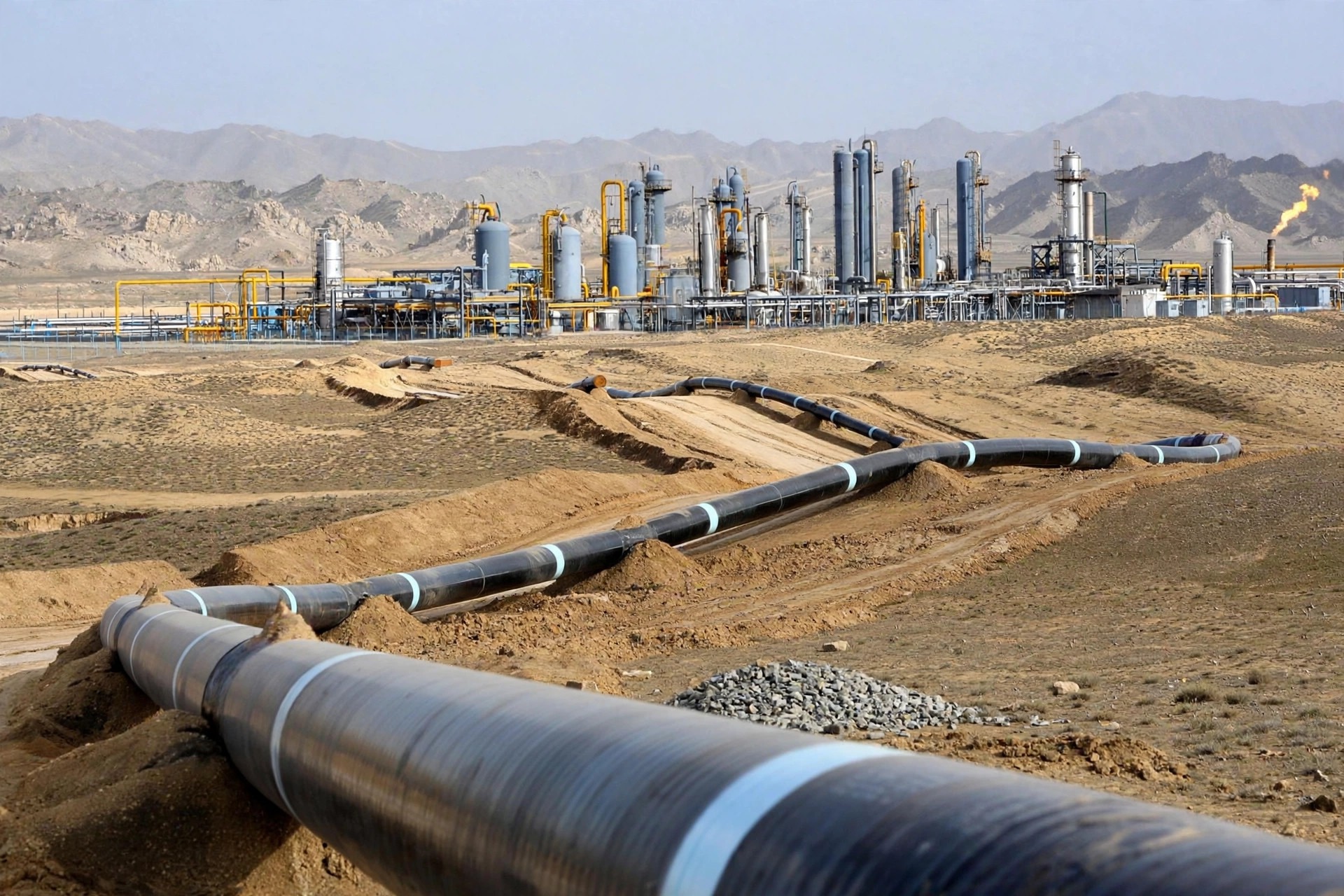
The new owners' defining act was the third line: a state-of-the-art production plant supplied by FLSmidth of Denmark, financed by a consortium that blended local bank debt, a large rights issue to shareholders, and foreign development and equity money — Denmark's Investment Fund for Developing Countries (IFU) participated alongside FLSmidth as an investor, with Islamic and multilateral lenders among the financiers, according to contemporaneous reporting of the funding package. Completed around the turn of the decade, the expansion multiplied the company's capacity several-fold and repositioned it as a serious southern producer with modern, fuel-efficient equipment and genuine export capability. The energy investments followed the same logic — waste-heat recovery first, then solar and wind — aimed at the single largest controllable cost in cement making: the power and fuel bill.
The financing and build-out had an international cast that the company's disclosures and contemporaneous reporting record in detail. Alongside local bank debt and the rights issue, the expansion drew foreign financing from DEG, the German development finance institution, while Denmark's IFU and FLSmidth itself took equity stakes — aligning the equipment supplier with the plant it was building. The electrical connection for the enlarged plant was built by GE Power's Grid Solutions business: a 132/6.3-kilovolt grid station at Nooriabad, delivered on a turnkey basis to draw power from the Hyderabad Electric Supply Company. The older plant, meanwhile, was retrofitted with bag houses in place of its electrostatic precipitators, bringing dust emissions within national environmental standards. An expansion, in other words, was not only a kiln: it was a grid connection, an emissions system and a financing syndicate, each of which had to arrive before the first clinker did. It is also why followers of the company read the monthly dispatch figures compiled for the industry as a whole: in cement, one plant's utilisation is only meaningful when set against the zone it sells into.
How Power Cement makes money
The mechanics match the sector template. Revenue is tonnes dispatched — to Karachi and southern dealers, to institutional buyers, and to export customers — multiplied by the retention price the company keeps after taxes and distribution shares. Costs begin at the quarry and are dominated by fuel and power: coal for the kiln, electricity for grinding, increasingly offset by waste-heat, solar and wind generation on site. Freight is the southern variable: distances to Karachi are short, which flatters home-market margins, while exports are priced off world clinker and cement markets minus shipping — profitable when regional prices and the exchange rate align, marginal when they do not, and always useful for keeping kilns running in a soft domestic season.
What makes Power's version of the model distinctive is its history written into the balance sheet. A plant expanded with substantial borrowed money carries finance costs that a debt-free rival does not; the expansion years therefore showed the classic pattern of a growing cement company — capacity and sales rising faster than profit, with interest and depreciation absorbing the early output of the new line. As the debt is serviced down and utilisation rises, the same structure works in reverse. That arc — invest heavily, endure the carrying costs, harvest utilisation — is the standard biography of a cement expansion, and Power Cement is one of its clearest recent Pakistani examples. The group's other listed interests mean capital allocation at Power is also a group decision, weighed against opportunities elsewhere in the Arif Habib portfolio.
Power Cement in the southern market
The south is Pakistan's export coast and its most commercially exposed cement region: producers there compete for Karachi's builders, for Balochistan's projects, and for cargo space to East Africa, the Gulf and beyond. Power Cement's three lines, modern equipment and port access give it a place in all three contests, while its Arif Habib parentage gives it something smaller independents lack — a sponsor with deep capital-markets access in the city where it is headquartered. At the same time, it remains a mid-tier producer in an industry whose giants operate at several times its scale, in a region where new capacity across the fence can reset prices for everyone. That combination — real assets, real sponsor, mid-tier scale — is the company's durable description.
The company also carries the southern producer's exposure to public works and weather in Karachi itself: the city's construction runs on private housing societies, commercial towers and port-linked industry more than on federal mega-projects, so Power's home demand follows Karachi's own economy — its real-estate cycles, its industrial health, and even its infrastructure failures, since every road, drain and building rebuilt after flooding is, in the end, cement demand. Management commentary through the years reflects that localism: southern dispatches, not national totals, are the number the plant lives by.
Energy: the cost line that decides the year
If one variable explains Power Cement's results across most years, it is the fuel and power bill. A cement kiln burns fuel continuously at temperatures that leave no cheap substitute, and the grinding mills that finish the product are among industry's hungrier electricity users. The company's responses, assembled since the Arif Habib takeover, amount to a layered energy strategy. Waste-heat recovery — capturing the kiln's exhaust gases to generate roughly ten megawatts of electricity — turns a waste stream into the plant's cheapest power. Captive and renewable supply — the solar installation of about seven megawatts commissioned on a rental model, with a wind project of similar scale under development — trims grid purchases whose tariffs have risen steeply. And the fuel mix itself is managed tonne by tonne: imported coal, local coal and alternative fuels each carry different prices, calorific values and logistics, and the blend chosen in a quarter can move the cost per tonne of clinker by more than any pricing decision in the same period.
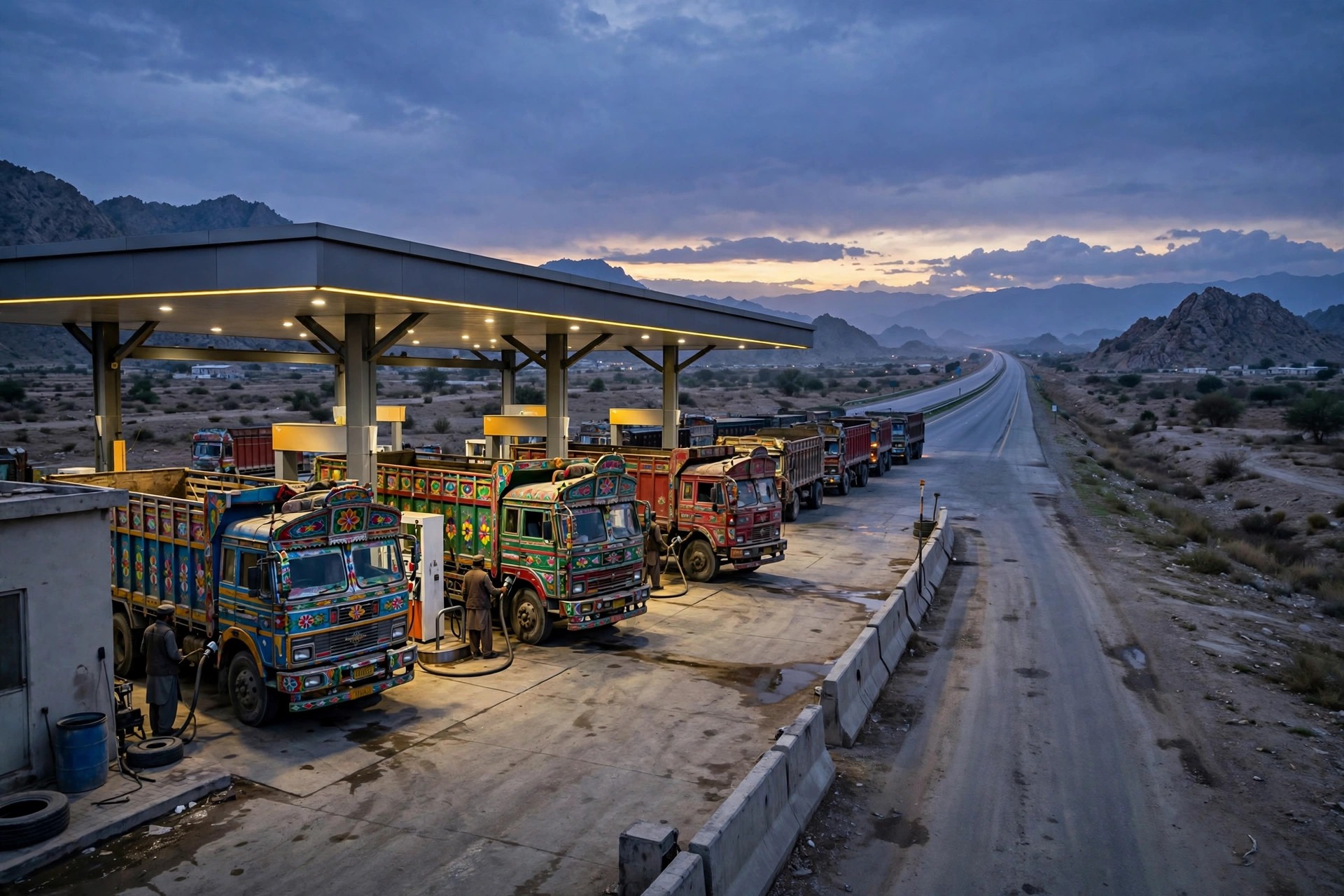
This is also where the southern location cuts both ways. Nooriabad is close enough to Karachi's ports that imported coal lands cheaply at the plant gate — a structural advantage over northern rivals trucking fuel across the country — but that same openness ties the plant's costs to world coal markets and the exchange rate, while a northern competitor burning local coal lives in a different cost world. When imported coal spikes globally, southern margins compress first and fastest; when it falls, the south recovers first. Power Cement's disclosures on its energy projects are therefore not corporate decoration: they are management's running commentary on its largest cost line.
Exports: the pressure valve of the south
The final piece of the model is the sea. Southern cement plants, Power included, sit within trucking distance of two ports, and the export trade — clinker especially, the semi-finished product that foreign grinders finish into cement — acts as the industry's pressure valve. When Karachi's builders slow down, kilns need not stop: clinker can be loaded for East Africa, the Gulf or Sri Lanka at whatever the world market pays, keeping utilisation up and fixed costs spread, even at thin margins. When domestic demand booms, the same tonnes are worth more at home and exports shrink. The company's export certifications from standards bodies in several destination markets — South African, Indian, Sri Lankan, European and Philippine among them, as its annual reporting lists — are the paperwork that keeps that valve open, and the Arif Habib Group's trading and finance connections do the rest. A reader of Power's quarterly numbers who ignores the export split between local and foreign dispatches will misunderstand both: the tonnes are the same, but the prices, currencies and margins are two different businesses sharing one kiln.
What investors typically watch
Followers of POWER watch southern dispatches and Karachi-market retention prices; export volumes and realised export prices, which management discusses in its reporting; coal prices and the fuel mix, including how much power the waste-heat, solar and wind assets supply; capacity utilisation on the third line; and the pace of debt reduction from the expansion era. Group-level news from Arif Habib Corporation can also matter, as sponsor decisions shape strategy. These are observation points for understanding the business, not a recommendation — this article is educational content, not financial advice, and readers can find the cement industry's foundations in the Aktzien learning library.
Key takeaway: Power Cement is the former Al-Abbas Cement — a small Sindh producer founded in 1981 — transformed after its 2010 acquisition by the Arif Habib Group, whose FLSmidth-built third line made it a modern, export-capable southern plant of over three million tonnes a year.