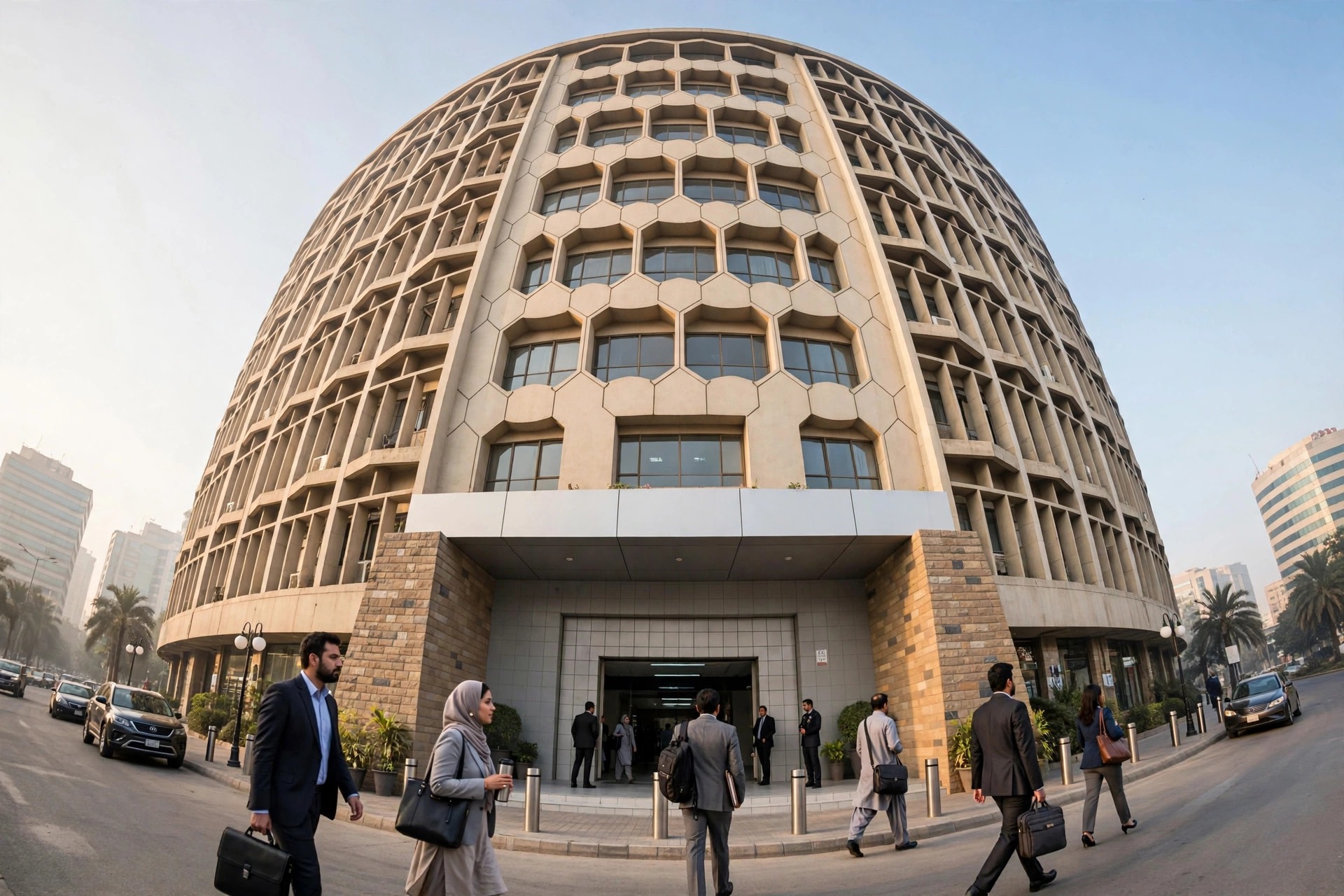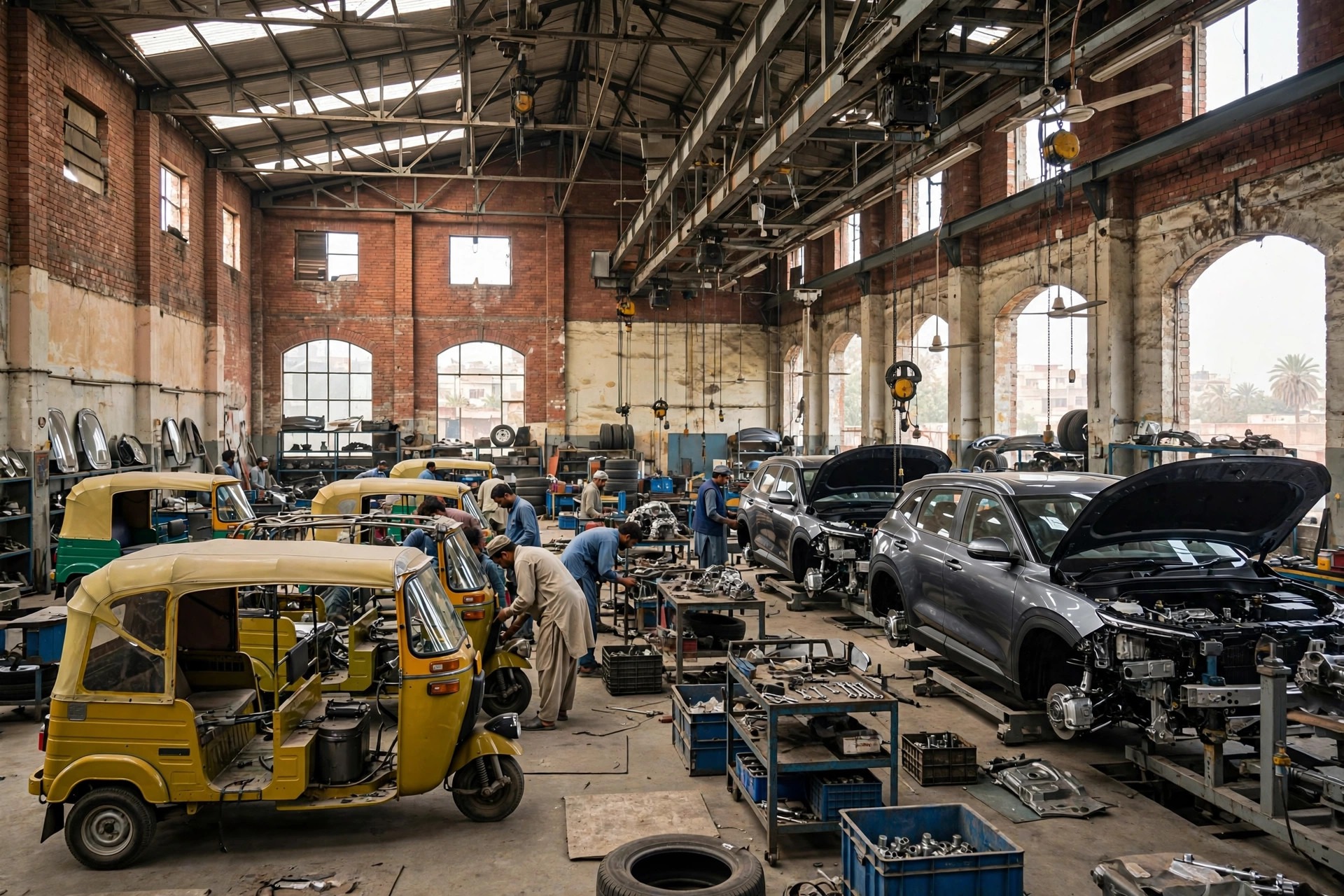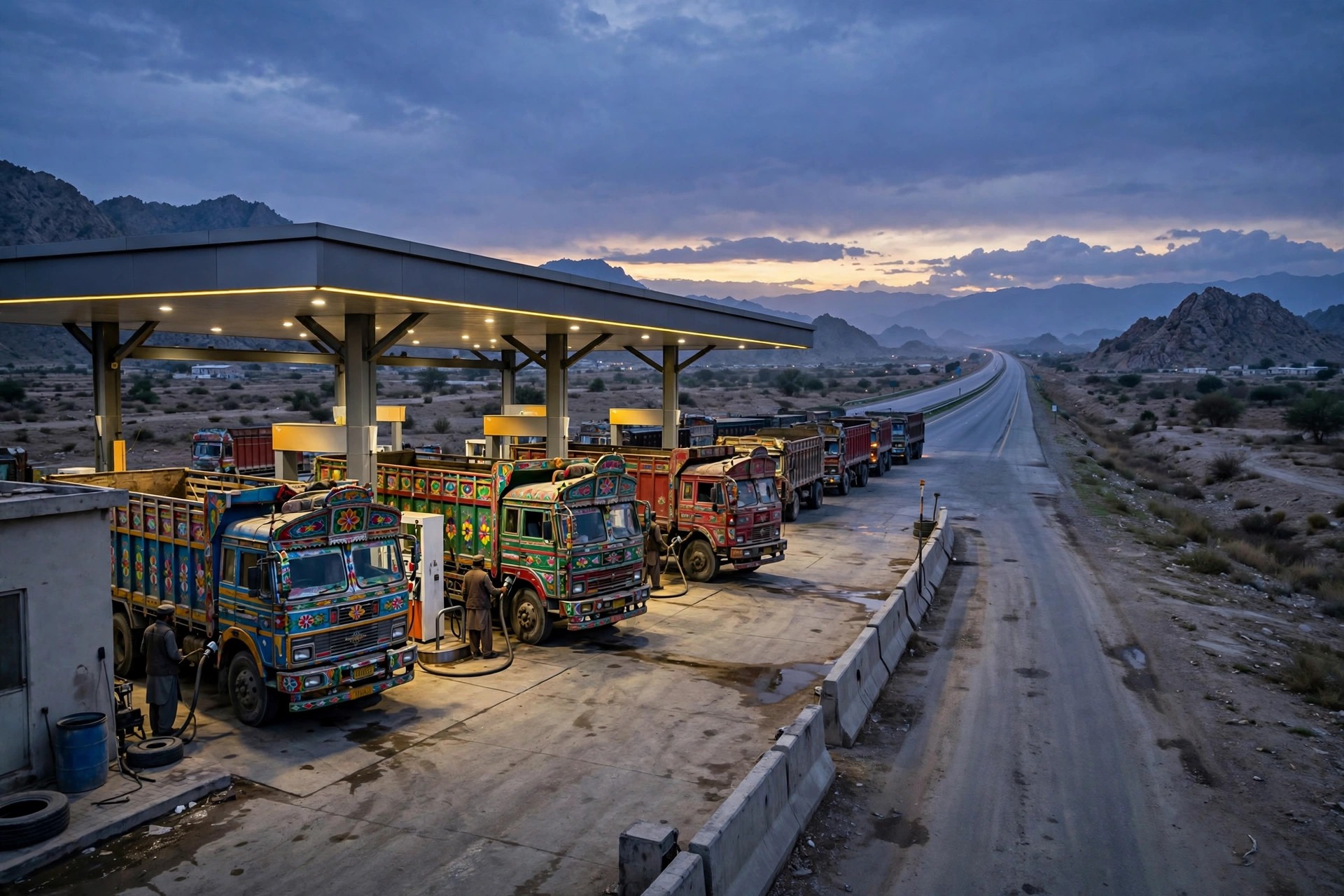
KARACHI: Drive any highway in Pakistan and the pattern repeats: every few kilometres a petrol pump, and a striking share of them carrying the green-and-white roundel of Pakistan State Oil. PSO is the country's largest oil marketing company — the business that takes refined fuel from refineries and import terminals, stores it in depots across the country, and delivers it to filling stations, airlines, power plants, factories and the armed forces. It does not drill for oil and it does not refine crude. Its craft is logistics and reach, exercised at a national scale, inside prices and margins that the state largely sets. Understanding PSO means understanding how fuel actually moves through Pakistan, and why the company that moves it is permanently entangled in the country's energy finances.
What PSO actually does
An oil marketing company, or OMC, sits at the downstream end of the oil chain. Explorers such as OGDC and Pakistan Petroleum find and produce hydrocarbons; refineries turn crude oil into petrol, diesel, kerosene, jet fuel and furnace oil; OMCs buy those finished products — topping them up with imports where local refining falls short — and sell them on. PSO's product list covers motor gasoline (petrol), high-speed diesel, furnace oil for power generation and industry, jet fuel for airlines, kerosene, liquefied petroleum gas (LPG), and a lubricants business that blends and sells engine oils under its own brands.
The physical backbone is storage and distribution. PSO maintains storage installations and depots around the country, receives product by pipeline, rail and road tanker, and supplies a retail network of thousands of filling stations, most of them run by independent dealers operating under its brand and standards. Around that retail core sits a set of less visible but important businesses: aviation fuelling at airports, supplies to power stations and large industrial customers, LPG distribution, and lubricants sold through workshops and retail channels. Our guide to oil marketing stocks on the PSX explains how PSO compares with the smaller listed marketers that share the same regulated framework.
1974–1976: assembled by the state, piece by piece
PSO was not founded in the usual way; it was assembled by government decision during the nationalisation era of the 1970s. The sequence, documented in the company's own history, runs as follows. On 1 January 1974, the federal government took over the management of Pakistan National Oil and Dawood Petroleum Limited and renamed the combined operation Premier Oil Company Limited, under the Marketing of Petroleum Products (Federal Control) Act 1974. In June 1974 a second state vehicle, the Petroleum Storage Development Corporation, was created to handle storage.
The pieces came together in 1976. The storage corporation was renamed State Oil Company Limited in August 1976. In September 1976 the government purchased the Pakistani refining and marketing undertakings of Esso Eastern — the local arm of the American oil major — and vested them in State Oil, giving the state company an established network and a stake in Pakistan Refinery. Finally, on 30 December 1976, Premier Oil was merged into State Oil, and the combined company took the name Pakistan State Oil Company Limited. The merged business controlled a majority of the country's oil storage, distribution and marketing at birth — a position its successors have defended, against growing competition, ever since.
PSO was listed on the Karachi Stock Exchange in 1977, an early example of a state enterprise with a public float. The Government of Pakistan remains its majority shareholder, acting through the petroleum ministry, with the balance held by institutions and public investors on what is now the Pakistan Stock Exchange.
The decades since: liberalisation without privatisation
For its first two decades PSO operated in a sheltered market with a handful of players. From the 1990s onwards the sector opened up: new OMCs were licensed, multinational marketers came and went, and PSO's share of a growing market was contested pump by pump. The company's response, particularly in the 2000s, was a corporate renewal programme — reorganising operations into business lines, modernising the retail network under a "New Vision" station format, and pushing into lubricants, LPG and non-fuel retail.
Privatisation was repeatedly planned and repeatedly shelved. In the early 2000s the government announced its intention to sell a controlling stake to a strategic investor; the process was postponed several times, challenged in court, and opposed on strategic grounds. In 2019 PSO was removed from the active privatisation programme altogether. The result is a hybrid familiar across the PSX: a commercially run, exchange-listed company whose controlling shareholder is the state, whose chief executives are appointed through a public-sector process, and whose largest strategic questions — pricing, supply security, sector debt — are decided as much in Islamabad as in its Karachi head office.
How PSO makes money
The economics of an OMC are unusual, because the two numbers that matter most are not set by the company. Pump prices for petrol and diesel are determined under a government pricing formula administered with the regulator, OGRA, and revised at regular intervals to reflect international product prices and the exchange rate. Within that price sits the OMC margin — a fixed amount per litre that is the marketer's core earning. PSO therefore makes its basic living litre by litre: margin multiplied by volume, across petrol, diesel and other regulated products.
Three further layers sit on top of that base:
- Inventory gains and losses. PSO holds large stocks of fuel bought at yesterday's prices. When the regulated price rises, stock on hand is suddenly worth more — an inventory gain. When prices fall, the same mechanism produces losses. Because price revisions are frequent and stocks are large, this single line can swing a quarter's profit dramatically, in either direction, without any change in how well the business is run.
- Unregulated and semi-regulated products. Lubricants, LPG, jet fuel and certain industrial supplies carry margins the company has more influence over. Lubricants in particular are a classic OMC profit pool: branded, higher-margin, and sold on quality rather than price alone.
- Volume itself. In a market where the per-litre margin is fixed, growth comes from selling more litres — winning dealer sites, supplying new industrial customers, and holding share against rival OMCs such as Attock Petroleum and a long tail of newer entrants.
Against these earnings stand the costs of the network: depots, tankers, dealer support, staff, and the financing cost of carrying enormous working capital. Fuel is bought before it is sold, often with borrowed money, so interest costs are a structural feature of the model. The wider PSX energy stocks guide shows where this downstream model sits between the explorers upstream and the gas utilities downstream.
The receivables shadow: PSO and circular debt
No account of PSO is complete without its balance sheet's most famous feature: money owed to it by the energy sector itself. Historically, PSO supplied furnace oil and other fuels on credit to power generation companies, and gas companies supplied by PSO-linked arrangements have also featured in the chain of arrears known as circular debt. When power-sector customers pay late — because electricity distributors have not collected from their own customers — PSO's profit-and-loss account can record a sale while its cash box stays empty, and the gap accumulates as receivables, financed by PSO's own borrowings.
This is why seasoned readers of PSO's accounts watch cash flow and receivable balances as closely as profit. Periodic government efforts to settle circular debt — through budget allocations, borrowing or restructuring — can release substantial payments to PSO at a stroke, transforming its liquidity and its capacity to pay dividends without any change in fuel volumes. The same dynamic links PSO to the gas utilities profiled elsewhere in this series, and to the index heavyweights discussed in our explainer on how OGDC makes money, whose gas sales enter the same payment chain from the other end.
PSO in everyday Pakistani life
PSO's real franchise is familiarity. Its pumps serve the truck corridors that carry Pakistan's trade, the motorcyclists and car drivers of its cities, the generators and boilers of its factories, and — through aviation joint ventures — the aircraft at its airports. In remote districts, the PSO pump may be the only branded fuel outlet; in the cities, its stations anchor main roads. The company also carries obligations that a purely private marketer might decline: maintaining supply through shortages, serving unprofitable locations, and holding strategic stocks. That blend of commercial business and national utility is precisely what its ownership structure implies.
As a KSE-100 constituent, PSO also matters mechanically to index investors: its size means movements in its share price move the benchmark, a relationship explained in our guide to how the KSE-100 is calculated. Its membership of the index is reviewed periodically, like every constituent's, under the process described in our explainer on KSE-100 rebalancing.
Competition, brands and the modern pump
PSO's dominance is no longer unchallenged, and the shape of competition explains much of its recent strategy. The licensing of dozens of new OMCs over the past two decades fragmented the market: smaller marketers compete aggressively for dealer sites, sometimes on thinner economics, while established rivals — Attock Petroleum from the Attock Group, and the local operations built by international brands over the years — contest the profitable urban and motorway locations. In response, PSO has leaned on the things a small rival cannot easily copy: the deepest storage network in the country, supply arrangements reaching every province, a lubricants brand sold far beyond its own pumps, and the trust attached to a state-backed name in a market periodically troubled by adulterated fuel and short measures.
The filling station itself has also changed. Modern PSO outlets compete with convenience retail, car wash and tyre services, digital payment and fleet cards for commercial customers who want centralised billing and control over drivers' purchases. Fleet and card businesses matter strategically: they lock in high-volume customers, generate data about consumption, and reduce the cash-handling risks of the traditional pump. Meanwhile the company has had to plan for a world in which its two biggest products face long-run questions — diesel demand tied to freight and agriculture, petrol demand exposed, over time, to more efficient vehicles and, eventually, electrification. None of that changes today's model, but it frames why OMCs everywhere are investing in the non-fuel parts of the forecourt.
Supply, finally, is a permanent operational drama. Pakistan refines only part of the fuel it consumes, so PSO imports large volumes through Karachi's ports, coordinating shipping, foreign exchange and letters of credit in a market where the rupee and global prices move constantly. When imports are delayed or the currency lurches, the whole country's pumps feel it within days — and the largest marketer feels it first and loudest, both operationally and in the headlines.
What investors typically watch
Observers of PSO tend to track a consistent set of observation points. Sales volumes by product — petrol and diesel above all — show whether the company is holding share in a growing or shrinking market. Government decisions on OMC margins matter directly, since a change of a few rupees per litre flows across billions of litres. Inventory gains and losses, driven by the direction of international prices between pricing dates, explain much of the quarter-to-quarter noise in reported profit. Receivables and any news on circular-debt settlement reveal whether accounting profit is turning into cash. And the lubricants and LPG businesses, smaller but higher-margin, show whether the company is building earnings that do not depend on regulated margins at all.
One further point deserves emphasis for new readers: this profile is educational content about how a company works, not financial advice or a recommendation about its shares. Aktzien, the investing app being built for Pakistan, plans to offer plain-language company explainers of this kind alongside its trading features — a reminder that understanding the business comes before any decision about the stock.
Key takeaway: PSO is a state-controlled logistics giant: it earns a regulated margin on every litre it moves, rides inventory swings it cannot control, and lends, in effect, to the whole energy sector — which is why its cash flow matters as much as its profit.