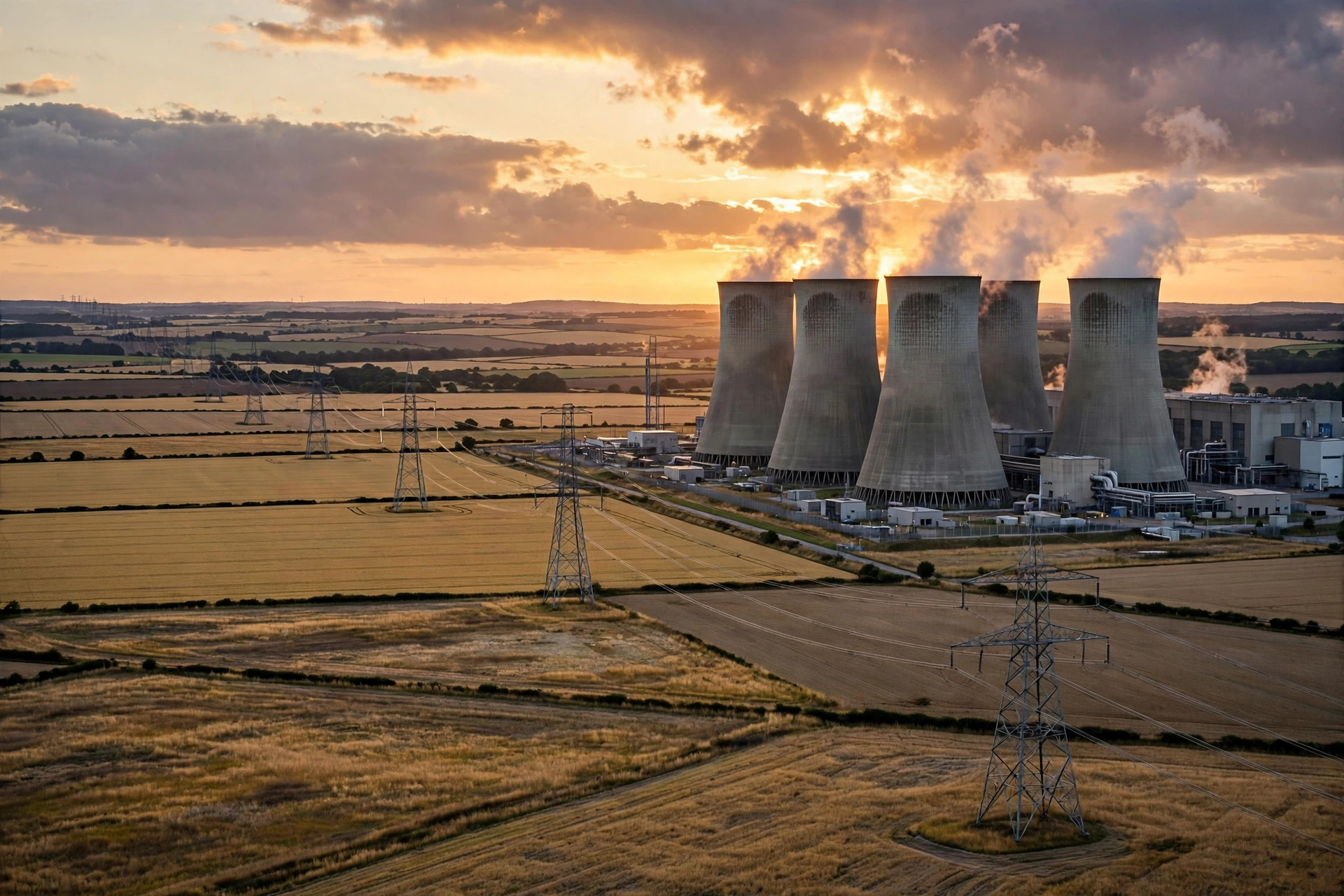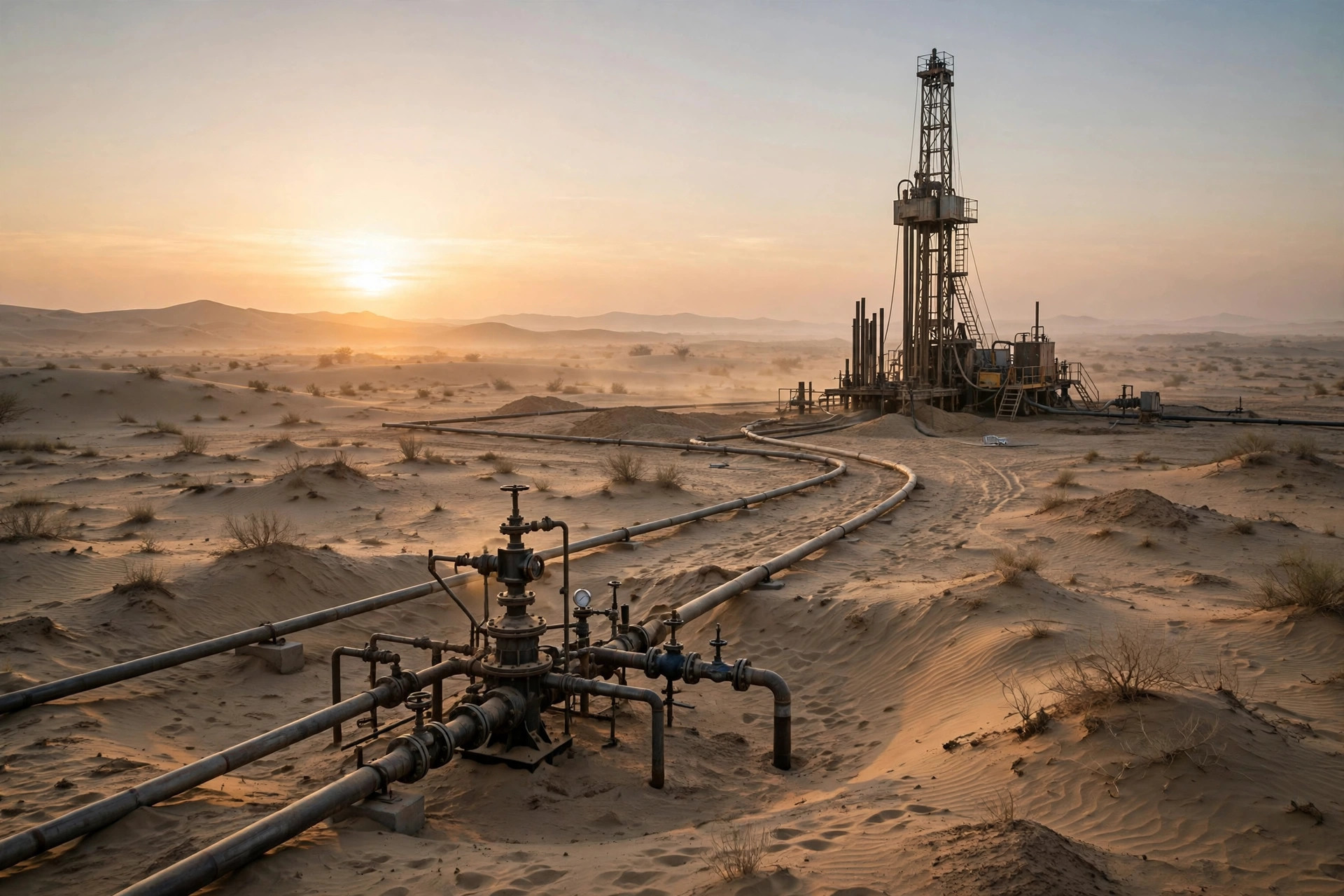
KARACHI: An exploration and production company owns a peculiar kind of factory: one it cannot see, located kilometres underground, that empties a little every day. Pakistan’s listed E&P companies — names such as OGDC, Pakistan Petroleum, Pakistan Oilfields and Mari Petroleum are among the largest and most closely followed on the exchange — search for oil and gas, bring it to the surface, and sell it into a pricing system set by policy and linked, in important ways, to the dollar. Their shares have historically been heavyweight constituents of the market and generous dividend payers at times, but the economics underneath are unlike any factory, bank or shop. This guide explains those economics without recommending any stock.
From licence to production: how the business works
It starts with acreage. The state, which owns Pakistan’s subsurface resources, grants exploration licences and leases over defined blocks, usually through competitive rounds administered under the petroleum policy of the day. A company — often in a joint venture with partners, including state-owned entities — first studies seismic data, essentially sound-wave maps of underground structures. Promising structures become exploration wells. Many such wells find nothing commercial; the cost of the dry holes is the tuition the industry pays for its successes.
If a well finds hydrocarbons in commercial quantities, the discovery is appraised, a development plan is approved, and production facilities are built: wells, gathering lines, processing plants that separate gas, oil and water, and pipelines to buyers. Gas is typically sold to the transmission and distribution utilities or directly to large buyers under allocation and pricing rules; crude oil and condensate go to refineries, including the plants covered in our guide to PSX refineries. LPG and other products have their own channels. The field then produces for years, with output naturally declining as reservoir pressure falls, unless new wells or compression work sustain it.
Joint ventures spread both cost and risk. A listed company may operate one block and hold minority, non-operated stakes in several others, so its reported production is its working-interest share of many fields. When you read that a company participated in a discovery, the key details are its percentage share, whether the find is oil or gas, the tested flow rates, and the long road between a test result and booked reserves and cash flow. Headline excitement at the discovery stage is normal; commercial value is proven much later.
Reserves: the inventory that matters
For most companies, inventory sits in a warehouse and can be counted. For an E&P company, inventory is reserves — estimates of oil and gas that can be produced economically with existing technology under current rules. Reserves are categorised by confidence, with proved reserves the most certain. Annual reports disclose reserve estimates and production, allowing a basic calculation every investor should know: the reserve life, reserves divided by annual production. A company producing the equivalent of, illustratively, 10 million barrels a year against 150 million barrels of proved reserves has a fifteen-year reserve life at that rate — before any new discoveries.
Two ideas keep reserves honest. First, reserve replacement: each year production depletes the stock, so a company must add reserves through discoveries, extensions or revisions at least as fast as it produces, or it is slowly liquidating itself, however profitable today looks. Second, reserves are estimates that get revised as fields behave, prices change and technology improves. A downgrade does not mean anyone lied; it means the underground reality differed from the model. Still, persistent negative revisions deserve questions.
Unit economics follow from this. Investors watch finding and development costs per barrel, lifting costs per barrel, and how much of each revenue rupee survives as profit after royalties, taxes and depletion charges. Depletion — the non-cash charge that spreads the cost of successful exploration over production — is the E&P cousin of depreciation, and understanding it is essential to reading these accounts sensibly.
Dollar-linked earnings, rupee reality
Pakistan’s wellhead gas prices and crude realisations have historically been linked, through policy formulas, to international oil prices and therefore to dollars, then converted and paid in rupees. The precise formula differs by the petroleum policy vintage of each concession — older fields often sit under older, less generous pricing, newer ones under later policies — and gas pricing for particular fields has at times been renegotiated or enhanced for tight gas and other special categories. Readers should consult company disclosures and the current petroleum policy rather than rely on any single formula quoted in articles, because the detail is field-by-field.
The practical consequences are threefold. First, when global oil prices rise, E&P revenues tend to rise, with lags and formula caps or discounts depending on the field. Second, when the rupee depreciates, the rupee value of dollar-linked revenue rises too, which is why these companies have often acted as a partial currency hedge inside Pakistani portfolios — their costs, largely local salaries, services and some imported equipment, do not rise as fast as revenue in a depreciation. Third, the state takes a large share throughout: royalty on production, corporate taxes, and various levies and funds prescribed by policy, before shareholders see a rupee.
An illustrative example clarifies the sensitivity. Suppose a field sells its output for the rupee equivalent of $50 per barrel when the exchange rate is Rs 280 to the dollar — Rs 14,000 per barrel. If the rupee moves to Rs 300 with the dollar price unchanged, revenue becomes Rs 15,000 per barrel: a gain of about 7 percent from currency alone. That is an arithmetic example, not a forecast, and real formulas include discounts, caps and timing differences. But it explains why E&P results can improve in a weak-currency year even with flat volumes.
Gas, circular debt and the receivables problem
Pakistan’s E&P sector carries a famous flaw: it often does not get paid on time. Much of its gas is sold into a system whose end buyers include households paying regulated tariffs that have not always covered costs. The resulting energy-sector circular debt — unpaid bills cascading between distribution companies, generators, fuel suppliers and the state — reaches back to the explorers as overdue receivables from gas utilities and refineries. A company can report strong profits while its cash piles up as IOUs from state-linked buyers.
This is why seasoned readers check the cash flow statement and receivables ageing as carefully as the income statement. Dividends, too, are affected: boards can only pay out cash they actually have, and periodic government-backed settlements of circular debt have historically unlocked payments across the chain. Our forthcoming explainer on power generation stocks covers the generation side of the same loop, and the two sectors should be read together — they are opposite ends of one payment chain.
Crude receivables from refineries and gas receivables from utilities also explain a paradox: E&P balance sheets often show both large cash balances and large overdue receivables, and periodic pressure to invest in government securities or special projects as part of national settlements. None of this is hidden; it is disclosed, debated and central to understanding the sector.
Exploration risk and the shape of growth
Growth for an explorer comes from four sources: new discoveries, development of known finds, enhanced recovery from old fields, and acquisitions of stakes in producing assets at home or abroad. Pakistani companies have pursued all four, including international ventures and unconventional resources such as tight gas and shale studies, which remain technically and commercially demanding. The country’s producing heartlands — in Sindh, Punjab, Khyber Pakhtunkhwa and Balochistan — are mature, meaning the easy giant finds are likely behind it, and maintaining national production requires constant drilling just to offset decline, a treadmill the industry calls offsetting natural depletion.
Security and community relations are real operating factors in some producing regions, affecting costs and schedules in ways quarterly reports describe plainly. Environmental obligations, including eventual decommissioning of fields, are growing disclosure items. Investors comparing E&P companies should therefore look beyond this year’s production: compare reserve life, exploration acreage and success record, the age profile of fields, exposure to each pricing regime, and the state of receivables. Two companies with identical profits this year can have very different next decades.
Dividends, valuation habits and risks
Large Pakistani E&P companies have a long history of paying substantial dividends in profitable periods, funded by the sector’s strong cash generation when collections cooperate — one reason income-focused investors study them, and one reason disappointments bite when receivables swallow cash. Market discussion often uses price-to-earnings multiples and dividend yields here, but both inherit the oil-price and currency assumptions of the moment; a low multiple at peak oil can be a warning, not a bargain. The general valuation habits in our guide to PSX energy stocks and the learning library apply, with sector adjustments.
The risk list is honest and long: oil and gas price cycles, dry wells, reserve downgrades, pricing-policy changes, windfall or additional taxation debates when prices spike, circular-debt relapse, and concentration in a depleting national resource base. Set against it are entrenched positions, dollar-linked revenues and strategic importance no government can ignore. This article is educational content, not financial advice, and takes no position on any individual share.
How a discovery becomes cash: the timeline nobody prices correctly
Between a discovery announcement and meaningful cash flow lies a sequence that routinely takes years, and walking it once explains much of the sector’s share-price behaviour. First, the discovery well is tested, giving flow rates from a single point that may or may not represent the reservoir. Appraisal wells follow to map the field’s size. Reserves are then certified or estimated, a development and production lease is granted, and a field development plan — wells, processing facilities, pipelines — is costed and approved with joint-venture partners and regulators. Construction follows, then commissioning, then the ramp to plateau production. At each stage, spending rises before revenue begins, and at each stage the market must decide how much of the eventual prize to price today.
This is why experienced followers distinguish three kinds of E&P news: exploration results, which are geological promises; reserve and development milestones, which are engineering commitments; and production and pricing news, which is cash. Confusing the first for the third is the classic beginner error in this sector, encouraged by headline flow rates quoted without decline rates, recovery factors or the company’s working-interest share. A field flowing impressively from one well may still be small; a modest discovery near existing infrastructure may be worth more per barrel than a larger find in a remote block, because it can be tied in quickly and cheaply.
There is also a portfolio logic outsiders miss. Large explorers drill many prospects across many blocks, expecting most to disappoint and a few to carry the programme. Judged well-by-well, the record looks wasteful; judged as a portfolio against total exploration spending and total reserves added, it may look disciplined. Annual reports disclose exploration costs written off — the dry-hole bill — and tracking that number against discoveries made is among the most honest long-run scorecards the sector offers.
Costs, abandonment and the other side of the ledger
Exploration economics also carry end-of-life obligations that younger industries rarely face. Fields must eventually be decommissioned — wells plugged, facilities removed, sites restored — and accounting standards require companies to provide for those costs over a field’s life. The provisions sit in the notes, growing or being revised as fields age and regulations tighten, and they represent real future cash outflows that today’s production must fund. A company harvesting old fields while under-providing for abandonment is borrowing from its own future, and auditors’ treatment of these estimates is worth a reader’s attention.
On the operating side, cost discipline divides the sector as sharply as geology does. Lifting costs — the cash cost of producing each barrel — reflect field age, depth, water handling and the efficiency of shared infrastructure. Mature fields fight rising water production and falling pressure with workovers and compression, each rupee of which must be justified against remaining reserves. Companies that hold costs while replacing reserves are compounding; companies achieving one by sacrificing the other are merely rearranging their decline. The annual reserve statement, the exploration write-offs and the unit-cost trend, read together over five years, tell that story more truthfully than any single year’s profit headline.
Key takeaway: E&P profits rest on underground reserves, dollar-linked formulas and the state’s willingness to pay its energy bills — judge these companies by reserve replacement, cash collection and field life, not by one year’s earnings.