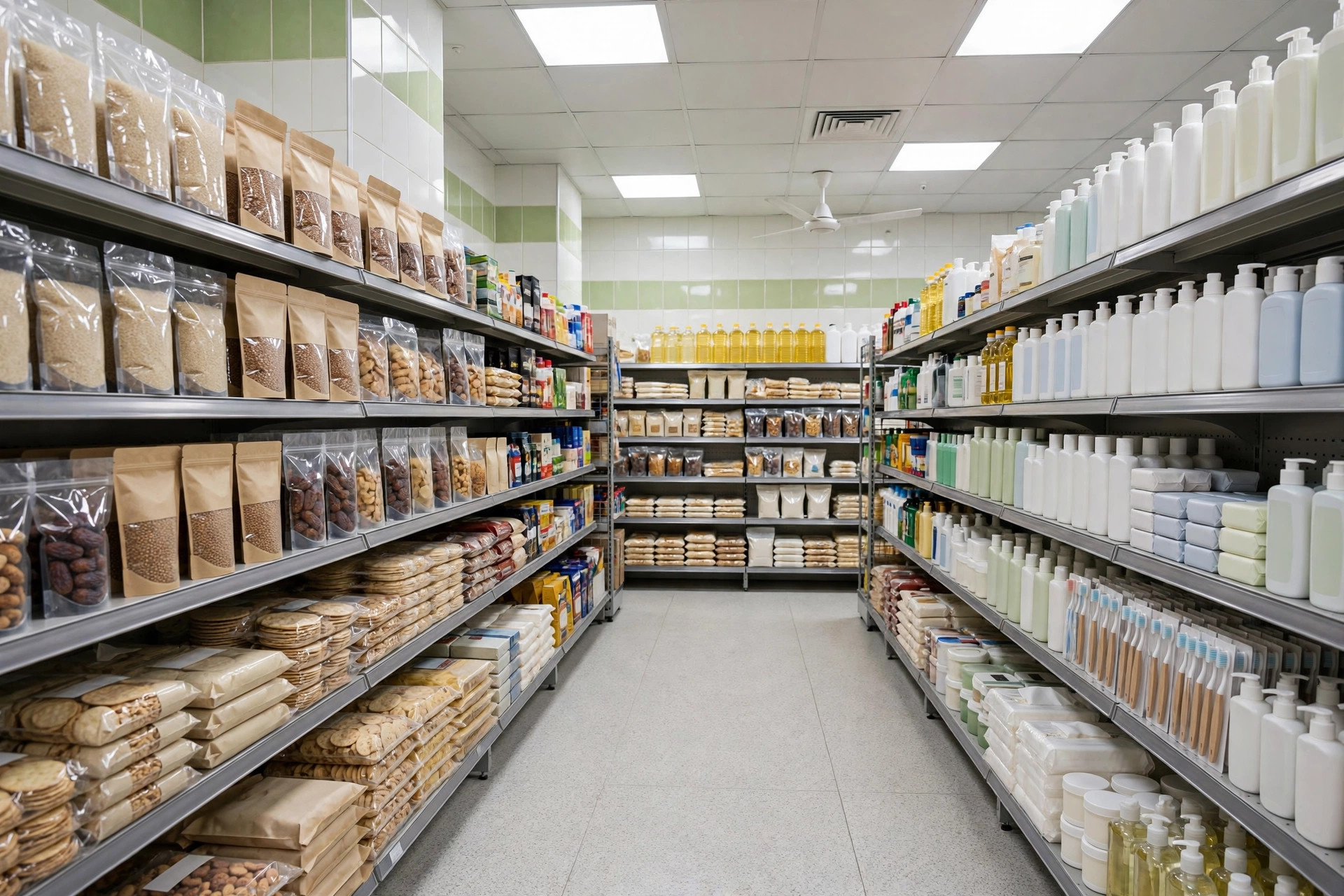
KARACHI: Open any kitchen cupboard or bathroom shelf in Pakistan and you are looking at the products of listed companies — tea and milk, biscuits and ice cream, soap, shampoo and washing powder, cooking oil and baby food. Food and personal care is the sector investors meet daily as consumers, which creates a dangerous illusion of understanding: liking a brand is not the same as understanding the business that sells it. On the Pakistan Stock Exchange, these companies — local subsidiaries of global consumer groups alongside Pakistani-owned food businesses — are prized for a quality most sectors lack: demand that persists through recessions, because people keep eating, washing and feeding their children when times are hard. But persistence is not immunity. When inflation surges, as it periodically does in Pakistan, these companies face a three-way squeeze: raw materials priced in dollars, consumers trading down to cheaper options, and retailers and distributors squeezed for cash. This guide explains how consumer companies make money, what pricing power really means in practice, how inflation tests it, and how to read their results like an analyst rather than a shopper.
How a consumer company makes money
The model looks simple: buy commodities and ingredients — milk, tea, wheat, sugar, edible oils, surfactants and packaging — manufacture branded products at scale, distribute them to hundreds of thousands of shops, and sell each unit at a price above its full cost. The magic is in the layers between. A brand is a promise that reduces the shopper's risk, and a trusted brand can charge more than an unknown one for a physically similar product. Distribution is a physical achievement: cold chains for ice cream and chilled products, vans and distributors reaching small neighbourhood shops (kiryana stores) as well as modern supermarkets, and, increasingly, e-commerce and quick-commerce channels in the big cities. Advertising and promotion sustain the brand; trade discounts and credit terms sustain the shelf space. The listed company that does all of this well converts a commodity input into a branded good with a repeatable margin — the exact transformation that commodity producers in chemicals or steel cannot achieve, because their buyers compare prices by the tonne.
Portfolio shape matters. A company concentrated in one category — say, tea, or ice cream — rides that category's fashion and input costs; a diversified group spreads across food, beverages, home care and personal care, smoothing the whole. Categories differ in character: staples such as milk, flour-based products and detergents are high-frequency and price-sensitive; discretionary treats such as ice cream, chocolates and premium personal care are the first casualties when household budgets tighten, and the first beneficiaries when real incomes recover. Several listed companies are subsidiaries of multinationals, which brings global brands, technology and governance — and royalty and technical-fee payments to parents, and dividend flows abroad, all disclosed in the accounts. Pakistani-owned food companies, including large dairy, snacks and packaged-food businesses, compete with local knowledge, nimbler pricing and deep rural distribution. Both models can work; read each company inside its own model, as with pharmaceutical subsidiaries versus local champions.
Pricing power: the real test, taken during inflation
Pricing power is the ability to raise prices without losing so much volume that profit falls. It sounds like a slogan; in practice it is a set of small, hard mechanics. The first is pack architecture: rather than raising the headline price of a standard pack, companies adjust grammage and introduce price-point packs — the small sachet or mini-pack sold at a psychologically fixed coin price — which lets them manage the price per gram while keeping an affordable entry point for cash-strapped shoppers. Pakistan's famous sachet economy, in shampoo, detergent and more, was born of exactly this logic: the unit is tiny, the price point is stable, the margin per gram is defended, and low-income consumers gain access to brands they could not buy in bottles. The second mechanic is mix: persuading some consumers toward premium variants within the brand lifts average realisation even when headline prices barely move. The third is brand trust itself, which matters most precisely when budgets are tight — a family cutting spending still hesitates to gamble on an unknown brand for baby food or milk.
Inflation attacks from the cost side simultaneously. Edible oils, milk powder, tea, sugar and packaging are commodity-priced, many of them imported or dollar-linked, so a weak rupee and a global commodity spike arrive together — the same pincer that squeezes spinners from the other direction. The company's defence is the sequence: cost savings and grammage adjustments first, price increases in steps, promotions trimmed — each move calibrated against competitors, because the first brand to raise prices alone donates shelf share to rivals. Volume usually dips after sharp price rises, then recovers as wages and remittances catch up and consumers re-adjust; the shape of that dip and recovery, visible in quarterly volume commentary, is the truest report card on pricing power. A company that repeatedly grows volume at stable margins through an inflationary episode is demonstrating something real; a company that holds margin only by raising prices into collapsing volume is borrowing from its own future.
The shopper's side: downtrading, incomes and occasions
Demand in this sector is steady in aggregate and restless in detail. When inflation outpaces incomes, shoppers downtrade: from branded to unbranded staples (loose milk, loose flour, open-market oil), from large packs to small ones, from premium to economy tiers, and from treats to essentials. Rural demand follows the farm economy — harvest incomes, remittances from family abroad — while urban demand follows salaries and employment. Ramadan and Eid seasons reshape monthly patterns for food categories; summer lifts ice cream and beverages; winter lifts tea and soups. None of this volatility changes the sector's defensive core — total calories and basic hygiene are not optional — but it shuffles share between brands, tiers and the formal versus informal market. That last contest is structural: a large share of Pakistan's food consumption still flows through unbranded, informal channels, and every shift from loose to packaged is long-run volume growth for listed companies, paid for by the trust, safety and convenience that packaged brands offer. Health and food-safety scares, which periodically surface in public debate, tend in the long run to accelerate that shift toward documented, branded supply — while punishing, severely and rightly, any individual company whose own standards fail.
Reading a consumer company's results
The income statement of a consumer company rewards a particular reading order. Revenue first — but split, mentally, into price, mix and volume: growth composed mostly of price increases during high inflation is maintenance, not expansion, and good managements say so in their commentary. Gross margin second, read against the commodity cycle of the period — milk, oils, tea and sugar prices, and the exchange rate; margin defended during a cost spike is evidence of pricing power, margin expanded during a cost collapse may be arithmetic rather than brilliance. Advertising and distribution expenses third: consumer companies must keep spending on brands through downturns, and a company that protects this year's profit by starving its brands is quietly selling next year's share. Working capital fourth — distributors and modern-trade chains take credit, inventory of imported inputs must be financed, and at high policy rates the finance cost of the pipeline is real. Finally, cash conversion: the best consumer franchises convert profit into operating cash reliably, because their products sell for cash daily while they pay suppliers on terms — the famous negative-working-capital rhythm of strong consumer businesses, visible in the statements of the best-run listed names.
An illustrative example, using invented figures: a detergent brand sells a pack for Rs 200. Input and packaging costs rise by fifteen per cent in an inflationary year. The company shrinks the pack slightly, holds the Rs 200 price point, launches a premium variant at Rs 260, and trims promotional spending. Revenue per pack is defended, margin per gram improves, and volume falls only slightly because the price point never visibly changed. Whether you applaud the ingenuity or note the smaller pack, the financial lesson is the same: in consumer goods, the price you see is not the price that matters — price per gram, per wash, per serving is where the economics actually live, and results should be read at that resolution.
Risks: commodities, currency and trust
The standing risks are plain. Commodity spikes that outpace the company's ability to adjust packs and prices compress margins for quarters at a time. Currency depreciation raises imported input costs and, for subsidiaries, the rupee cost of royalties. Consumer downtrading during income squeezes shifts volume to economy tiers and informal supply. Regulatory and tax measures — sales-tax structures on packaged foods, labelling and standards enforcement — change category economics and should be verified in current official sources when they matter. And trust risk is absolute: a food-safety failure can destroy in weeks a brand built over decades, which is why quality systems, traceability and honest recall behaviour are investment-relevant facts, not public-relations garnish.
Set against those risks is the sector's long runway: a large, young population, urbanisation, rising female participation in shopping decisions and the workforce, modern retail and e-commerce growth, and the continuing formalisation of food and hygiene spending all push in the listed companies' favour over time. This article is educational content, not financial advice. In a market of cyclical heavyweights — cement, steel, autos — the consumer sector is where an investor learns the opposite discipline: not timing a cycle, but judging whether a franchise's pricing power and cash discipline are compounding quietly, year after unglamorous year. For the sharpest contrast in this series, compare these brand-driven margins with insurance, where the product is a promise and the "inventory" is risk itself.
Dairy, the hardest category of all
One category deserves its own paragraph because it teaches the whole sector's economics in concentrated form: packaged milk. Pakistan is among the world's large milk producers, yet the overwhelming share of milk is sold loose through informal channels — the neighbourhood milkman and the open shop — while packaged UHT and pasteurised milk, sold by listed and large private companies, holds a minority share. The packaged player's costs are unforgiving: milk must be collected daily from thousands of farmers through village collection centres, chilled immediately, transported, processed and distributed nationally, all against a competitor — the loose-milk seller — who carries none of those costs and pays no comparable taxes or packaging expense. Packaged milk's selling proposition is safety, consistency and convenience, and its demand grows with urbanisation, female employment, and public concern over adulteration of loose supply, which periodically and rightly alarms consumers. But the price gap against loose milk is structural, and every inflationary episode widens shoppers' temptation to trade back down. When you read a dairy company's results, you are reading the frontier of Pakistan's food formalisation itself: volumes growing from a small base, margins perpetually negotiated against an informal rival, and marketing that must sell trust before it can sell taste. Progress is real but slow, and investors who expect packaged shares of consumption to converge quickly to rich-country levels will spend years being disappointed by a trend that is, in fact, working — just at the pace of fridges, incomes and trust, not of quarterly targets.
A note on channels completes the picture, because where products are sold is changing under the sector's feet. The neighbourhood kiryana store remains the backbone of distribution, and the distributor networks that serve it — with their vans, credit cycles and local knowledge — are among the most durable assets a consumer company owns. Layered on top, modern trade (supermarkets and hypermarkets) concentrates urban volume and bargaining power, demanding listings, promotions and longer credit. Quick-commerce and online grocery, still small in national terms, are growing fastest exactly where incomes and smartphones are densest, and they reward different skills: availability, search visibility and small-pack economics. A company's results increasingly reflect its fluency across all three channels at once; commentary that separates modern-trade or e-commerce growth is worth reading closely, because channel mix shifts margins even when total volume stands still.
Key takeaway: consumer companies turn commodities into brands and brands into pricing power — judge them on volume held through inflation, margin defended per gram, and cash conversion, not on whether you personally like the product.