KARACHI: Open a medicine cabinet in Pakistan and there is a fair chance something inside it came from Searle. The Searle Company Limited — SEARL on the exchange — is one of Pakistan's leading pharmaceutical companies, selling prescription medicines across cardiology, pain management, women's health, respiratory care and a dozen other therapy areas, alongside consumer health products. Its corporate story runs in two acts. In the first, Searle was the Pakistani subsidiary of an American drug company, a respected but modest multinational outpost. In the second, under the ownership of Karachi's IBL Group, it expanded aggressively — by acquisition, by brand-building and by sheer sales-force energy — into a flagship of Pakistan's listed pharmaceutical sector. Both acts are written into the company that trades today.
What Searle sells
Searle's business is branded pharmaceuticals. It manufactures and markets prescription medicines — largely branded generics and licensed products — in therapeutic areas that its own reporting highlights: cardiovascular medicine, pain management, gynaecology and obstetrics, cough and respiratory products, anaemia, pulmonology, neurology, paediatrics and anti-infectives among them. Its long-standing brands include names generations of Pakistani doctors have prescribed, such as Aldactone and Lomotil from the original American portfolio, and Hydryllin in cough and allergy care. Alongside prescription products, the group sells consumer and nutritional items — the company historically also made a low-calorie sweetener — and manufactures for other companies from its plants.
The company's own materials organise those brands by the shelf they sit on, which is a useful map of the portfolio. Hydryllin leads in cough care; Nuberol is its muscle relaxant; Peditral is an oral rehydration product; Spiromide, Extor and Byscard sit in cardiovascular care; Tramal and Rotec in analgesia; Gravinate, Selanz and Lomotil in gastrointestinal care; Venofer in anaemia; and Cosopt and Trusopt in eye care. A portfolio spread that way means no single therapy area, and no single brand, carries the whole company.
The structure around the listed company matters. Searle sits at the head of a small pharmaceutical group: wholly owned subsidiaries include Searle Laboratories, Searle Pharmaceuticals and Searle Biosciences, while IBL HealthCare Limited — itself listed, and formerly known as OBS Pakistan — is a subsidiary in which Searle holds a major stake, and Nextar Pharmaceuticals sits within the wider fold. Understanding SEARL therefore means reading consolidated accounts: factories, brands and sales teams spread across several legal entities, all answering to the same group strategy. Our sector guide to pharmaceutical stocks on the PSX explains how this group structure compares with the multinational and local rivals around it.
1888–1993: an American subsidiary in Karachi
The name on the door is American. G.D. Searle & Co. was founded in the United States in 1888 by Gideon D. Searle, and became a substantial research-based drug company. Its Pakistani arm was incorporated on 5 October 1965 as a private limited company, a subsidiary of the American parent, importing and then manufacturing the parent's products for the local market from Karachi. For decades that was the model: a quality-focused multinational subsidiary, respected by doctors, operating in a protected market at a comfortable scale.
The American parent left a research legacy that still explains parts of the Pakistani portfolio. Founded by Gideon Daniel Searle in Omaha, Nebraska, in 1888, G.D. Searle incorporated in 1908 and settled its headquarters in Skokie, Illinois, in 1941. In 1960 it released Enovid, the first commercial oral contraceptive — one root of the women's-health strength the Pakistani company still trades on. Searle also developed Lomotil, the antidiarrhoeal medicine that remains in the local range, led the push for approval of the artificial sweetener aspartame, sold as NutraSweet, and, through its research arm in the 1990s, developed celecoxib, the first selective COX-2 inhibitor approved by the US Food and Drug Administration, at the end of 1998. The low-calorie sweetener mentioned in the Pakistani company's own description of its business is a direct descendant of that American research era.
Two changes set up the modern company. In November 1993 Searle Pakistan was converted into a public limited company and listed, bringing public shareholders into what had been a wholly owned subsidiary. And globally, the American parent's own corporate journey — G.D. Searle passed through Monsanto's ownership and its pharmaceutical business was ultimately absorbed into Pfizer's world — loosened the old subsidiary logic across many markets, leaving local operations to be sold, merged or taken over by domestic owners. Pakistan's industry followed that global pattern: through the 2000s, ownership of several multinational subsidiaries passed to Pakistani groups with local knowledge and local ambitions. Searle's turn came with the IBL Group.
The IBL era: a flagship is built
IBL — International Brands (Private) Limited — is a Karachi-based group with interests across pharmaceuticals, consumer goods, distribution and related businesses. IBL became Searle's majority shareholder, holding in recent disclosures a stake in the mid-to-high fifty per cent range, and Searle is described in its own materials as an IBL Group company and a subsidiary of International Brands. Under IBL's ownership the company's tempo changed. Where the multinational subsidiary had grown steadily, the IBL-era Searle grew by acquisition and portfolio expansion: buying brands and businesses, adding subsidiaries, entering new therapy areas, building export sales through a dedicated global business division, and investing in its manufacturing sites in Karachi and Lahore.
The standout transaction of the era was the group's move on OBS Pakistan, another long-established pharmaceutical business with multinational roots: the OBS business came into the fold and was reorganised as IBL HealthCare, adding manufacturing capacity, brands and a second listed vehicle to the group. Acquisitions of this kind are the standard route to scale in Pakistani pharma, where launching a brand from zero takes years of doctor relationships, and buying one buys the relationships with it. Searle's own corporate briefings chart the result in deliberately simple terms — a business whose turnover multiplied several-fold within a decade of the ownership change — but the underlying drivers are the structural ones described in the next section.
How a Pakistani pharma company makes money
The economics are distinctive, and often misunderstood. A company like Searle does not, in the main, sell to patients: it sells to pharmacies and distributors, on brands prescribed by doctors. Revenue is therefore built by a medical sales force — hundreds of representatives visiting doctors, hospitals and pharmacies — whose job is to earn prescriptions for Searle's brand against several rival brands of the same molecule. Manufacturing quality, reliable supply and brand trust built over years are the moat; the daily contest is for the prescription pad.
Prices, unusually for a consumer-facing industry, are regulated. The Drug Regulatory Authority of Pakistan (DRAP) approves maximum prices for medicines, with mechanisms for hardship increases and adjustments that companies lobby over constantly. That single fact shapes the whole sector's finances: when the rupee falls or imported raw material (active pharmaceutical ingredients are largely imported, much of it from China and India) becomes dearer, a pharma company cannot simply reprice its shelf — it must apply, wait, absorb or economise. Gross margins therefore swing with exchange rates and regulatory decisions as much as with commercial skill. Companies respond by shifting mix towards newer, higher-value products, consumer items outside the tightest price controls, exports, and manufacturing for others.
Seen that way, Searle's group-building reads as margin strategy: more brands, more therapy areas, more channels, and the scale to negotiate raw-material purchases and run plants efficiently. The same logic explains why Pakistani pharma results are followed so closely at budget and pricing-policy time, a pattern new readers can explore further in our learn section.
Searle in Pakistani life
Pharmaceutical companies are invisible until they are indispensable. Searle's products sit inside the treatment of Pakistan's most common burdens — hypertension and heart disease, diabetes-adjacent care, maternal health, childhood illness, the coughs of a Karachi winter. Its field force is a daily presence in clinics from Karachi to Khyber, and its factories employ the pharmacists, chemists and engineers who form the skilled core of Pakistan's drug industry. In a country that imports most of its raw pharmaceutical ingredients but formulates most of its finished medicines at home, companies of Searle's scale are the reason a prescription written in a small town can usually be filled there the same day.
On the exchange, SEARL is one of the pharmaceutical sector's anchor names in the KSE-100, and its weight illustrates a broader point about the benchmark — explained in our guide to market capitalisation — that the index reflects not just banks and energy giants but the consumer economy of a country of more than 240 million medicine buyers.
Factories, quality and the generics contest
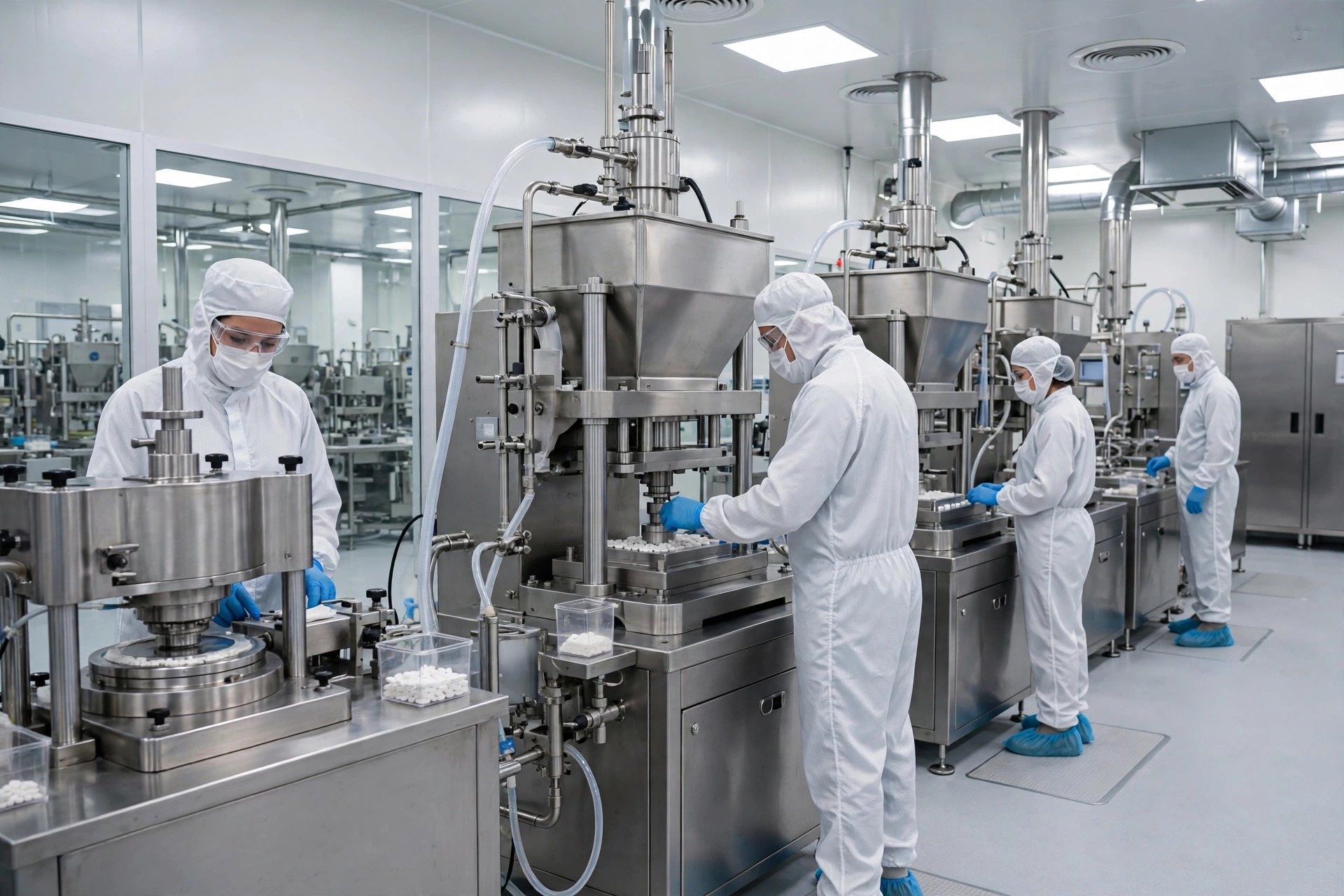
Behind the brands sits manufacturing. Searle operates production facilities in Karachi and Lahore that its materials describe as built to international standards, making tablets, capsules, liquids, injectables and other dosage forms for its own portfolio and, through group entities, for third parties. Plant quality is not back-office detail in pharmaceuticals: the regulator licenses premises as well as products, export customers audit factories before they buy, and a single quality failure — a contaminated batch, a failed inspection — can close lines and shred a brand's standing with doctors. The group's investment pattern, expanding and upgrading plants alongside acquisitions, reflects the arithmetic of the industry: brands win prescriptions, but only factories that pass audits and run without stock-outs can convert them into revenue.
The competitive arena is the branded-generics market. For most molecules off patent, a Pakistani doctor choosing a prescription weighs several local brands of identical chemistry — made by Searle, by the local arms of other multinationals, and by aggressive domestic manufacturers — on trust, habit, representative relationships and price. Market research subscriptions that track prescriptions are the industry's scoreboard, and Searle's corporate presentations dwell on its rankings by units and value within them: leadership positions in cardiovascular and pain, strength in women's health and respiratory care, and a portfolio of large individual brands each selling at a scale that would make a respectable company on its own. That portfolio depth is the practical fruit of the IBL strategy — acquire brands, feed them through a strong field force, extend their life with new combinations and pack sizes — applied year after year.
Exports and the consumer shelf
Two smaller engines deserve note because they point beyond the regulated domestic prescription market. Exports, run through the company's global business division, sell Searle products into markets across Asia, Africa and beyond: individually modest, collectively a dollar-earning hedge against rupee weakness and domestic price controls. Consumer healthcare — over-the-counter products and nutritionals sold on advertising and shelf presence rather than prescriptions — gives the group brands it can price and promote with fewer regulatory constraints, and binds the Searle name to households directly rather than through the doctor's pen. Neither engine yet rivals the prescription core, but both feature in how management describes the company's future, and both are watched for the margin mix they bring.
Because Searle sits inside a wider family-influenced group, related-party dealings deserve the same attention as operations: the listed company trades with IBL affiliates in distribution and other services, lends its balance sheet to group strategy through subsidiary investments, and pays dividends within a structure where the parent is also the controlling shareholder. None of this is unusual in Pakistan's market — most of its large listed companies are group flagships — but it raises the analytical standard: the consolidated cash flow statement, the schedule of related-party transactions, and the record of minority treatment across the parent's other ventures are as informative as any sales figure. The company's long presence in governance rankings and investor polls during its growth years is part of the record observers weigh against these structural questions.
Regulation frames even the company's daily operations. Beyond price approvals, DRAP licenses every product and plant, polices advertising to doctors and the public, and periodically reshapes the market with reference pricing and essential-medicines policies; quality failures elsewhere in the industry invite system-wide crackdowns that compliant manufacturers must also absorb. Searle's positioning — established brands, documented quality systems, a portfolio weighted towards chronic therapies where doctors value consistency — is in part a hedge against that environment: in a market where the cheapest generic wins the tender, the trusted brand wins the prescription, and Searle has spent sixty years arranging to be the latter.
What investors typically watch
Observers of Searle watch revenue growth by therapy area and the success of recently launched or acquired brands; gross margin, as the cleanest single read on pricing-versus-input-cost pressure; DRAP pricing decisions and the exchange rate, for the reasons above; the performance and integration of subsidiaries such as IBL HealthCare; export growth; and working capital, since distributors and hospitals in Pakistan pay slowly and receivables reveal stress early. They also watch group-level moves — further acquisitions are part of this company's established playbook, for better or worse.
For the avoidance of doubt: this profile is educational content about Searle's history and business model. It is not financial advice, and it expresses no view on the merits of SEARL shares.
Key takeaway: Searle began in 1965 as an American drugmaker's Pakistani subsidiary, listed in 1993, and became the IBL Group's pharmaceutical flagship — growing by brands, acquisitions and sales-force reach inside a price-regulated, import-dependent industry.