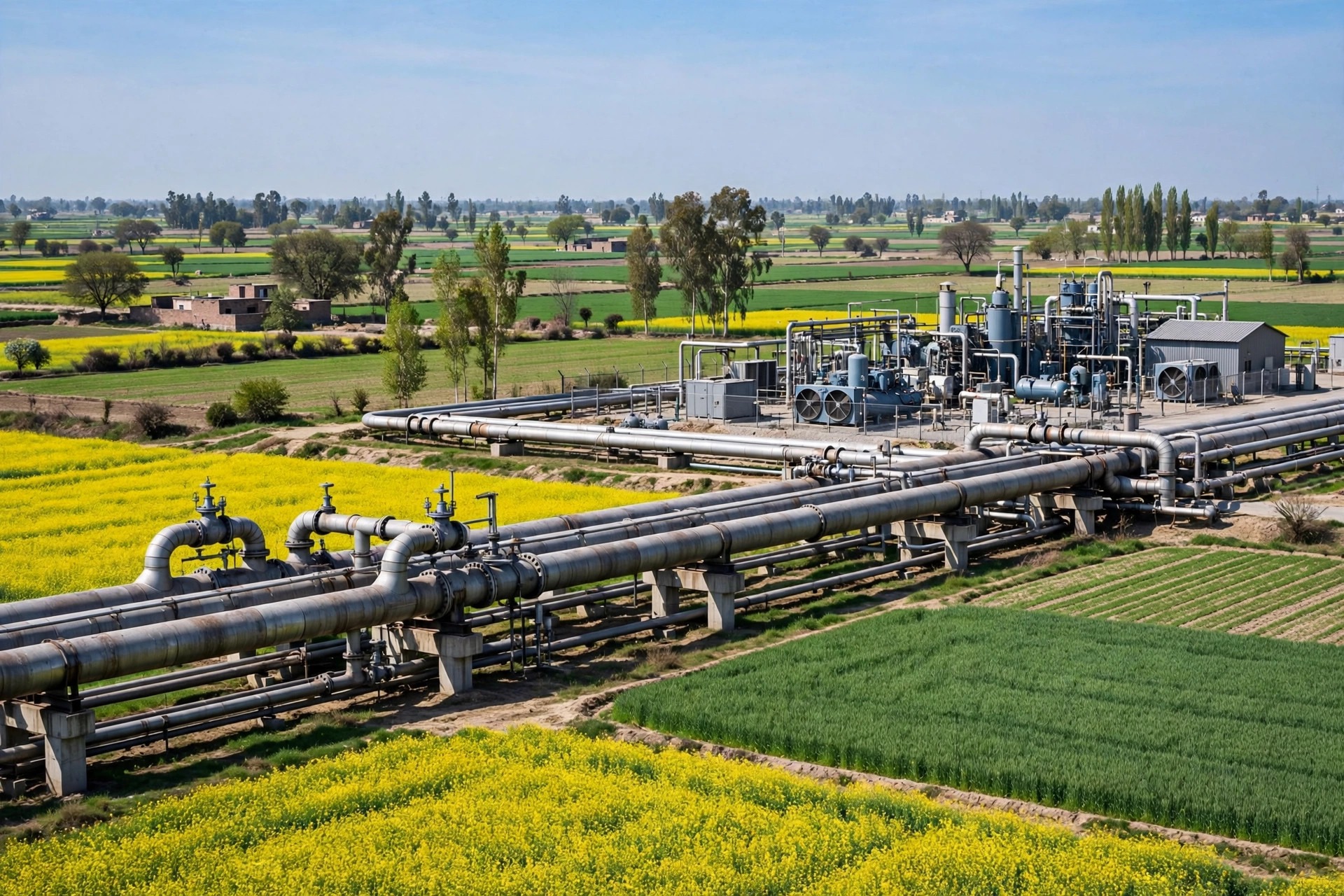
KARACHI: When a home in Lahore lights a stove, a factory in Faisalabad fires a boiler, or a power plant near Multan burns gas, the molecule usually arrived through the same invisible motorway: the pipeline network of Sui Northern Gas Pipelines Limited. SNGPL — traded as SNGP — is the integrated gas utility for northern and central Pakistan, transmitting natural gas from fields in the south and west across Punjab to Peshawar, and distributing it to millions of domestic, commercial and industrial customers in Punjab, Khyber Pakhtunkhwa, Islamabad and Azad Jammu & Kashmir. It owns almost no gas. Its assets are steel, compression and rights-of-way — and its earnings are set, in the main, by a regulator. Few listed companies are so essential, and few business models are so widely misunderstood.
What a gas utility actually does
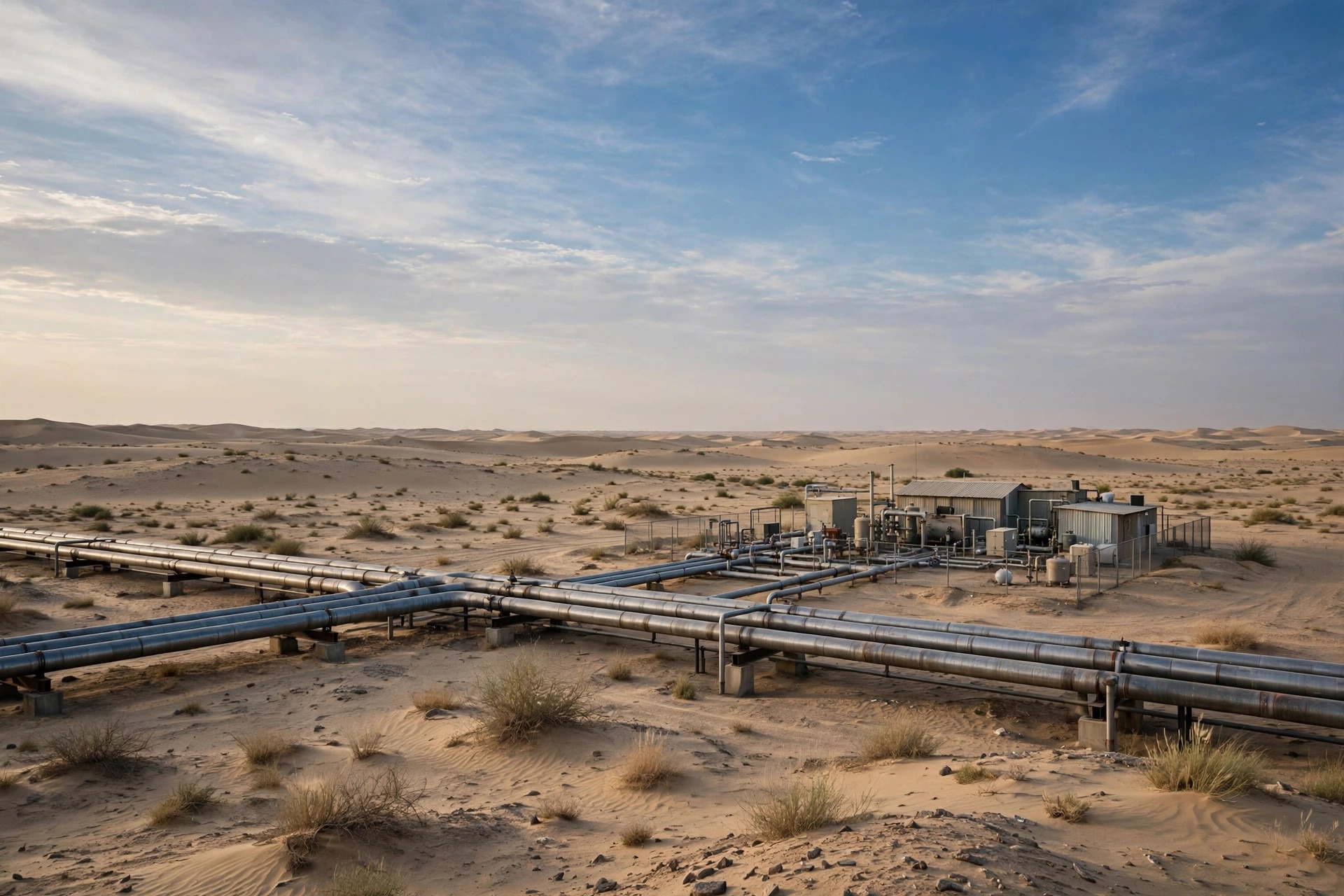
SNGPL performs three jobs in sequence. It purchases gas from producers — state explorers such as OGDC and Pakistan Petroleum, private and foreign producers, and, in recent years, regasified imported LNG entering the national system. It transmits that gas at high pressure through thousands of kilometres of large-diameter pipeline, using compressor stations to keep it moving from the Sui field region of Balochistan and other supply points up the spine of the country. And it distributes gas at lower pressure through a vastly longer web of smaller mains and service lines to individual homes, shops, factories, CNG stations, fertiliser plants and power stations, metering and billing each customer.
The company's headquarters is in Lahore, and its operations are run through regional offices covering its franchise territory. It also works as an engineering, procurement and construction contractor, designing and building pipelines for itself and occasionally for third parties — a sideline that uses the deepest pipeline-engineering bench in the country. Its southern counterpart, Sui Southern Gas, performs the same functions for Sindh and Balochistan; the two utilities between them operate the entire national gas grid. Our guides to oil marketing stocks and energy stocks on the PSX place SNGPL in the chain between the producers above it and the fuel retailers beside it.
1952–1964: Sui gas looks for a road north
The precondition for SNGPL was a discovery. In 1952 Pakistan Petroleum discovered the Sui gas field in Balochistan — a giant field, the largest in the country's history, which began production in 1955. Gas at Sui was worthless without a way to reach customers, and the first great pipeline, built by Sui Gas Transmission Company in the mid-1950s, ran south to Karachi. The industrial cities of the north — Multan, Lahore, Faisalabad, Rawalpindi — were the obvious second market, but serving them meant building a separate transmission system hundreds of miles across the country.
Sui Northern Gas Pipelines Limited was incorporated as a private limited company on 17 June 1963 to do exactly that, and converted into a public limited company in January 1964, listing on the stock exchange the same year. It began with inherited infrastructure: from the Pakistan Industrial Development Corporation it took over the existing Sui–Multan transmission system — 217 miles of 16-inch pipeline and 80 miles of 10-inch line — and from the Attock Oil Company the Dhulian–Rawalpindi–Wah system, 82 miles of smaller pipe carrying gas from the Dhulian field near the Potohar. Commercial operations started modestly, selling an average of about 47 million cubic feet of gas a day across the Multan and Rawalpindi regions to a total of just 67 consumers. The entire modern network — today serving millions of connections — grew from that seed.
Six decades of laying pipe
The company's subsequent history is one of continuous physical expansion, tracking Pakistan's urbanisation and industrial geography. Transmission lines were looped and extended until the system ran unbroken from Sui to Peshawar; compressor stations multiplied to move rising volumes; distribution networks spread from the first industrial towns to thousands of towns and villages, and domestic connections — rationed in later years by moratoria when gas ran short — became a defining amenity of the Punjabi middle-class home. Source fields multiplied too: alongside Sui came supplies from other fields in Sindh, Punjab and Khyber Pakhtunkhwa, and in the 2010s imported LNG, regasified at Karachi terminals and swapped into the northern system, added a new, costlier supply stream that reshaped the economics of both gas utilities.
Ownership followed the classic Pakistani utility pattern: the Government of Pakistan is the majority shareholder, directly and through state entities, with the balance in public and institutional hands on the exchange. Management is professional but appointments and policy run through the petroleum ministry, and the company's obligations — whom to connect, whom to prioritise when gas is short, what to charge — are set by government policy and by the Oil and Gas Regulatory Authority, OGRA, which licenses gas utilities and determines their allowed revenue. SNGPL is thus best understood as a regulated state-controlled utility that happens to have minority public shareholders, rather than as an ordinary competitive business.
How SNGPL makes money: the regulated return
This is the part of the model that matters most, and it differs fundamentally from the producers it buys from. SNGPL does not profit from the price of gas as a commodity in the way an explorer does. Under OGRA's framework, the utility is entitled to earn a regulated return on its asset base — broadly, its pipeline network and associated facilities, valued under the regulator's rules — together with recovery of its operating costs through the prices it charges. Gas purchase cost is, in principle, a pass-through: the company buys at prices set for each field and sells at consumer prices set by the government on OGRA's advice.
Two frictions disturb that tidy design. The first is UFG — unaccounted-for gas: the difference between the gas the company buys and the gas it can bill for, lost to leaks, theft, metering error and unbilled consumption. OGRA allows only a benchmark level of UFG in the tariff; losses above the benchmark come out of the company's own earnings. In a network of this age, length and social complexity, UFG is not a footnote — it is one of the largest single determinants of reported profit, and the company runs continuous programmes of leak repair, metering upgrades and anti-theft enforcement against it. The second friction is price-setting delay: consumer gas prices are politically sensitive, and when notified prices lag behind costs — as they have for long stretches — the utility absorbs the difference, sometimes for years, until adjustments or government support restore it. Profit at SNGPL is therefore best read as an outcome of regulation administered over time, not of any single year's trading.
Newer pressures layer on top: the higher cost of RLNG in the supply mix, gas shortages in winter that force load management between households, industry, fertiliser and power, and the arrears that circulate through the whole energy sector — the circular-debt web in which utilities, generators and fuel suppliers owe one another. Our profile of Sui Southern Gas tells the parallel southern story, and the production end of the molecule's journey is covered in our profile of Pakistan Petroleum, the operator of the Sui field itself.
SNGPL in everyday life
It is difficult to overstate the utility's role in northern Pakistan's domestic economy. Piped gas historically heated homes, cooked food and heated water at prices far below alternatives, shaping everything from housing design to the economics of the tandoor and the textile mill. Industry in Punjab — textiles above all — was built on the assumption of gas for processing and captive power. When winter demand peaks and supply falls short, the resulting load-shedding of gas is a political event in a way electricity cuts no longer surprise anyone with; few companies' operational constraints translate so directly into public mood. The network is also a major employer of engineers and technicians, and its compressor stations and regional offices dot the map of two provinces.
As a very large, state-controlled and widely held company, SNGP carries meaningful weight in the KSE-100 — the mechanics of which are set out in how the KSE-100 is calculated.
The winter problem and the allocation of scarcity
Every year, SNGPL's year is decided in about ninety days. Gas demand in its franchise peaks violently in winter, when households across Punjab and Khyber Pakhtunkhwa turn on heaters and geysers that stand idle all summer, while supply — from depleting domestic fields and fixed LNG arrangements — cannot flex to match. The result is an annual allocation crisis administered by the utility: government priority orders rank domestic consumers first, and industry, fertiliser plants, CNG stations and captive power users face curtailment in a published order of sacrifice. Factories plan production around gas holidays; households in tail-end localities watch pressure fall at cooking hours; and the utility absorbs public anger for decisions substantially made elsewhere.
Scarcity also explains two of the system's chronic debates. New domestic connections have repeatedly been frozen by moratorium when supply tightened, stranding applicants and pushing households to LPG and electricity. And the price structure itself — domestic gas historically priced far below the cost of imported alternatives — encourages the winter burn that causes the shortage, a distortion economists have flagged for decades and governments have only recently and partially corrected through tariff rebalancing. For the investor, the practical point is that SNGPL's volumes are not a simple demand story: they are an allocation outcome, set by policy, weather and the national supply balance, in which a cold winter can simultaneously raise throughput and worsen losses and public pressure.
An ageing network and the investment question
Much of SNGPL's distribution web was laid for a smaller, poorer Pakistan. Rehabilitation — replacing leaking steel with modern pipe, upgrading metering from estimated billing to accurate measurement, sectionalising networks so theft and leakage can be isolated — is a multi-decade capital programme whose returns appear as UFG reduction and as growth in the regulated asset base on which OGRA calculates allowed earnings. The tension is funding: a utility whose tariffs have lagged costs for long periods must finance investment from cash flow squeezed by the very losses the investment would cure, supplemented by borrowing against future determinations. Watchers of the company therefore track the capital programme's pace and OGRA's treatment of it as carefully as the profit line itself.
The company's engineering arm is a quiet strategic asset. Decades of building high-pressure pipelines for itself have given SNGPL design, procurement and construction capabilities that few Pakistani organisations can match, and it has executed pipeline projects for third parties as an EPC contractor. That competence matters beyond the sideline revenue: when the state contemplates new cross-country transmission lines or LNG evacuation projects, the realistic builder of first resort is usually one of the two utilities — a fact that anchors SNGPL's relevance in any future redesign of the gas market, however the ownership and unbundling debates eventually settle.
What investors typically watch
Followers of SNGPL watch OGRA's revenue-requirement determinations and tariff notifications first of all: the allowed return, the UFG benchmark and the speed of price adjustments frame the earnings outlook more than any commercial variable. They watch actual UFG performance against the benchmark, capital expenditure on network expansion and rehabilitation (which grows the regulated asset base), gas supply allocations between customer classes, RLNG volumes and their pricing treatment, and receivables — both what consumers and industries owe the company and what settlement of sector arrears might release. Dividend capacity, finally, is read through cash rather than accounting profit, as with every company in the circular-debt chain.
This profile is educational content explaining how SNGPL works and where it came from. It is not financial advice, and it offers no recommendation on SNGP shares.
Key takeaway: SNGPL is a regulated pipeline utility, not a gas producer: founded in 1963 to carry Sui gas north, it earns a regulator-set return on its network across Punjab and Khyber Pakhtunkhwa, with unaccounted-for gas losses and tariff delays the perennial swing factors.