KARACHI: Ask a Pakistani to name a shoe brand and one answer comes back more than any other: Servis. Behind the brand stands Service Industries Limited — SRVI — a company founded in Lahore in 1941 by three college friends, and still family-run in its third generation. Servis is one of Pakistan's great manufacturing stories: a business that began with handbags and sports goods, supplied boots to an army during the Second World War, built Pakistan's first organised shoe factory in Gujrat, passed the mighty Bata in domestic shoe sales, and then reinvented itself twice — as the country's largest footwear exporter, making shoes for global brands, and as a tyre manufacturer building truck radials with a Chinese joint-venture partner. It is classified on the exchange under leather and tanneries, but that label captures perhaps a third of what the company actually is.
What Service Industries does today
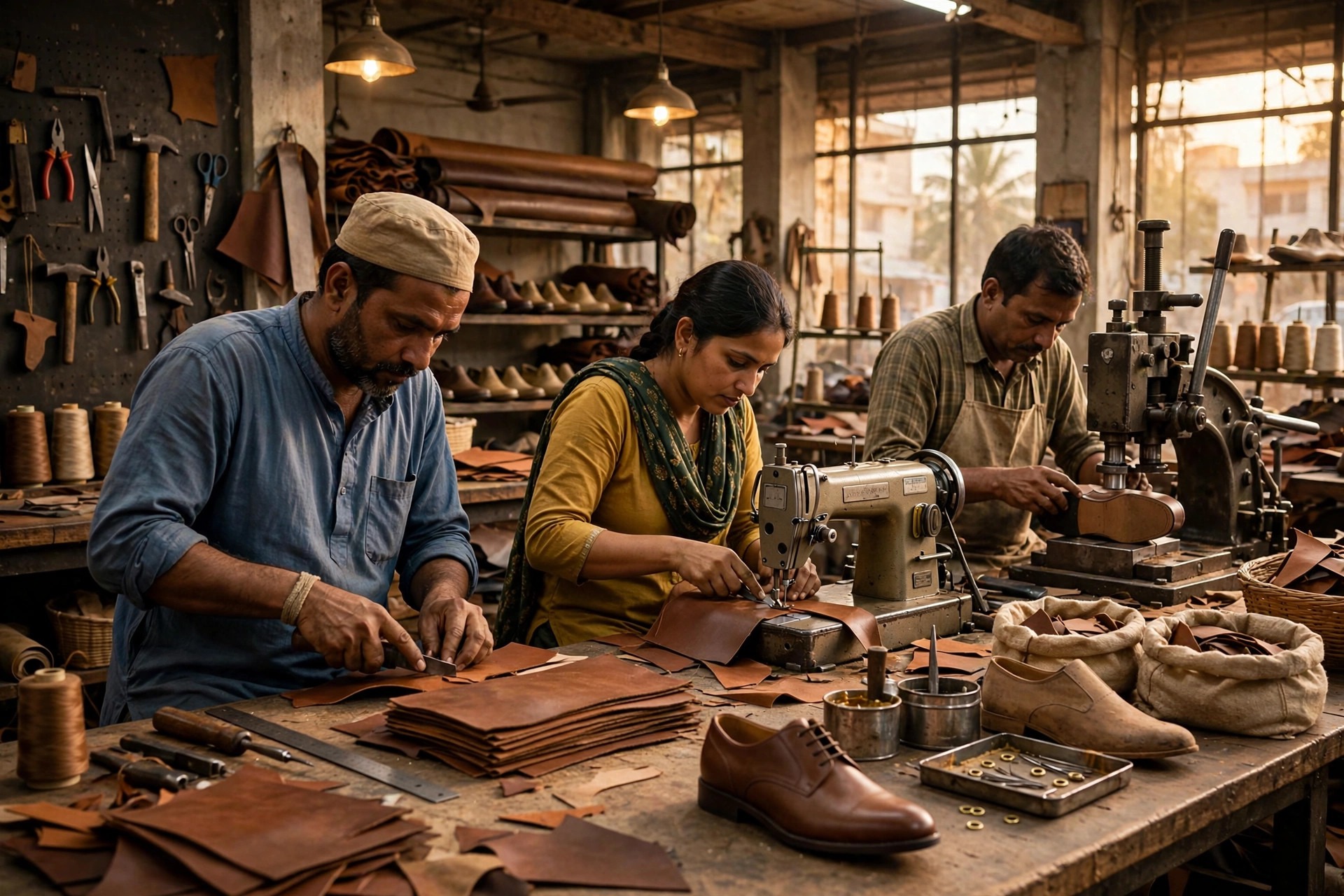
The modern group works in two great divisions. Footwear is the historic core, and it now runs in two directions at once. Domestically, Servis shoes are sold through one of Pakistan's largest footwear retail networks — historically through its Service Sales Company arm under formats including Shoe Planet — under brands segmented by wallet and occasion, from school shoes and chappals to the athleisure labels of its newer ranges. For export, its subsidiary Service Global Footwear Limited — separately listed after a public offering in the early 2020s — manufactures shoes in Gujrat for international brands, exporting the overwhelming bulk of its production to Europe and beyond.
Tyres are the second division. Servis Tyres has long made tyres and tubes for bicycles, motorcycles, rickshaws and agricultural and light vehicles — a natural adjacency for a rubber-and-leather manufacturer serving Pakistan's two- and three-wheeler nation. The step-change is Service Long March Tyres, a joint venture with China's Chaoyang Long March company, in which Service Industries holds a significant minority stake: it manufactures all-steel radial tyres for trucks, buses and off-road vehicles — a product Pakistan previously imported almost entirely — at a purpose-built plant that has been expanding since production began. Around these two divisions sit smaller interests, including a tannery heritage, retail and investment arms. Our guide to automobile stocks on the PSX explains the tyre side's place in the wider vehicle economy, from rickshaws to truck fleets.
1941–1959: three friends, an army contract, and a move to Gujrat
The founding is the kind of story business schools preserve. In 1941, three young college friends — Chaudhry Nazar Muhammad and Chaudhry Muhammad Hussain, both from the Gujrat district, and Chaudhry Muhammad Saeed, from Gujranwala — started a small business in Lahore making handbags and sports goods. The Second World War transformed it: Service supplied boots to the British Indian Army, learning volume manufacturing under military specifications. Partition in 1947 disrupted its markets and debtors, as it did every Lahore business, but the young Pakistan Army's boot orders from 1950 put the firm on a durable footing.
The formal milestones followed in quick succession. In 1953 the founders established Halal Tanneries, securing their leather supply, and in 1954 they installed a shoe-manufacturing plant in Lahore's Gulberg industrial area. In 1959 the company went public — and in the same period relocated its factory to Gujrat, the founders' home district, where it opened what is described in company histories as Pakistan's first organised shoe factory. The Gujrat move proved inspired: the district had a deep tradition of craft shoemaking, a workforce that understood the product in its hands, and land and community roots that let the plant grow for decades. Gujrat remains the group's manufacturing heartland today.
1960s–2000s: diversification and the Bata contest
From the 1960s to the 1980s Service diversified steadily: into textiles, into motorcycle tyres, even into gas masks — the eclectic portfolio of a manufacturing group in a protected, import-substituting economy. The decisive commercial move came in retail. In 1965 the company formed a retail subsidiary, Service Sales Company, and opened Servis stores pointedly near those of its great rival, Bata Pakistan — then the unchallenged king of Pakistani footwear. The contest ran for decades, store against store, school-shoe season against school-shoe season. By 2007, by the company's account, its retail arm had surpassed Bata in sales, and by 2010 Service had grown to more than 450 retail outlets alongside a rising export business.
Governance stayed in the family. Ownership passed to the founders' descendants, and in 2011 Omar Saeed, a third-generation family member, became chief executive, with the wider Saeed family — Arif Saeed prominent among them — leading the group. Under this generation the retail estate was modernised with the Shoe Planet format, management professionalised, and the export and tyre strategies pushed to the front. The family's dual role — controlling shareholder and management — is the standard Pakistani group pattern, and the standard investor question that comes with it: whether minority shareholders' interests are protected by the board and by performance. SRVI's long record of dividends and expansion is the evidence its defenders cite.
Going global: export footwear and Chinese tyres
Two moves define the modern company. The first is export footwear. Service Global Footwear consolidated the group's export manufacturing — shoes made in Gujrat to the specifications, audits and delivery schedules of international fashion and footwear brands, names such as Zara and Caprice appearing in industry reporting of its customer base. Exporting at this level is a different discipline from domestic retail: margins are thinner, quality systems are audited by the customer, and orders swing with European consumer demand — but payment is in hard currency, which in Pakistan's perennial foreign-exchange scarcity is worth a great deal. The subsidiary's separate listing raised capital specifically to fund the second move.
The second move is Service Long March Tyres. In November 2019 Service Industries signed a joint venture with Chaoyang Long March, a Chinese tyre maker, and the venture company was incorporated in January 2020 to build Pakistan's capacity in all-steel truck and bus radial tyres. The logic was import substitution at industrial scale: Pakistan's freight runs on imported truck radials, and a local plant — Chinese technology, Servis's market knowledge and distribution — could serve fleets, replacement demand and eventually exports. The plant reached operation and, by the company's reporting, has run at high utilisation with expansion under way. Together, the two moves reposition SRVI: no longer simply a Gujrat shoe company with a tyre sideline, but a two-engine manufacturer whose growth engines face outward — to European shoe buyers and to the regional tyre trade.
How Service Industries makes money
Each engine has its own arithmetic. Domestic footwear retail earns a brand margin: design, manufacture at Gujrat cost, distribute nationally, and capture the spread between factory cost and the price a family pays for school shoes — against rent, retail staff and the fashion risk of unsold stock. Export footwear earns a manufacturing margin: thinner per pair, but earned in euros and dollars, on the buyer's designs, with volume and reliability the whole game. Tyres earn an industrial margin: rubber and other imported inputs, energy-intensive curing, and competition against imports — where the local maker's advantages are freight, availability, relationships with fleets and the tyre dealers of every highway town. Across all three, the rupee cuts both ways, cheapening export labour while raising imported input costs; energy prices and consumer demand in Pakistan and Europe do the rest. Background on how such diversified groups are valued sits on our learn hub, and the company's index membership follows the rules in our explainer on KSE-100 rebalancing.
Servis in Pakistani life
Servis is one of the few Pakistani brands that crosses every class line: its chappals and school shoes are bought in villages, its fashion labels in Lahore malls, its tyres fitted to the motorcycles and trucks that physically move the economy, and its Gujrat factories among the largest formal employers of their district. The founding values the annual reports still quote — humility, fairness and respect — are corporate boilerplate in most companies; in Servis's case they are attached to a genuinely unusual fact pattern, a partnership of friends that incorporated, professionalised and survived three generations without breaking up. That continuity, more than any single product, is what Pakistanis mean when they cite Servis as a home-grown success.
The brand house: from school shoes to Ndure
Servis's domestic armoury deserves a closer look, because it explains the company's resilience across income cycles. The range is deliberately laddered. At the foundation sit the volume staples — school shoes, sandals and chappals, and workhorse lines sold on durability at prices a schoolteacher's salary can carry — refreshed seasonally and anchored by the back-to-school and Eid peaks that structure Pakistani footwear retail. Above them sit comfort and leisure brands, women's and children's fashion labels, and the group's newer athleisure push under the Ndure brand, aimed at the sneaker culture of urban youth that global sportswear brands awakened but priced beyond most local wallets. Manufacturing depth is what makes the ladder possible: the same Gujrat complex that cuts export shoes for European brands can turn its quality systems to domestic designs, while the retail estate — hundreds of company-served outlets — gives the group shelf space competitors must rent from others.
The retail operation itself, long run through Service Sales Company and modernised under formats such as Shoe Planet, is a business within the business: site selection, seasonal buying, markdown discipline and franchise management against Bata, against the informal bazaar, and increasingly against online sellers. That Servis moved from challenger to the retailer to beat — overtaking Bata's sales in its own account of events — is less a single victory than a compounding of these operational habits over forty years.
The tyre division's older half is easy to overlook and wrong to ignore. Servis Tyres supplies the replacement and original-equipment markets for the vehicles Pakistan actually runs on: bicycles, motorcycles, auto-rickshaws, tractors and light commercial vehicles. These are high-unit, distribution-driven markets in which the Servis name — trusted from footwear — travels surprisingly well, and in which import competition arrives as cheap, uneven-quality product against which a warranted local brand defends share through thousands of small dealers. The division's cash generation through cycles funded much of the group's patience elsewhere, and its rubber-processing competence — compounds, moulding, curing — formed the technical platform on which the far more demanding all-steel radial venture with Long March was later built.
Gujrat itself is part of the story. The district's cluster of fan, pottery, furniture and footwear workshops made it one of Pakistan's artisanal manufacturing hubs long before industrial estates were fashionable, and Service Industries is its largest corporate citizen — the employer whose apprenticeships trained generations of local machinists and stitchers, and whose success demonstrated that a Gujrat firm could out-compete multinationals. That rootedness carries obligations the family visibly accepts, from local employment preference to philanthropy, and it gives the group a social licence that purely financial owners rarely enjoy.
What investors typically watch
Followers of SRVI separate the engines. For domestic footwear: retail sales momentum, same-store performance and the expansion or reformatting of the store network. For exports: order books from European buyers, capacity utilisation at Service Global Footwear, and the euro-rupee rate. For tyres: Servis Tyres' two-wheeler volumes, tied to motorcycle sales, and Service Long March's capacity additions, utilisation and export progress — plus rubber and crude-linked input prices across the tyre business. Group-level watchers add the usual Pakistani family-group questions: related-party transactions between the many subsidiaries, dividend policy, and how capital is allocated among three very different businesses competing for the same balance sheet.
This profile is educational content about Service Industries' history and model. It is not financial advice, and it makes no recommendation about SRVI shares.
Key takeaway: Service Industries grew from a 1941 Lahore partnership into Gujrat's shoe giant — out-selling Bata at home, exporting footwear to global brands, and building truck tyres with a Chinese partner — three manufacturing engines inside one family-run listed group.