KARACHI: Open a medicine cabinet in almost any Pakistani home and there is a fair chance something inside it passed through a factory in Landhi, Karachi. Abbott Laboratories (Pakistan) Limited — ABOT on the Pakistan Stock Exchange — has been incorporated in this country since 2 July 1948, less than a year after independence, and it remains one of the defining names of the local pharmaceutical industry: a manufacturer and importer of medicines, nutritional products, diagnostics and diabetes-care goods, and the Pakistani arm of the global Abbott healthcare group. It is also, for stock market purposes, one of the heavyweight names in the PSX pharmaceutical sector and a long-standing constituent of the KSE-100. This profile traces where the company came from, what it actually sells, how the money flows through a business like this, and what people who follow the stock usually watch.
Roots before and after 1948
The title of this profile speaks of roots in British India, and the distinction matters. Abbott as a global enterprise is an American healthcare company founded in the nineteenth century, and its products reached the subcontinent through the trading and distribution networks of the colonial era. The Pakistani company's own legal birthday, however, is precise and documented in its financial statements: it was incorporated in Pakistan on 2 July 1948. That date makes ABOT one of the oldest continuously operating pharmaceutical companies in the country — a business set up when Karachi was the capital of a brand-new state, when most medicines were imported, and when building local manufacturing was as much a nation-building act as a commercial one.
The company's registered office and manufacturing base sit opposite the Radio Pakistan Transmission Centre on Hyderabad Road, Landhi, in Karachi's industrial east — an address that has appeared in its accounts for decades. Two manufacturing facilities in Karachi anchor its production. From that base, the company grew alongside the city itself: as Karachi became Pakistan's commercial capital and its population multiplied, the demand for reliable, branded medicines, infant and adult nutrition, and hospital supplies grew with it. Abbott Pakistan expanded from a trading presence into local formulation and packaging, and eventually into the multi-segment healthcare business it reports today.
Listing and the modern shape of the company
Abbott Pakistan's own analyst materials record that it was listed as a public limited company in Pakistan in 1982, bringing public shareholders alongside the global parent. That structure — a listed local subsidiary of a multinational — is a common pattern among Pakistan's older pharmaceutical names, and it shapes the company's character in two ways. First, it plugs the local business into a global pipeline: research-based products, international brands, manufacturing standards and technology come from the wider Abbott group. Second, it means the local company's shares trade on the PSX and its results are scrutinised locally, while strategic control rests with the parent. When the KSE-100 is calculated, ABOT's size and liquidity have historically kept it in the conversation for index membership — a point worth understanding through our explainer on market capitalisation, since index weight follows the value of the shares available to trade, not simply the size of the underlying business.
Over the decades the company's range widened well beyond tablets and syrups. Its published segment reporting divides the business into Pharmaceuticals, Nutritional, Diagnostics and an "Others" segment covering diabetes care and general healthcare products. That spread — from prescription medicines to baby nutrition to laboratory testing equipment — makes Abbott Pakistan less a single-product drug maker than a small healthcare conglomerate in its own right, and it changes how its earnings behave compared with a pure generics manufacturer.
The pharmaceutical business: the core
The pharmaceutical segment is the heart of the company: the manufacture, import and marketing of pharmaceutical products registered with the Drug Regulatory Authority of Pakistan (DRAP). In plain terms, Abbott makes some medicines itself at Landhi, imports others from Abbott affiliates abroad, and sells both through the standard Pakistani distribution chain — distributors, wholesalers, pharmacies, hospitals and doctors who prescribe them.
Two features of this market matter for understanding the business. The first is that medicine prices in Pakistan are regulated. For most essential and many other drugs, the maximum price is set under a government pricing framework administered through DRAP, with adjustments governed by policy formulas rather than by what the market would bear. A pharmaceutical company's revenue per unit is therefore partly a political and regulatory variable — a fact of life for every company in the sector, multinational and local alike. The second is that demand for medicines is unusually steady. People do not stop needing antibiotics, pain relief or chronic-disease medication because the economy slows; volumes are driven by population, disease patterns and doctors' habits more than by consumer confidence. That steadiness is precisely why pharmaceutical shares are often described as "defensive" — the word describes demand, not a promise about any share price.
Nutrition, diagnostics and diabetes care
The nutritional segment imports and markets paediatric and medical nutrition — the category that includes Abbott's globally known Similac, PediaSure and Ensure families of products, alongside specialist medical nutrition and Glucerna-type products for people managing diabetes. Unlike prescription drugs, nutrition competes on supermarket and pharmacy shelves, on brand trust built with mothers, paediatricians and dietitians. Margins and growth here behave more like a consumer-goods business: brand strength matters, imported input costs matter, and the rupee's exchange rate matters a great deal, because much of this range is imported rather than made locally.
Diagnostics is a different kind of business again. Abbott supplies diagnostic equipment, molecular devices and testing kits to laboratories and hospitals — the analysers that sit behind blood tests in pathology labs across the country. Revenue in diagnostics mixes equipment placement with the recurring sale of reagents and consumables, and demand rises with the formalisation of healthcare: more hospitals, more labs, more testing per patient. The remaining segment — diabetes care products such as glucose monitoring, and general healthcare and consumer items — rounds out a portfolio that touches a Pakistani patient at almost every point: the pharmacy counter, the baby-food shelf, the hospital laboratory and the home medicine drawer.
How Abbott Pakistan makes money
Strip the segments away and the revenue mechanics are straightforward. For locally manufactured pharmaceuticals, the company buys active ingredients and packaging — a significant share of pharmaceutical raw materials in Pakistan are imported, priced in foreign currency — manufactures at Landhi, and sells at regulated maximum prices through distributors, keeping the difference after manufacturing, marketing, medical-representative and overhead costs. For imported finished products, whether medicines or nutrition, it buys from affiliates or suppliers abroad and earns the distribution and marketing margin within the regulated or competitive price.
That structure creates the two great sensitivities of the business, and of Pakistani pharma generally. The first is the exchange rate: costs are substantially dollar-linked while selling prices, where regulated, adjust slowly and by formula — so a sharp rupee fall squeezes margins until price revisions catch up. The second is the pricing regime itself: periodic government decisions on drug price adjustments can lift or cap the whole sector's revenue line at once. Set against those pressures are the stabilisers: trusted brands that doctors prescribe by name, a portfolio spread across several healthcare categories, and the research and product pipeline of a global parent. The company's accounts, like those of its peers in our guide to pharmaceutical stocks on the PSX, are best read with those forces in mind.
Abbott in everyday Pakistani life
It is easy to discuss a pharmaceutical company as an abstraction of segments and margins. Its real presence is more intimate. Abbott's products show up at the beginnings and the difficult middles of life: infant and growing-up nutrition in the kitchen, nutritional supplements for elderly parents, glucose monitoring in a diabetic household, laboratory tests in a hospital corridor, and prescription medicines in the strip of tablets a pharmacist slides across the counter. The company's Karachi factories and offices also employ a workforce in the thousands-strong range typical of large pharma operations — manufacturing staff, quality specialists, medical representatives who visit doctors and hospitals daily, and the distribution chain beyond them.
There is a historical resonance too. A company incorporated in 1948 has supplied medicines through every chapter of the country's medical history — the era of the basic health unit, the growth of private hospitals in the big cities, the rise of the modern pathology laboratory. Few consumer-facing institutions in Pakistan can claim that kind of continuity.
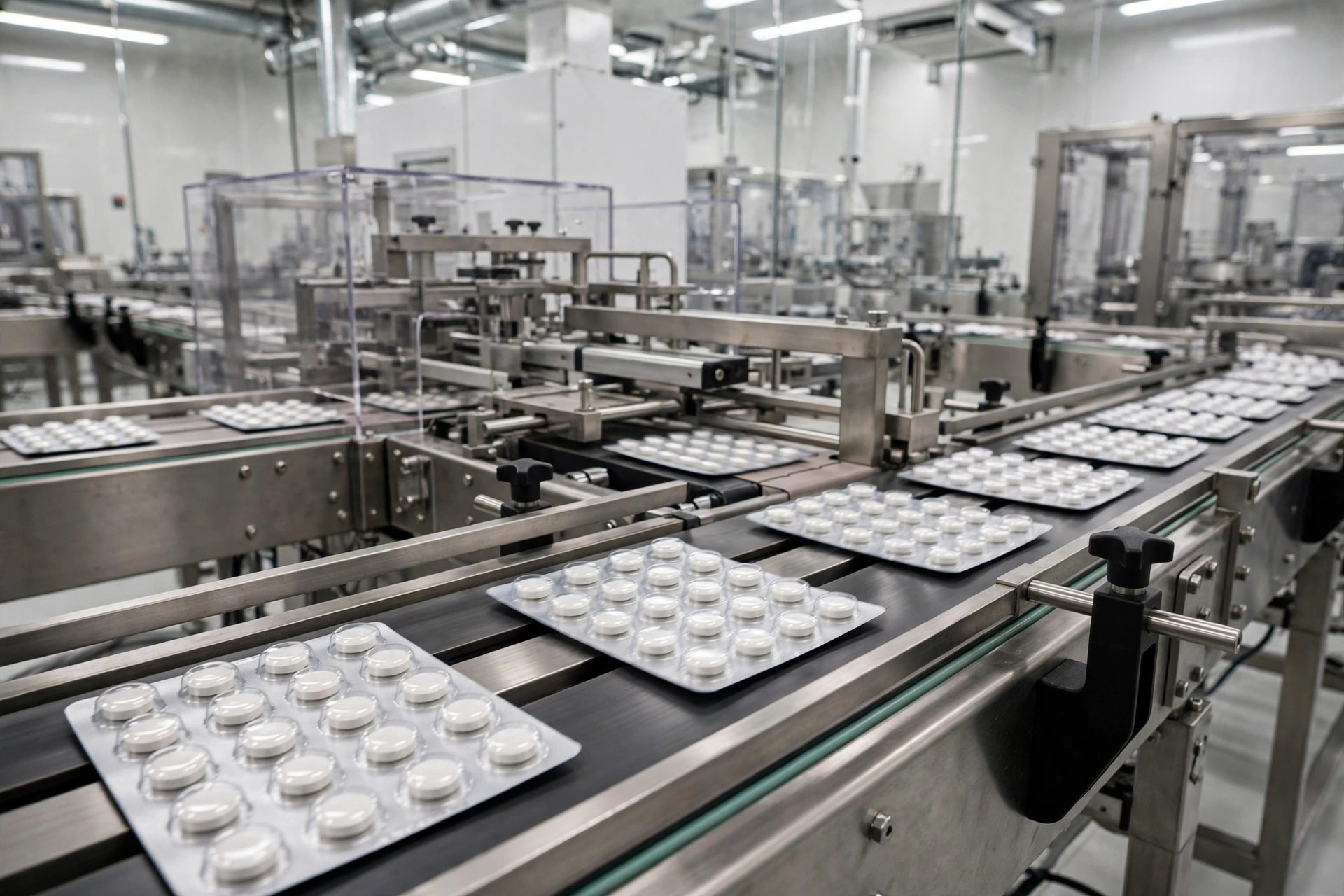
One more strand of the story is the workforce and the factory floor. A pharmaceutical plant is a regulated environment in a way few factories are: every batch is documented, every process validated, and inspections by the local regulator — and, for a multinational, by the parent's global quality organisation — are a condition of operating. Landhi's longevity as a site means generations of Karachi families have worked there, and the skills accumulated in its quality, engineering and regulatory teams are part of why multinationals keep manufacturing in Pakistan at all, rather than importing everything. When followers talk about a pharmaceutical company's "moat", this unglamorous competence — making the same medicine, to the same standard, millions of times — is a large part of what they mean.
What followers of ABOT watch
Analysts and long-term shareholders who track Abbott Pakistan tend to watch a recognisable list of dials. Drug pricing decisions and DRAP approvals sit at the top, because they move the whole sector. The rupee's direction follows, for the imported-cost reasons explained above. Within the company, they watch the balance between segments — how fast nutrition and diagnostics grow relative to the regulated pharmaceutical core — and any shift between locally manufactured and imported products, since local manufacture usually cushions currency shocks. Product launches from the global Abbott pipeline, and the company's standing in doctors' prescribing habits, are the slower-moving indicators of competitive health.
They also watch the index mechanics around the stock: periodic reviews can change a company's membership or weight in the benchmark, for reasons explained in our guide to KSE-100 index rebalancing, and those changes can move demand for the shares independently of anything happening at Landhi. None of these observation points amounts to a judgement about whether the share is cheap or dear. This article is educational content, not financial advice. The Aktzien learning library explains the basics — how regulated pricing works, what a segment report shows, and how to read a pharmaceutical company's results — for readers meeting these ideas for the first time.
The multinational subsidiary question
One question follows every listed multinational subsidiary, and Abbott Pakistan is no exception: how much of the value created in Pakistan stays visible to the local shareholder? The local company earns its margin on manufacturing and marketing, but it also buys products, ingredients and technology from within the global group, and pays for the brands and research that make its portfolio what it is. Those intra-group arrangements are disclosed in related-party notes that careful readers actually read. Set against them are the advantages that independence cannot buy: instant access to a world-scale research pipeline, quality systems audited to global standards, and brands that arrive in Pakistan pre-trusted by doctors who trained on them abroad.
The second recurring question is strategic: what does the parent want this subsidiary to be? Over seven decades the answer, judged by actions, has been a full-spectrum healthcare platform — not merely an import desk — with real factories, real laboratories business and a workforce rooted in Karachi. As Pakistan's healthcare formalises — more insurance, more organised retail pharmacy, more laboratory testing — that breadth positions the company in several growing pools at once, while its regulated core keeps growing mainly with population and pricing decisions. Which of those pools expands fastest is, in the end, the Abbott Pakistan story in miniature.
Key takeaway: Abbott Pakistan is a 1948-vintage Karachi healthcare business — medicines, nutrition, diagnostics and diabetes care under one listed roof — whose fortunes turn on regulated drug prices, the rupee's cost to its imported inputs, and brands Pakistanis have trusted for generations.