KARACHI: If the Pakistan Stock Exchange had a household name, it would be Arif Habib. Arif Habib Limited — AHL — is the listed brokerage and investment-banking arm of the Arif Habib Group: the firm that executes trades for institutions and retail clients, publishes the research that lands in inboxes every morning, and sits at the table when Pakistani companies raise capital. It took over the group's securities brokerage business in 2005, it has repeatedly been named among the PSX's Top 25 Companies, and it trades under the symbol AHL. For a beginner learning how brokers make money, AHL is the ideal second lesson: a brokerage whose own shares are listed on the very exchange where it deals, letting anyone watch a market intermediary's earnings rise and fall with the market itself.
1970: a broker starts with almost nothing
The group's story begins in 1970, when a young Arif Habib — whose family had migrated from Gujarat at Partition, and who started work on a small salary with only a matriculation education — began in Karachi's stock market. The biographies of the man dwell on the modesty of the start because he himself does. Over the following two decades he built a sole-proprietor brokerage bearing his name, trading for clients through the Karachi Stock Exchange's loud, paper-based era, accumulating the two assets a broker truly owns: a membership seat and a reputation.
Reputation, in his telling and in the market's memory, was the strategy. Karachi's market of the 1970s and 1980s was a small, relationship-driven world in which a broker's word on settlement was his bond; Arif Habib served repeatedly as president and chairman of the Karachi Stock Exchange — six times by the group's count — and became a founding figure of the Central Depository Company, the institution that dematerialised Pakistan's shares (see opening a brokerage account in Pakistan for how that infrastructure serves today's investors). He also served on national bodies — the Privatisation Commission, the Board of Investment and tariff and securities-law committees — which took a market man's perspective into policy rooms.
1994–2005: incorporation, listing and the creation of AHL
The corporatisation came in stages. On 14 November 1994 the brokerage was incorporated as Arif Habib Securities Limited, a public limited company, to carry on the business Arif Habib had run as a sole proprietor; it commenced business in 1995, acquired his exchange memberships and brokerage assets in 1999, and listed on Karachi, Lahore and Islamabad stock exchanges in June 2001. For a few years, the listed company was the whole group in one shell: brokerage, investment management and proprietary investments together.
The modern structure dates from the mid-2000s restructuring. The group separated its businesses: the parent became Arif Habib Corporation (AHCL — today the group's listed holding company, with interests from fertiliser and steel to energy and, most recently, aviation), and in 2005 the securities brokerage and investment-banking business was placed into Arif Habib Limited, the operating company this profile covers. AHL has carried the flag since: the brokerage desks, the research department, the investment-banking mandates and the online trading platform all sit in AHL, majority-held by AHCL at roughly three-quarters of its shares.
The 2008 global financial crisis tested the whole group severely — group histories are frank that it came close to collapse as markets crashed and leveraged positions collapsed in value. The group survived by selling assets, including its bank (acquired as Rupali Bank in 2006, renamed Arif Habib Bank, then sold and folded into what became Summit Bank), and by merging its asset-management arm with MCB's in 2010 to form MCB-Arif Habib Savings and Investments. AHL itself endured because brokerage, properly run, is a fee business: painful in a crash, but not dependent on a loan book.
What AHL actually does
AHL's activities divide into four businesses. Equity brokerage is the core: executing trades on the PSX for domestic institutions, foreign investors, high-net-worth individuals and retail clients, through branches, relationship managers and its online platform, AHL eTrade. Fixed-income, money-market and foreign-exchange brokerage serves institutional clients trading government securities and currencies. Investment banking and corporate advisory handles initial public offerings, secondary offerings, underwriting, block trades, mergers, acquisitions, privatisations and restructurings — the firm is routinely among the bookrunners and advisers on Pakistan's larger capital-market transactions, and group materials note its role in executing very large equity capital-market deals. Research — daily and thematic coverage of the economy and listed companies — supports all of it and wins the international awards (Asiamoney, Euromoney, FinanceAsia, CFA Society Pakistan and others) that the firm cites in its credentials.
Commodities brokerage sits in a wholly owned subsidiary, Arif Habib Commodities, which gives clients access to the Pakistan Mercantile Exchange. Distribution achievements are part of the record too: the Central Depository Company named AHL its top brokerage house for opening Roshan Digital Accounts — the State Bank's channel for overseas Pakistanis to invest — and AHL counts multiple PSX Top 25 Companies awards across its history.
Ownership and the group around it
AHL is majority-owned by Arif Habib Corporation Limited (AHCL), the group's listed parent, which holds around 73 per cent. The group's wider empire — power and energy ventures, fertiliser and steel interests assembled over the years, real-estate and financial holdings, and most recently the consortium that acquired Pakistan International Airlines — sits at the AHCL level or in sister companies, not inside AHL. That separation matters for reading AHL's accounts: it is a focused capital-markets operating company, not a conglomerate, and its risk is market risk rather than industrial risk.
Arif Habib himself remains the group's chief executive and public face, with professional management running the brokerage. For minority holders, the sponsor's identity is unusually personal: the firm's name, brand and client trust are the founder's, which has been a commercial asset for fifty years and is a succession question the market will one day price.
How a brokerage makes money
AHL's income statement is a leveraged play on market activity, in four lines. Brokerage commissions rise and fall with traded value on the PSX and PMEX — quiet markets starve brokers, bull markets feast them. Investment-banking fees are lumpier: a single large IPO, block trade or privatisation mandate can transform a year. Proprietary and investment income — gains on the firm's own book and its holdings — swings with the index itself. Interest and margin-related income, from financing clients and deploying float, adds a steadier layer.
Costs are people and systems: dealers, analysts, compliance, branches and trading technology. The result is high operating leverage in both directions, which is why AHL's earnings across a decade look like a cardiogram of the Karachi market — strong in boom years such as the mid-2010s and the post-2023 rally years, thin when volumes dry up. Dividends follow the same rhythm, generous in fat years and restrained in lean ones, a pattern readers can frame with how PSX dividends work.
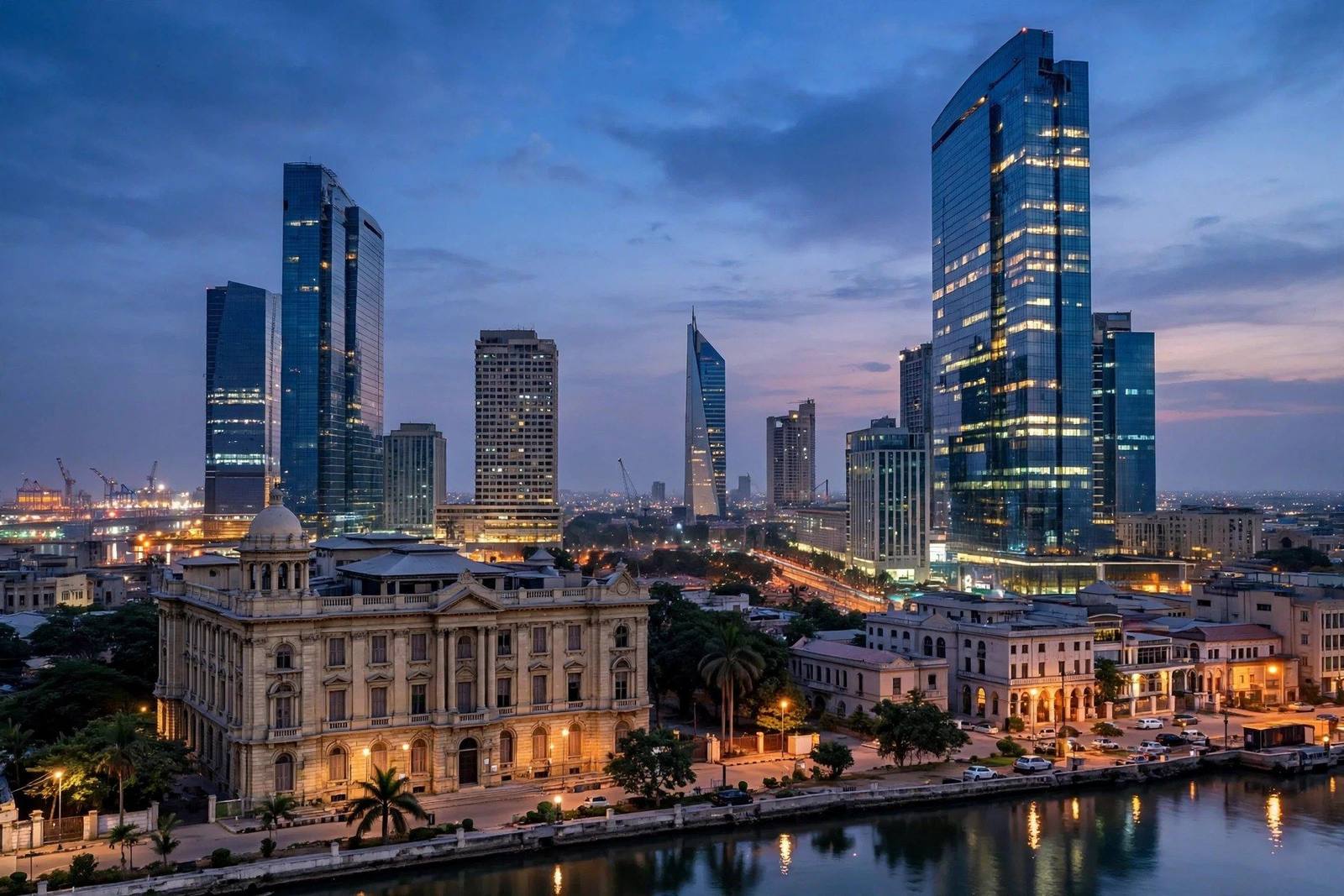
AHL's Karachi-centred model also carries a lesson about the market's geography. Pakistan's capital market remains strikingly concentrated in one city and one exchange building's orbit, even though its investors are now national and global. A firm like AHL, with its dealing rooms, research floor and investment-banking teams in Karachi and its clients everywhere else, is built for that geography — close to the exchange, the regulator's Karachi offices, the banks' head offices and the corporate headquarters that cluster in the same few districts.
Strengths, risks and honest caveats
The strengths are franchise and full-service breadth. AHL is one of the few Pakistani houses that can research a company, raise capital for it, distribute the deal to institutions and overseas Pakistanis, and support the aftermarket — a combination foreign and institutional clients value, reflected in its market share and award record. Its brand is the strongest personal brand in Pakistani broking, and its listed status subjects it to a disclosure discipline many rival brokers, being private, escape.
The risks are the mirror image of the model. Earnings are hostage to market volumes and sentiment; a prolonged bear market compresses every revenue line at once. Investment-banking income depends on a deal pipeline that government policy, interest rates and politics can switch off. Proprietary positions add volatility. Competition — from bank-owned brokers, digital-first platforms and foreign-facing houses — pressures commission rates relentlessly. And key-person dependence on the founder is a real, if slowly diminishing, factor.
Research, reputation and the morning note
One part of AHL deserves a closer look because outsiders underestimate it: research. A Pakistani brokerage's morning note — a few pages on overnight news, results and the day's expected trade — is how much of the market organises its thinking. AHL's research department has for years been among the most decorated in that daily contest, and the awards it cites from international publications are not vanity prizes; institutional clients, especially foreign ones deciding whether Pakistan deserves attention at all, often meet the country first through a broker's research. The analyst who explains an IMF programme or a fertiliser subsidy clearly is, in a real sense, part of the market's infrastructure.
That soft power converts into hard economics in ways the accounts only partly show. Research wins brokerage mandates; brokerage flow wins investment-banking roles; investment-banking roles win more flow. The flywheel is the firm's true asset, and it depends on people — a small number of senior analysts, dealers and bankers whose names clients know. AHL's filings and award history let a reader track that asset's health indirectly, through market share, mandate lists and staff continuity, in a way that is impossible for unlisted rivals.
The firm has also been a channel for two of the era's defining investor flows: foreign portfolio investors entering and leaving Pakistan with the country's index fortunes, and overseas Pakistanis arriving through Roshan Digital Accounts after 2020. Being named the top house for RDA openings by the Central Depository Company was a signal that the second flow — smaller per account but far stickier — had found in AHL one of its main gateways.
The name on the PSX
AHL trades as the market's principal listed pure brokerage — a meta-investment, in effect: a share whose fortunes describe the stock market's own health. Analysts who cover it value it on through-cycle earnings and dividend capacity rather than any single year's spike, and its register mixes the parent's controlling stake with institutional and retail holders who want geared exposure to PSX volumes. It is not a KSE-100 heavyweight; it is a sector bellwether, and its result season commentary is read as a weather report for the whole brokerage industry.
Investors who study AHL are usually studying Pakistan's capital-market cycle itself. This article is educational content, not financial advice; the firm's annual reports and its own research disclosures are the place to test any conclusion about it.
Key takeaway: Arif Habib Limited (AHL), created in 2005 from a brokerage founded in 1970, is Pakistan's flagship listed broker and investment bank — a fee business whose earnings rise and fall with the market it serves.