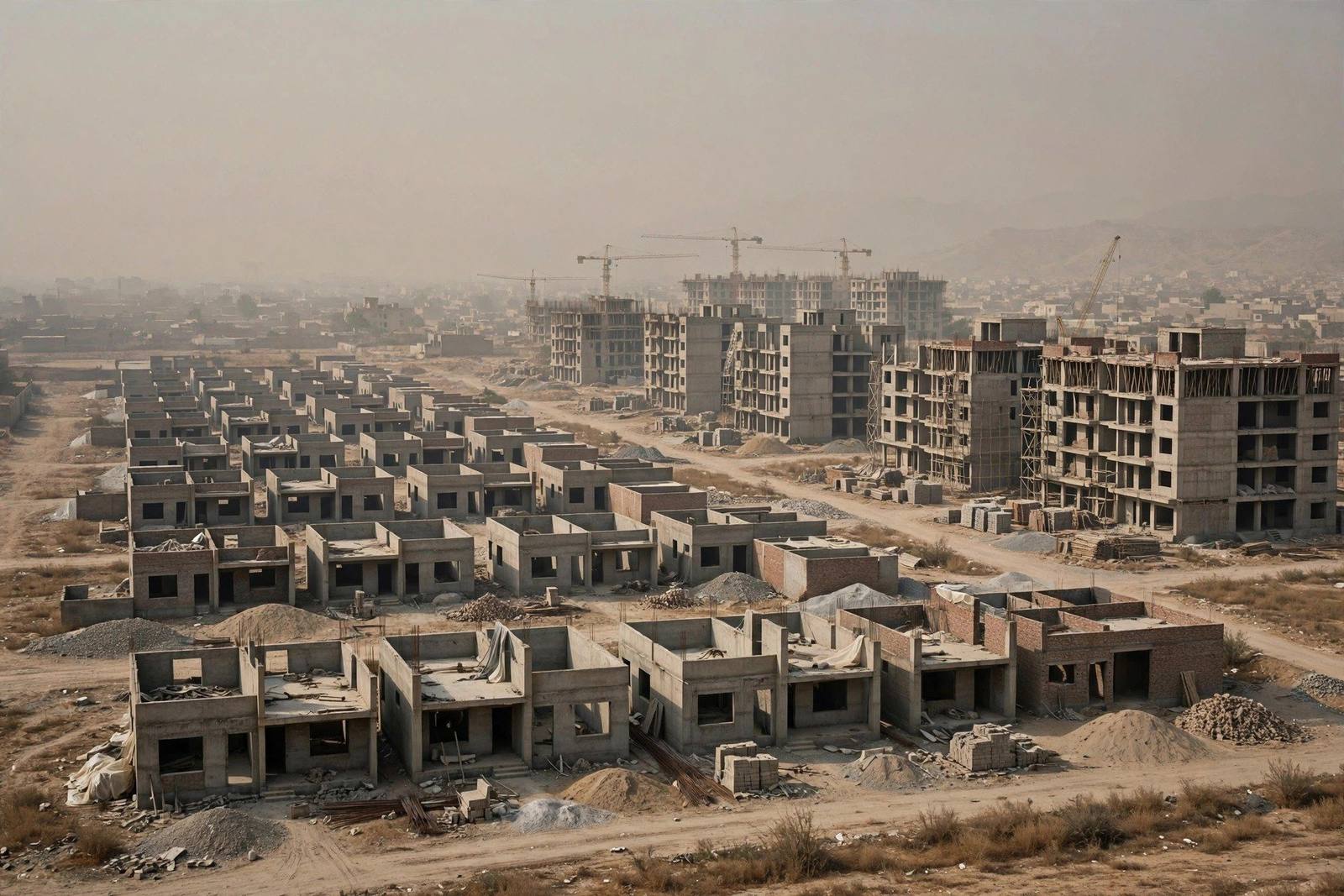
Housing finance in Pakistan explained: the mortgage market that barely exists
Why mortgages stay tiny in a country short of millions of homes: titles, foreclosure law, informal incomes and the state schemes still trying to change it.
The final batch-3 guides: Islamic banking, takaful, Shariah screening, riba, inheriting shares, accounts for minors and students, paper shares, unclaimed dividends and the PSX's own history. Educational content only, not financial advice. Continue with the previous page, the first market guides or the 44 Learn guides.
Why mortgages stay tiny in a country short of millions of homes: titles, foreclosure law, informal incomes and the state schemes still trying to change it.
How microfinance banks and charities lend tiny sums to Pakistan's smallest borrowers, how the model earns, and which names an investor can actually study.
How carbon credits work, what Pakistan can sell from its mangroves and forests, and why verification, permanence and honest accounting decide the value.
From phutti in the field to yarn in Faisalabad: how cotton is grown, ginned and priced, and why pests, water and imports now decide Pakistan's textile year.
How silver is priced and sold in Pakistan's sarafa markets, what industry adds to demand, and the spreads, purity and storage traps buyers should know.
What a plot file, an affidavit and an allocation letter really are, how files trade in DHA and private schemes, and where buyers lose money in the paper market.
How farmland in Pakistan is owned, leased and farmed, what returns really come from rent, crops and city growth, and the title and water risks to check first.
How Islamic banks lend and take deposits without interest, what the courts and the State Bank have ordered, and how conversion is reshaping Pakistan's banks.
Takaful replaces the insurance contract with a shared pool: participants donate contributions, claims are paid from the fund, and the operator only manages it.
Behind every Islamic bank product sits a classical contract: a sale, a lease or a partnership. Murabaha, ijara and musharaka explained in plain terms.
The KMI index admits a company only if it passes numerical tests on debt, illiquid assets and non-compliant income. How the screens, thresholds and purges work.
Riba — any stipulated increase on a loan — is the prohibition from which Islamic finance is built. What it covers, where scholars differ, and how Pakistan applies it.
When a shareholder dies, their PSX shares do not move by themselves. Transmission, succession certificates and CDC procedure explained for families, step by step.
Children cannot hold a PSX account in their own right, but a guardian can invest for them for years before they turn eighteen. How guardian accounts actually work.
A student can legally open a PSX account at eighteen and start with very little. What pocket-money investing can and cannot do, and the traps aimed at the young.
Millions of paper share certificates still sit in Pakistani drawers, untradeable and earning nothing. How dematerialisation moves them into a CDC account safely.
Billions of rupees in declared dividends were never collected by the shareholders they belong to. Why dividends go unclaimed, where the money goes, and claiming it.
A Ponzi scheme pays old investors with new investors' money until arithmetic wins. How the fraud is built, how Pakistan's famous cases unfolded, and the warning signs.
Dazzling forex apps promise students and salaried Pakistanis a dollar income. Most of what they offer is illegal for residents. What the law actually permits, explained.
Founded months after Partition with five companies in a Karachi hall, merged from three rival exchanges, demutualised and listed on itself: the PSX's own history.
One email now. A clearer investing experience later.