KARACHI: Every other refinery in Pakistan was built in a country that already had one. Attock Refinery was built in a country that had none — in an era when the site at Morgah, outside Rawalpindi, was reached by the standards of 1922, not of today. The refinery's first stills came on stream in 1922, fed by pipeline from the oilfields of the Attock district, where the Attock Oil Company had struck oil at Khaur in 1915. A century later the same site — expanded, rebuilt and modernised in waves — still refines crude for northern Pakistan, and the company that runs it, Attock Refinery Limited (ATRL), is described in its own materials and the industry's as Pakistan's oldest refinery. ATRL was carved out of the Attock Oil Company as a separate company in 1978, converted to a public company in 1979, and is the refining anchor of the Attock Group — supplying, among others, its sister marketer Attock Petroleum. It sits among the PSX refinery stocks in the KSE-100. This profile covers the century at Morgah, what a refinery actually does, and the peculiar economics of a business that buys and sells at prices it largely does not control.
1913–1922: oil at Khaur, a refinery at Morgah
The story begins with the parent. The Attock Oil Company was incorporated in England on 1 December 1913 by British investors drawn to the oil seeps and geological promise of the Attock district in northern Punjab. Drilling began at Khaur — about fifty miles south-west of Rawalpindi — in January 1915, and oil was found at remarkably shallow depth. The First World War interrupted progress, but after it the company laid pipelines from the fields and built its refinery at Morgah, beside Rawalpindi's garrison and rail links. The refinery came on stream in early 1922 — sources give February or March of that year — with two small stills of about 2,500 barrels per day. It was the first refinery in the region, and its early years were precarious: the Khaur field declined faster than hoped, and keeping the stills fed was a struggle.
Rescue came from the drill bit. A commercial discovery at Dhulian in 1937, and further fields thereafter, justified expansion: through the late 1930s and early 1940s new units — including a larger distillation unit, thermal cracking, lubricating-oil refining and wax facilities — lifted capacity to around 10,000 barrels per day. Partition in 1947 placed Morgah in Pakistan, and the refinery became the new country's only one for years, processing the crude of the northern fields for a market that stretched from Peshawar to Lahore. For the young state, Morgah was strategic infrastructure in the plainest sense: without it, every litre of petrol, kerosene and diesel in the north had to be imported.
Growth, and the birth of ATRL as a company
Successive discoveries in the Potohar region and beyond kept the expansion going. Distillation capacity was raised substantially in 1981 with additional units, and a major upgrade around 1999–2000 added a heavy-crude unit, a reformer and a captive power plant — and, the company notes with pride, made Morgah the first refinery in Pakistan able to produce premium motor gasoline directly without blending additives of the MTBE type. Later additions have included a pre-flash unit and an isomerisation unit to lift petrol output and quality, and planning for diesel hydro-desulphurisation to meet cleaner fuel standards — the continuous reinvestment treadmill every old refinery must run to stay legal, efficient and relevant. Nameplate capacity in recent company descriptions stands in the low-to-mid fifty-thousand barrels per day range after these upgrades, processing crude grades from the lightest to the heaviest — a flexibility that suits its diet of varied local crudes.
The corporate form caught up with the industrial reality in 1978. Attock Refinery Limited was incorporated as a private limited company in November 1978 to take over the Attock Oil Company's refining and refined-products supply business, and converted to a public limited company in June 1979, listing on the country's stock exchanges. The parent, Attock Oil Company, retained its upstream identity within the group — exploration through what became Pakistan Oilfields — while ATRL took the refinery, its people and its century-in-the-making site. That 1978 separation is why the refinery's history (from 1922) and the company's history (from 1978) have different start dates, both of them true.
What a refinery does — and what Morgah makes
A refinery is a sorting and cooking plant for crude oil. Crude arrives as a mixture of hydrocarbons of every weight; distillation separates it by boiling point into gases, light liquids and heavy residues, and conversion and treatment units then upgrade the mix toward what the market wants. Attock's product slate, from its own descriptions, spans liquefied petroleum gas (LPG), motor gasoline (petrol), kerosene and jet fuels, high-speed diesel, furnace fuel oil, and asphalt (bitumen), along with speciality products such as solvents and, historically, lubricating base oils and waxes from its lube refinery.
Location is destiny in refining, and Morgah's is double-edged. On the credit side, it sits beside its crude: the northern oilfields deliver by pipeline, sparing the refinery the cost and vulnerability of importing crude through Karachi and hauling it a thousand kilometres north — and it sits inside its market, supplying Punjab's north, Islamabad, Khyber Pakhtunkhwa and the northern areas, including strategic customers such as the armed forces and aviation. On the debit side, it is landlocked and scale-limited: it cannot receive the very large crude cargoes or reach the export markets available to the coastal refineries at Karachi, and its crude diet depends on the output of ageing northern fields, supplemented by arrangements to bring in crude from further afield. Its customers are the oil marketing companies — its sister APL prominent among them — which lift its products under the national supply system.
How a refinery makes money: the crack spread and the formula
A refinery's gross margin is the crack spread: the value of the basket of products a barrel of crude yields, minus the cost of the barrel. A refinery that can turn heavy, cheap crude into light, valuable products — more petrol and diesel, less furnace oil — earns a wider spread than one running a simple distillation column. This is why the upgrade history above matters commercially: reformers, isomerisation and hydro-treatment units all exist to shift the product slate upmarket and to meet fuel-quality specifications, and why the industry obsesses over each plant's configuration and complexity.
In Pakistan, however, the textbook model runs through a regulatory filter. Refinery economics have historically been shaped by government pricing arrangements — for decades a formula that effectively guaranteed a measure of return in exchange for price control, and in more recent policy, moves toward pricing frameworks linked to import parity: in plain terms, a local refinery's products are priced as if they had been imported, so the refinery captures the freight and duties an importer would have paid, on top of international product prices. The details of Pakistan's refinery policy have been renegotiated repeatedly — including a major upgrade-focused policy announced in recent years offering incentives for deep-conversion investment — and each reset changes what Morgah's output is worth. Add the familiar inventory effect (a refinery holds large crude and product stocks, whose paper value rises and falls with prices) and an ageing plant's maintenance shutdowns, and you have the ingredients of ATRL's characteristically volatile earnings: strong when product prices and cracks are high and the plant runs flat-out, weak when cracks narrow, crude supply stumbles or a turnaround takes units offline. Our guide to refinery stocks on the PSX compares this model across the listed coastal and inland plants.
A century at Morgah: what the site means
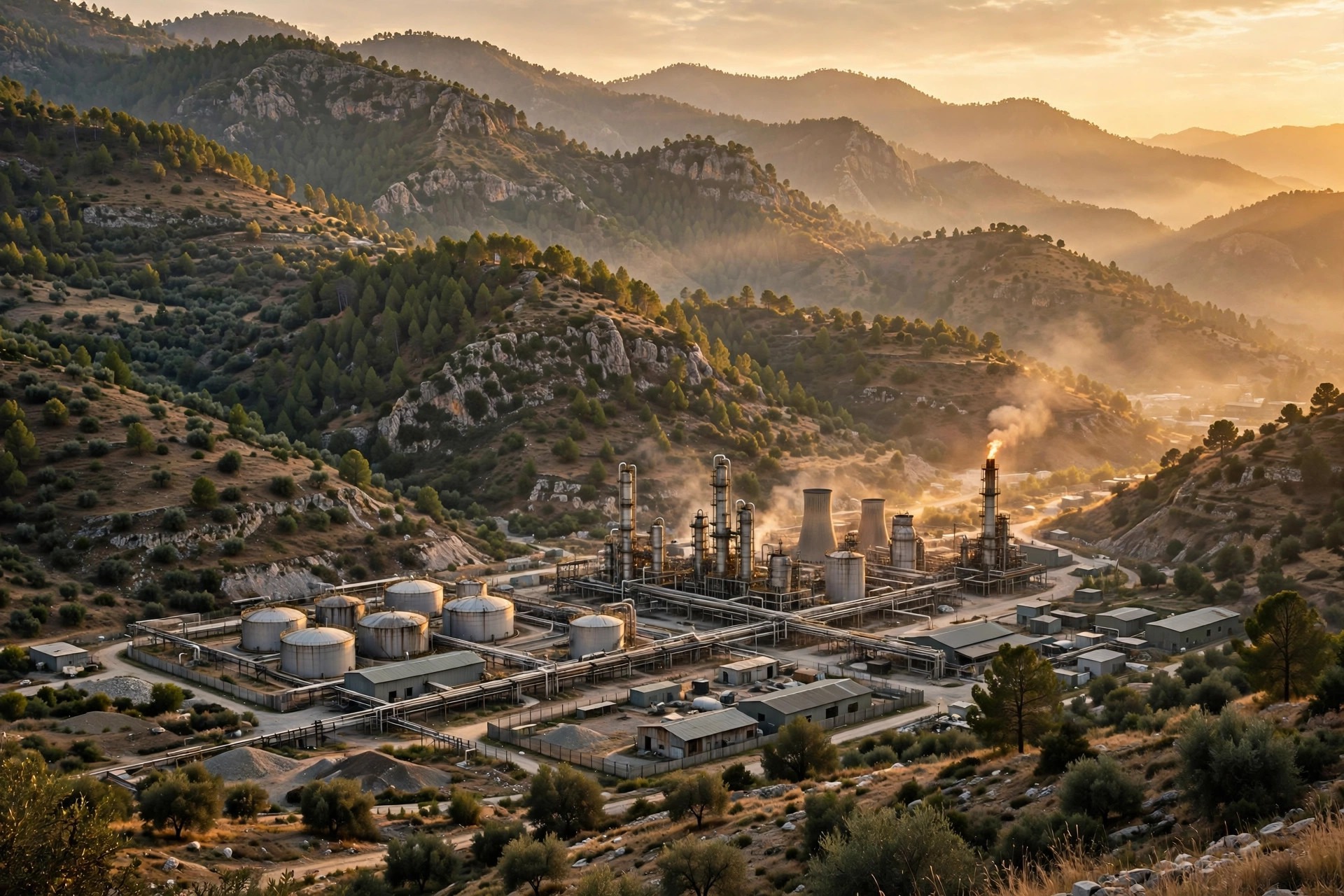
There is something genuinely unusual, by global standards, about a refinery operating on one site for over a hundred years. Morgah's original 1922 distillation unit survives, preserved as part of a refinery museum on the site — industrial heritage of a kind Pakistan rarely keeps. Generations of Rawalpindi families have worked at the plant; its flare and tank farm are landmarks of the city's southern approach; and its continued operation, through nationalisation-era policies (the Attock group, unusually, remained in private — largely foreign-sponsored — hands through the 1970s upheavals), energy crises and the rise of far larger coastal competitors, is a story of incremental adaptation rather than grand reinvention.
The Attock Group frame completes the picture. ATRL refines; Pakistan Oilfields explores and produces the crude; Attock Petroleum markets the products, and itself holds a significant stake in the refinery. Within the group, Morgah is the industrial heart — the asset the other businesses were built around — and decisions about its upgrade path are group decisions, weighed against the capital demands of exploration and marketing alike.
The upgrade question
Every Pakistani refinery now faces the same strategic fork, and Morgah faces it in its sharpest form. Global fuel standards keep tightening, furnace-oil demand keeps shrinking as power generation moves to other fuels, and the deep-conversion complexes that turn residue into petrol and diesel cost sums that dwarf a small refinery's balance sheet. Pakistan's recent refinery policy has tried to square this circle with fiscal incentives for upgrade projects, and each listed refinery's board must decide — with its sponsors — whether to commit, to specialise, or to sweat the existing assets. For ATRL the decision carries an extra weight: the plant is the Attock Group's industrial heart and the north's supply security, so the question is not merely financial. Whatever is chosen will define the company's third half-century as a listed entity — and whether the Morgah story is one of renewal or of a graceful, profitable long decline.
There is precedent for renewal. The refinery has already reinvented its product slate several times — adding cracking in the 1940s, gasoline reforming in the upgrade around 2000, isomerisation in the modern era — each time spending its way back into relevance. The museum piece from 1922 and the computer-controlled units beside it are the same site telling the same story: survival, for a refinery, is a capital-expenditure habit, not an inheritance.
For readers placing ATRL in the wider energy chain, the contrasts are instructive. The explorers earn from what is in the ground; the marketers earn a fixed toll on what flows through their pumps; the refinery sits between them, transforming rather than merely moving the product, and taking the price risk of that transformation. That is why refinery shares can be the most volatile corner of the energy complex — and why Morgah's century of survival, through every pricing regime the state has devised, is itself a data point about the value of an irreplaceable site and a patient sponsor group.
What followers of ATRL watch
The checklist begins with throughput: how much crude the refinery actually processed, because fixed costs are spread over every barrel and northern crude availability is a real constraint. Next, gross refining margins — the crack environment for its product slate, particularly petrol and diesel cracks versus furnace oil, whose demand has shrunk as power generation moved away from oil. Product pricing and policy follow: any change in the refinery pricing framework or the upgrade incentives on offer can reset earnings power, and progress (or delay) on quality upgrades such as diesel desulphurisation determines whether Morgah's products remain saleable under tightening standards. Inventory gains and losses, energy costs and unplanned shutdowns explain most of the remaining quarter-to-quarter noise.
Finally, the capital question that hangs over every small, old refinery: whether the economics justify the deep-conversion upgrade that would transform its slate — a decision measured in hundreds of millions of dollars, against a remaining life the site has already stretched beyond a century. Index membership adds its own rhythm, through the reviews described in our explainers on how the KSE-100 is calculated and rebalancing. This article is educational content, not financial advice; the Aktzien learning library explains refining margins, regulated pricing and inventory effects from first principles for readers new to the energy chain, and Aktzien plans to offer tools that make following such companies easier.
Key takeaway: Attock Refinery has processed crude at Morgah since 1922 and, as ATRL since 1978, earns the spread between crude and the petrol, diesel, jet fuel and asphalt it yields — a spread filtered through Pakistan's pricing policy, northern crude supply and the upgrade choices of a refinery now in its second century.