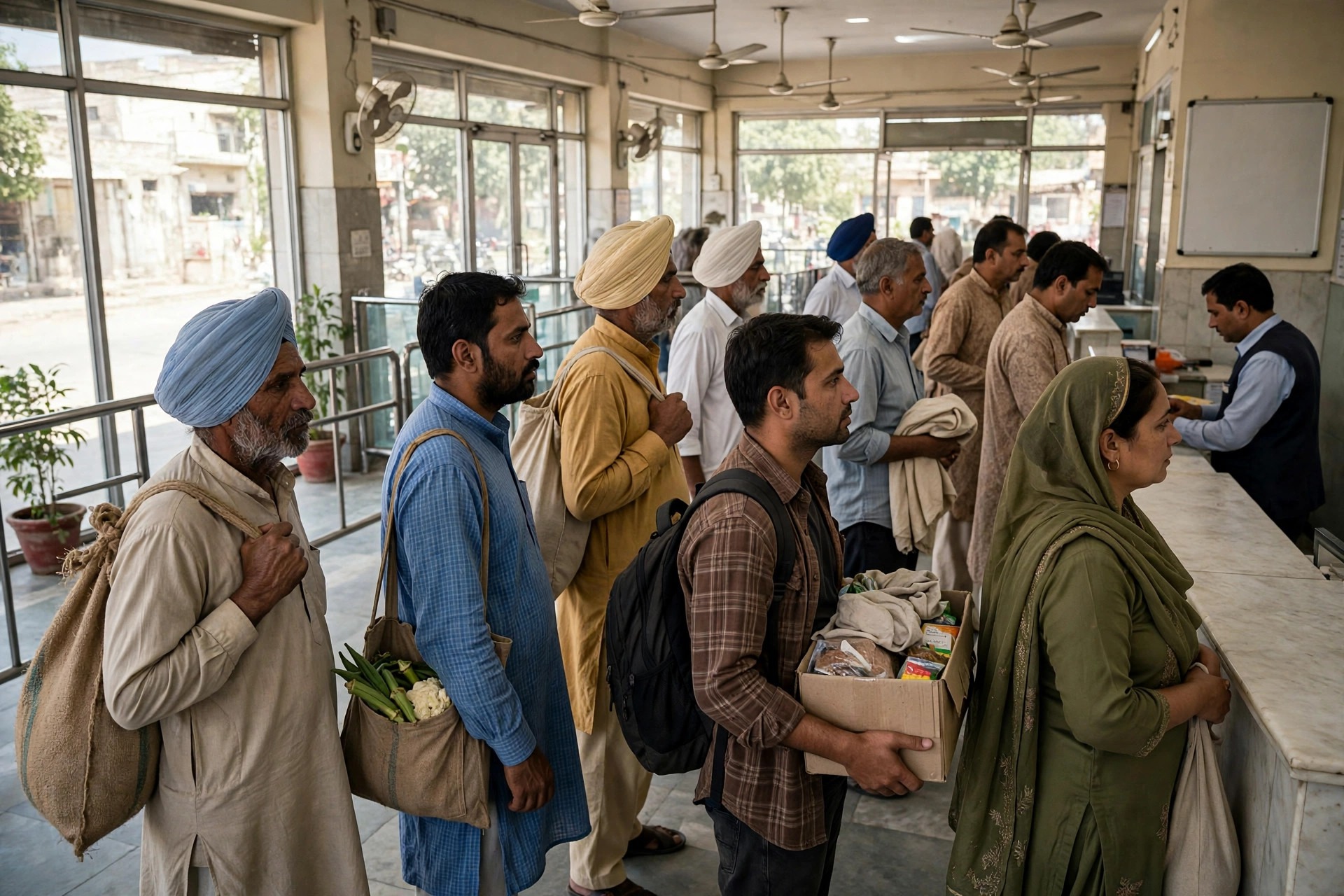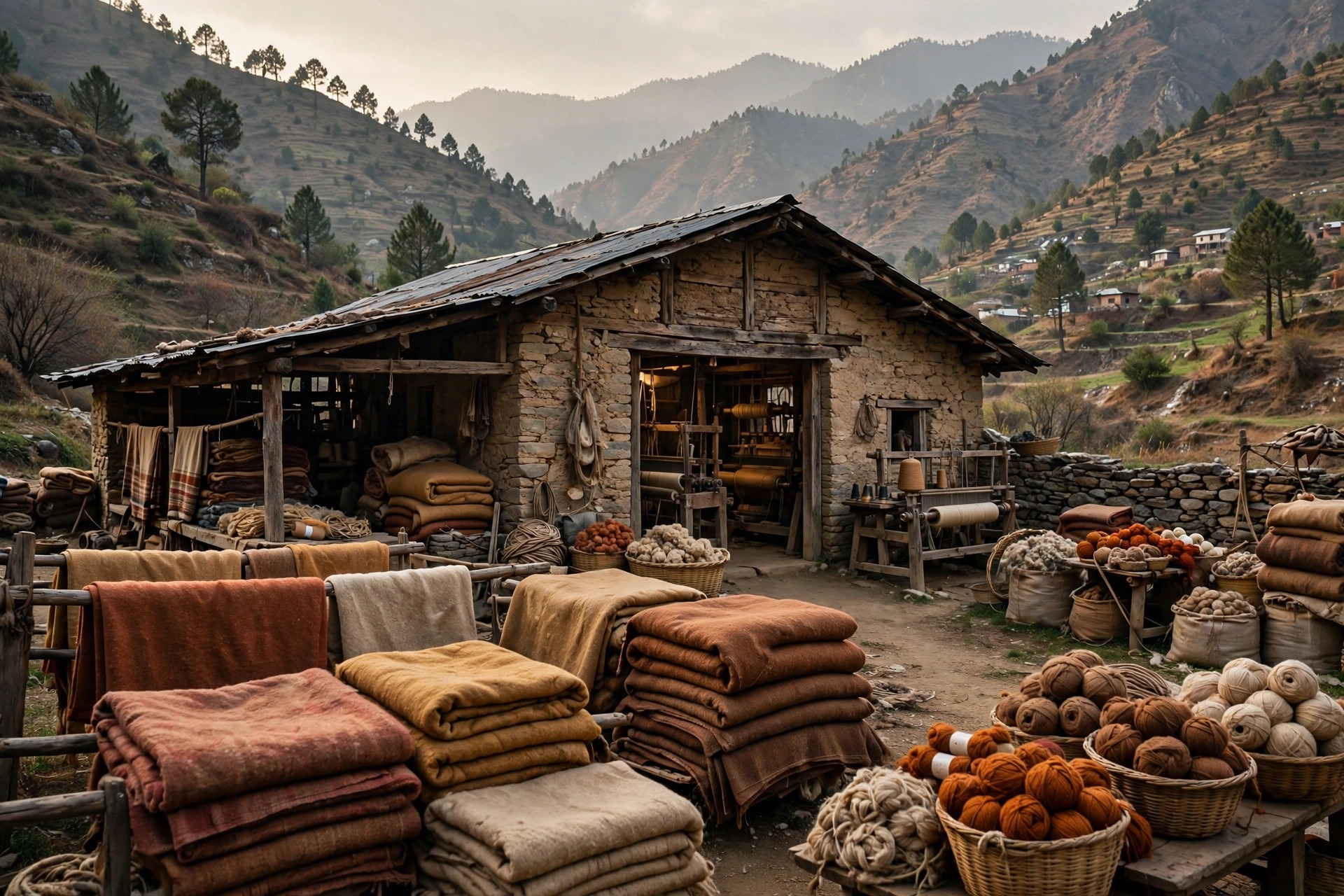
KARACHI: Bannu Woollen Mills Limited — BNWM on the Pakistan Stock Exchange — is one of the smallest and oldest companies in the KSE-100, and one of the most evocative. Its factory stands on D. I. Khan Road in Bannu, a garrison and trading town in southern Khyber Pakhtunkhwa, where it has been spinning woollen yarn and weaving cloth since 1953. The company describes itself, with justification, as the oldest woollen industry in Pakistan. Its blankets and shawls are winter staples in the northern areas; its tweeds and service dress cloth have clothed generations of soldiers, policemen and schoolchildren. Yet almost everything about BNWM is a study in contrast with the rest of the benchmark index: it is tiny beside the banks and cement giants, family-group owned rather than widely traded in size, and documented so thinly in public sources that even its own website gives slightly different accounts of when its founding owner sold it. This profile is therefore deliberately qualitative — a history and an explanation of the business, written only from what can be verified.
What Bannu Woollen Mills makes
The mill manufactures and sells woollen yarn, cloth and blankets. Its product list, as the company itself presents it, reads like a catalogue of Pakistan's colder-climate wardrobe: tweeds and blazer cloth, velour, lighter shirting fabrics with traditional trade names such as superior, donigal and honey shirting, and light winter fabrics known as byla and byma; blankets and shawls; service dress cloth for uniforms; and upholstery and curtain cloth for furnishings. The company markets its products through its own retail outlets as well as through trade channels, and its quality-management system has been certified to ISO 9001 standards — a point the company highlights as part of its claim to consistent quality in a niche where imports and informal-sector products compete hard on price.
To understand the business, picture the chain. Wool and woollen blends — increasingly blended with synthetic fibres for cost and durability — are spun into yarn, woven into fabric, then finished: dyed, raised, checked and cut into blankets, shawls and cloth lengths. Each stage adds value, but none is high-technology in the modern sense; the mill's competitive assets are its looms and finishing skills, its brand recognition among blanket buyers, its institutional relationships with uniformed services, and its location amid the northern markets where its products are actually needed for much of the year. In the wider industry survey at PSX textile stocks, BNWM sits at one extreme: where the big listed textile names are cotton spinners, weavers and garment exporters of global scale, Bannu is a single-site wool specialist selling mainly into its home market.
A state mill from the PIDC era
The mill was established in 1953 by the Pakistan Industrial Development Corporation — PIDC — the state body charged in the new country's first decade with building industries that private capital would not yet risk. PIDC's model was to set up factories in under-industrialised regions, prove them, and later divest them to private owners. A woollen mill in Bannu fitted that philosophy exactly: it brought factory employment to a remote district of the then North-West Frontier Province, processed a raw material suited to the northern climate, and served a national market for blankets and warm cloth that imports had previously supplied.
In the 1960s, under PIDC's disinvestment programme, the mill was purchased by the Bibojee Group of Companies. The group's founder was Lt. Gen. (Retd.) Muhammad Habibullah Khan Khattak, a senior army officer turned industrialist from the region, who built Bibojee into a diversified house with interests that came to include the Ghandhara vehicle businesses and other manufacturing. The Bannu mill has remained in the Bibojee orbit ever since — a span of roughly six decades of continuous group ownership that is rare in Pakistani industry. The company became a public limited company in 1992, and its shares have been quoted on the stock exchange since then, though the sponsoring group remains the controlling presence. The plant's site in Bannu, on a plot the company records at around 165 kanals, remains the centre of operations, with its corporate presence in Karachi.
The wool niche in a cotton country
Pakistan's textile fame rests on cotton — the country is one of the world's significant cotton producers, and its listed textile giants spin, weave, stitch and export cotton on a vast scale. Wool is a side-story: Pakistan has sheep in its northern and western highlands, but domestic wool is largely coarse, and fine woollen manufacture has always depended partly on imported fibre and tops. The woollen segment that Bannu inhabits is therefore small, seasonal and defensive in character. Demand concentrates in the winter months and in the colder provinces; institutional orders — blankets and uniform cloth for the armed forces, police, railways, hospitals and relief agencies — provide a steadier baseload than fashion-driven retail. When a cold wave strikes the northern areas, or when floods and earthquakes trigger relief purchases of blankets, it is mills like Bannu that supply the trucks.
That niche has protected and limited the company in equal measure. Protected, because few competitors have reason to build a new integrated woollen mill in Pakistan for so modest a market, and because institutional buyers value a known domestic supplier. Limited, because the market grows slowly, cheap imported and synthetic blankets press on prices, and warm winters or tight government budgets can soften orders for a season. The company's own vision statement — to be the market leader in woollen and blended fabrics, blankets and shawls — describes leadership of a small pond, honestly framed.
How a mill like this makes money
The economics are those of any weaving business, with wool's own wrinkles. Revenue is the sum of many modest product lines — yarn sold to other weavers and knitters, fabric sold by the metre to traders and garment makers, and finished blankets and shawls sold at higher margins through retail and institutional channels. Against revenue stand the costs of fibre (exposed to international wool prices and the rupee's exchange rate where fibre is imported), dyes and chemicals, energy for spinning, weaving and finishing, labour in a labour-intensive plant, and maintenance of ageing machinery. Gross profit depends on product mix: a year weighted towards finished blankets and uniform contracts earns differently from a year weighted towards yarn and grey cloth.
Seasonality shapes the cash cycle. A woollen mill builds inventory ahead of winter — buying fibre and producing blankets through the warmer months, storing value in warehouses, and collecting cash as the cold season's orders ship. Working capital, not machinery, is often the binding constraint, which is why small mills live close to their bankers and why interest costs can decide whether a thin-margin year ends in profit or loss. Export earnings are not the story here, unlike Pakistan's cotton exporters; the rupee costs and rupee revenues largely match, and the exchange rate matters mainly through imported inputs and competition from imported finished goods. Scale is the other structural fact: with a single plant and a few hundred employees, BNWM's absolute earnings are small, and individual orders or cost shocks that a diversified textile group would absorb can move its annual result noticeably.
Why is it in the KSE-100 at all?
New readers sometimes ask how a company this small sits in an index associated with giants. The answer lies in how benchmarks are built. The KSE-100 aims to represent the broad listed market across sectors, and its selection — explained in how the KSE-100 is calculated — combines market-value criteria with sector representation, so smaller sectors keep a presence rather than the index becoming purely banks, energy and cement. A company's market value, in turn, is simply its share price multiplied by its shares — the concept unpacked in market capitalisation explained — and a small, tightly held company can qualify within its sector even at a modest absolute size. Membership also changes: periodic reviews move companies in and out as values and liquidity shift, and BNWM's seat should be read as "representative of its corner of the market at the review date", not as a ranking of Pakistan's hundred most important businesses. Fellow small textile constituents, such as the Faisalabad weaver profiled elsewhere in this series, tell a similar story.
What investors typically watch
For a company documented as thinly as BNWM, honest observation points are mostly operational. Winter demand and institutional orders drive volumes, so news about government and services procurement and the severity of the northern winter matters more than national GDP. Fibre and energy costs determine whether selling prices can protect margins. Product mix — finished goods versus yarn and cloth — signals earnings quality. Working capital and borrowing show whether the seasonal build is being funded comfortably. And at the governance level, readers watch the Bibojee Group's stewardship, dividend practice in profitable years, and any investment in modernising looms and finishing equipment. Coverage is sparse, annual reports are the primary source, and figures should be read there directly rather than through summaries.
This profile is educational content, not financial advice. It is also, transparently, a profile written from limited material: Bannu Woollen Mills keeps a low public profile, and beyond its own company profile, exchange filings and standard business databases, little detailed history is published. What can be said with confidence is the essential story — a 1953 state-built mill, sold to a regional industrial group in the 1960s, still weaving in Bannu more than seventy years on, and still standing for a corner of Pakistani manufacturing that predates, and has outlasted, many louder industries. Readers building their general knowledge of the market can continue at Aktzien Learn.
The human geography of the mill deserves a paragraph of its own. Bannu is not an industrial city; it is a district town in Pakistan's south-western Khyber Pakhtunkhwa, close to the former tribal areas, where formal factory employment has always been scarce. A mill founded there in 1953 — with several hundred workers in recent public listings — is not merely a business but a piece of local infrastructure: generations of the same families have worked its shifts, its whistle has marked the town's day, and its survival through Pakistan's many industrial shake-outs has mattered to the local economy out of proportion to its national size. That cuts both ways for the company. It enjoys the loyalty and low labour turnover of a community employer, and doubtless a measure of local goodwill no Karachi group could buy. But it also carries a community employer's obligations — sustaining employment through weak seasons — in a business whose margins rarely allow generosity. When readers ask why such an old, small mill has never been moved, merged into a bigger textile group or simply closed in a bad decade, the honest answer is partly in that social fabric, and partly in the Bibojee Group's own roots in the same region: the mill is a hometown asset, run by a group founded by a son of the same soil.
A note on sources is owed to the reader here, because this series normally reconstructs companies from rich public records, and Bannu's record is not rich. The firm facts used above — the 1953 PIDC founding, the Bibojee purchase under PIDC disinvestment, the 1992 conversion to a public limited company, the product range, the Bannu site and the ISO certification — come from the company's own published profile and standard exchange and business-database listings, which agree with one another on those points. Even the company's own pages differ slightly on the exact year of the Bibojee purchase within the 1960s, which is why this profile dates it to the decade rather than a single year. Beyond that core, this profile deliberately avoids the invented precision — capacities, market shares, dated milestones — that thin documentation cannot support. A company can be genuinely significant to its town and its trade, and genuinely hard to write about at length, at the same time; BNWM is both, and pretending otherwise would serve no reader.
Key takeaway: Bannu Woollen Mills is Pakistan's oldest woollen mill — founded by PIDC in 1953, owned by the Bibojee Group since the 1960s, listed since 1992 — a small, seasonal, single-site maker of blankets, shawls and uniform cloth whose KSE-100 seat reflects sector representation, not giant scale.