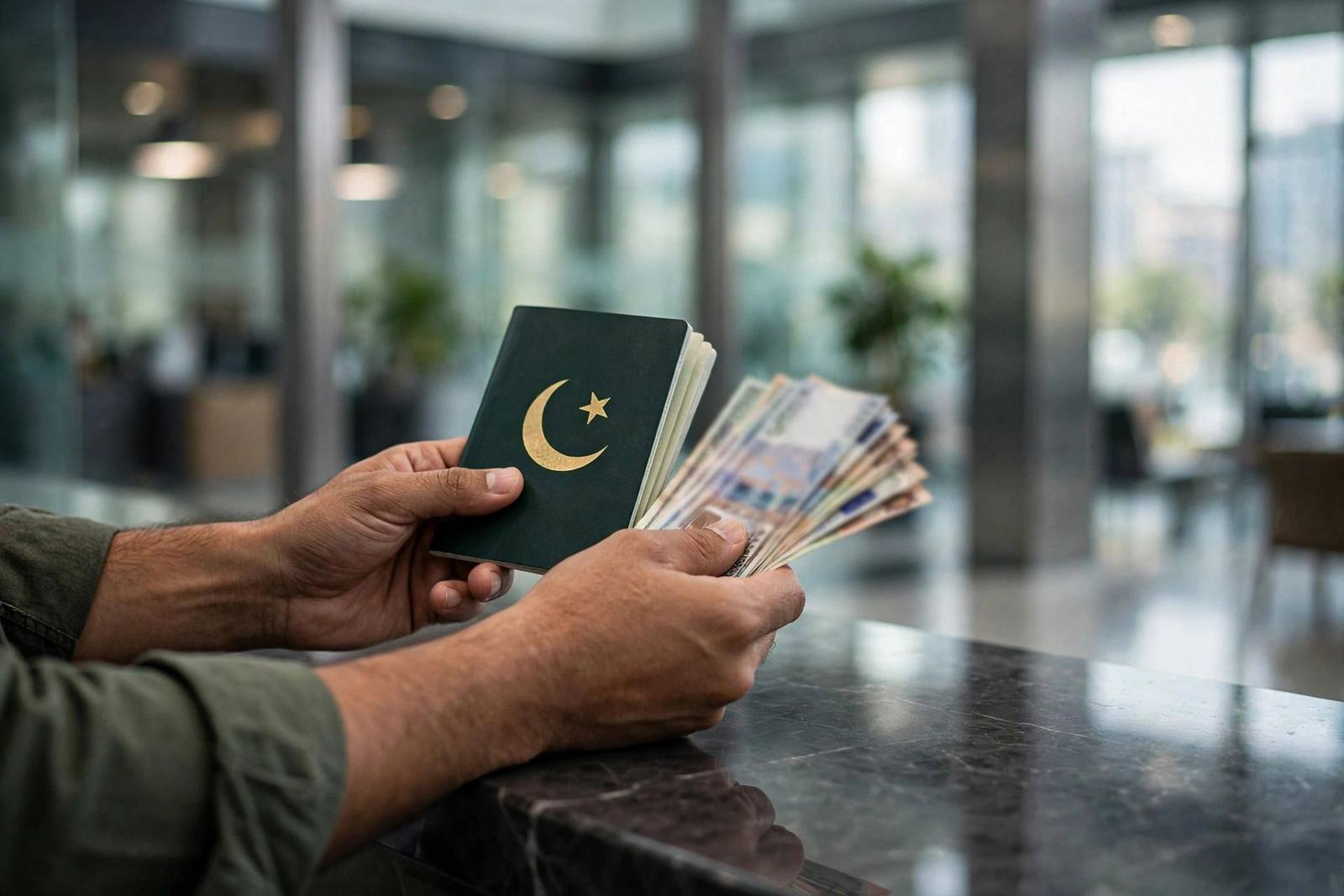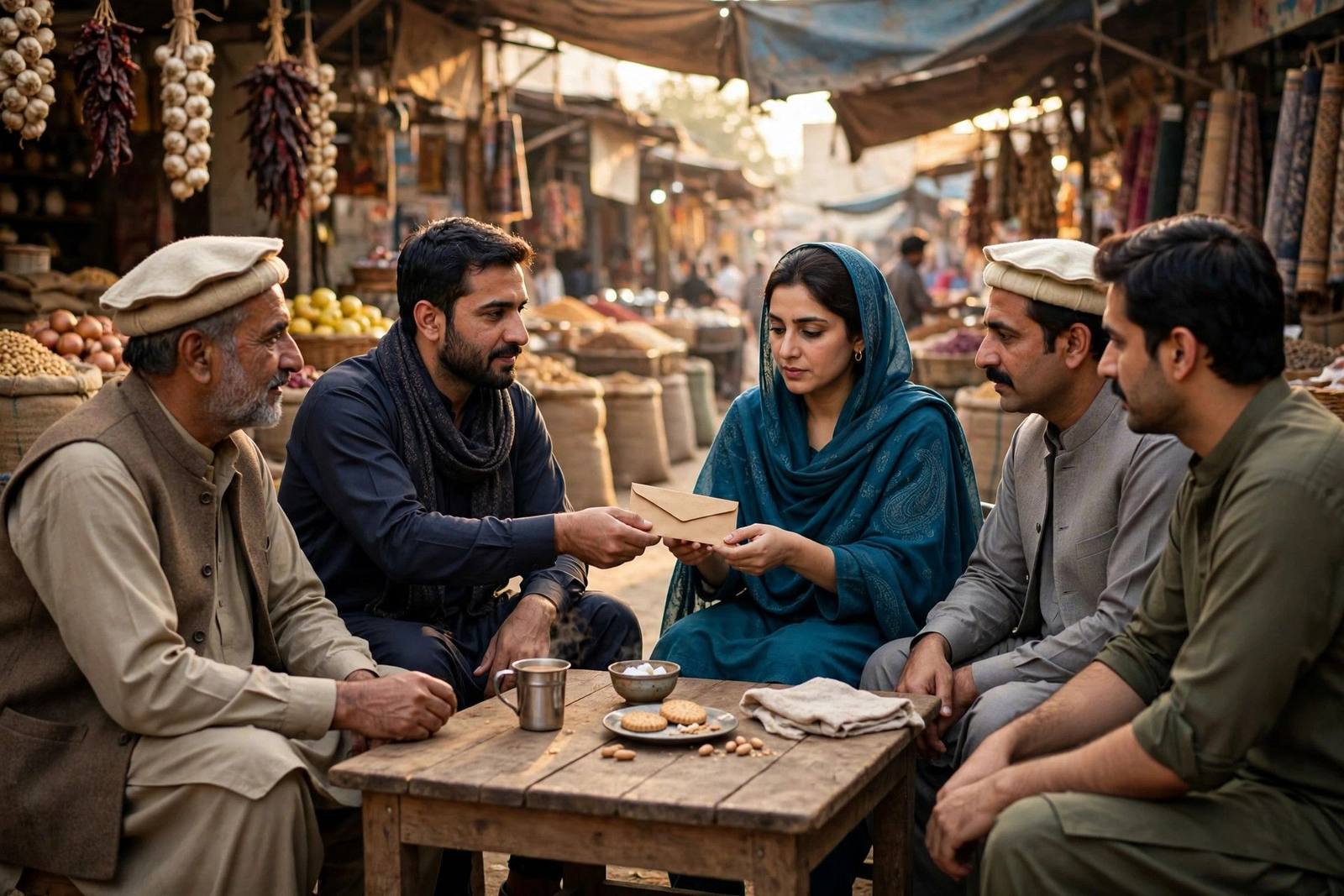
KARACHI: Almost every Pakistani household knows the committee. A group of colleagues, cousins, neighbours or shopkeepers agrees that each member will put in a fixed sum every month, and that each month one member takes home the whole pot. The circle runs until every member has had a turn, and then it dissolves — or, as often happens, starts again over tea. Committees, known internationally as rotating savings and credit associations, or ROSCAs, are probably the most widely used financial instrument in Pakistan after cash itself. They require no bank account, no paperwork, no credit history and no interest. They also sit entirely outside the regulated financial system, which means their strengths and their dangers come from exactly the same source: they run on trust alone. This guide explains how a committee actually works, does the arithmetic its members rarely do, and assesses the institution honestly — neither the scam its critics describe nor the free lunch its fans imagine.
What a committee actually is
A committee is a private, self-organised agreement among a fixed group of people to save together and lend to each other in rotation. It has no legal personality, no office and usually no written contract. One member — often the person who formed the group, and frequently the one who takes the first pot — acts as organiser: collecting the monthly instalments, keeping the list of who has received and who is still waiting, and chasing late payers. The group may form around a workplace, a family, a market association, a women's savings circle or a housing society, and its size ranges from a handful of members to several dozen. The monthly contribution is set at a level every member can sustain, because the system's entire stability depends on nobody missing a payment for the full length of the cycle.
It is worth being precise about what a committee is not. It is not a bank deposit: no institution holds the money between meetings, and no regulator supervises it. It is not an investment: the pot does not grow while it circulates. And it is not, despite the way it is sometimes discussed, a profit-making scheme — over a full cycle, each member pays in exactly what they take out, rupee for rupee, before any adjustment for timing and inflation. What the committee really sells is sequencing. Everyone receives the same total, but at different times, and the order of receipt is where all the economics — and most of the arguments — live.
How the rotation works
The mechanics are simple. Suppose twelve members each contribute Rs 10,000 a month. Every month the organiser collects Rs 120,000 and hands it to one member. In the first month, one member receives Rs 120,000 having paid in only Rs 10,000; in the last month, another member receives Rs 120,000 having paid in Rs 110,000 over the preceding eleven months and adding their final instalment. The order is settled at the start — by mutual agreement, by lottery or draw, by need, or in some circles by bidding, where members accept a discount on the pot for an earlier turn and the discount is shared or used to sweeten later payouts. Bidding committees, common in some trading communities, are quietly more sophisticated: the discount is an implicit interest rate, and the member who bids most aggressively for early cash is revealing how urgently they need it.
Once the order is set, the obligations are rigid. A member who has already taken the pot must keep paying every month until the cycle ends — they have effectively received an interest-free loan from the group and are repaying it in instalments. A member still waiting is, in the meantime, lending interest-free to everyone ahead of them. The organiser's social authority enforces this. There is no collateral, no guarantor in the legal sense, and usually no recourse beyond reputation, family pressure and exclusion from future circles. That enforcement sounds fragile, yet in stable, close-knit groups it works remarkably well, because the cost of defaulting is not a legal judgment — it is being cut off from the network of people among whom one lives and works.
The arithmetic nobody does
Because the sums in and out are equal, members tend to describe the committee as costless. It is not; its costs are hidden in timing. Inflation in Pakistan has, in recent years, run at rates that make timing matter enormously. The member who takes the pot in month one receives rupees at today's purchasing power and repays them in steadily cheaper rupees over the year. The member who takes it in month twelve has lent a year of purchasing power to the group and receives back a pot whose real value has shrunk by roughly the year's inflation. In a high-inflation year, the last recipient can lose a noticeable slice of real value — the mirror image of the first recipient's gain. A committee, in other words, transfers wealth from its patient members to its early ones, silently and without anyone signing anything.
The second hidden cost is opportunity cost. The waiting member's monthly instalments could instead sit in a bank account, in National Savings schemes or in prize bonds, earning something rather than nothing. Committees predate easy access to those alternatives for many savers, and for some members the comparison misses the point: the committee's real product is not return but commitment. A standing monthly obligation enforced by peers achieves what willpower alone often does not — a lump sum actually accumulates. Economists who study ROSCAs worldwide make exactly this argument: the committee is a commitment device first and a financial contract second, and judged purely as an investment it will always lose to a savings account; judged as a machine for forcing disciplined saving among people paid monthly, it is genuinely hard to beat.
Why committees thrive alongside banks
If committees were merely inferior bank accounts, they would have disappeared as banking spread. They persist because they solve problems banks do not. They need no documentation beyond belonging — a decisive advantage in an economy where much income is informal and undocumented. They charge no fees and ask no questions. The lump sum arrives on a known date, which members plan around: a daughter's wedding, a shop's stock purchase, school fees, a motorbike, the down payment on a plot. The early turn functions as instant, interest-free credit without an application; the late turn functions as enforced saving without a branch visit. For observant savers who avoid interest on religious grounds, the basic committee also has an appeal: the rotation involves no riba in its simple form, though scholars differ on some bidding variants, and members for whom that matters should take advice specific to the format their circle uses.
There is also a social economy inside the circle. Membership signals reliability; being invited into a good committee is a small certificate of character, and organisers — often respected elders, senior colleagues or market figures — build standing by running circles that complete without incident. Digital versions have begun to appear, with apps and wallet-based groups formalising contributions and draws, though the classic committee remains stubbornly offline and interpersonal. Pakistan's formal financial-inclusion efforts, from branchless banking to microfinance, compete with the committee less on price than on trust — and trust, built over decades of completed cycles, is the incumbent's deepest moat.
Where committees go wrong
The failure modes are the mirror of the strengths. Because there is no regulator, no deposit protection and usually no paper trail, a member's protection is only the group's cohesion. The classic disaster is default in the middle: a member who has taken an early pot stops paying, moves away, loses a job or simply disappears, and the remaining members must either cover the shortfall, shrink later pots, or watch the circle collapse. Organiser fraud is the second disaster — the person collecting the cash is, for part of each month, holding everyone's money, and cases of organisers absconding surface in the press with depressing regularity. The third risk is contagion of circumstance: circles formed inside one workplace or one trade can be hit simultaneously when that employer or trade hits trouble, so the members all need their money at exactly the moment the group's capacity to pay is weakest.
A subtler risk is mismatch. A committee is a poor emergency fund: your turn is fixed months away, and a crisis in month two cannot pull a month-ten pot forward without the group's agreement. Money locked into a rotation is also money exposed to a full cycle of inflation and life risk with no compensation for either. And because committees are so familiar, outright frauds borrow their clothing — schemes that promise doubled pots or bonus turns are not committees at all but the anatomy described in our guide to Ponzi schemes in Pakistan, and the difference matters: in a genuine committee the pot can never exceed total contributions, so any promise that it will is the tell of a swindle.
Committees in Pakistan's financial landscape
Regulators have long regarded the committee with a mixture of respect and unease. It sits outside the State Bank's and the SECP's perimeters: no licence is needed to run one among friends, no returns are filed, and participants have no claim on any compensation scheme when one fails. At the same time, official financial-inclusion strategies acknowledge what any bazaar could have told them — that informal rotating savings move serious money. Development economists have estimated for decades that a large share of Pakistani households participates in a committee at some point, and microfinance institutions deliberately borrowed the model's group discipline when designing their own lending circles. The committee's persistence is therefore best read as market information: it tells the formal sector exactly which needs — small, regular, trust-based, paperwork-free — remain unmet by accounts and apps.
That gap also explains the periodic attempts to formalise the model. Savings apps, wallet-based circles and community-finance startups have each tried to keep the rotation while adding records, reminders and some measure of recourse. Their challenge is structural: the very features that make a committee work — personal knowledge of every member, social consequences for default, an organiser whose standing is local and personal — resist scaling. A digitised committee among strangers is a different product wearing a familiar name, and it should be judged by different tests: who holds the money, under what licence, and what happens when a stranger in another city stops paying. Until formal versions can answer those questions as convincingly as a trusted organiser can, the tea-shop original will keep its market.
If you join one: the ground rules
None of this means committees should be avoided; it means they should be joined like a financial decision, not a social reflex. Know every member, or know exactly whose judgement you are trusting in admitting them — the circle is only as strong as its weakest payer. Prefer groups where you can verify the organiser's track record across completed cycles, and where contributions are made in ways that leave some trace, even if only a shared written list signed at each collection. Take a turn that matches your purpose: an early pot is borrowing, so have the use for it settled in advance; a late pot is saving, so be honest that inflation will tax it, and consider it the price of enforced discipline rather than a return. Never let a committee be the destination for money you cannot afford to lose or might need mid-cycle, and be wary of stacking multiple committees whose combined instalments strain your monthly cash flow — the most common path to default is an honest member who over-committed in a good season.
Finally, keep the committee in proportion. For many Pakistanis it is the first rung of financial life — the lump sums that seed a small business, furnish a home or fund a course — and it has quietly financed more real economic activity than many formal schemes. Used knowingly, with members you trust, sums you can sustain and a purpose fixed in advance, it remains a serviceable tool. This article is educational content, not financial advice. The honest summary is that a committee is a disciplined way to move your own money through time with the help of your peers, and it deserves neither romance nor contempt — just clear arithmetic before you commit.
Key takeaway: A committee pays every member back exactly what they put in — its real economics are timing, trust and discipline: early turns are interest-free loans, late turns are inflation-taxed saving, and the group's cohesion is the only guarantee you will ever get.