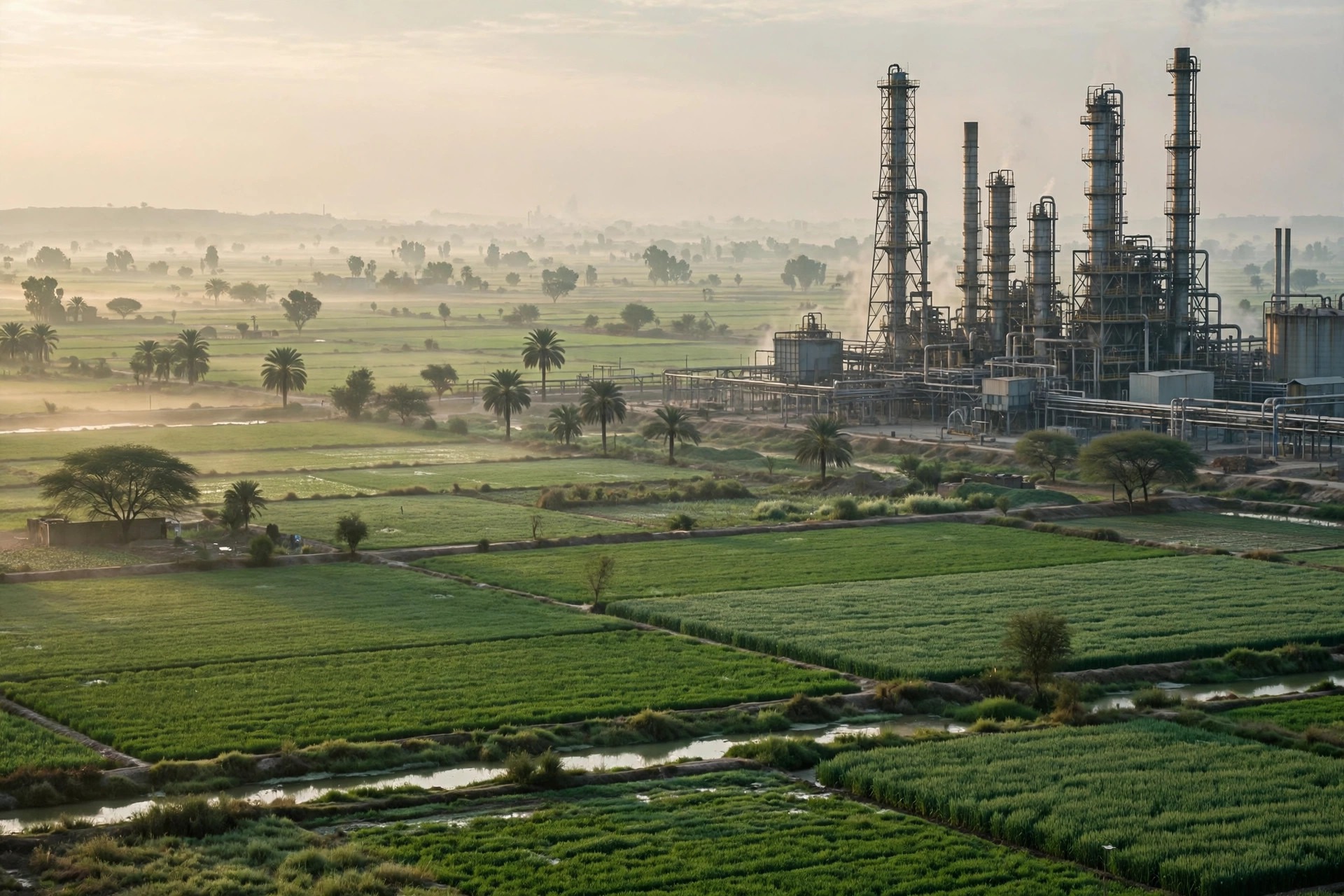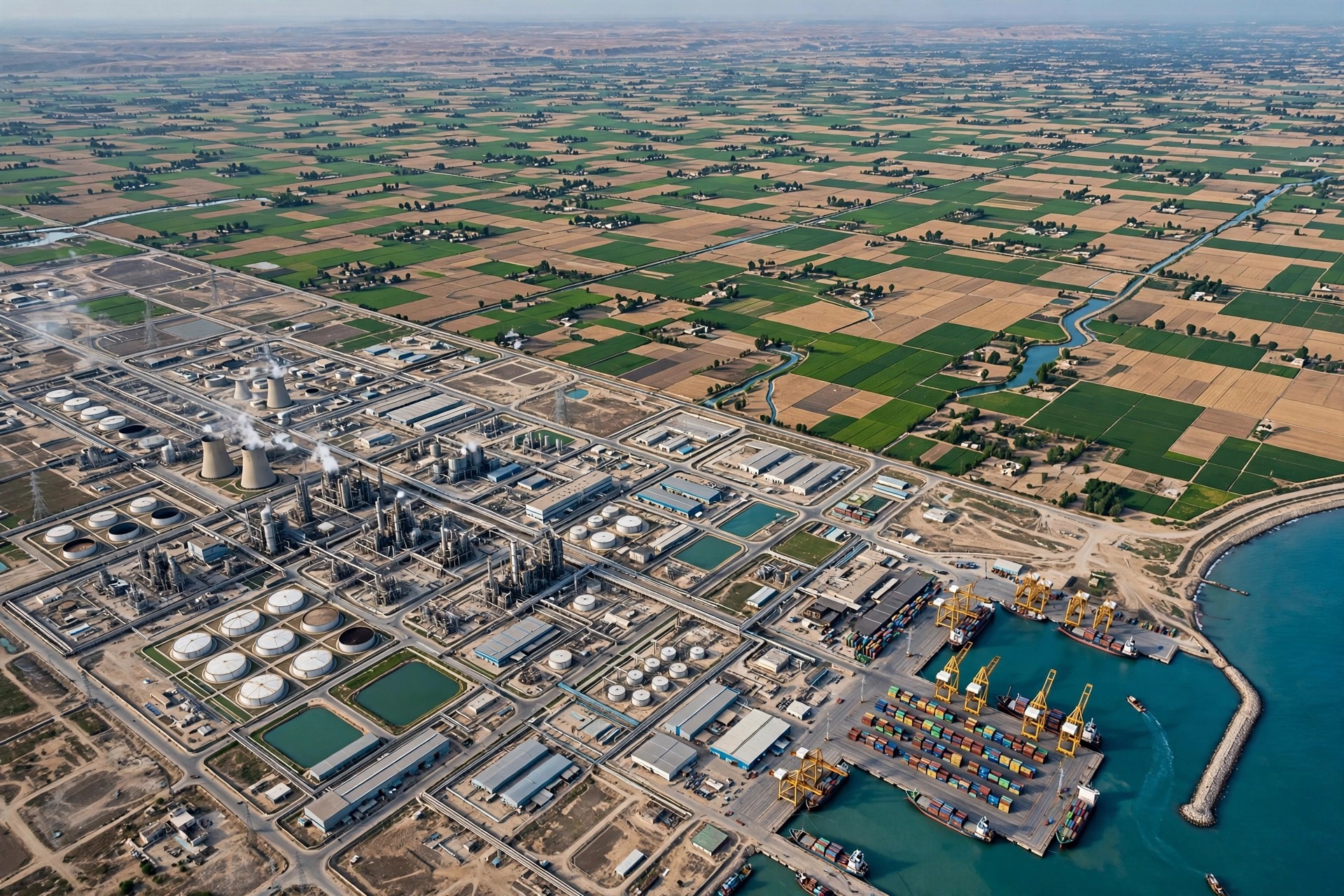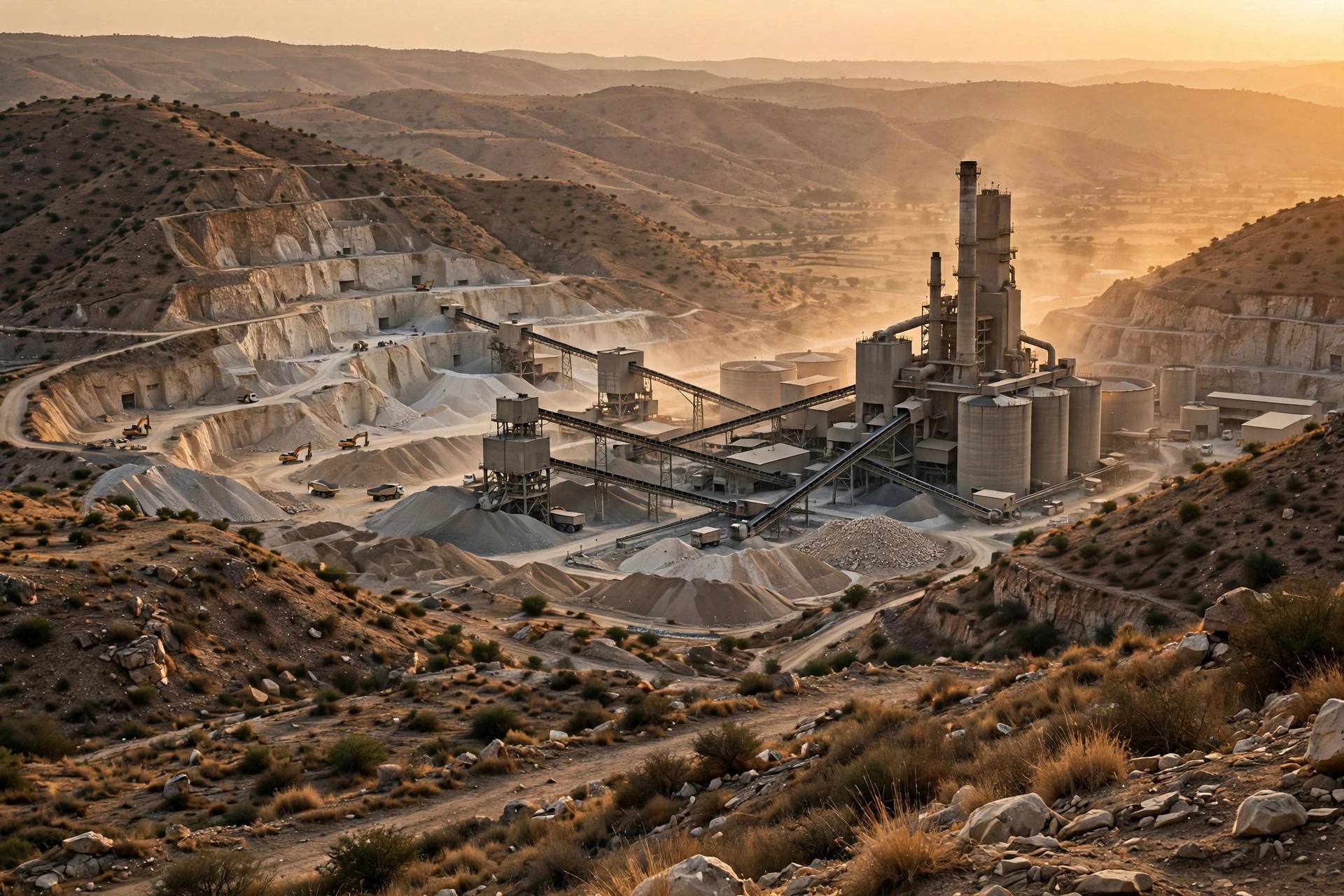
KARACHI: Drive south from Dera Ghazi Khan towards the Sulaiman foothills and the landscape explains the company before any annual report does: limestone country. D.G. Khan Cement — DGKC on the Pakistan Stock Exchange — began there in 1986 as a state-built plant, passed through one of the defining privatisations of the 1990s, and grew under the Nishat Group into one of Pakistan's largest cement makers, with plants in Punjab and on the Balochistan coast. Its story is really three stories woven together: the story of Pakistan's cement industry, the story of privatisation, and the story of how the Mansha family's Nishat Group turned a single government factory into the heavy-industry anchor of a business empire.
What DGKC makes and sells
DGKC makes cement — mainly ordinary Portland cement, the grey powder that, mixed with water, sand and aggregate, becomes the concrete and mortar in houses, bridges, dams and motorways — along with sulphate-resistant cement for ground conditions where ordinary cement degrades faster. Its brands include DG Cement, Elephant Cement, Hathi Cement and Block Cement, sold through a countrywide dealer network to everyone from a family adding a room to contractors on national infrastructure projects. Cement is a commodity: one bag competes with another largely on price, availability and the builder's trust in consistent strength. That is why plant location and distribution matter so much — cement is heavy and cheap per kilo, so transporting it long distances eats the margin, and every producer's natural territory is the construction demand within economical trucking distance of its kilns.
The company sits inside the wider map drawn in our guide to cement stocks on the PSX, where DGKC appears alongside northern and southern rivals whose plants ring the country's limestone belts. Cement demand itself is a rough thermometer of the whole economy: it rises with housing, development budgets and big projects, and falls quickly when interest rates climb or public spending is cut.
Founded by the state: 1978 to 1986
DGKC's own company histories trace its incorporation to 1978, under the management control of the State Cement Corporation of Pakistan — the government body that then ran much of the industry. The plant was built at Dera Ghazi Khan in southern Punjab, close to limestone deposits, with plant and machinery supplied by Ube Industries of Japan. Commercial production started in April 1986 at an initial clinker capacity of about 2,000 tonnes per day, using dry-process technology. In that era the logic was developmental, not commercial: the state built cement capacity so that Pakistan would not have to import a basic building material, and plants were placed near raw materials even when the nearest big market was hours away. The Dera Ghazi Khan site fit that pattern perfectly — remote, but sitting on the essential ingredient.
Privatisation and the swap that brought Nishat in
The early 1990s changed the ownership, twice over. Under the government's privatisation programme, DGKC was sold in 1992 — accounts of the transaction describe an initial acquisition by the Saigol Group — and the company was listed on the stock exchanges. Soon afterwards came the transaction that fixed its modern identity: in a swap between two of Pakistan's great business houses, the Nishat Group acquired DG Cement while the Saigol Group took Maple Leaf Cement from Nishat. DGKC's own annual-report histories summarise it simply as acquisition by the Nishat Group in May 1992 followed by listing, and by either telling the destination is the same: the plant became the cement flagship of Mian Muhammad Mansha's Nishat Group, where it has remained ever since, with Nishat Mills — the group's textile flagship — as its single largest shareholder.
Privatisation mattered because it changed what the plant was for. A state unit could tolerate low utilisation and overstaffing; a listed company answerable to shareholders had to sweat the asset. Through the 1990s DGKC debottlenecked and expanded the Dera Ghazi Khan plant in stages, adding capacity as Pakistan's construction demand grew, and financed part of a major mid-1990s expansion with support that included the International Finance Corporation.
Three plants, two markets: Chakwal and Hub
One plant became three. The second was built at Khairpur, near Chakwal in northern Punjab — company histories record the separate Chakwal plant being established in 2007 with its own large kiln lines, placing DGKC inside the northern market that serves Islamabad, Lahore and the populous Punjab heartland. The third, and boldest, step came in the following decade at Hub, in Balochistan, just outside Karachi. Setup of the Hub plant began around 2015, and it gave DGKC something its inland plants could never offer: a coastal position in the southern market, within reach of Karachi's construction demand and of the port for exports by sea.
Geography is strategy in cement. The industry divides Pakistan into a northern zone and a southern zone, with different demand cycles, competitors and export options. With Dera Ghazi Khan and Chakwal in the north and Hub in the south, DGKC became one of the few producers with a serious footprint in both — able to serve house-builders in Punjab, projects in Karachi, and overseas buyers when domestic demand sagged and clinker or cement exports made sense. Each expansion also raised the stakes: cement plants are enormously capital-intensive, financed with a mix of debt and equity, and they earn their keep only if utilisation stays high across the cycle.
Inside the Nishat Group
To see DGKC clearly, zoom out to its parent. The Nishat Group, built by the Mansha family, spans textiles, banking, insurance, power and more. DGKC is its industrial heavyweight, and the cross-holdings reflect the group's style: Nishat Mills holds the largest block of DGKC shares, while DGKC itself holds stakes in group ventures. Two subsidiaries show how a cement company grows sideways along its own supply chain and beyond. Nishat Paper Products, set up in 2004 as a joint venture and later wholly within the group's orbit, makes the paper sacks cement is packed in — a plant conveniently located at the Chakwal site, producing bags by the hundred-million. Nishat Dairy, founded in 2011, runs a large dairy farm — a reminder that conglomerates in Pakistan often place side bets far from the parent business. Readers following the family tree can continue with the profiles of Nishat Mills, the 1951 textile mill that seeded the group, and Nishat Power, its listed power venture. Our explainer on Pakistan's conglomerates sets out why these groups are structured the way they are.
How a cement company makes money
The mechanics are a contest between price per bag and cost per tonne. Revenue is simply dispatches — tonnes of cement and clinker sold — multiplied by the price the market will bear, which in Pakistan moves with demand, competitor capacity and periodic understandings among producers, and is quoted net of taxes and dealer margins. The cost side is dominated by energy: burning limestone into clinker takes intense heat, historically from gas, furnace oil and, above all in recent decades, coal, much of it imported, supplemented by local coal and alternative fuels. Add electricity for grinding, limestone and other raw materials, packing, freight to dealers, and the depreciation of very large plants, and you have the model: when construction booms, kilns run full, fixed costs spread thin and margins widen quickly; when demand falls, the same fixed costs sit on fewer tonnes and profits compress just as fast. This operating leverage — plus exposure to the dollar through imported coal — is why cement earnings swing so dramatically, and why DGKC's watchers obsess over monthly industry dispatch numbers published for the sector.
Cement in everyday Pakistani life
It is hard to name an industry more literally foundational. Every self-built house in a Punjab village, every Karachi apartment block, every motorway interchange and hydropower dam passes through the bags that DGKC and its rivals produce. The company's plants are also major employers and buyers in districts — Dera Ghazi Khan, Chakwal, Hub — where formal industrial jobs are scarce, and its kilns anchor local economies of transporters, dealers, masons and retailers. When Pakistan debates housing shortages, infrastructure gaps or reconstruction after floods, it is implicitly debating the capacity and pricing of this industry.
Two adaptations define DGKC's recent decades as much as its plants do. The first is exports. A coastal plant at Hub put the company within trucking distance of Karachi's ports, and when domestic construction slows — as it does whenever interest rates rise to fight inflation — southern producers can redirect clinker and cement to buyers in East Africa, the Gulf and beyond. Export tonnes rarely earn what home tonnes earn, but they keep kilns running, absorb fixed costs and bring in dollars; watching the export share of DGKC's dispatches is therefore a quick way to judge how weak, or how strong, the home market is. The second adaptation is energy. Cement's fuel bill pushed the whole industry, DGKC included, towards waste-heat recovery power, captive generation, solar installations at plant sites and constant re-optimisation of the coal blend — imported coal when it is cheap, local and Afghan coal when the dollar or freight rates punish imports. Each choice is a bet placed months before the cement is sold, and the spread between a well-bought fuel book and a badly bought one can decide a quarter.
Underneath both sits the industry's oldest rhythm: capacity is added in waves when times are good, and the whole sector then spends years digesting it. DGKC's Hub plant was conceived in one such wave, and its early years ran through the digestion phase that followed. That is the essential context for reading any single year's result for this company — the plant fleet is long-lived, the demand cycle is not, and the distance between the two explains most of what looks like drama in the annual accounts.
One more feature of the company repays attention: its headquarters and shareholding tell the group's story in miniature. The head office sits in Lahore, far from any of its kilns, inside the Mansha business ecosystem — the same city, and often the same extended professional circles, as Nishat Mills, the group's banks and its power ventures. Group companies lend credibility to one another, share treasury and legal depth, and present a common face to regulators and lenders, which is part of why a cement plant privatised in the confused early 1990s could finance expansion after expansion. For the outside shareholder the arrangement demands one habit above all: reading DGKC's related-party disclosures, because in a group this interconnected, the boundary of the company is a legal fact but an economic gradient — and the annual report is where that gradient is honestly mapped.
What investors typically watch in DGKC
- Dispatches and capacity utilisation — how many tonnes the company and the industry ship each month, against installed capacity.
- Retention prices — the net price per bag producers actually keep after taxes and trade discounts, and how it moves against costs.
- Coal and energy costs — imported coal prices, the mix of local and Afghan coal, and the rupee's effect on all of it.
- The north–south balance — demand in Punjab versus Karachi and the export option through Hub when home demand is weak.
- Interest rates and construction activity — the macro weather for the whole sector, including public development spending.
- Group and balance-sheet moves — debt taken on for expansions, and dividends balanced against the next kiln the group wants to build.
DGKC's seat in the benchmark reflects that scale: as one of the larger listed industrials, it is the kind of stock whose market capitalisation keeps it in the KSE-100 through most reviews. This profile is educational content, not financial advice — its aim is to give you the map: a state factory of the 1980s, a privatisation-era swap, three plants across two markets, and a cost base hostage to coal and construction cycles. The Aktzien learning library fills in the general ideas — capacity, commodities and conglomerates — behind the map.
Key takeaway: DGKC grew from a 1986 state plant at Dera Ghazi Khan into the Nishat Group's three-plant cement flagship, earning its money tonne by tonne on the spread between bag prices and the coal-heavy cost of making clinker.