KARACHI: Every bag of Engro urea spread on a wheat field in Sindh or Punjab carries a story that starts with a gas discovery in the 1950s. Engro Fertilizers — EFERT on the Pakistan Stock Exchange — is the listed company that runs the Daharki fertilizer complex, one of the industrial landmarks of upper Sindh, and sells the urea, phosphates and speciality nutrients that Pakistani farmers plan their seasons around. It is a subsidiary of the Engro group, a fixture of the fertilizer sector, and for many market followers the purest listed window onto a question that decides harvests: how much gas Pakistan's urea plants get, and at what price.
What EFERT makes and sells
EFERT's core product is urea, the nitrogen fertilizer that drives crop growth and accounts for the largest share of fertilizer use in Pakistan. Around that core sits a full shelf of plant nutrition: Engro DAP and other phosphatic products (much of them imported through the group's trading arm and marketed domestically), the phosphatic brand Zorawar, the compound fertilizer Zarkhez range supplying nitrogen, phosphorus and potassium together, the enhanced-efficiency Zabardast Urea, and micronutrient and speciality lines such as Zingro. The company also sells seeds and crop-protection products, positioning itself less as a bag-seller and more as a seasonal partner to the farmer — advice, field staff and agronomy programmes included, a tradition that goes back to the very beginning of the business.
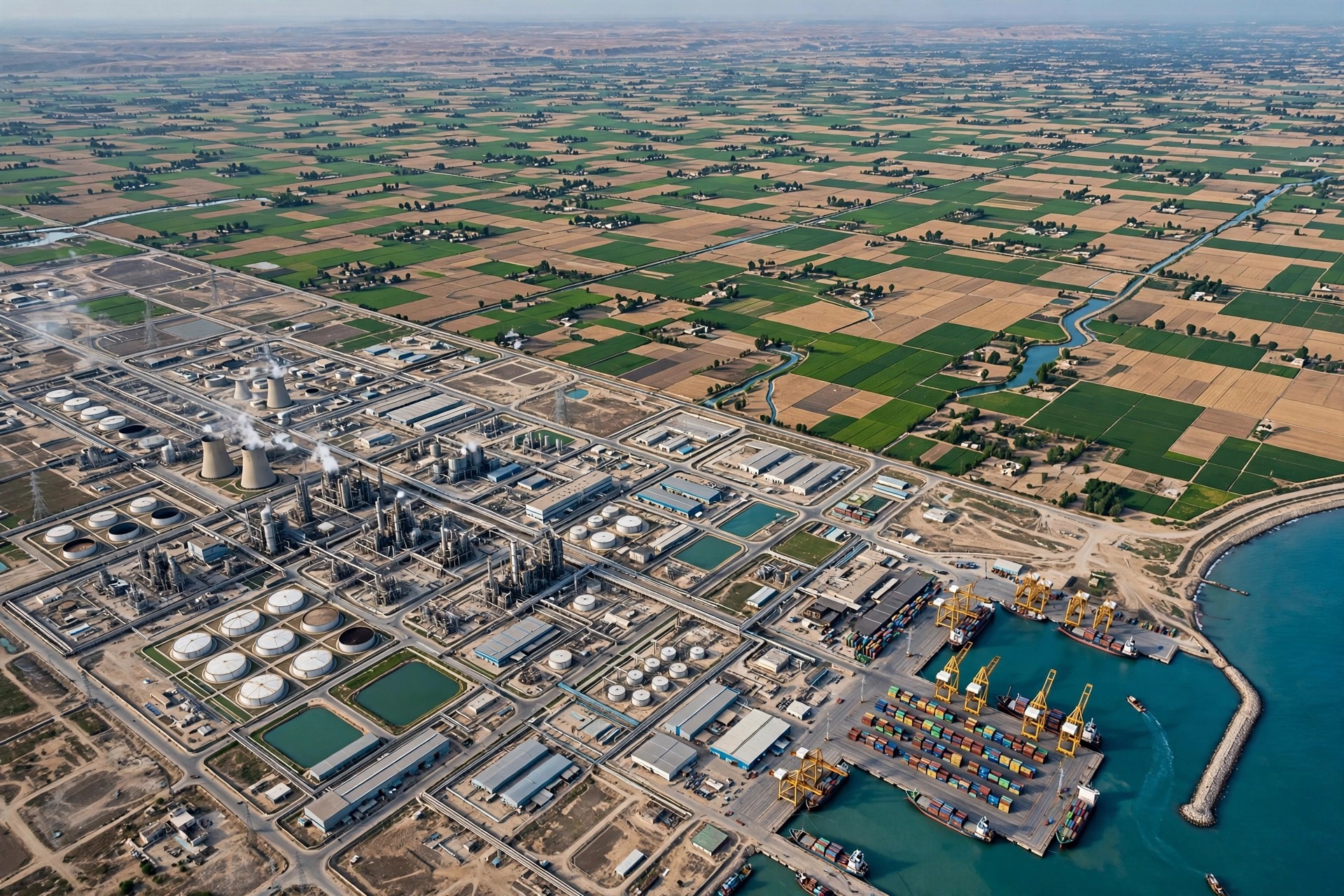
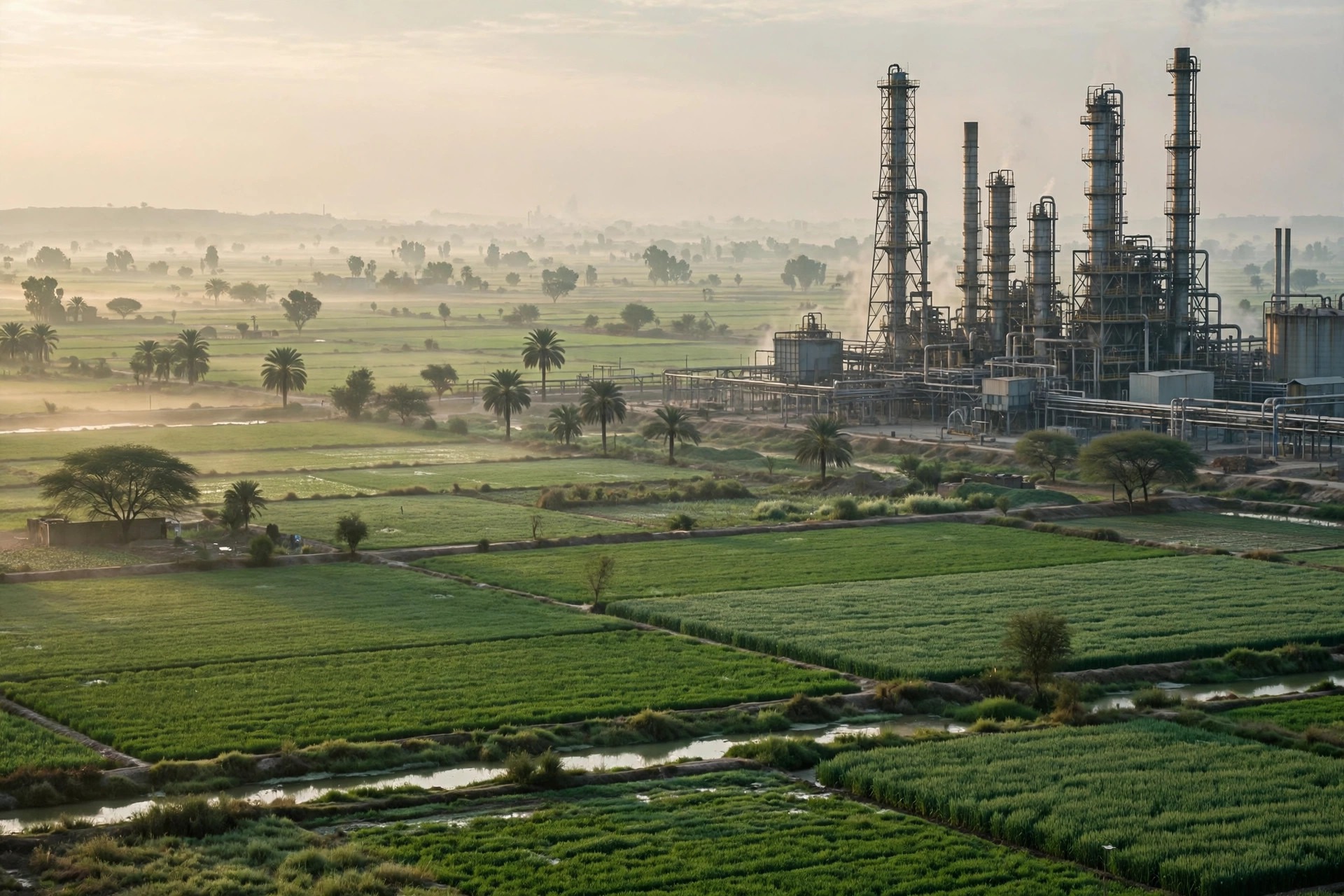
Production is centred on Daharki, in Sindh's Ghotki district, where the plants turn natural gas into ammonia and then urea, with a further facility at Port Qasim handling phosphates. Gas is both the raw material and the fuel of a urea plant — chemists call the portion consumed in the reaction itself feedstock and the portion burned for energy fuel — so a fertilizer company's destiny is written in its gas allocation and the tariff attached to it. Our guide to fertilizer stocks on the PSX places EFERT beside its listed rivals and explains the sector's shared dependence on gas policy.
Esso, the Mari field and a plant at Daharki: 1957 to 1968
The origin is unusually well documented. In 1957, Pak Stanvac — a joint venture involving Esso — discovered the Mari gas field near Daharki, then a small, remote settlement in upper Sindh. Esso proposed using that gas where it lay: a urea plant next to the field. An agreement with the Government of Pakistan followed in 1964, Esso Pakistan Fertilizer Company was incorporated in 1965 with Esso holding about three-quarters of the shares and the public the rest, construction began at Daharki in 1966, and production started in December 1968. At roughly US$43 million for an initial capacity of about 173,000 tonnes a year, it was described at the time as the single largest foreign investment by a multinational in Pakistan. Just as lastingly, Esso built a proper marketing organisation that ran agronomy programmes teaching farmers how to use fertilizer — the company was, in effect, creating its own market, and its branded urea gave the business the name that stuck: Engro, presented as an acronym for Energy for Growth.
From Exxon to the great employee buy-out
In 1978 Esso became Exxon as part of a global renaming, and the company became Exxon Chemical Pakistan. The decisive chapter came in 1991, when Exxon decided to exit the fertilizer business worldwide. Rather than sell Daharki to another multinational, the business was bought by its own people: the employees of Exxon Chemical Pakistan, partnering with local and international financial institutions, acquired Exxon's roughly 75 per cent stake in what is still described as perhaps the most successful employee buy-out in Pakistan's corporate history. The company was renamed Engro Chemical Pakistan, and the farmer's supplier became a Pakistani company with an unusually professional, institutionally held ownership. Capacity grew through the 1990s — notably the Pakven 600 project commissioned in 1993, built around an imported second-hand plant, which lifted urea capacity to about 600,000 tonnes a year, with further debottlenecking after that — and the group diversified into foods, energy, chemicals and other ventures, all still inside the one listed Engro company.
EnVen, the demerger and a listing of its own
Two moves in quick succession created the EFERT investors know today. The first was physical: the EnVen plant at Daharki, commissioned in June 2011 at a cost of about US$1.1 billion and built under the government's 2001 Fertilizer Policy, which promised new plants gas at a concessional rate for ten years. EnVen was a giant single-train urea plant and transformed Engro's scale overnight. It also wrote the company's defining grievance: the gas contracted through Sui Northern Gas Pipelines was not delivered as promised, supply fell short of the policy commitment, and in 2013 Engro claimed very large damages over the default — a dispute that taught the whole sector how much a fertilizer plant is worth when its gas does not arrive. Concessional feed-gas pricing on part of the supply also made EnVen's economics structurally different from the older base plant, a two-tier gas reality that still shapes how analysts model the company.
The second move was corporate. In June 2009 Engro Fertilizers was incorporated as a separate company, and the fertilizer business was demerged from the parent with effect from 1 January 2010, as Engro Chemical converted itself into a holding company, Engro Corporation. EFERT then listed on the Karachi Stock Exchange in December 2013 after an initial public offering. In 2015 it absorbed the group's DAP-importing arm, Engro Eximp, and in 2016 Engro Corporation sold a substantial minority stake in EFERT to private investors, leaving the parent with a controlling holding of a little over half. The profile of its parent today is told in the companion piece on Engro Holdings, and the holding-company mechanics behind both are unpacked in how Engro makes money.
How a urea maker earns its money
The model in one line: buy gas at a regulated price, convert it into urea, sell the urea at a market price the government watches closely because farmers' costs are politically sensitive. The spread between the gas tariff — different for feedstock and fuel, and different again for the older plant and EnVen under its policy concessions — and the urea price is where profit is made or lost. Phosphatic products work differently: DAP is largely imported at international prices and sold in rupees, so its margin swings with global prices and the exchange rate, while speciality and compound fertilizers earn on brand, agronomy and distribution rather than commodity spread. Against revenue sit the costs of running huge chemical plants safely — maintenance turnarounds, catalysts, labour, packing, a national distribution network of dealers and warehouses — plus finance costs on expansion debt and corporate tax, including the sector's periodic encounters with additional levies. Because Pakistan periodically faces urea shortages and imports at far higher international prices, domestic producers also operate under constant public scrutiny: their gas is subsidised by policy, so their pricing is treated as a matter of national food security, not just commerce.
The farmer's year, and EFERT's place in it
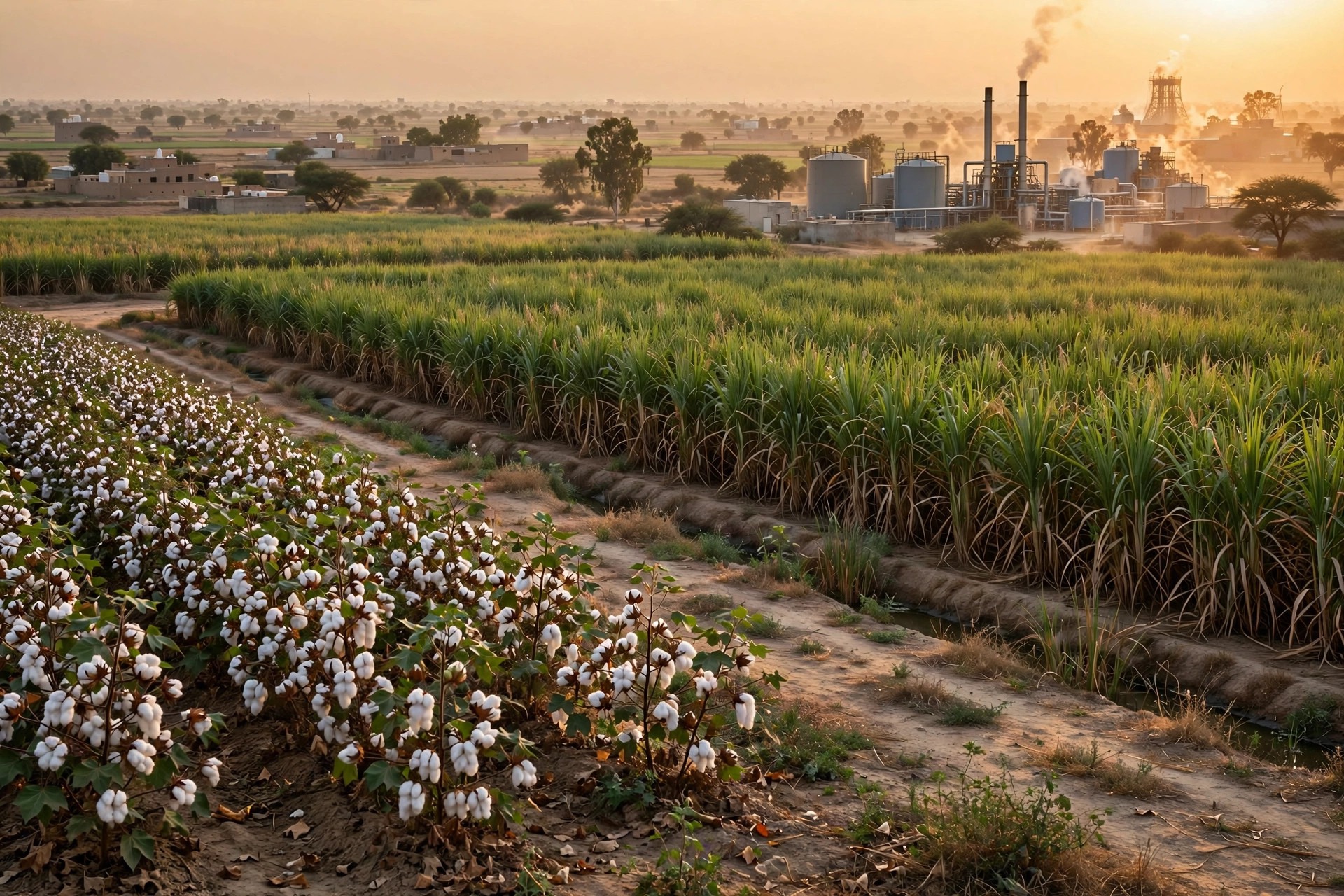
Fertilizer demand follows the agricultural calendar: the Rabi season's wheat and the Kharif season's cotton, rice, sugarcane and maize set the rhythm, and a dealer's yard in October tells you more about the quarter than any forecast. EFERT's field teams, soil-testing and farmer-education work — a direct inheritance from the Esso era — exist because yields in Pakistan remain well below potential, and every incremental bag used correctly is both a sale today and a more productive customer tomorrow. In a country where agriculture employs a huge share of the workforce and food imports strain the external account, the Daharki plants are strategic infrastructure that happens to be privately owned and publicly listed.
Efficiency, turnarounds and the second business: phosphates
Running a urea plant well is a discipline of small percentages. Ammonia and urea units lose efficiency as catalysts age and heat exchangers foul, so producers periodically shut a train down for a turnaround — a planned maintenance overhaul lasting weeks — and EFERT's production calendar, like its rivals', is punctuated by these events, each one trading lost output now for reliability and energy efficiency later. Because gas is the dominant cost, a plant that squeezes more urea from each unit of gas effectively buys its feedstock cheaper than a less efficient rival on the same tariff; the Daharki base plant's decades of debottlenecking, from its original 173,000-tonne design to many times that figure, are a record of exactly that compounding. EnVen added scale of a different order — a single modern train whose output rivals the entire historic plant — which is why the company's results since 2011 are best read as two businesses sharing a site: an old, repeatedly upgraded workhorse and a giant whose gas arrangements carry the legacy of the 2001 policy promise and the litigation it spawned.
The phosphates side deserves separate attention because it behaves like a trading business wearing a manufacturer's clothes. DAP and other phosphatic products are substantially imported — the group's Eximp arm, absorbed into EFERT in 2015, exists for precisely this — so margins ride on international prices, shipping and the rupee rather than on Daharki's efficiency. In years when global phosphate prices spike, that book can contribute handsomely or squeeze painfully depending on how quickly local prices adjust; in quiet years it simply broadens the farmer offering, letting one dealer sell the full nutrient basket. EFERT's seed and crop-protection lines sit at the same strategic point: they do not move the profit needle like urea does, but they deepen the company's grip on the farmer's season, which is the asset competitors find hardest to copy.
There is a human thread through this history that the numbers miss. Daharki was a small settlement when Esso arrived; the plant made it a company town, with housing, schools and a technical workforce drawn increasingly from Sindh itself, and generations of Pakistani chemical engineers have passed through its training systems into the wider industry. The employee buy-out of 1991 deepened that identification — the workforce quite literally owned the plant for a formative period — and Engro's subsequent reputation for professional management, safety culture and community investment around its sites grew from soil first tilled at Daharki. When the group today speaks of its fertilizer business as its foundation, it is speaking historically as well as financially: everything Engro became was first paid for by urea made beside the Mari field.
What investors typically watch in EFERT
- Gas supply and tariffs — volumes actually received at Daharki, curtailment in winter, and any change to feedstock and fuel pricing or the treatment of concessions.
- Urea offtake and pricing — industry sales by month, dealer inventories, and the gap between local urea prices and import parity.
- Plant reliability — production at the base plant and EnVen, turnaround shutdowns, and how close output runs to capacity.
- The phosphates book — international DAP prices and the rupee, which drive the imported-product margins.
- Policy weather — subsidy decisions, gas-sector reform, and export permissions or bans, all of which can reset sector economics.
- Dividends and the parent — EFERT has historically been a meaningful dividend payer within the Engro system, so payout decisions are read as signals about both cash and group needs.
EFERT's weight in the KSE-100 reflects its status as one of the market's large industrial names; the explainer on market capitalisation shows why companies of this scale anchor an index. This profile is educational content, not financial advice. Its purpose is the story and the mechanics: a gas field found in 1957, a workforce that bought its own company in 1991, a billion-dollar plant whose promised gas became a courtroom argument, and a listed business still living, every quarter, on the spread between a regulated input and a nation's harvest.
Key takeaway: Engro Fertilizers turns Daharki's gas into urea and a shelf of crop nutrients; born as Esso's 1968 plant, bought by its employees in 1991 and separately listed in 2013, it lives on gas supply, gas tariffs and the farming calendar.