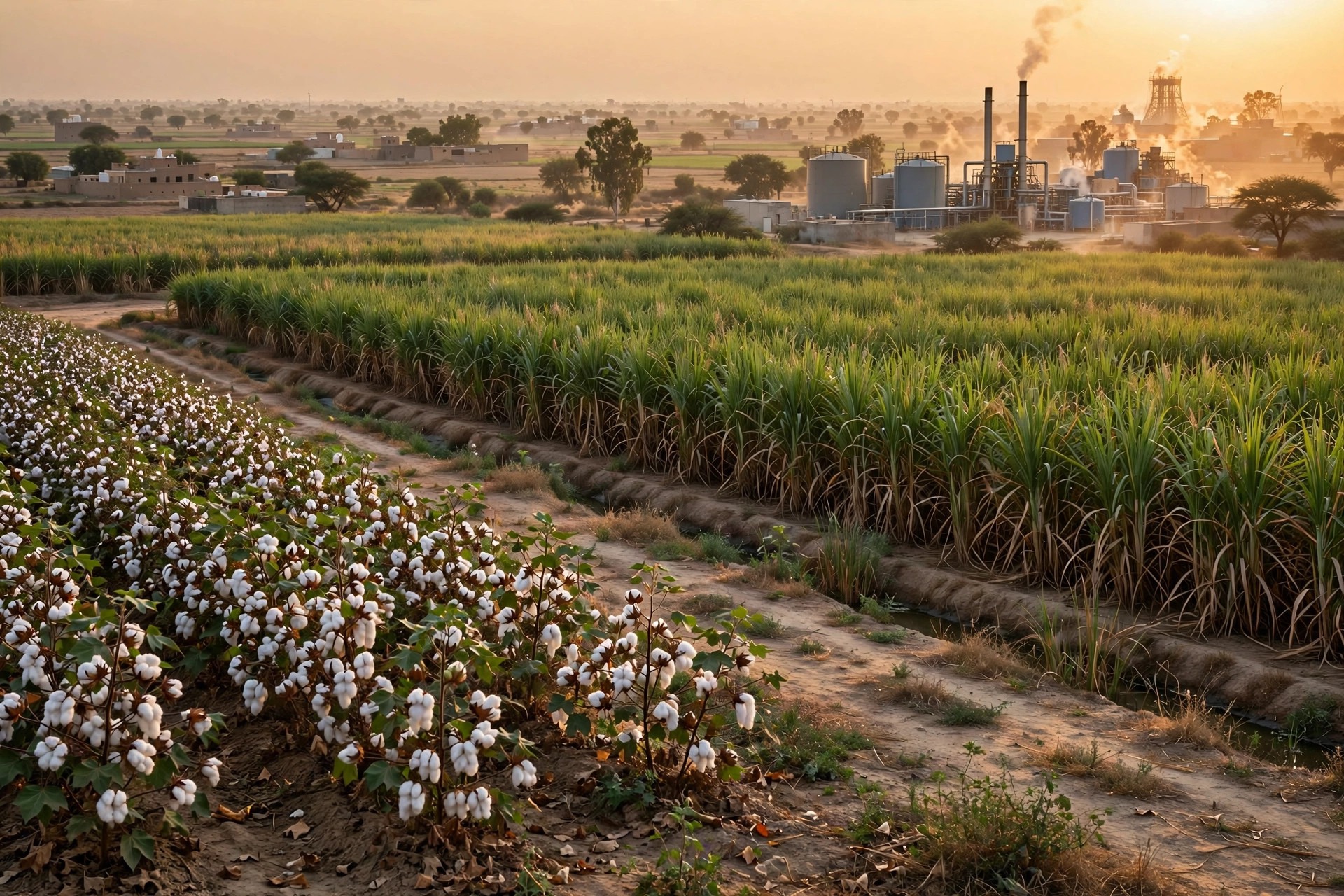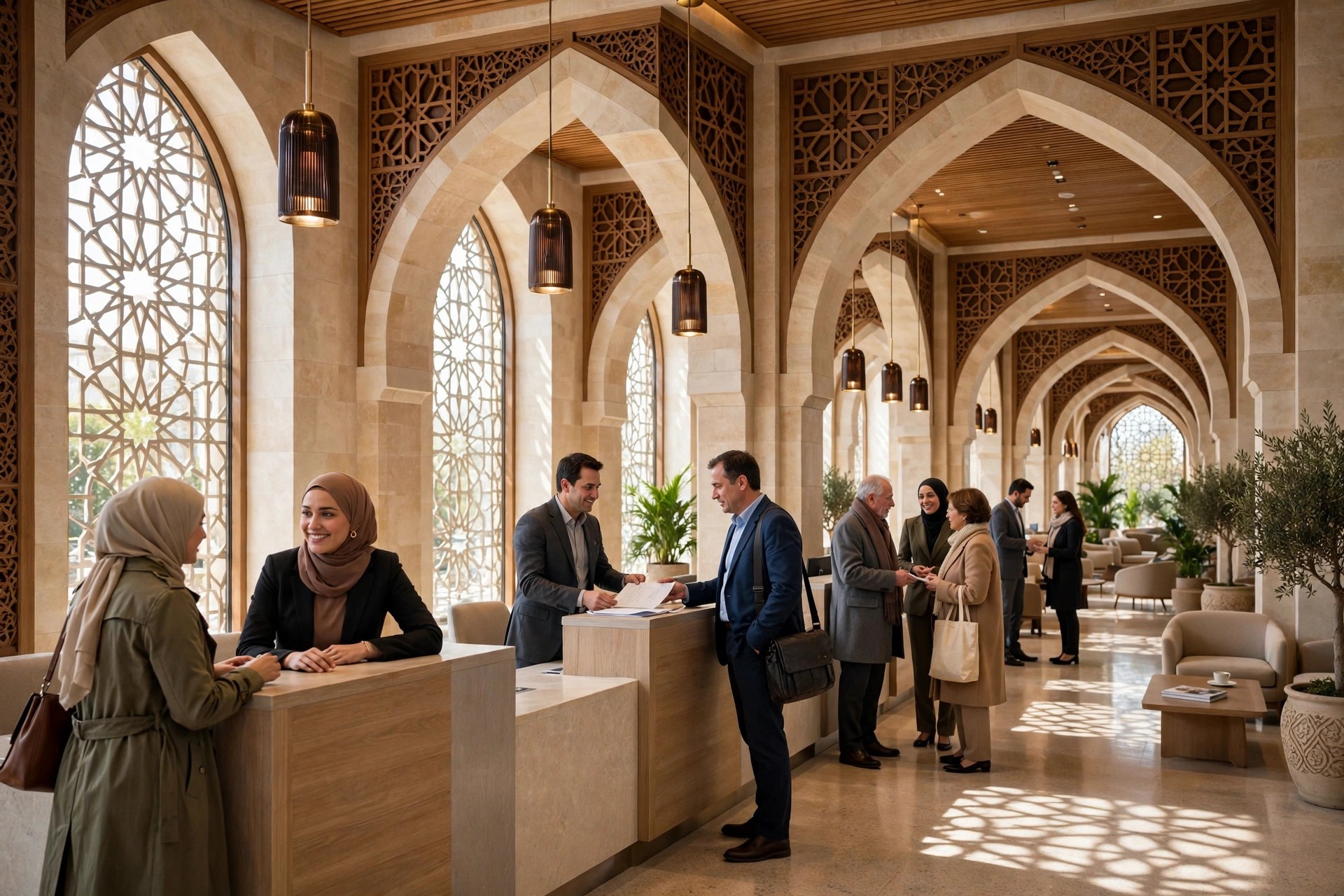
KARACHI: Banks almost never change their religion. Yet that, in operational terms, is what Faysal Bank did: a mid-sized conventional bank, with hundreds of branches, millions of accounts, car loans, credit cards and a treasury book, converted itself — product by product, branch by branch — into a fully Islamic bank. The State Bank of Pakistan granted Faysal Bank its Islamic banking licence on 30 December 2022, effective 1 January 2023, and the bank surrendered its conventional licence in return. FABL on the Pakistan Stock Exchange is therefore a case study in transformation: a Bahraini-owned Pakistani bank named after a Saudi prince, rebuilt once through the acquisition of another foreign bank's leftovers, then rebuilt again around Shariah-compliant finance.
What Faysal Bank does today
Faysal Bank is a full-service Islamic commercial bank headquartered in Karachi. It serves retail customers, small and medium businesses, commercial clients, agricultural borrowers and large corporates, through a branch network that its own reporting puts in the hundreds, spread across well over two hundred cities and towns, plus digital channels. The products carry the standard shapes of Pakistani banking — current and savings accounts, consumer and auto financing, home finance, trade services, cards, treasury operations — but every contract is now structured on Islamic principles: no interest (riba), with returns built instead from trade, leasing and partnership structures such as murabaha (cost-plus sale), ijarah (leasing) and diminishing musharakah (shared ownership that the customer buys out over time). Where a conventional bank earns the spread between the interest it pays depositors and the interest it charges borrowers, an Islamic bank earns from the margin on real transactions and shares profit with depositors whose money is placed on a profit-and-loss-sharing basis. The wider sector map is in our guide to banking stocks on the PSX, and the pure Islamic model is explored through the market leader in how Meezan Bank makes money — the competitor whose growth, in many tellings, made Faysal's choice look inevitable.
Origins: a Bahraini Islamic bank's Karachi outpost
Faysal Bank's presence in Pakistan began in October 1987, when its predecessor, Faysal Islamic Bank of Bahrain — an institution owned by Prince Mohammed bin Faisal Al Saud, son of Saudi Arabia's King Faisal, after whom the bank is named — opened with a small branch operation. The Pakistani business was incorporated locally on 3 October 1994 as Faysal Bank Limited, a public limited company. Its early decades were not a straight line: an Islamic investment-banking operation sat alongside a conventional commercial bank, and group histories record that a merger of the two in the 1990s cost the combined institution its purely Shariah-compliant character — the bank spent the next quarter-century as a conventional bank with Islamic windows and ambitions, majority-owned ultimately by Bahrain's Ithmaar Bank, which holds roughly two-thirds of Faysal Bank's shares directly and indirectly. Faysal Asset Management, the group's fund-management arm, was launched in 2003 and remains part of the family.
Reinvention I: buying RBS Pakistan
The bank's first great transformation was about scale. In 2008 a new president, Naved A. Khan, arrived from the ABN Amro world with a mandate to restructure. In 2010 Faysal Bank acquired the Pakistan business of the Royal Bank of Scotland for about £34 million. That business was itself a layer cake of earlier deals: ABN Amro's Pakistan operation, which had bought Prime Commercial Bank in 2007 — a network of dozens of branches across many cities — before ABN Amro's global carve-up delivered it to RBS. Faysal Bank thus swallowed, in one transaction, a branch network assembled by three predecessors, and spent the following years under Khan's successor Nauman Ansari integrating systems, trimming the enlarged workforce and digesting the acquisition. The episode is a tidy illustration of how Pakistani banking consolidates: foreign banks arrive, buy, merge, and eventually leave — and a local institution with patient owners picks up the network.
Reinvention II: the conversion to Islamic banking
The second transformation was about identity. Islamic banking had been the fastest-growing corner of Pakistani finance for years — depositors, especially retail savers, were choosing Shariah-compliant accounts at a pace conventional banks could not match, and Faysal's own leadership could see its Islamic branches outgrowing its conventional ones. In 2014 the bank announced its intention to convert into a full-fledged Islamic bank within three to five years. In the event it took longer — conversion is not a rebrand but a renegotiation of a bank's entire balance sheet. Every interest-based loan had to be restructured into a compliant contract or run off; every deposit relationship restated on profit-sharing terms; treasury holdings of conventional government securities replaced with sukuk; staff retrained; a Shariah board engaged to rule on each product; and millions of customers — later accounts of the programme put the number at around two million — carried across without breaking their banking lives. Under president Yousaf Hussain, who took the role in 2017, the bank converted branches in waves, marketed heavily under its Islamic identity — the "Faysal Islami" banner — and grew aggressively while converting, expanding the branch network and, by its own account, multiplying business and profitability several-fold across his tenure.
The finish line came at the end of 2022: conversion complete in December, the Islamic banking licence granted on 30 December 2022, effective from 1 January 2023, and the conventional licence surrendered. Faysal Bank became the largest conventional-to-Islamic conversion in Pakistan's banking history — a proof of concept watched closely by every other bank with a large Islamic window and a conventional core.
How an Islamic Faysal makes money
The income mechanics now mirror other Islamic banks. On the funding side, the bank gathers current accounts (held as safekeeping, earning the bank the use of stable balances) and savings and term deposits placed under mudarabah-style arrangements, where depositors share an agreed proportion of the profit earned on the pool of assets their money funds. On the earning side, it deploys those funds into Shariah-compliant financing — vehicle and home finance structured as diminishing musharakah or ijarah, working-capital murabaha for businesses, trade finance — and into government sukuk and other compliant securities. The bank keeps its share of the profit generated, deducts the depositors' share, and tops up earnings with fee income: cards, trade commissions, account services, bancassurance-style takaful referrals and digital transactions. Costs are the familiar banking stack — a large branch network, thousands of staff, technology — plus the running expense of Shariah governance itself. Profit therefore still rises and falls with the policy rate (compliant returns benchmark against it in practice), with credit quality, and with the bank's ability to grow low-cost current and savings deposits, the cheapest fuel in any bank, Islamic or not.
Its place in Pakistani banking
Faysal Bank sits in the second tier of Pakistani banks by size — a mid-sized bank in rating-agency descriptions, though one that counts itself among the country's larger branch networks and fastest converters of the last decade. Its strategic importance exceeds its balance sheet: it demonstrated that a whole bank can cross over, which matters for national policy, since Pakistan's courts and regulators have set the financial system on a long path towards eliminating interest-based finance. For customers, the visible change was branding and paperwork; for the industry, the change was a competitor proving that Islamic banking was no longer a niche product line but a complete alternative operating system for a bank.
What conversion actually involved, day to day
It is worth pausing on the plumbing, because no other Pakistani bank has attempted this at comparable scale. A conventional loan book cannot simply be relabelled. Car finance written on interest had to be restructured into diminishing musharakah contracts in which the bank and customer co-own the vehicle; corporate working-capital lines became murabaha purchases of actual goods; credit cards — among the hardest products to make compliant — had to be redesigned or wound down; and the treasury's conventional government securities, the bedrock of every Pakistani bank's liquidity, had to be run off and replaced with a still-limited supply of sovereign sukuk. Deposits were the mirror image: savers who had contracted for fixed interest were moved onto profit-sharing terms, which meant explaining to millions of people why their account names, statements and expected returns were changing, and accepting that some would leave. The bank sequenced the work branch by branch over years — its reporting through the conversion period shows the Islamic share of the balance sheet climbing steadily — while a Shariah board vetted each replacement product and the State Bank supervised the plan. That the conversion finished without a deposit run, a systems failure or a regulatory rupture is, in the industry's quiet consensus, the real achievement; the licence ceremony in December 2022 was merely its paperwork.
Conversion also reset the bank's competitive frame. As a conventional bank, Faysal competed against everyone and was distinctive to no one in particular. As an Islamic bank it speaks to a defined and growing customer preference — the same preference that powered Meezan Bank's rise from a 2002 start-up to the sector's profit leader — and it does so with a branch footprint and a corporate franchise built over thirty-five years, an asset no new Islamic entrant can replicate quickly. The open question the strategy leaves is execution over time: whether a converted giant can keep the service culture and product pace of institutions born Islamic, now that the heroic phase of the project is over.
For ordinary customers, meanwhile, the conversion's most visible legacy is a branch network that now markets itself in the language of faith and family rather than rates — prayer-friendly service pledges, Shariah-board credentials displayed where interest-rate posters once hung, and product names re-drawn around partnership and leasing rather than borrowing. Whether one finds that framing persuasive or not, it repositioned the bank in the one segment of Pakistani retail finance still compounding quickly, and it did so without surrendering the corporate and trade franchises built since 1987. Few strategy case studies in Pakistani banking offer so clean a before-and-after: the same branches, the same city skylines, the same ticker — and an entirely different contract underneath every account.
The ownership thread is worth holding onto as well. Ithmaar Bank of Bahrain — itself an Islamic retail bank within the Ithmaar Holding group — has been the patient constant through every reinvention: the small 1987 outpost, the 1994 incorporation, the RBS digestion and the eight-year conversion. Gulf-linked ownership gave Faysal both its name and its eventual destination; it is fitting that a bank founded by a Bahraini Islamic institution should, thirty-five years on, return to being an Islamic institution at full scale in Pakistan. Minority shareholders on the PSX ride alongside that majority — a structure common among Pakistan's foreign-owned banks, where the parent's strategy sets the horizon and the local listing supplies capital, scrutiny and a public price.
What investors typically watch in FABL
- Deposit growth and mix — especially current and savings accounts, and whether the Islamic identity keeps outgrowing the market.
- Financing growth and asset quality — how fast the compliant loan book expands, and the level of non-performing financings within it.
- Returns on sukuk and the policy-rate cycle — Islamic banks feel rate cycles too, through investment income and financing yields.
- Cost discipline — the expense of a large branch network relative to income, against digital-banking investment.
- Capital strength — the capital adequacy position that constrains how fast the bank may safely grow.
- The parent — Ithmaar Bank's roughly two-thirds holding, and any news from Bahrain about the group's intentions.
FABL's benchmark membership follows the same arithmetic as any large listed bank — see how the KSE-100 is calculated and the Aktzien learning library for the banking basics behind it. This profile is educational content, not financial advice: its point is the rarity of what Faysal did. Banks are usually bought, merged or closed; very few vote, over eight years, to become a different kind of bank — and then actually finish the job.
Key takeaway: Faysal Bank began in 1987 as a Bahraini Islamic bank's Karachi branch, grew by buying RBS Pakistan in 2010, then converted its entire conventional business to Islamic banking, completing the switch on 1 January 2023.