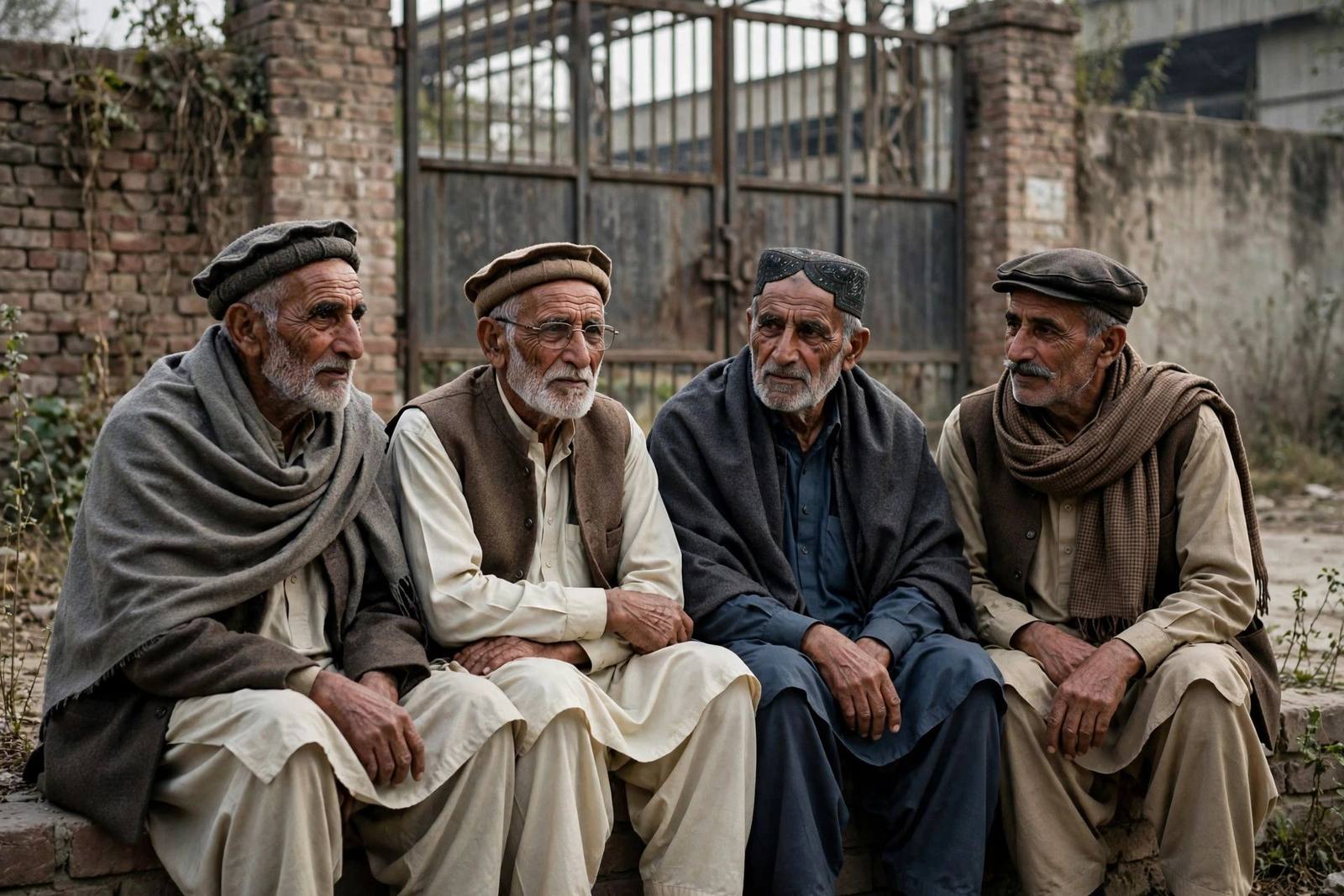
KARACHI: Somewhere in the small print of a Pakistani salary slip, between the income tax withholding and the provident fund, sits a deduction most employees have never investigated: the contribution to the Employees' Old-Age Benefits Institution — EOBI. It is deducted from the wages of millions of formal-sector workers, matched by a larger contribution from their employers, and it buys something increasingly rare in Pakistan's economy: a guaranteed monthly pension for life, payable from retirement until death, with survivor benefits behind it. Yet ask the average insured worker what he is entitled to, how his pension will be calculated, or even whether his employer is actually depositing the money, and the answers dissolve into shrugs. Employers, for their part, treat EOBI as a compliance chore; workers treat it as a minor tax. Both attitudes undersell a scheme that, for the majority of Pakistani employees who will never accumulate serious private savings, is the single largest retirement asset they own. This guide explains what EOBI is, who is covered, how contributions and pensions work, what other benefits the scheme carries, where its real weaknesses lie, and the handful of checks every insured person should make long before retirement makes them urgent.
What EOBI is: social insurance, not a savings account
EOBI is a federal institution created under the Employees' Old-Age Benefits Act of 1976, operating under the federal government's human-resource development ministry, and designed as social insurance rather than personal saving. The distinction governs everything about how it behaves. In a savings vehicle — a provident fund, a voluntary pension scheme — your contributions accumulate in something recognisably yours, invested, withdrawable under rules. In social insurance, contributions from today's workers and employers pool to pay today's pensioners, and your own pension is a statutory promise funded by the workers and employers of your retirement years. There is no individual pot with your name on it and no balance to check in the savings sense; there is a record of insured employment, and a formula that converts that record into a monthly pension when you reach the prescribed age with the required years of coverage.
The scheme's benefits extend beyond the old-age pension that gives the institution its name. The same insurance carries an invalidity pension for insured persons disabled out of the workforce, a survivor's pension for the widow or widower — and in defined circumstances children and parents — of an insured person who dies, and a one-time old-age grant for those who reach retirement age without enough insured years to qualify for the monthly pension. Around these federal benefits sits a provincial sibling most workers conflate with it: employees' social security institutions in the provinces, which provide medical care and cash benefits for sickness, injury and maternity, funded by separate employer contributions. EOBI is the pension pillar; social security is the health and welfare pillar. A payslip's story is incomplete without both, and our companion explainer on provident fund and gratuity covers the third pillar — the employer-level retirement money that sits alongside the state scheme.
Who is insured, and who is left outside
Coverage attaches to employment in covered establishments. The Act applies to industrial, commercial and other establishments employing the prescribed minimum number of workers — a threshold that has been set at five or more employees in the modern framework — and every person employed there, within wage and age conditions the law prescribes, is an "insured person" from the first day of employment, with registration the employer's obligation. Government employees with their own pension system, the armed forces, police and certain other categories stand outside, serving under their own arrangements. Crucially, coverage follows the establishment, not the worker's awareness: an employee need not apply, opt in or even know the scheme exists to be insured — though, as a later section explains, verifying that the employer's paperwork matches that legal reality is the single most valuable check a worker can perform.
The boundary of the scheme is also its great limitation. Pakistan's labour force is overwhelmingly informal — day labourers, domestic workers, agricultural hands, home-based piece-rate workers, the self-employed of every bazaar — and EOBI, anchored to registered establishments with payrolls, reaches only a minority of the workforce, on the order of several million insured persons and a pensioner population in the hundreds of thousands, against a labour force in the tens of millions. Successive governments have announced intentions to widen the net to sectors such as domestic work, and provincial experiments exist, but the structural fact stands: EOBI protects the already-formal. For the informal majority, old-age security still rests on family, continued work and whatever private provision — from National Savings to property — the household can build, which is the planning gap our guide to retirement planning in Pakistan addresses head-on.
Contributions: the small deduction and the larger one you never see
The financing is a payroll contribution split between employer and employee, calculated on the insured person's wages up to a prescribed wage ceiling, which is anchored to the applicable minimum wage and moves when minimum wages move. The structure in recent years has placed the employee's share at a small percentage — around one per cent of the minimum-wage base — and the employer's share at several times that, around five per cent, with the federal government having historically contributed as well and the precise rates and ceilings set through the Act and notifications that employers must track. Two implications follow from the design. First, because the contribution base is capped at a figure tied to the minimum wage, even a highly paid employee's EOBI record is built on that modest base — the pension it produces is a floor of basic security, not income replacement, and no one should mistake it for the latter. Second, the employee's visible deduction is the minor part of the cost; the employer's larger share is part of the true price of formal employment, one of the wedges that make formality expensive and informality tempting for small businesses.
Employers must register the establishment and each employee, deposit contributions monthly, and maintain the records on which a worker's insured years accumulate — years, note, not amounts. Because the pension formula rewards the length of insured service, continuity matters enormously: a worker with twenty-five years across three employers, all deposited, holds a materially stronger claim than one whose middle employer quietly never paid. Contribution evasion — establishments unregistered, workers shown as casual or contract to dodge coverage, deposits skipped in cash-strapped months — is the scheme's chronic disease, and its victim discovers the loss decades later, at the claim desk, when reconstruction is hardest. The verification habit described below exists precisely because the institution's promise is only as good as the employer's deposits.
The pension itself: formula, age and the minimum guarantee
The old-age pension becomes payable at the prescribed retirement age — sixty for men and fifty-five for women in the long-standing framework — provided the insured person has completed the minimum qualifying period of insured employment, set at fifteen years for the full monthly pension. The pension amount is computed by a statutory formula built from the insured person's average wages over the final years of service — measured, in practice, against the minimum-wage-anchored base — multiplied by the years of insured employment and divided by a prescribed factor, subject to a minimum pension floor that governments periodically raise through budget announcements. Recent years have seen that minimum pension sit in the region of ten thousand rupees a month, with increases announced from time to time — a figure to treat as a recent budget's setting, not a permanent entitlement level, in exactly the spirit of our slabs explainer's warning about fiscal numbers.
Those who reach the age with fewer than the qualifying years are not left empty-handed: the old-age grant pays a lump sum for each completed year of insured employment, a consolation that underlines how heavily the formula prizes crossing the fifteen-year threshold. Survivor and invalidity benefits run on parallel rules with their own qualifying conditions — an insured person dying in service with even a few years of contributions can leave a widow's pension claim of real value, one of the least-known and most humane corners of the system. Pensioners receive payment through designated banking channels, with periodic proof-of-life requirements, and arrears and indexation are perennial subjects of pensioner agitation, because a fixed nominal pension in a high-inflation country is a melting asset — the subject of the next section.
The honest weaknesses: adequacy, inflation and the fund's arithmetic
Candour requires stating what EOBI cannot do. A pension anchored to the minimum wage, even at the formula's maximum realistic service, replaces only a small fraction of a middle-class salary; its design goal is a subsistence floor for low-wage workers, and judged against formal-sector professional expectations it will always disappoint. Inflation compounds the shortfall: increases arrive by announcement, irregularly, always behind prices, so the real value of a pension drawn for twenty years erodes substantially across the drawing period. And behind the benefits sits the scheme's own long-run arithmetic — the balance between contributions flowing in from a limited formal workforce, the institution's investment returns on its accumulated fund (invested heavily, by statute and habit, in government securities and approved instruments), and pensions flowing out to a growing, longer-lived pensioner population. Actuarial valuations of such schemes in Pakistan have periodically flagged the need for parametric reform — contribution rates, retirement ages, coverage — of the kind every pension system on earth eventually confronts.
None of this makes the insured worker's stake small; it makes it specific. EOBI is a floor, and floors matter most to those with the least above them — for a retiring factory worker or guard with no provident fund of size and no property, the monthly pension, however modest, is the difference between dependence and a measure of dignity, and its survivor provisions protect precisely the widows most exposed in the informal economy of grief. The correct response to the scheme's inadequacy is not dismissal but supplementation: treat EOBI as the base layer, and build the provident fund, gratuity, voluntary pension and private saving above it, as our retirement planning guide lays out in sequence.
Five checks to make while you are still working
Everything valuable a worker can do about EOBI is done decades before claiming. First, confirm you are registered: every insured person should hold an EOBI registration number and card, and the institution's online verification channels allow checking your record against your CNIC; no card and no record means your employer may never have registered you. Second, confirm deposits are current — employment proofs, salary slips and the institution's record should tell a consistent story, and gaps are vastly easier to fix while the employer exists and you are on its premises. Third, preserve your own file: appointment letters, salary slips and any EOBI documents, in physical or scanned form, because claims are proven with paper and employers' records have a habit of not surviving the decades. Fourth, on changing jobs, ensure the new employer registers you under the same identity so service accumulates in one record rather than fragmenting. Fifth, near retirement, engage the institution early — claim processing rewards those who arrive with complete documents before the last salary stops, not after.
This article is educational content, not financial advice, and EOBI's rates, wage ceilings, qualifying conditions and pension amounts are set by law and government notification and change over time — verify your own position with the institution directly. But do verify it. The deduction on your salary slip is small, monthly and easy to ignore for thirty years, which is exactly how a worker reaches sixty to discover what his employers did or did not do. A pension you already pay for deserves an hour of your attention while the answer can still be changed.
Key takeaway: EOBI is social insurance, not a savings account — your employer's deposits buy you a modest lifetime pension and survivor cover based on years of insured service, so verify your registration and deposit record now, while gaps can still be repaired.