KARACHI: Pick up a bottle of cough syrup in a Lahore pharmacy, a glass bottle of a fizzy drink at a Karachi dhaba, or look through the window of a new house in any Pakistani city, and there is a fair chance the glass came from the same maker. Ghani Glass Limited — GHGL on the Pakistan Stock Exchange — is one of the country's principal glass manufacturers, producing container glass for the pharmaceutical, food and beverage industries and float glass for construction. It is a business hiding in plain sight: its products are literally transparent, bought not by consumers but by the drug companies, drinks bottlers and builders who fill, sell and install them. Understanding Ghani Glass means understanding the economics of melting sand — one of the oldest, most energy-hungry and most quietly essential industries in Pakistan.
A Lahore group that started with mines
Ghani Glass is the flagship manufacturing company of the Ghani Group, a Lahore-based business house whose origins go back to 1959, when the Ghani family began trading. The group's early anchor was mining — Ghani Mines was established in the 1960s — and that origin matters, because glassmaking begins in a quarry. The main ingredient of glass is silica sand, supported by soda ash, limestone, dolomite and feldspar; a group that understood minerals had a head start in understanding glass. Over the decades the group widened into automobiles, dairy, poultry and other ventures, but glass became its signature industry, and the family name is now attached to several listed glass businesses — a point of frequent confusion addressed below.
Ghani Glass Limited itself was incorporated in 1992 and listed on the stock exchanges in 1994. Its first plant was built at Hattar, in the Haripur district of Khyber Pakhtunkhwa, and commercial production began in 1995. The choice of pharmaceutical containers as the entry point was deliberate and demanding: medicine bottles must meet good manufacturing practice (GMP) requirements, with controlled composition, consistent dimensions for high-speed filling lines, and — for the amber glass that protects light-sensitive medicines — precise colour and chemistry. The Hattar plant was set up to those standards from the start, and in October 1998 Ghani Glass received ISO 9002 certification, which the company records as a first for a Pakistani glassmaker. Within a few years of starting, it had become a leading supplier to the pharmaceutical industry whose bottles it still fills pharmacies with today.
Two divisions: containers and float
Ghani Glass today works through two distinct divisions that share a raw material and a furnace technology but serve entirely different customers.
Container glass is the original business. At its container plants — the original Hattar site in the north and a plant in Karachi's Landhi industrial area serving the south — the company produces pharmaceutical containers in amber and clear glass, including syrup bottles, tablet jars, droppers and vials, made to USP Type III specification; beverage bottles in flint (clear) and green glass; and food jars and bottles. Customers are pharmaceutical companies and food and beverage brands, Pakistani and multinational, who buy containers by the million and run them through filling lines where a fraction of a millimetre of variation can stop production. Alongside its sister company Tariq Glass — profiled separately as Tariq Glass (TGL), which leans toward tableware and its own float and container lines — Ghani anchors a small, concentrated industry in which a handful of furnaces supply a whole country's bottles.
Float glass is the second business, produced at the company's plant on the Lahore–Sheikhupura road. Float glass is the flat glass of windows, shopfronts, facades, mirrors and furniture: molten glass is floated on a bath of molten tin to produce sheets of uniform thickness and near-perfect flatness, then cut and sold in clear, tinted (green and brown) and reflective varieties. Float ties Ghani to the construction cycle rather than to medicine and drinks — when housing and commercial building boom, float demand follows; when construction stalls, it shows quickly. A further plant in the Gujranwala area has extended the company's footprint in value-added glass. Together, the group's glass plants run to a combined capacity measured in hundreds of thousands of tonnes a year, and the company exports containers and float glass to markets across Asia, Africa, the Middle East and beyond.
Not to be confused: the several Ghanis of glass
New readers of the PSX often trip over the group's structure, so it is worth separating the names. Ghani Glass Limited (GHGL) is this company: containers and float. Ghani Global Glass is a separate listed group company specialising in pharmaceutical glass tubing, ampoules and vials drawn from tubes. Ghani Value Glass works further downstream, processing glass into value-added products such as mirrors and aluminium products. The wider Ghani Global group also includes chemical and gas businesses. Each is a distinct listed company with its own accounts, and the similarity of names reflects a family group that grew by building adjacent plants rather than by folding everything into one balance sheet. For an investor reading announcements, checking which "Ghani" a headline refers to is the Pakistani glass industry's equivalent of checking which class of share you hold.
Growth in stages: more furnaces, then a new kind of glass
Ghani's expansion followed the classic pattern of a successful Pakistani process industry: prove the product, then replicate the furnace. Demand from pharmaceutical customers for the Hattar plant's GMP-standard bottles outgrew the original installation, and the company invested in a second plant on the same premises, doubling down on the site with modern furnaces supplied with German furnace technology and high-speed forming machines running around the clock. A Karachi container plant followed, putting production beside the southern market and the port. The bigger strategic step was the move into float glass at Sheikhupura — a different product, a different customer and a different cycle, but the same core skills of melting, forming and quality control, and the same advantage in mineral sourcing that the group's mining background provided.
That sequencing matters for reading the company today. The container business is the steadier leg: people take medicine in recessions and booms alike, and drinks demand, while seasonal, rarely collapses. Float glass is the cyclical leg, geared to construction. Owning both means GHGL's results blend a defensive stream with a cyclical one, and the balance between them in any year explains much of the movement in its overall margins. It also means capital spending arrives in lumps — a new furnace or a rebuild is a major project, financed and then sweated over a long campaign — so the company's cash flow in investment years looks very different from its cash flow in harvesting years, a rhythm common to glass, cement and steel that first-time readers of heavy-industry accounts should expect rather than be alarmed by.
How glassmaking makes money
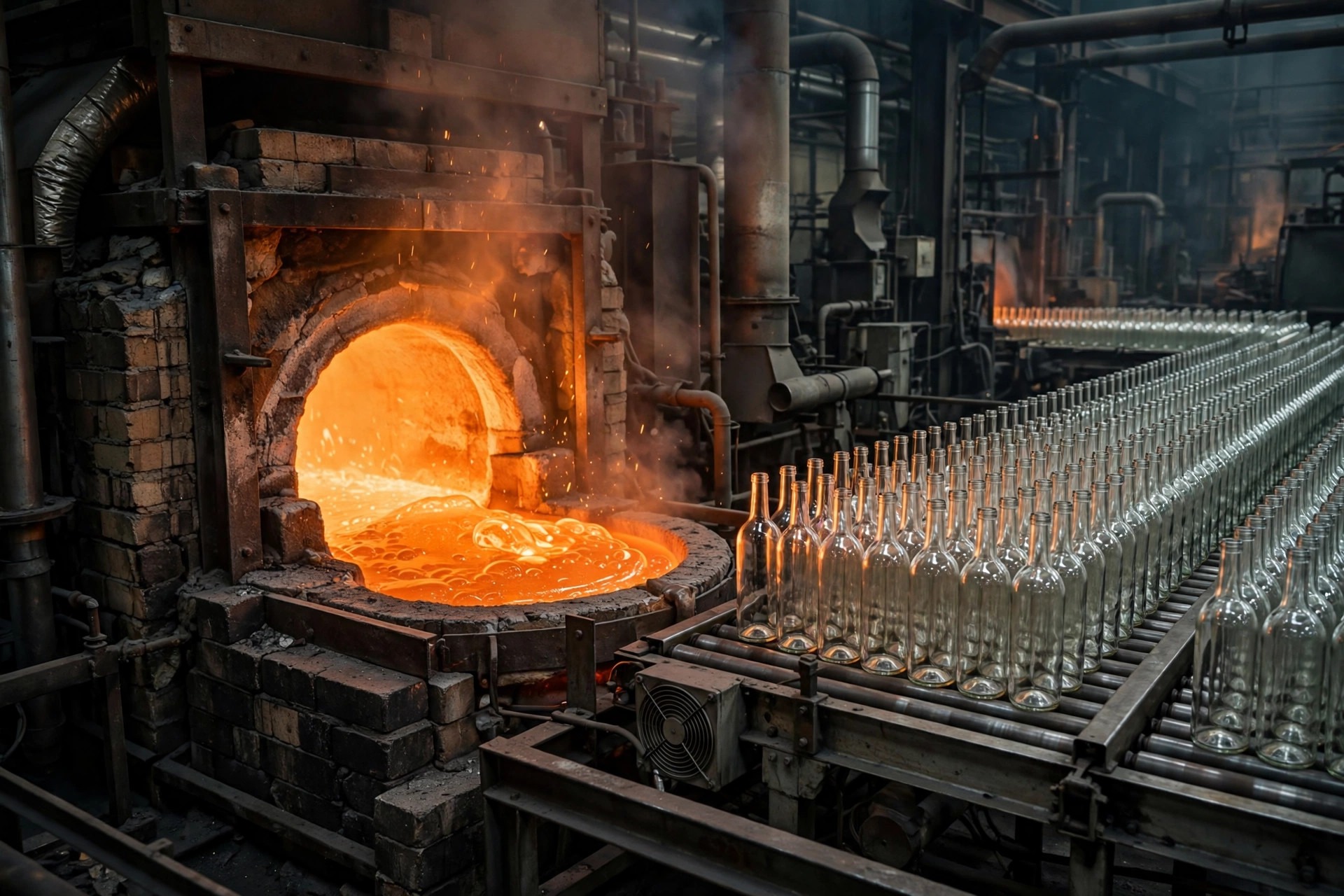
A glass furnace is one of industry's most unforgiving assets. Once lit, it must run continuously — day and night, for years — because letting molten glass cool and solidify inside would destroy the furnace lining. Production therefore cannot simply be switched off in a weak quarter; the art of the business is keeping the furnaces fed with orders at prices that cover a cost stack dominated by two items: raw materials and, above all, energy. Melting sand requires sustained temperatures around the melting point of glass, traditionally fired by natural gas in Pakistan, so the gas tariff is to a glassmaker what the cotton price is to a spinner — the single input that can redraw the profit and loss account. When energy prices rise faster than bottle prices can be renegotiated with powerful multinational customers, margins compress across the whole industry at once.
Revenue itself is straightforward: tonnes of containers and square metres (in practice, tonnes) of float glass, sold at negotiated prices. Profitability then depends on:
- Furnace utilisation and campaign life — a furnace is rebuilt at great expense after a campaign of some years; spreading that capital cost over maximum saleable output is the core discipline.
- Product mix — pharmaceutical containers and tinted or reflective float glass earn more per tonne than commodity beverage bottles and clear float, so mix shifts move profits even at constant tonnage.
- Input costs — silica sand, soda ash (partly imported and therefore exchange-rate sensitive), other minerals, packing materials and freight, since glass is heavy, fragile and expensive to move relative to its value.
- Recycled cullet — crushed waste glass melts at lower temperatures than virgin raw material, saving energy and minerals at once; Ghani, like other makers, actively collects and recycles broken glass, one of the industry's genuinely circular features.
- Customer concentration — container glass is sold to a limited number of large pharmaceutical and beverage buyers whose own volumes (a good summer for drinks, steady medicine demand) transmit directly to the glassmaker.
Float glass adds an import contest: when imports are cheap or the rupee strong, imported sheets compete with local float; when freight is dear or the rupee weak, local furnaces gain natural protection, while their imported inputs grow costlier — a balance that shifts with the currency and explains much of the division's year-to-year variation.
Ghani Glass in everyday Pakistan — and in the KSE-100
Few KSE-100 companies touch daily life as physically as this one. The medicine bottle in the bathroom cabinet, the bottled drink at a wedding, the window glass of the flat being built across the street — Ghani's furnaces plausibly supplied all three, and its export shipments carry the same output to pharmacies and builders abroad. Its customer list reads as a cross-section of Pakistani consumer industry, which makes the company a useful lens on that industry's health: bottlers and drug firms do not order glass they do not expect to fill.
Its seat in the benchmark index follows the standard mechanics — free-float market capitalisation, reviewed periodically — which our explainers on how the KSE-100 is calculated, market capitalisation and index rebalancing unpack in full. For a mid-sized industrial in a niche sector, index membership says less about grandeur than about tradability: enough of its shares are in public hands, and change hands often enough, for the index to count it among the market's representative names.
There is also an environmental thread that runs through the company's operations and is worth a reader's attention. Glass is one of the few packaging materials that can be recycled indefinitely without losing quality, and Pakistan's informal and formal collection networks return large quantities of broken glass to makers as cullet, cutting both energy use and quarrying. At the same time, glassmaking remains one of the more energy-intensive industries in the country, so the company's furnace efficiency, fuel choices and any investment in waste-heat recovery or cleaner firing bear directly on both its costs and its footprint — an overlap of the financial and the environmental that is increasingly typical of heavy industry on the PSX.
What followers of Ghani Glass typically watch
Readers tracking GHGL tend to watch the gas tariff and energy availability first, then pharmaceutical and beverage demand — the volumes of its two great customer industries — and construction activity for float glass. Soda ash and other input prices, the exchange rate's effect on both imported inputs and import competition, furnace rebuild schedules (which bring heavy capital spending and temporary disruption), and the split of sales between containers and float all shape how a year's results come together. Export volumes provide a further signal of competitiveness beyond the protected home market. This profile is educational content, not financial advice, and none of those observation points is a recommendation to buy or sell the shares. The Aktzien learning library builds the background — from how furnaces of industry differ from software economics to how dividends work — that makes profiles like this one easier to read critically, and Aktzien, the app being built for Pakistani investors, plans to keep that explanation-first approach at the centre of its company pages.
Key takeaway: Ghani Glass, incorporated in 1992 and producing since 1995, turns sand, soda ash and intense heat into Pakistan's pharmaceutical and drinks bottles and its window glass — a furnace business whose profits hinge on energy costs, utilisation and the health of the drug, beverage and construction industries it supplies.